Toxocariasis in immigrants and travelers with unexplained eosinophilia
Laura Niño-Puerto, Belén Vicente, Josué Pendones Ulerio, Hugo Almeida, Javier Pardo Lledías, Juan Luis Muñoz Bellido, Antonio Muro, Moncef Belhassen-García

TL;DR
The study finds that Toxocara canis infection is a common but often overlooked cause of unexplained high eosinophil levels in immigrants and travelers from tropical regions.
Contribution
The study highlights the underrecognized role of Toxocara canis in causing eosinophilia and advocates for including Toxocara serology in diagnostic workups.
Findings
23% of tested patients had T. canis antibodies, with most being immigrants from Africa and Latin America.
Eosinophilia under 1000 cells/μL was significantly associated with T. canis seropositivity.
40.9% of T. canis-positive patients were asymptomatic, indicating silent infection.
Abstract
Eosinophilia is common in immigrants and travelers and is often linked to parasitic infections. While well-known helminths are routinely considered, Toxocara spp. remains underrecognized despite its global prevalence. This study aimed to identify undiagnosed T. canis infections in migrant and traveler patients from tropical and subtropical regions with eosinophilia of unknown etiology. We retrospectively analyzed patients evaluated at the Tropical Medicine Unit of the Complejo Asistencial Universitario de Salamanca between 2008 and 2023. Eligible participants were immigrants or travelers from tropical and subtropical regions with eosinophilia and complete clinical records. Noninfectious causes were excluded before testing. Serum samples from patients without a confirmed parasitic diagnosis were screened for anti-T. canis immunoglobulin (Ig)G antibodies via enzyme-linked immunosorbent…
Genes, proteins, chemicals, diseases, species, mutations and cell lines named across the full text — each resolved to its canonical identifier and authoritative record.
Click any figure to enlarge with its caption.
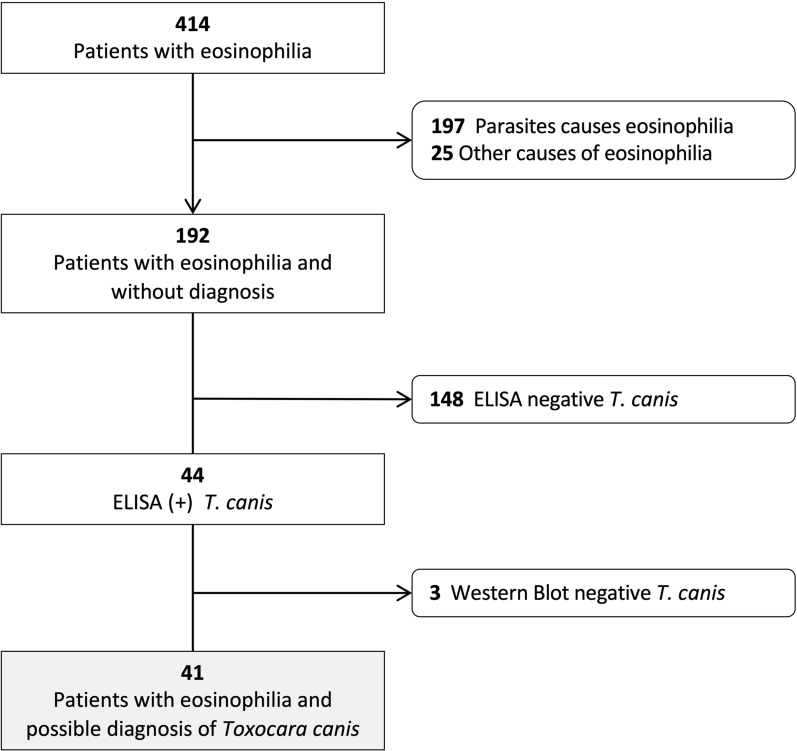 Figure 1
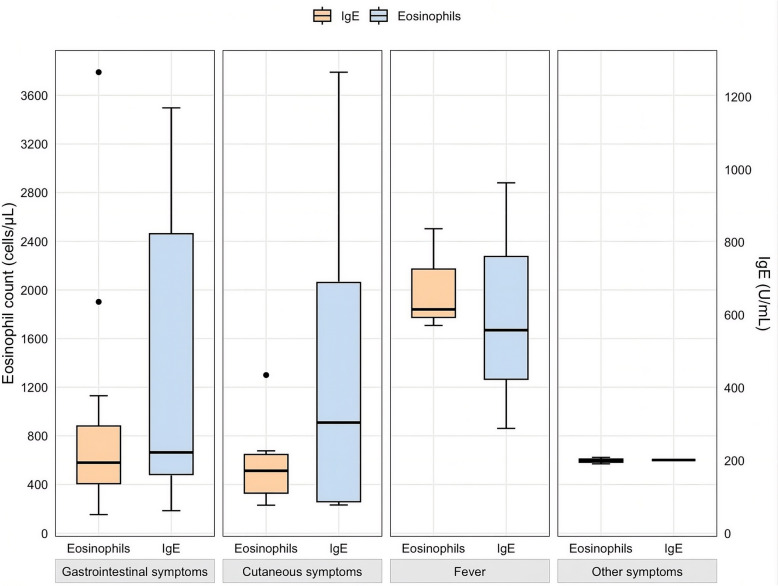 Figure 2
Peer Reviews
No public reviews on file for this paper yet. If you reviewed it on a platform where reviews are public (OpenReview, ICLR, NeurIPS, ICML), you can paste yours below so the community can read it here.
Videos
No videos yet. Explain this paper in a talk, walkthrough, or lecture? Add one.
Taxonomy
TopicsParasitic Infections and Diagnostics · Parasites and Host Interactions · Insects and Parasite Interactions