High-resolution map of chromatin accessibility - insights into the focused binding of a large number of transcription factors
Iris Zhu, David Landsman

TL;DR
This study maps chromatin accessibility in human cells and shows how transcription factors bind in focused regions linked to nucleosome depletion.
Contribution
A high-resolution map of chromatin accessibility and a model of TF co-binding in nucleosome-depleted regions.
Findings
Over 25,000 focused TF binding sites were identified in each cell type, linked to nucleosome depletion.
Most TFs bind to sites without their canonical motifs, suggesting cooperative binding mechanisms.
Phenotypically causal variants and functional motifs are enriched in focused binding sites.
Abstract
Emerging evidence has shown the common occupancy of dozens to hundreds of transcription factors (TFs) on cis-regulatory elements (CREs), yet the underlying details are largely unknown. In this study, leveraging extensive collections of TF ChIP-seq data of more than 1000 TFs in human HepG2 and K562 cells, we located highly focused TF binding sites (FBSs) within CREs as single-nucleosome depleted regions, which accommodate the majority of the total TF binding events. Approximately 25,000 strong FBSs were identified in each cell type. For more than 90% of TFs, including some pioneer factors such as GATA1 and JUN, their binding sites out of FBSs barely show nucleosome depletion. Essential cellular function related motifs and phenotypically causal variants are strongly enriched in the FBSs, but not in their immediate flanking regions within CREs. Most TFs bind to FBSs not containing their…
Genes, proteins, chemicals, diseases, species, mutations and cell lines named across the full text — each resolved to its canonical identifier and authoritative record.
Click any figure to enlarge with its caption.
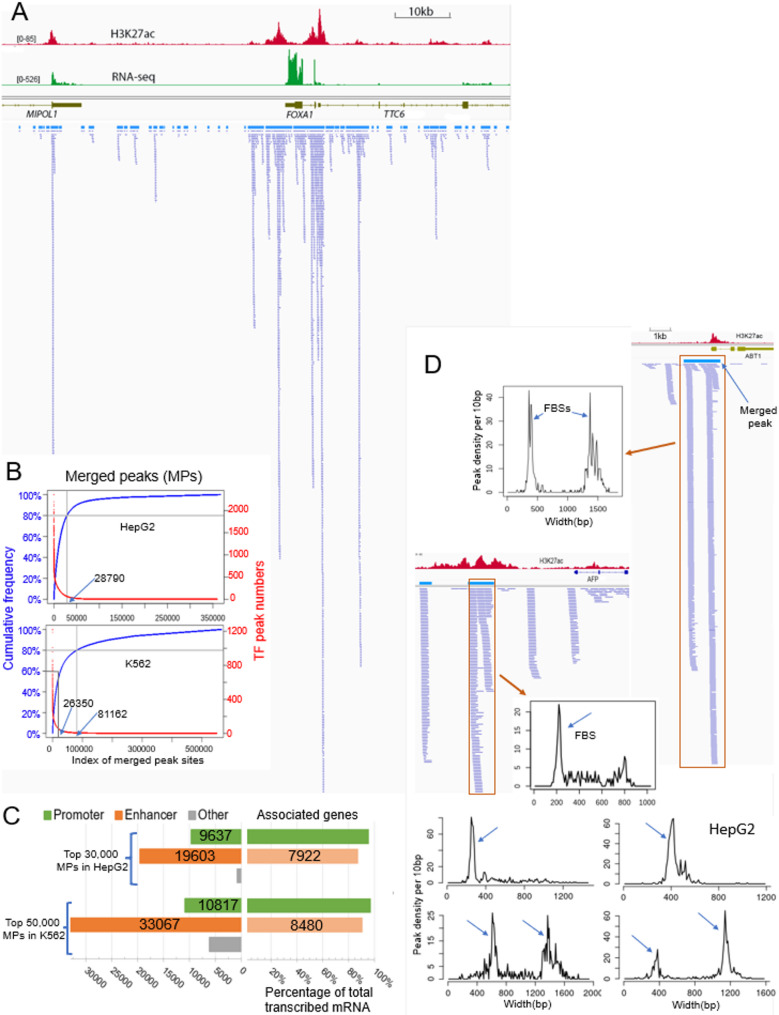 Figure 1
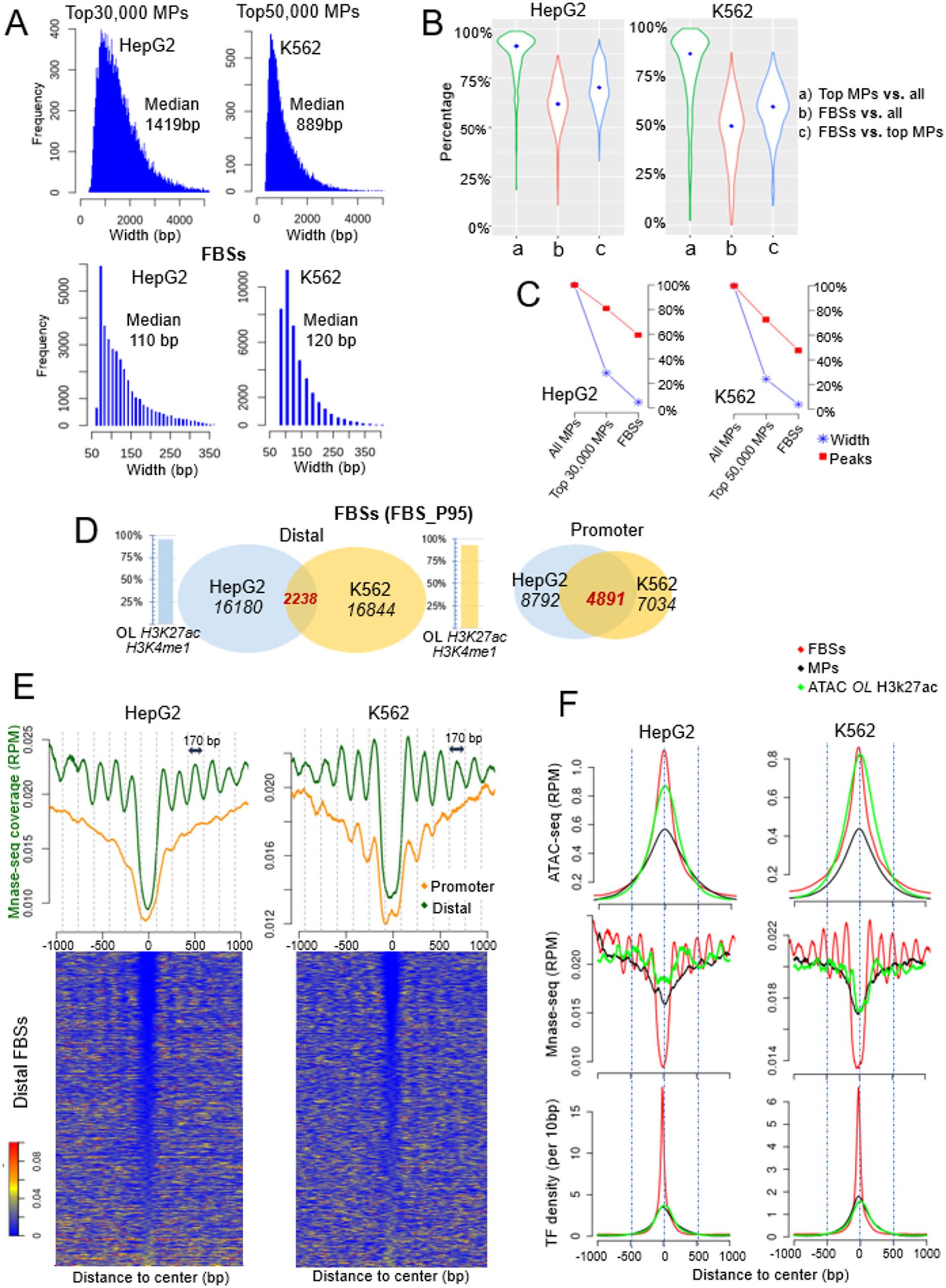 Figure 2
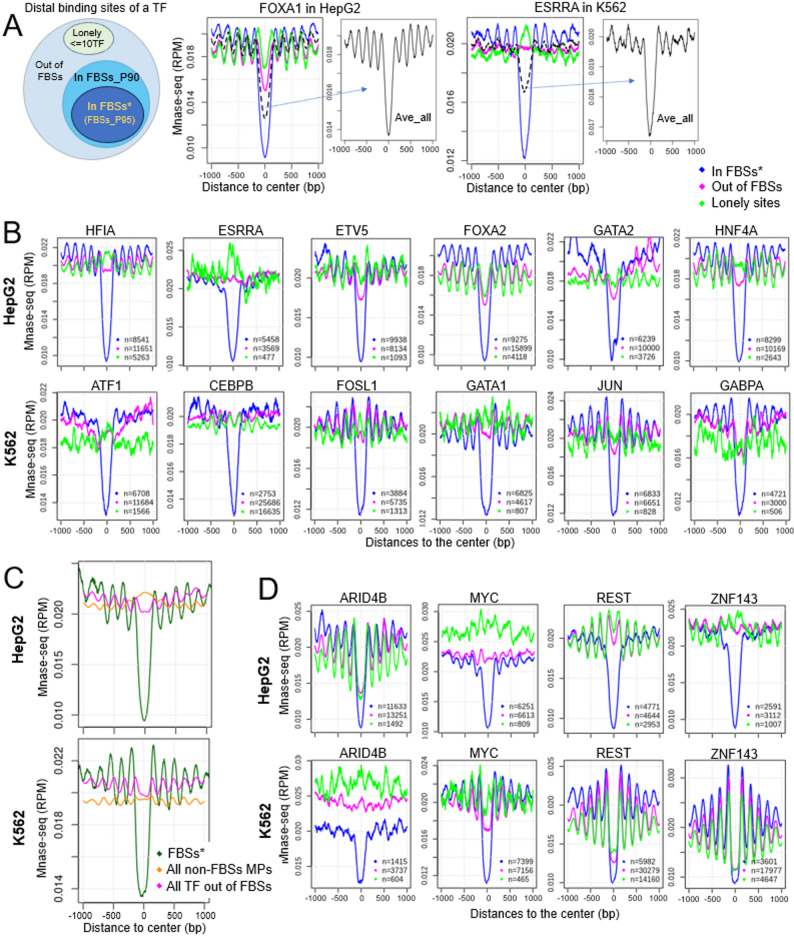 Figure 3
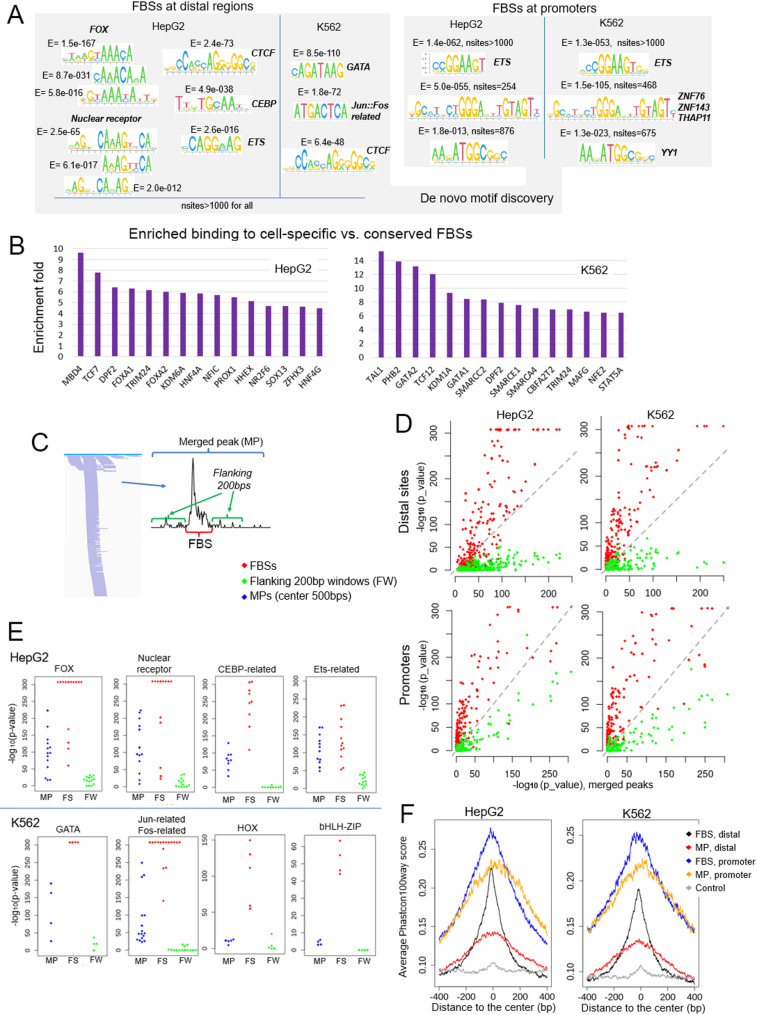 Figure 4
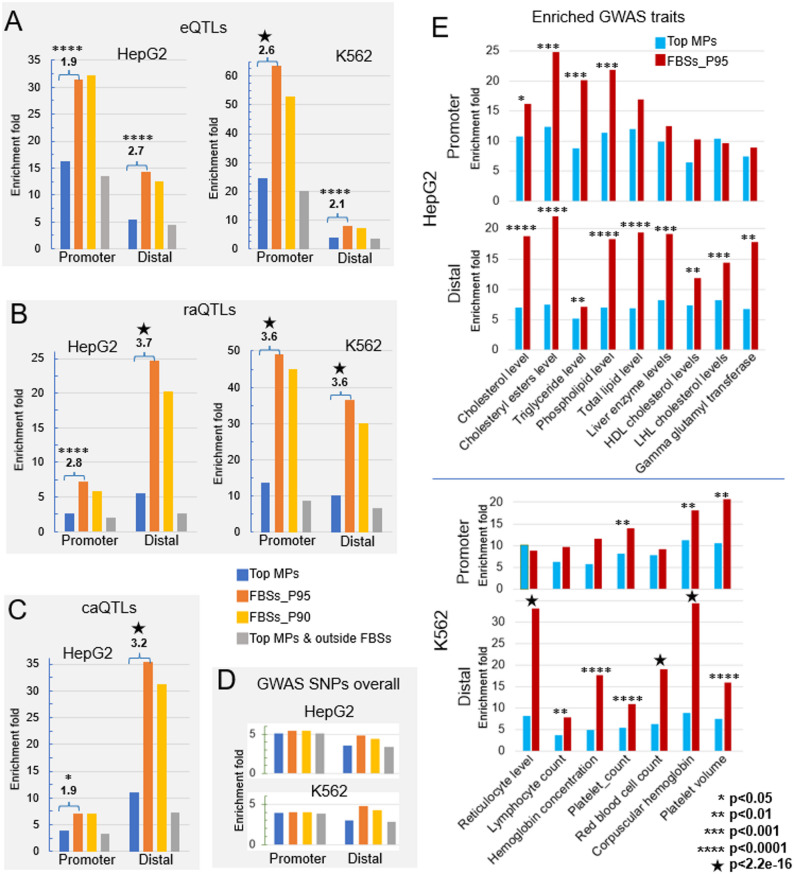 Figure 5
 Figure 6
 Figure 7
Peer Reviews
No public reviews on file for this paper yet. If you reviewed it on a platform where reviews are public (OpenReview, ICLR, NeurIPS, ICML), you can paste yours below so the community can read it here.
Videos
No videos yet. Explain this paper in a talk, walkthrough, or lecture? Add one.
Taxonomy
TopicsGenomics and Chromatin Dynamics · Chromatin Remodeling and Cancer · Genomic variations and chromosomal abnormalities