Mapping determinants of alternative protein food intake across 13 European countries: food system stakeholders’ perspectives
Hanna Zaleskiewicz, Ewa Kulis, Zofia Szczuka, Anna Banik, Gabriela Alcat, Concha Ávila, Isabel Cardoso, Feyza Başak Coşkun, Anna Kornafel, Lisa Mai, Lisa Kolden Midtbø, Jowita Misiakowska, Maja Oblak, Vesna Miličić, Pedro Queiroz, Giorgia Sabbatini, Britt Sandvad, Maria Siwa

TL;DR
This study explores factors influencing the adoption of alternative protein foods in 13 European countries, identifying key leverage points and feedback loops based on stakeholder perspectives.
Contribution
The study introduces a system mapping approach to identify interconnected determinants and leverage points for promoting alternative protein food consumption across multiple European countries.
Findings
Consumer education and social norms emerged as key leverage points across 6–8 country maps.
Feedback loops suggest that improved APF safety perceptions can reinforce positive consumer behaviors and economic benefits.
Stakeholders emphasized the central role of consumers in shaping food system dynamics.
Abstract
Using the system mapping approach, this study aimed to map the system of potential determinants of including alternative protein food (APF) into the daily diet across 13 European countries. We also aimed to identify key leverage points in the systems, which are determinants that are most interconnected with other determinants in the system. Similarities in leverage points and feedback loops found across the system maps were investigated. Food system stakeholders (N = 166; including food producers, food processors, policy makers, nutritionists, consumers, etc.) participated in 17 system mapping workshops, conducted in Austria, the Czech Republic, Denmark, France, Germany, Greece, Italy, Norway, Portugal, Slovenia, Spain, Turkey, and Poland. Group model building methods were applied to develop 17 maps. Centrality indices were calculated, feedback loops were identified, and similarities…
Genes, proteins, chemicals, diseases, species, mutations and cell lines named across the full text — each resolved to its canonical identifier and authoritative record.
Click any figure to enlarge with its caption.
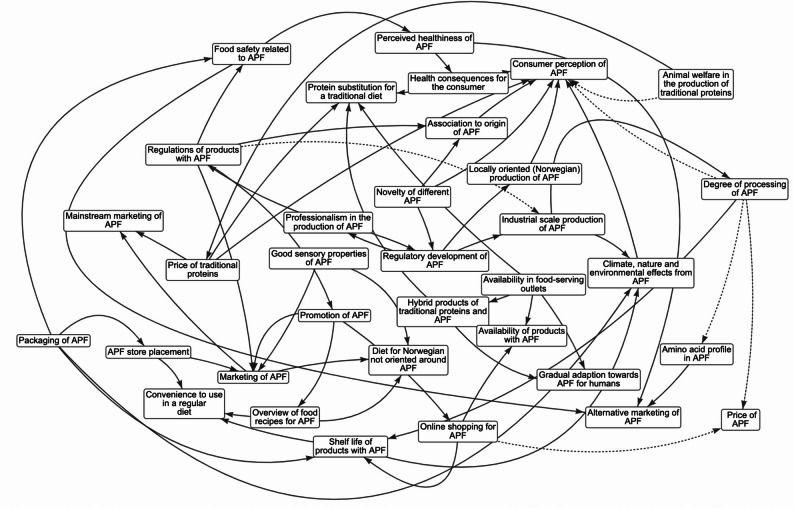 Figure 1
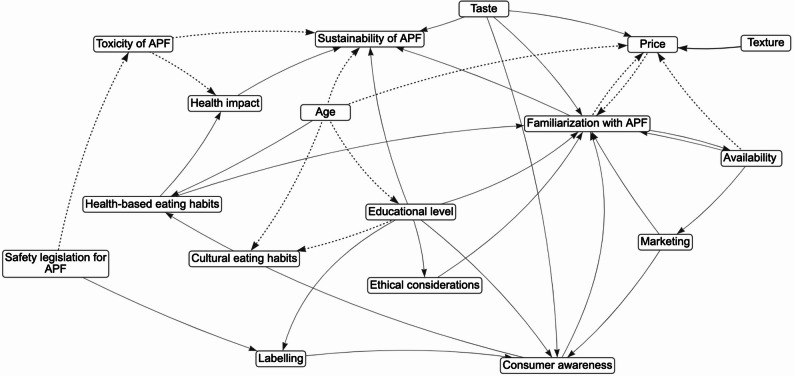 Figure 2
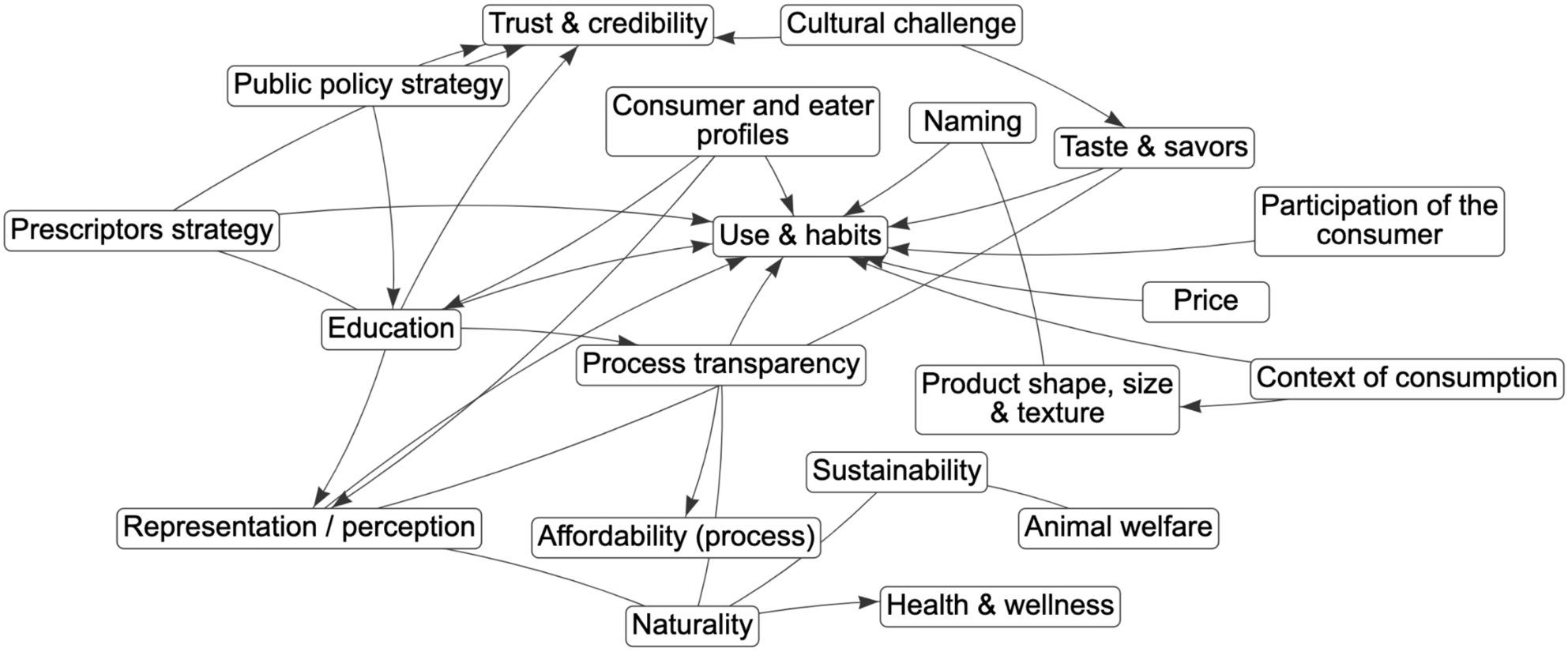 Figure 4
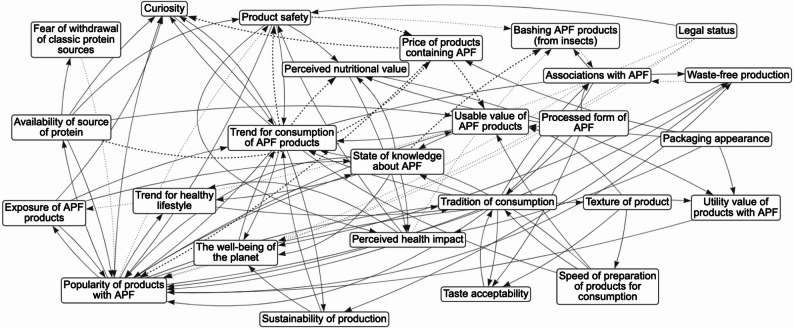 Figure 5
Peer Reviews
No public reviews on file for this paper yet. If you reviewed it on a platform where reviews are public (OpenReview, ICLR, NeurIPS, ICML), you can paste yours below so the community can read it here.
Videos
No videos yet. Explain this paper in a talk, walkthrough, or lecture? Add one.
Taxonomy
TopicsConsumer Attitudes and Food Labeling · Organic Food and Agriculture · Food Waste Reduction and Sustainability