Implementing shared care models for young people with mental health difficulties: a consolidated framework for implementation research- informed scoping review of service integration across physical, sexual and mental health domains
Allyson J. Gallant, Karen O’Connor, John Paul Lyne, Leona Ryan, Michelle Doody, Greg Sheaf, Agnes Higgins, David Cotter, Rebecca Murphy, Louise Doyle, David McEvoy, Brian Keogh, Shaakya Anand-Vembar, Mary Cannon, Gary Donohoe, Olivia Longe, Colm McDonald, Sara Burke, Colm Healy

TL;DR
This review explores shared care models that integrate mental, physical, and sexual health for young people with mental health difficulties, identifying barriers and enablers to implementation.
Contribution
A novel synthesis of shared care models for young people with mental health difficulties using the CFIR framework to guide implementation.
Findings
Most shared care models address mental and physical health, with fewer addressing mental and sexual health.
Common barriers include staff turnover and societal stigma, while enablers include youth-specific care and clear communication.
Implementation of integrated care remains limited despite its demonstrated need.
Abstract
Most mental health difficulties (MHD) emerge during adolescence and early adulthood, placing young people at an increased risk for co-occurring physical and sexual health challenges. Shared models of care (SMOC) to connect specialist mental health care with physical and/or sexual health have been developed to address these health needs among young people with MHD. We aimed to identify and characterise SMOC that integrate physical and/or sexual healthcare for young people with MHD, and to synthesise SMOC implementation determinants using the Consolidated Framework for Implementation Research (CFIR) for policy makers, commissioners and practitioners seeking to strengthen youth-integrated service delivery. Five electronic databases and key grey literature sites were searched in October 2024. Studies were eligible for inclusion if they predominantly included young people (aged 10–25) with…
Genes, proteins, chemicals, diseases, species, mutations and cell lines named across the full text — each resolved to its canonical identifier and authoritative record.
Click any figure to enlarge with its caption.
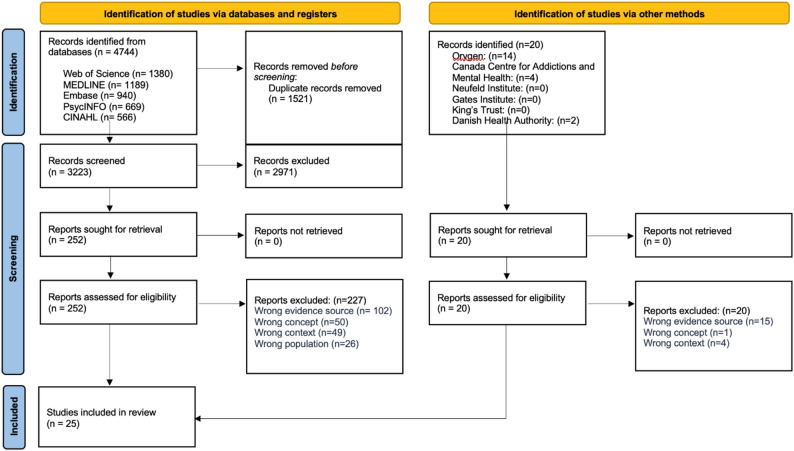 Figure 1
 Figure 2
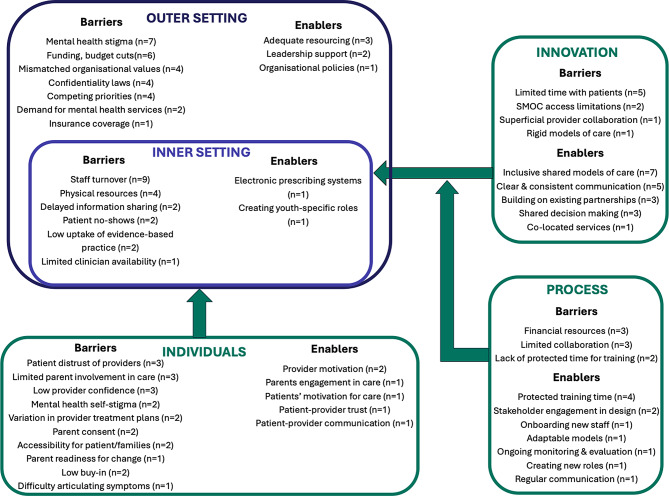 Figure 3
Peer Reviews
No public reviews on file for this paper yet. If you reviewed it on a platform where reviews are public (OpenReview, ICLR, NeurIPS, ICML), you can paste yours below so the community can read it here.
Videos
No videos yet. Explain this paper in a talk, walkthrough, or lecture? Add one.
Taxonomy
TopicsHealth Policy Implementation Science · Mental Health and Patient Involvement · Adolescent and Pediatric Healthcare