Spatio-temporal modelling and prediction of Anopheles mosquito abundance in Tanga and Unguja, Tanzania: climatic drivers and insights for malaria early warning and vector control strategies
Lembris Laanyuni Njotto, Neema B. Kulaya, Yahya A. Derua, Bernard B. Malongo, Filbert Francis, Karin L. Schiøler, Helle Hansson, Christian W. Wang, Fatma Saleh, Vito Baraka, Michael Alifrangis, Tiem van der Deure, Wilfred Senyoni, Ottmar Cronie, Anna-Sofie Stensgaard

TL;DR
This study models how climate affects Anopheles mosquito populations in Tanzania to predict malaria outbreaks and improve control strategies.
Contribution
A spatio-temporal model linking climate data to mosquito abundance is developed and validated for malaria early warning.
Findings
Anopheles abundance in Tanga increases with higher maximum temperatures but decreases with higher minimum temperatures.
Precipitation in Tanga affects mosquito abundance both immediately and with a two-month lag.
The model accurately predicted mosquito peaks in Unguja before a malaria surge in Zanzibar.
Abstract
Anopheles mosquitoes, vectors of human malaria, are highly sensitive to environmental change. As climate alters temperature and precipitation patterns, mosquito populations may shift in sibling species composition, location and timing, altering transmission dynamics. Understanding these patterns is key for malaria control. This study explores links between meteorological factors and Anopheles abundance across a diversity of sites in Tanga and Unguja, Tanzania, to predict mosquito peaks and support the development of early warning systems for malaria outbreaks. Adult Anopheles mosquitoes were sampled monthly from September/October 2021 to December/September 2023 across 11 sites in Tanga and 4 shehias in Unguja. Spatio-temporal Generalized Additive Mixed Effects Models (GAMMs) were employed to assess the influence of meteorological factors on Anopheles abundance. Models were built and…
Genes, proteins, chemicals, diseases, species, mutations and cell lines named across the full text — each resolved to its canonical identifier and authoritative record.
Click any figure to enlarge with its caption.
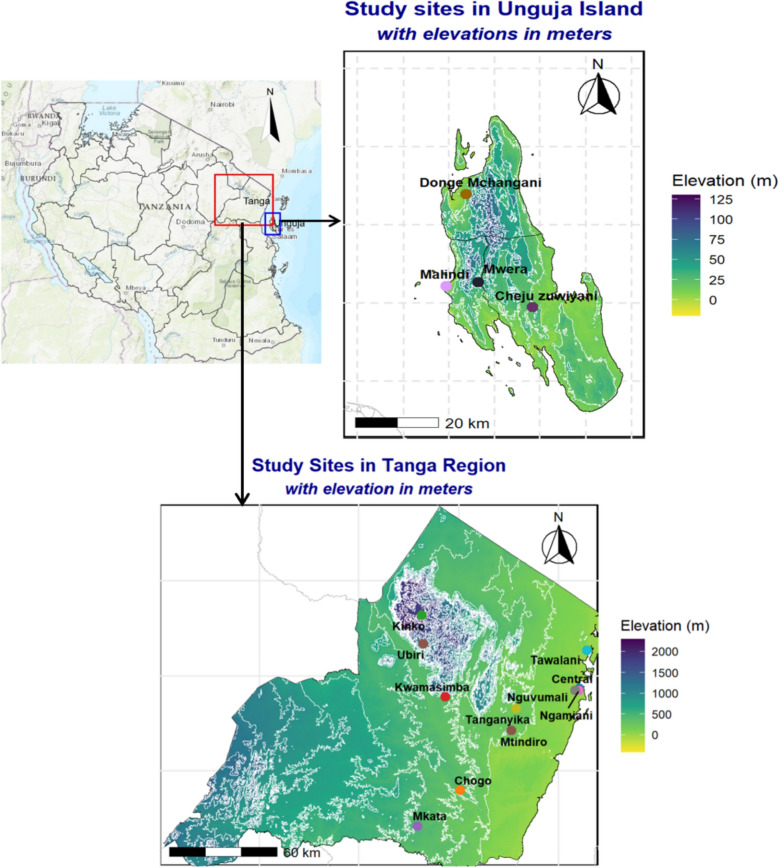 Figure 1
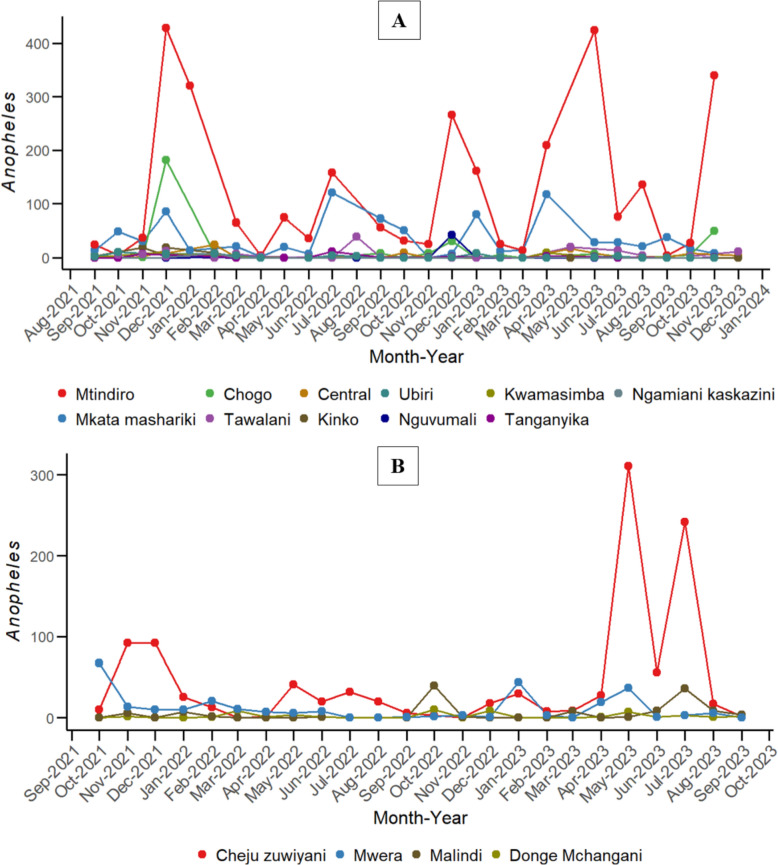 Figure 2
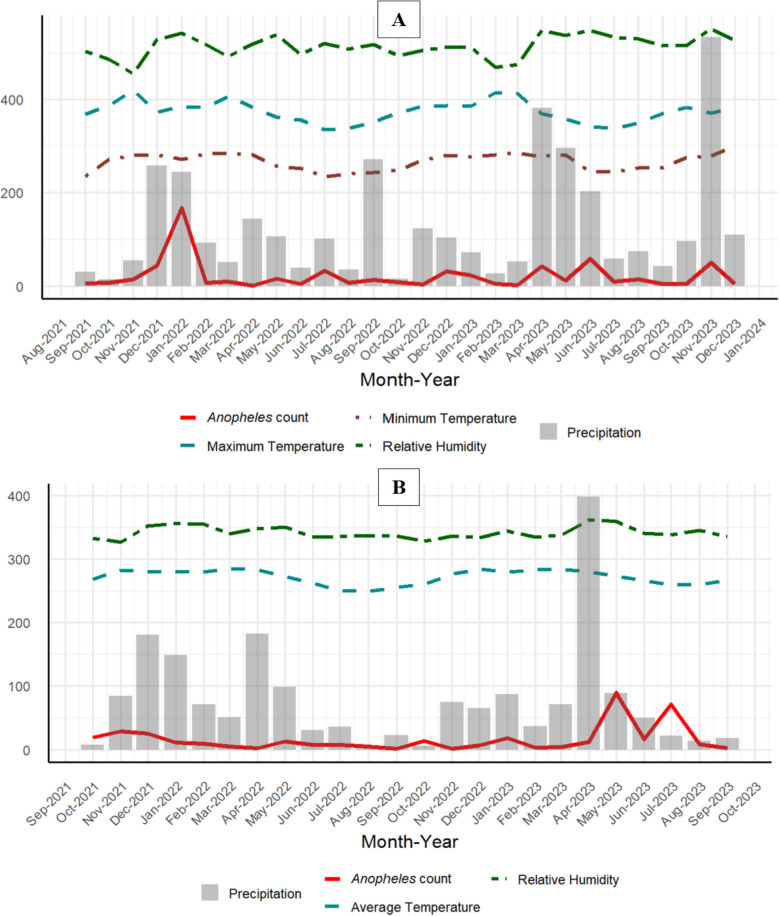 Figure 3
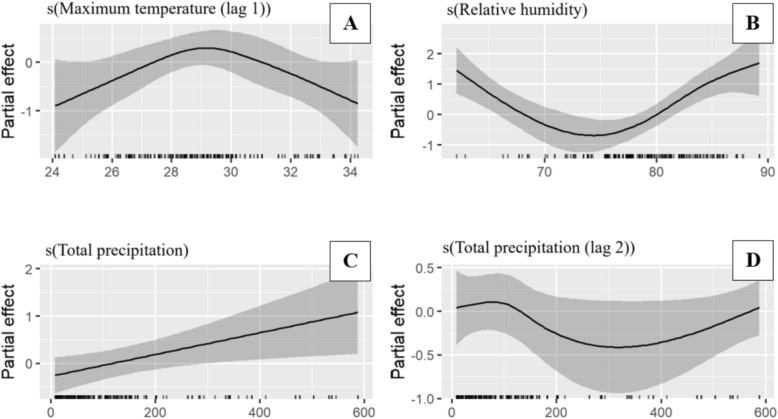 Figure 4
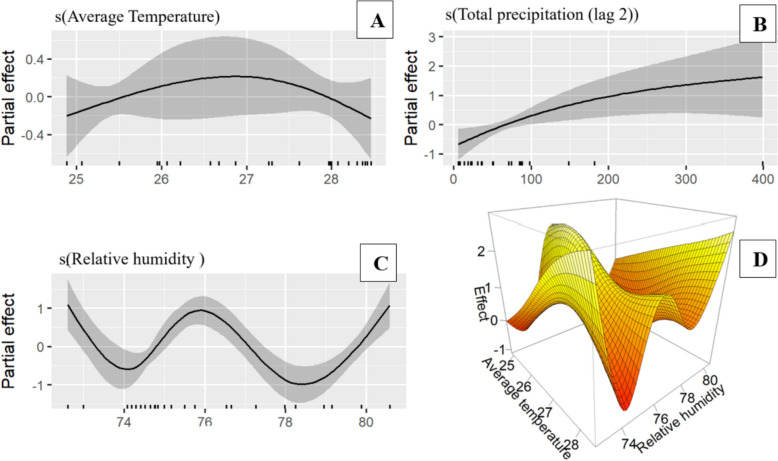 Figure 5
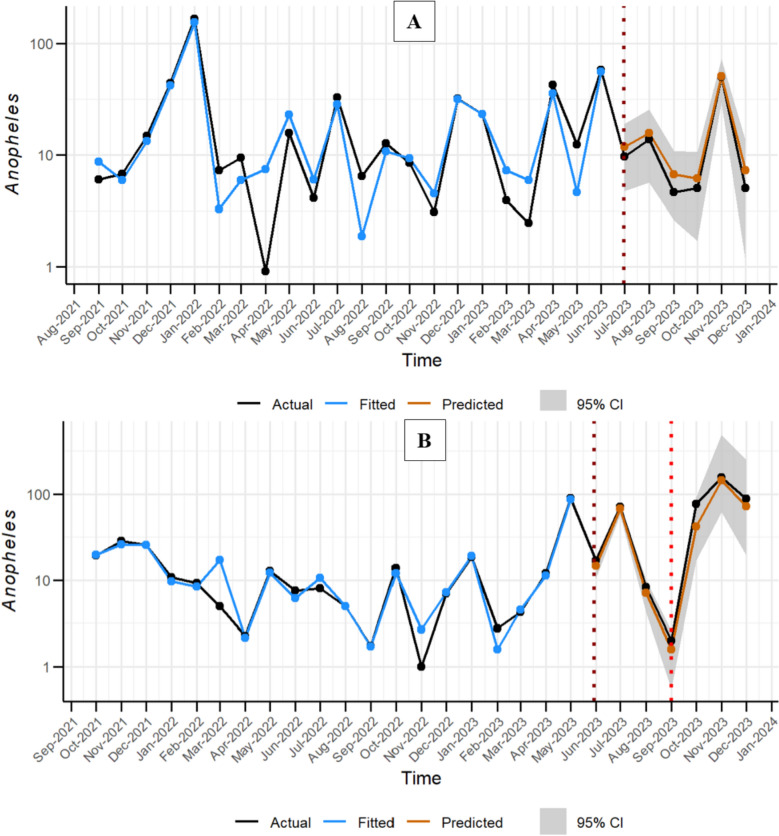 Figure 6
Peer Reviews
No public reviews on file for this paper yet. If you reviewed it on a platform where reviews are public (OpenReview, ICLR, NeurIPS, ICML), you can paste yours below so the community can read it here.
Videos
No videos yet. Explain this paper in a talk, walkthrough, or lecture? Add one.
Taxonomy
TopicsMalaria Research and Control · Mosquito-borne diseases and control · Parasitic Diseases Research and Treatment