Three-Dimensional CT Planning for Anatomic Shoulder Arthroplasty: Reliability of Version Correction With Short-Term Clinical Outcomes
Akshar P Thakkar, Ashorne K Mahenthiran, Geneva Ringsby, Sanket C Shah, Eric M Tarkowski, Margaret Ranum, Sanjeev Bhatia, Aaron A Bare

TL;DR
This study examines whether 3D CT planning improves shoulder implant outcomes by correcting glenoid version, finding that most patients achieved normal version but no significant short-term outcome differences.
Contribution
The study evaluates the reliability of 3D CT planning in correcting glenoid version during shoulder arthroplasty and its impact on clinical outcomes.
Findings
76% of patients achieved glenoid version correction to 0-10° using 3D CT planning.
Short-term clinical outcomes improved significantly, but no differences were found between corrected and uncorrected groups.
Three-dimensional CT planning is effective in identifying and correcting abnormal glenoid version.
Abstract
Introduction: Anatomic shoulder arthroplasty for end-stage glenohumeral arthritis offers excellent outcomes for many patients. Computed tomography (CT) has become recognized as a valuable preoperative planning tool for assessing acquired bone deficiencies, such as excessive posterior glenoid version. It remains uncertain whether three-dimensional (3D) CT technology helps surgeons reliably restore native glenoid version and if version correction offers superior short-term clinical outcomes. Methods: Fifty consecutive patients undergoing anatomic shoulder arthroplasty were enrolled in this study. A preoperative CT scan with 3D planning software was used to restore a normal range of glenoid version (0 to 10 degrees retroversion). All patients received a pegged cemented glenoid polyethylene component and underwent a postoperative CT scan to evaluate component alignment and glenoid version.…
Genes, proteins, chemicals, diseases, species, mutations and cell lines named across the full text — each resolved to its canonical identifier and authoritative record.
Click any figure to enlarge with its caption.
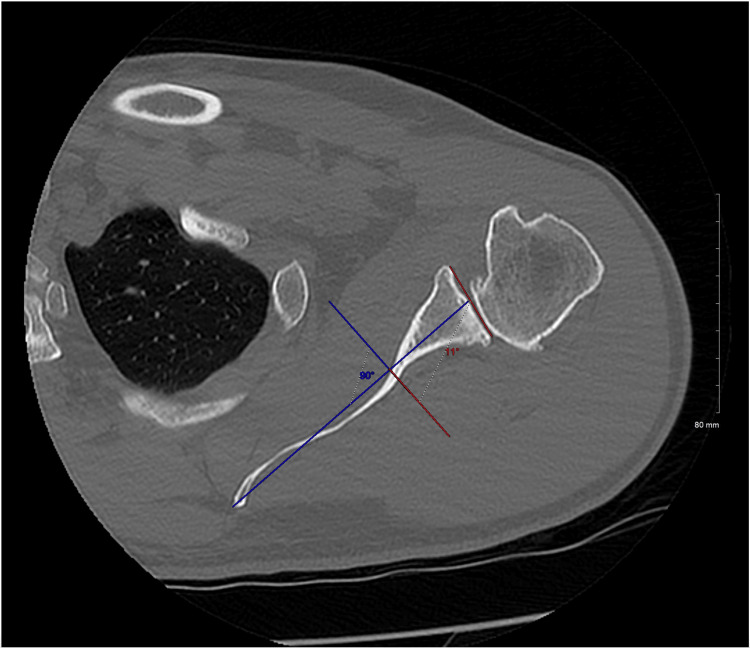 Figure 1
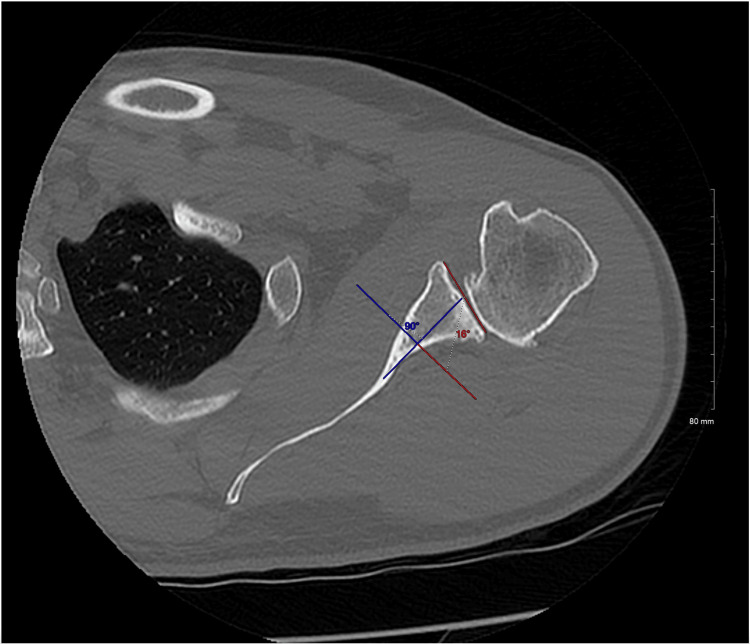 Figure 2
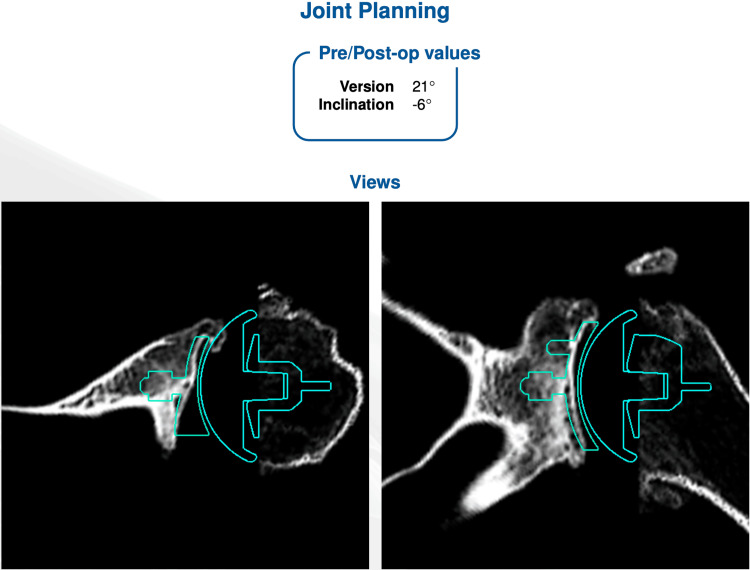 Figure 3
Peer Reviews
No public reviews on file for this paper yet. If you reviewed it on a platform where reviews are public (OpenReview, ICLR, NeurIPS, ICML), you can paste yours below so the community can read it here.
Videos
No videos yet. Explain this paper in a talk, walkthrough, or lecture? Add one.
Taxonomy
TopicsShoulder Injury and Treatment · Shoulder and Clavicle Injuries · Nerve Injury and Rehabilitation