Sustainable improvement of interprofessional care for better resident outcomes: protocol for the INTERSCALE hybrid type III effectiveness cluster-randomized trial comparing individualized and collaborative delivery of an evidence-based care model for long-term care
Franziska Zúñiga, Lea Saringer-Hamiti, Flaka Siqeca, Sarah Holzer, Raphaëlle-Ashley Guerbaai, Thekla Brunkert, Farah Islam, Jana Bartáková, Anja Orschulko, Sandra Staudacher, Reto W. Kressig, Andreas Zeller, Christine Serdaly, Nathalie I. H. Wellens, Sabina M. De Geest

TL;DR
This study tests whether a group-based approach to implementing a nurse-led care model in long-term care facilities is as effective as a one-on-one approach in reducing hospital transfers.
Contribution
The study introduces a scalable, collective implementation strategy for an evidence-based care model in long-term care.
Findings
The collective implementation approach may achieve non-inferior fidelity to the INTERCARE model.
The study will compare cost-effectiveness and organizational outcomes between individualized and collective support methods.
Results may inform scalable strategies for improving care in long-term care facilities.
Abstract
Over recent decades, multifaceted nurse-led care models have been developed to reduce unplanned hospital transfers from long-term care facilities (LTCFs). In Switzerland, the INTERCARE model has demonstrated effectiveness, with core components including deployment of nurses in expanded roles (INTERCARE nurses), evidence-based communication tools, and advance care planning. However, resource-intensive implementation strategies such as 1:1 support meetings for model implementers pose challenges for scale-up, underscoring the need for more scalable implementation support. The INTERSCALE study compares two modes of delivering implementation support—an individualized and a collective-oriented approach—testing the hypothesis that the latter achieves non-inferior fidelity to the INTERCARE model and comparable reductions in unplanned hospital transfers at the LTCF level. Secondary aims are to…
Genes, proteins, chemicals, diseases, species, mutations and cell lines named across the full text — each resolved to its canonical identifier and authoritative record.
Click any figure to enlarge with its caption.
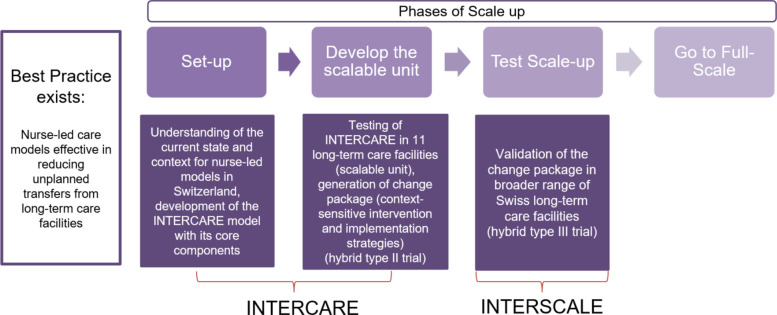 Figure 1
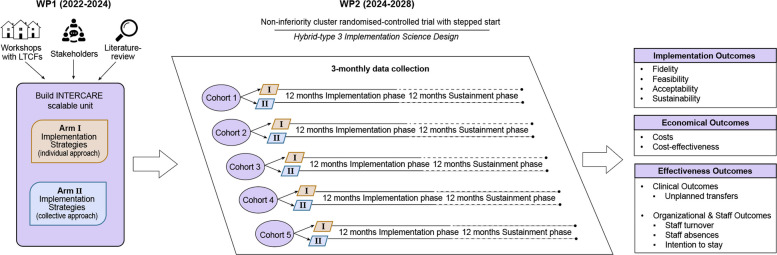 Figure 2
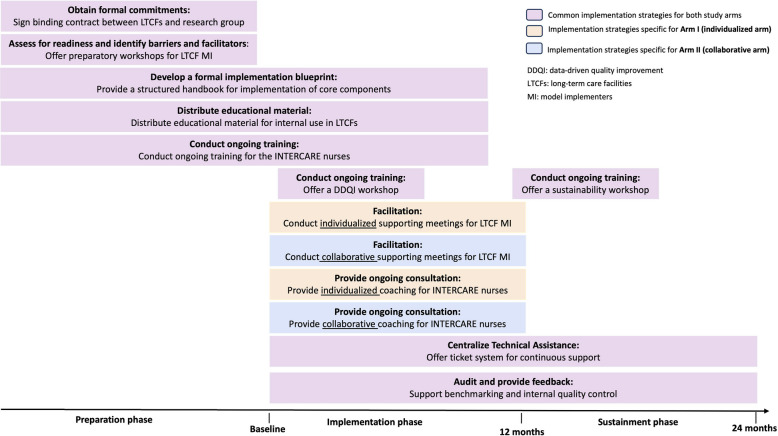 Figure 3
 Figure 4
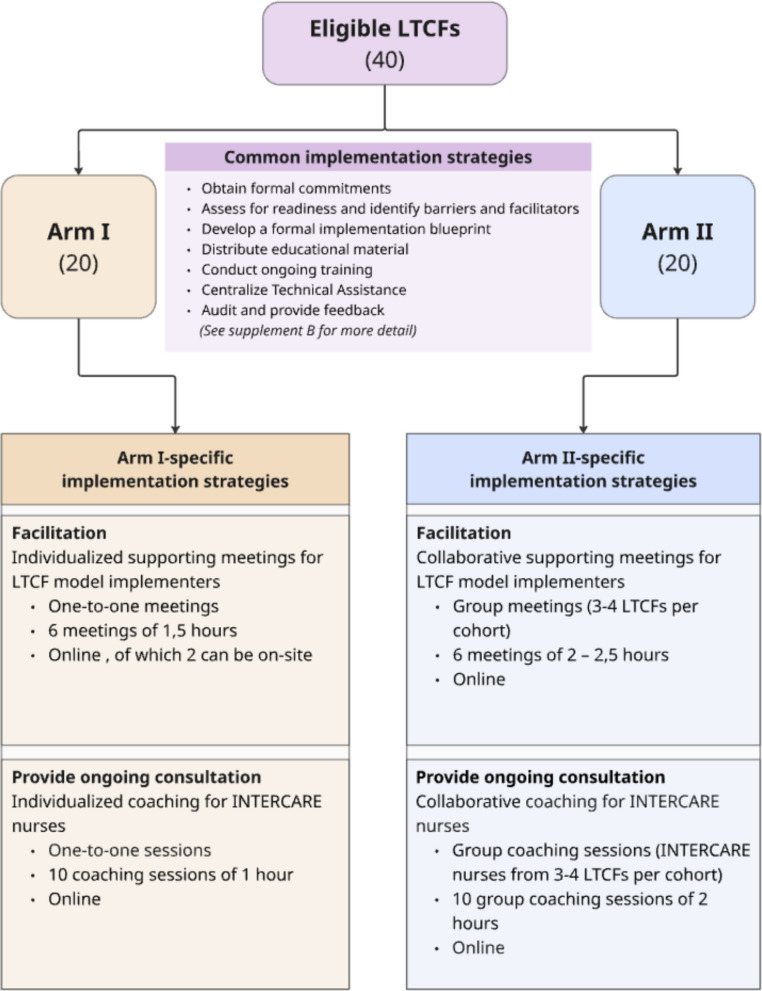 Figure 5
Peer Reviews
No public reviews on file for this paper yet. If you reviewed it on a platform where reviews are public (OpenReview, ICLR, NeurIPS, ICML), you can paste yours below so the community can read it here.
Videos
No videos yet. Explain this paper in a talk, walkthrough, or lecture? Add one.
Taxonomy
TopicsGeriatric Care and Nursing Homes · Frailty in Older Adults · Interprofessional Education and Collaboration