Management of pregnancy, delivery and breast-feeding in hereditary angioedema: an analysis of 15 pregnancies with conventional treatment approaches and a case of Lanadelumab use
Marine Casanova, Marie-Charlotte Brüggen, Walter Alfred Wuillemin, Christina Weber-Chrysochoou

TL;DR
This study examines how hereditary angioedema (HAE) affects pregnancy and finds that treatment with plasma-derived C1-inhibitor is safe, with a first documented case of Lanadelumab also showing positive outcomes.
Contribution
The first documented use of Lanadelumab during pregnancy in HAE patients is reported, showing good tolerability and effectiveness.
Findings
Plasma-derived C1-inhibitor was the most commonly used treatment and was well-tolerated during pregnancy.
Lanadelumab use during pregnancy was well-tolerated and resulted in a healthy newborn with no complications.
HAE symptoms varied during pregnancy, emphasizing the need for personalized treatment plans.
Abstract
The course of hereditary angioedema (HAE) during pregnancy varies greatly. Limited treatment options complicate the management of HAE in this period. This study aimed to examine the clinical progression of HAE throughout the perinatal period in relation to management strategies. Additionally, we reported the first documented case of Lanadelumab (Takhzyro) therapy during pregnancy in a patient with HAE. We performed an observational study at the University Hospital Zurich (a tertiary treatment center), in which we included 7 HAE female HAE patients. We analyzed 15 pregnancies of these women. The average maternal age at delivery was 33 years (range: 21–41), and the average gestational age was 40 + 3/7 weeks. Fourteen deliveries were spontaneous, with one requiring vacuum extraction. There were no miscarriages during the study period. Maternal C1-INH levels averaged 0.09 g/l (range:…
Genes, proteins, chemicals, diseases, species, mutations and cell lines named across the full text — each resolved to its canonical identifier and authoritative record.
Click any figure to enlarge with its caption.
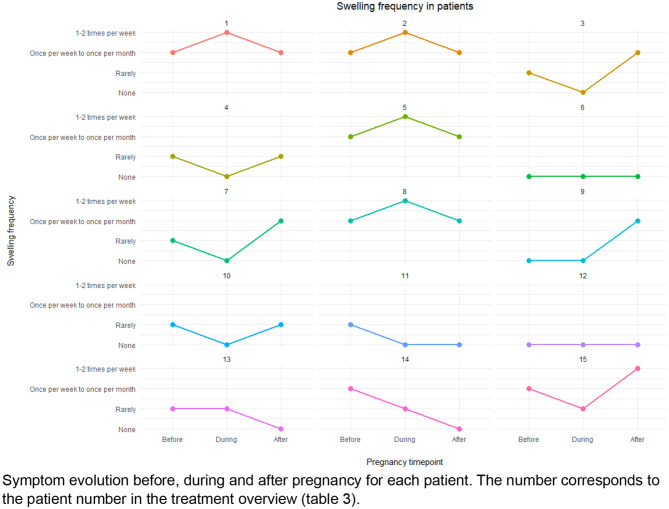 Figure 1
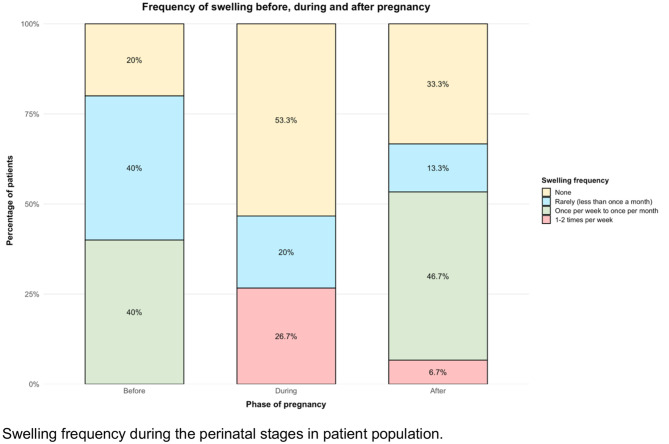 Figure 2
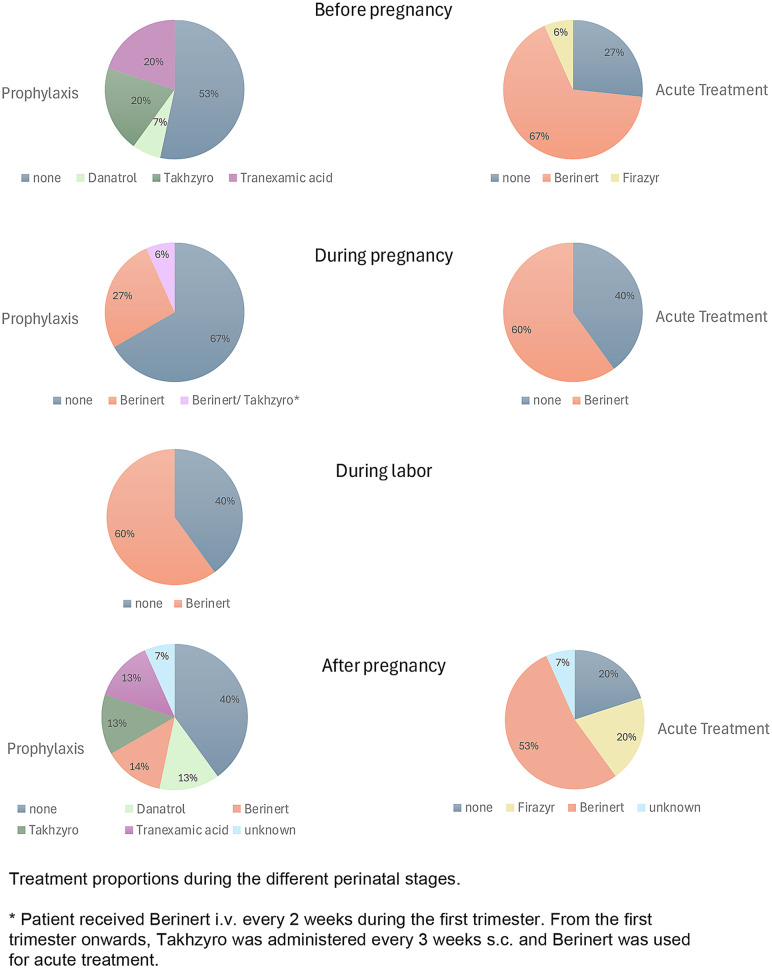 Figure 3
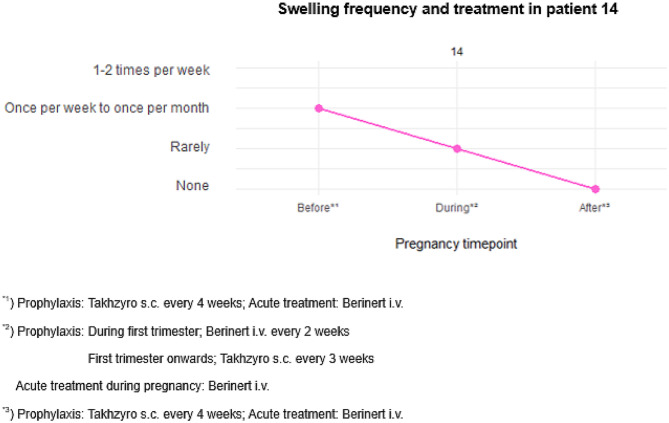 Figure 4
Peer Reviews
No public reviews on file for this paper yet. If you reviewed it on a platform where reviews are public (OpenReview, ICLR, NeurIPS, ICML), you can paste yours below so the community can read it here.
Videos
No videos yet. Explain this paper in a talk, walkthrough, or lecture? Add one.
Taxonomy
TopicsCoagulation, Bradykinin, Polyphosphates, and Angioedema · Hemophilia Treatment and Research · Urticaria and Related Conditions