Trendelenburg maneuver to predict fluid responsiveness in patients under mechanical ventilation with spontaneous breathing: a prospective study
Nattachai Hemtanon, Nattaya Raykateeraroj, Suneerat Kongsayreepong, Thassayu Yuyen, Pasith Boorapapon, Yukiko Hikasa, Suchanun Lao-amornphunkul, Nuanprae Kitisin

TL;DR
This study evaluates the Trendelenburg maneuver's ability to predict fluid responsiveness in ventilated patients with spontaneous breathing, finding it to be feasible but not reliable for most clinical decisions.
Contribution
The study introduces the Trendelenburg maneuver as a potential tool for assessing fluid responsiveness in ventilated patients with spontaneous breathing.
Findings
The Trendelenburg maneuver showed limited diagnostic performance with over 80% of patients in the gray zone.
A ΔCI > 0.15 L/min/m² had 52.4% sensitivity and 82.4% specificity for predicting fluid responsiveness.
Diagnostic accuracy decreased when fluid responsiveness was defined as a ≥15% increase in CI.
Abstract
Both hypovolemia and fluid overload are associated with adverse outcomes in critically ill patients, yet many methods for assessing fluid responsiveness have limitations. The Trendelenburg maneuver, which transiently increases cardiac preload through a head-down tilt and operates on the same principle as passive leg raising but is easier to perform and more comfortable, may offer a practical adjunct in light-sedated patients under mechanical ventilation with spontaneous breathing activity, a common clinical scenario. In this single-center, prospective study, mechanically ventilated adults with spontaneous breathing and signs of tissue hypoperfusion in a surgical intensive care unit (ICU) underwent a standardized sequence of hemodynamic assessments: supine baseline (T0), reverse Trendelenburg + 10° (T1), Trendelenburg − 13° (T2), return to supine before fluid loading (F0), and…
Genes, proteins, chemicals, diseases, species, mutations and cell lines named across the full text — each resolved to its canonical identifier and authoritative record.
Click any figure to enlarge with its caption.
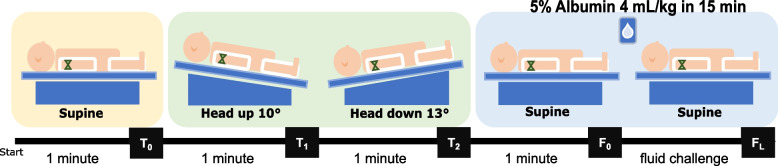 Figure 1
 Figure 2
 Figure 3
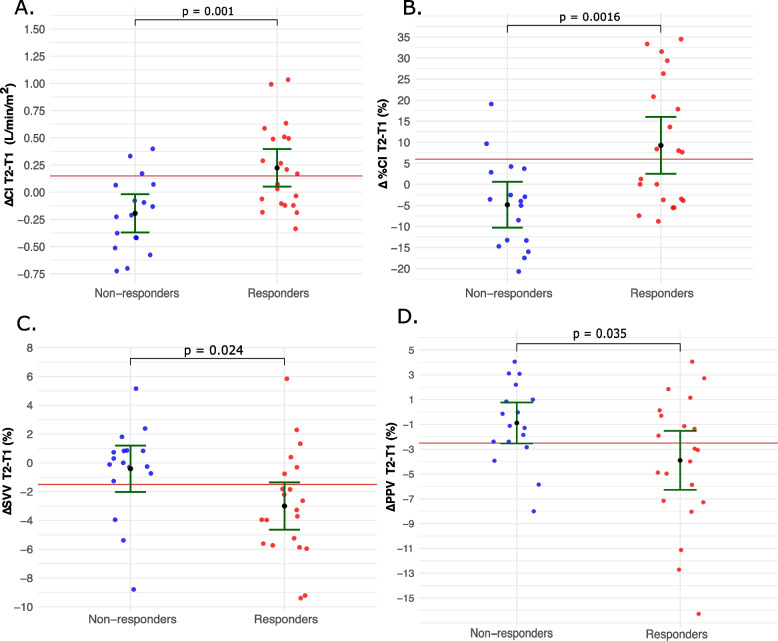 Figure 4
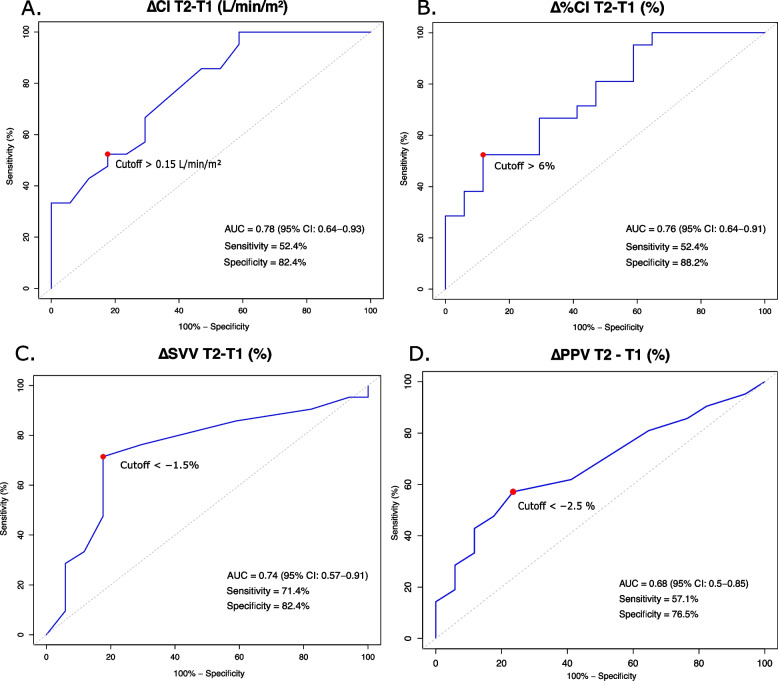 Figure 5
Peer Reviews
No public reviews on file for this paper yet. If you reviewed it on a platform where reviews are public (OpenReview, ICLR, NeurIPS, ICML), you can paste yours below so the community can read it here.
Videos
No videos yet. Explain this paper in a talk, walkthrough, or lecture? Add one.
Taxonomy
TopicsHemodynamic Monitoring and Therapy · Sepsis Diagnosis and Treatment · Trauma, Hemostasis, Coagulopathy, Resuscitation