Branch retinal artery occlusion time to presentation and diagnosis: a retrospective review
Hannah El-Sabrout, Daniel Lee, Ronak Shah, Aubrey L. Gilbert, Amar Patel, Dana Sax, Mary Reed, Mubarika Alavi, Nikita Vora, Cindy Hwang, Tova Mannis, Adrian Dokey, Shannon Moore, Robin A. Vora

TL;DR
This study finds that most patients with branch retinal artery occlusion experience significant delays in seeking or receiving timely eye care, highlighting the need for better public awareness and improved care workflows.
Contribution
The study provides novel insights into the patterns of delayed care for BRAO in a large community-based cohort, emphasizing the importance of early evaluation for diagnosis and risk mitigation.
Findings
Most patients with BRAO were not evaluated by an eye care provider within 24 hours of symptom onset.
Only 6.3% of patients with known symptom onset were seen by an eye care provider within 4.5 hours.
Delays in care were common, with 71.2% of patients experiencing delayed evaluation.
Abstract
Branch retinal artery occlusion (BRAO) is an acute, vision-threatening condition that often signals underlying systemic vascular disease and the need for urgent vascular risk assessment and mitigation. Although prompt evaluation is critical for accurate diagnosis and early identification of modifiable vascular risk factors, patterns of clinical presentation remain poorly characterized. This retrospective study included BRAO patients who presented to Kaiser Permanente Northern California (KPNC) within 30 days of symptom onset from 2014 to 2023. Demographic data, symptom timing, healthcare contact, and ophthalmologic evaluation were collected. The type of contact was categorized as eye care provider, call center, emergency department/urgent care, or other. Delays in presentation were defined as time from symptoms to initial contact and were analyzed across subgroups. From 2014 to 2023,…
Genes, proteins, chemicals, diseases, species, mutations and cell lines named across the full text — each resolved to its canonical identifier and authoritative record.
Click any figure to enlarge with its caption.
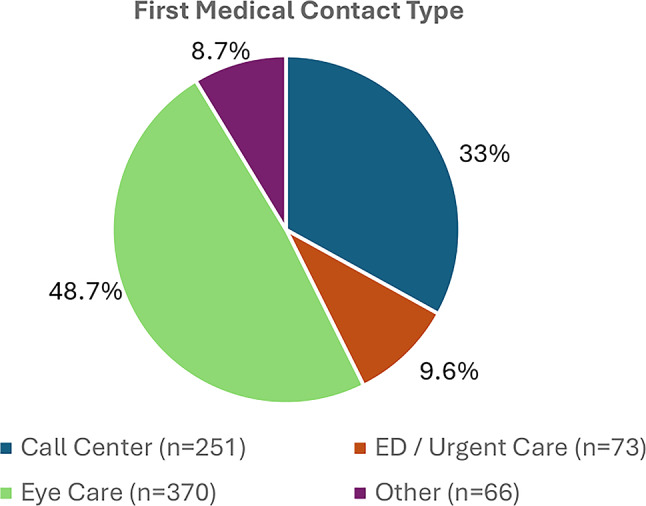 Figure 1
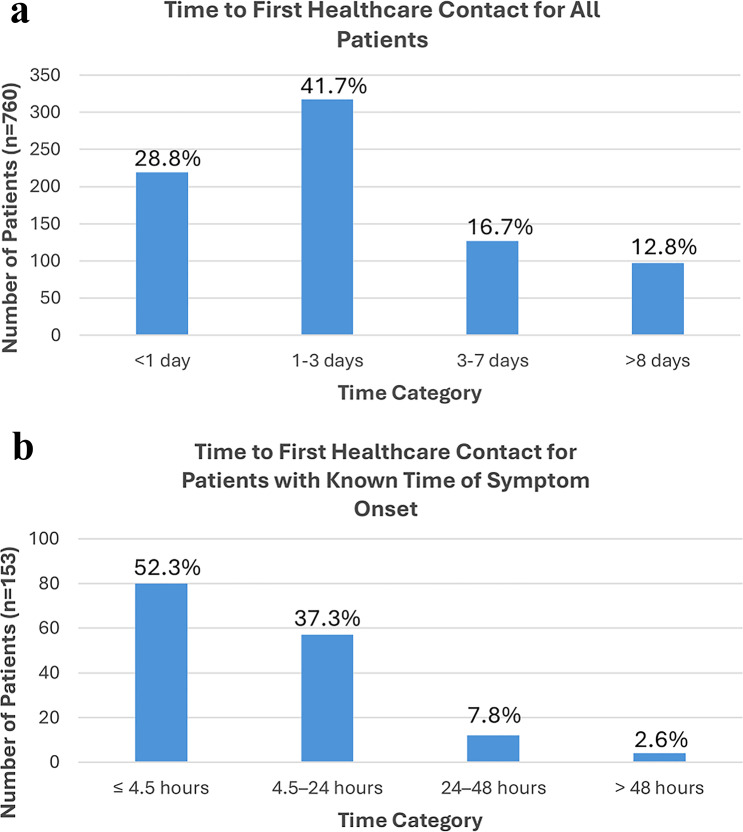 Figure 2
Peer Reviews
No public reviews on file for this paper yet. If you reviewed it on a platform where reviews are public (OpenReview, ICLR, NeurIPS, ICML), you can paste yours below so the community can read it here.
Videos
No videos yet. Explain this paper in a talk, walkthrough, or lecture? Add one.
Taxonomy
TopicsRetinal and Optic Conditions · Intraoperative Neuromonitoring and Anesthetic Effects · Ocular Diseases and Behçet’s Syndrome