Advances in Wine Yeast Autolysis: Biochemical and Molecular Mechanisms, and the Release of Organic Compounds in White and Sparkling Wines—An Updated Review
José Ricardo Machado dos Santos, Aniela Pinto Kempka

TL;DR
This review explores how wine yeast autolysis affects wine flavor, focusing on biochemical processes and new technologies to enhance compound release in white and sparkling wines.
Contribution
The paper updates current knowledge on autolysis mechanisms and introduces emerging technologies to accelerate autolysis in wine production.
Findings
Diethyl succinate is proposed as a key volatile marker of autolysis but results remain inconsistent.
Emerging technologies like pulsed electric fields and high-pressure homogenization show promise in enhancing autolysis.
Non-Saccharomyces yeasts are gaining interest for their autolytic potential alongside traditional Saccharomyces cerevisiae.
Abstract
Wine yeasts play a central role in alcoholic fermentation and significantly contribute to the sensory attributes of wines through cellular autolysis during lees aging (sur lie), especially in white wines. This process releases organic compounds that alter the wine's chemical and sensory profile. In addition to traditional aging, the use of commercial yeast derivatives and emerging technologies has enabled accelerated autolysis. This review compiles recent studies on white and sparkling wines, highlighting the predominance of Saccharomyces cerevisiae and the growing interest in non‐Saccharomyces yeasts. Most research focuses on sparkling wines produced by the traditional method, typically involving autolysis periods ranging from 6 to 18 months, temperatures between 12°C and 18°C, and the frequent use of synthetic wine models. The volatile fraction associated with autolysis has gained…
Genes, proteins, chemicals, diseases, species, mutations and cell lines named across the full text — each resolved to its canonical identifier and authoritative record.
Click any figure to enlarge with its caption.
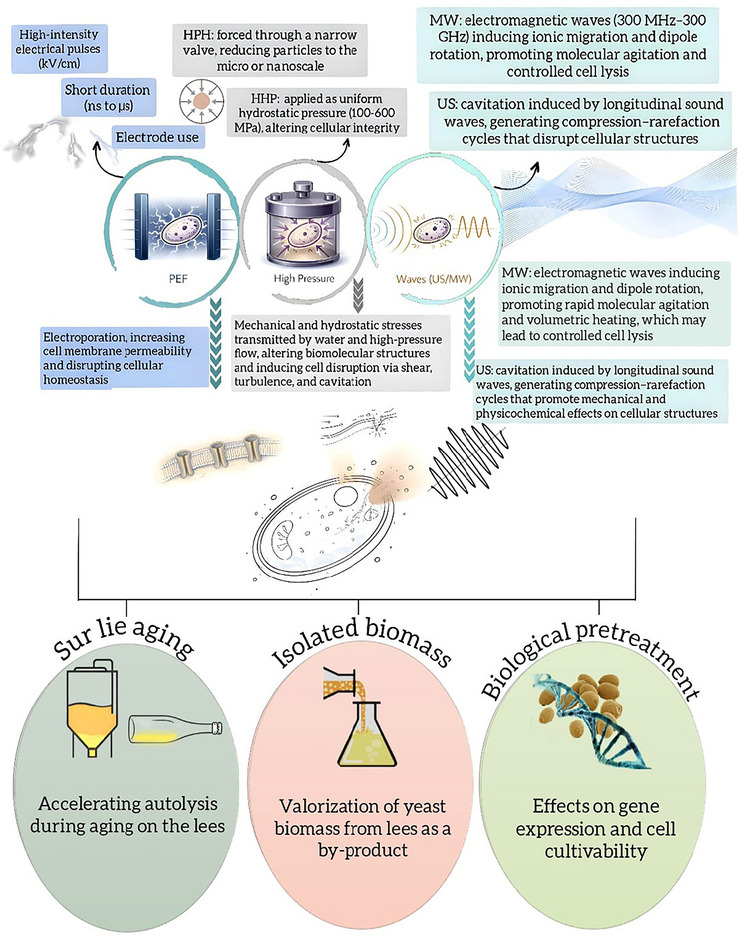 Figure 1
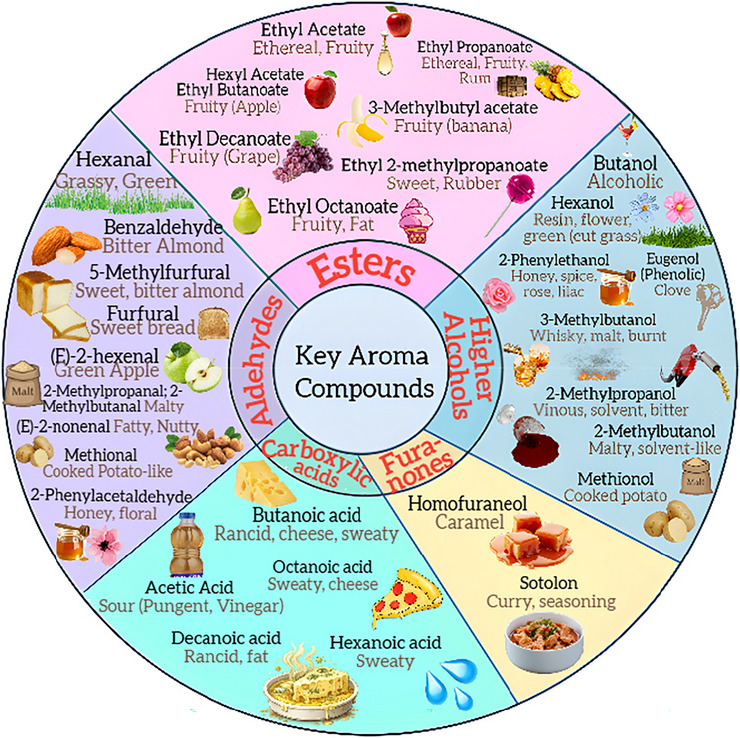 Figure 2
 Figure 3
 Figure 4
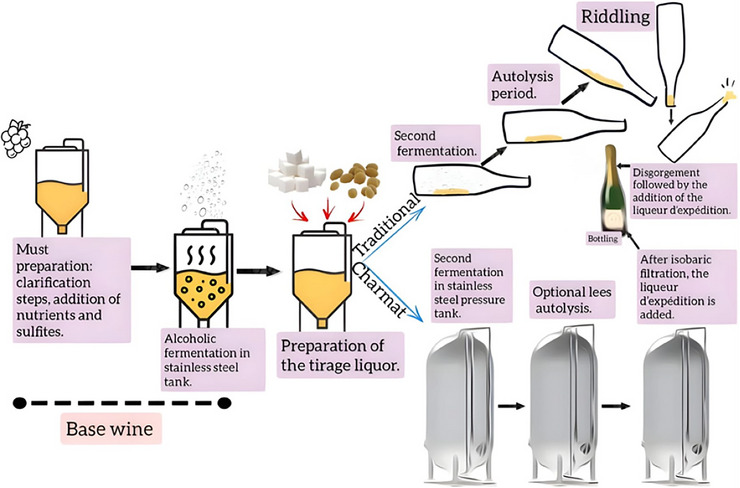 Figure 5
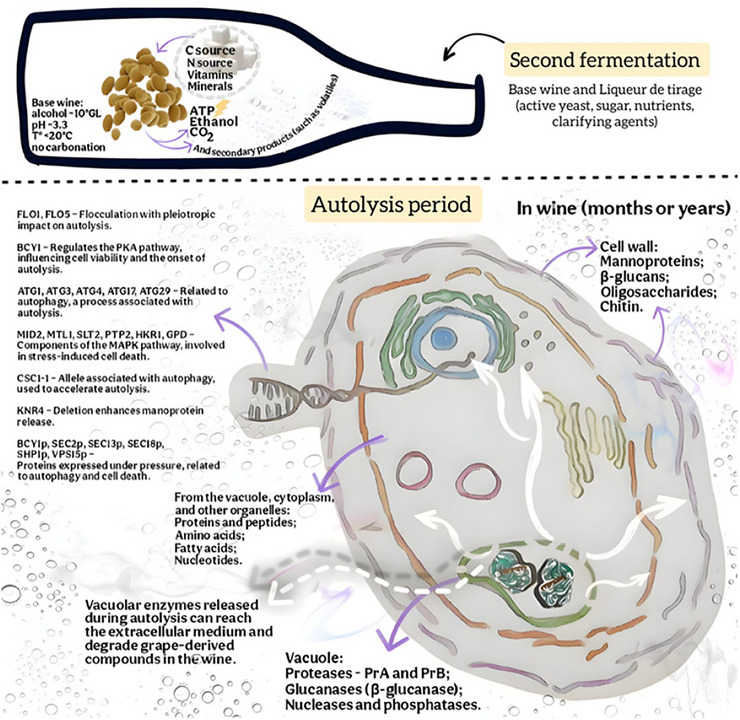 Figure 6
Peer Reviews
No public reviews on file for this paper yet. If you reviewed it on a platform where reviews are public (OpenReview, ICLR, NeurIPS, ICML), you can paste yours below so the community can read it here.
Videos
No videos yet. Explain this paper in a talk, walkthrough, or lecture? Add one.
Taxonomy
TopicsFermentation and Sensory Analysis · Fungal and yeast genetics research · Microbial Inactivation Methods