The Conjugated Bile Acids Profile Suggests a Novel Liver‐Muscle Axis Associated With Sarcopenia in Chronic Liver Disease
Motoh Iwasa, Akiko Eguchi, Motoyuki Kohjima, Teruo Miyazaki, Hiroshi Kitamura, Yuko Takami, Naoki Yamashita, Mina Tempaku, Kiyora Izuoka, Yoshinao Kobayashi, Yoshiyuki Takei, Akira Honda, Hayato Nakagawa, Tadashi Ikegami, Makoto Nakamuta, Jun Okabe, Aldo J. Montano‐Loza

TL;DR
This study shows that elevated bile acids from the liver are linked to muscle loss in chronic liver disease, suggesting a new target for treatment.
Contribution
The study identifies conjugated bile acids as a novel liver-derived factor contributing to sarcopenia in chronic liver disease.
Findings
Elevated conjugated bile acids correlate with reduced muscle mass and inflammation in CLD patients.
Muscle biopsies show a shift toward slow-twitch fibers and reduced fast-twitch fibers linked to bile acid levels.
In vitro experiments confirm that bile acids alter muscle cell markers, supporting their role in muscle pathology.
Abstract
Liver‐related sarcopenia is a devastating systemic complication of chronic liver disease (CLD) driven by mechanisms extending beyond nutritional deficiency. However, the role of liver‐derived humoral factors remains unclear. We utilised a unique cohort of human skeletal muscle biopsies to test the hypothesis that serum conjugated bile acids (C‐BAs) act as key mediators of this liver‐muscle cross‐talk. Serum and rectus abdominis muscle samples were meticulously collected from 36 CLD patients and 6 non‐CLD controls during elective surgery. Multifidus‐erector spinae and psoas muscle areas were quantified from CT images. Comprehensive correlations were analysed between C‐BAs and molecular markers of muscle inflammation and fibre‐type composition. These findings were supplemented by in vitro validation using GCDCA treatment of C2C12 myotubes. Serum C‐BAs levels were significantly elevated…
Genes, proteins, chemicals, diseases, species, mutations and cell lines named across the full text — each resolved to its canonical identifier and authoritative record.
Click any figure to enlarge with its caption.
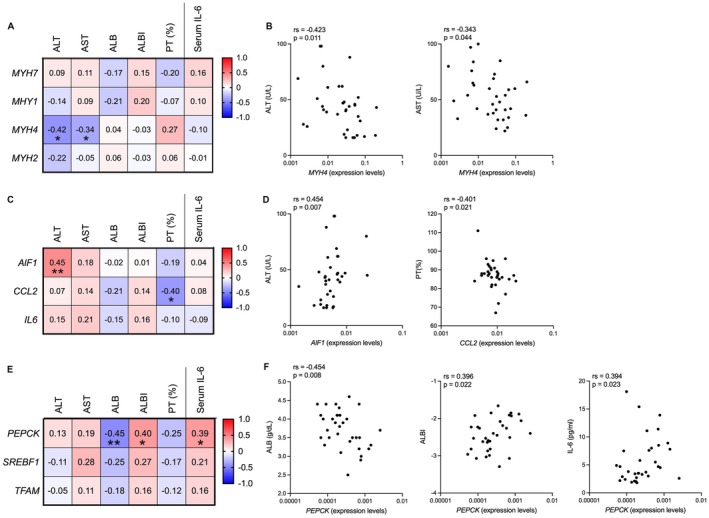 Figure 1
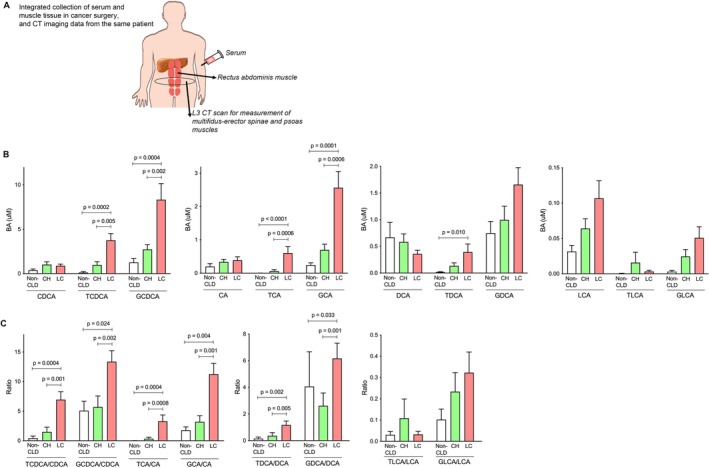 Figure 2
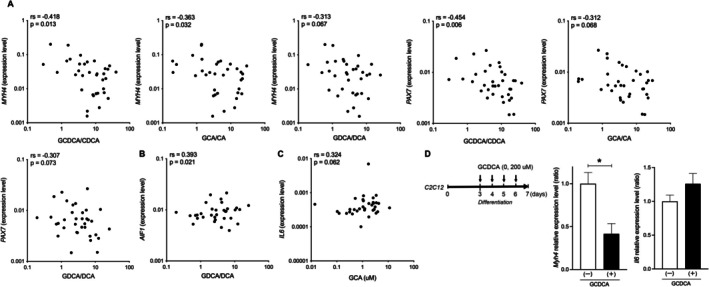 Figure 3
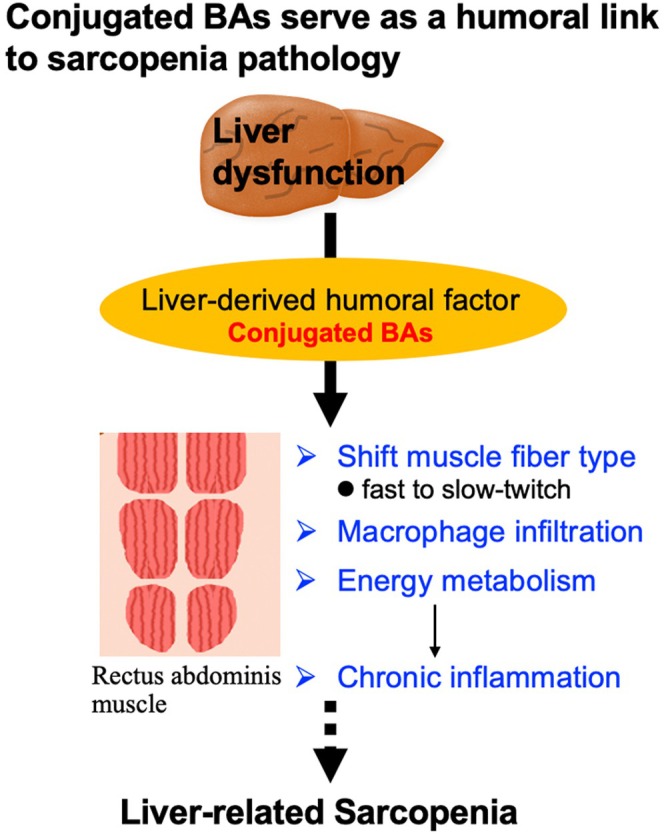 Figure 4
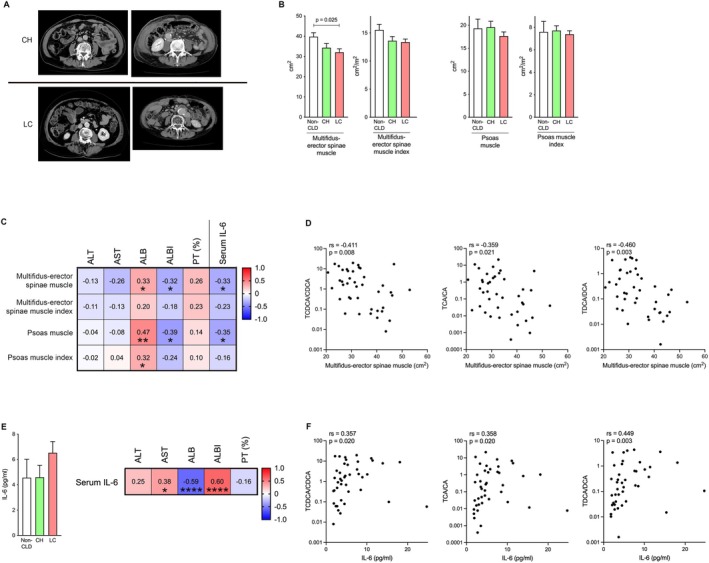 Figure 5
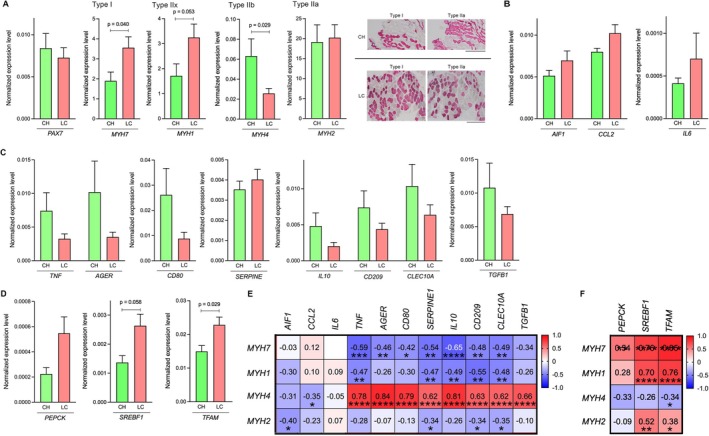 Figure 6
Peer Reviews
No public reviews on file for this paper yet. If you reviewed it on a platform where reviews are public (OpenReview, ICLR, NeurIPS, ICML), you can paste yours below so the community can read it here.
Videos
No videos yet. Explain this paper in a talk, walkthrough, or lecture? Add one.
Taxonomy
TopicsNutrition and Health in Aging · Muscle Physiology and Disorders · Clinical Nutrition and Gastroenterology