Resistance of Adult Kryptolebias marmoratus Hermaphrodites to Irreversible Sex Change by Exogenous Androgens
J Ficklin, S L Moy, A Sinha, E S Haag

TL;DR
This study explores why adult Kryptolebias marmoratus hermaphrodites resist permanent sex change when exposed to androgens, unlike younger fish or other species.
Contribution
The paper reveals that adult K. marmoratus hermaphrodites are resistant to irreversible sex change by exogenous androgens, unlike larvae or other fish species.
Findings
Exposure to methyltestosterone caused partial masculinization but not permanent sex change in adult K. marmoratus.
11-ketotestosterone and fadrozole had weaker and impermanent effects on adult sex change.
Adult K. marmoratus differ from other teleosts in their resistance to permanent masculinization by androgens.
Abstract
The Kryptolebias marmoratus species complex contains the only known self-fertile hermaphroditic vertebrates. All three taxa in this clade live in mangrove forests of the Caribbean basin, and all have individuals with both testis and ovarian tissue in their gonads. Two, K. marmoratus and K. hermaphroditus, use self-fertility as their main mode of reproduction and have colonized remote islands. K. marmoratus also has well-documented production of fertile males through sex change of adult hermaphrodites. The control of sex change in K. marmoratus is poorly understood. Individuals believed to be genetically identical can be raised in the same environment, yet change sex at drastically different times or not at all. However, juvenile fish can be permanently masculinized by immersion in the androgen methyltestosterone (MT). Here, we first document substantial individual variation in overall…
Genes, proteins, chemicals, diseases, species, mutations and cell lines named across the full text — each resolved to its canonical identifier and authoritative record.
Click any figure to enlarge with its caption.
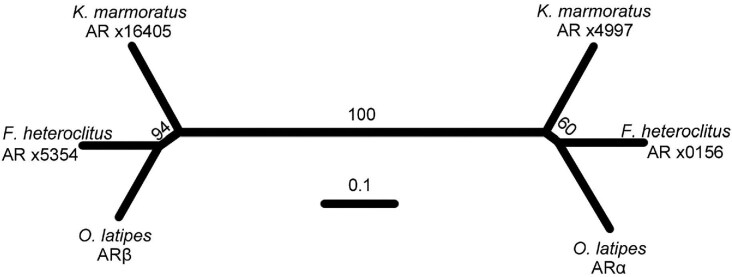 Figure 1
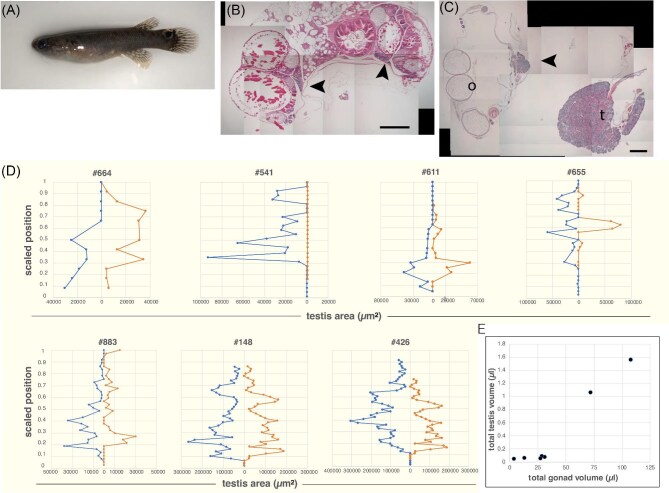 Figure 2
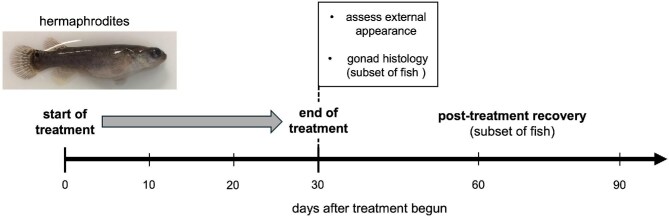 Figure 3
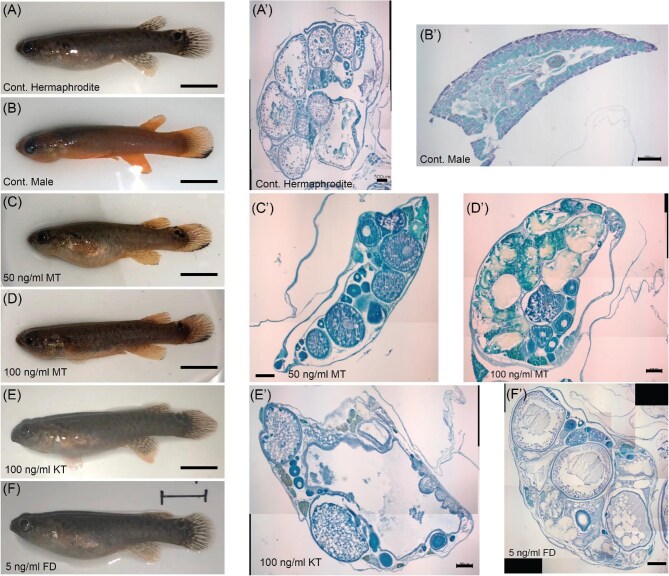 Figure 4
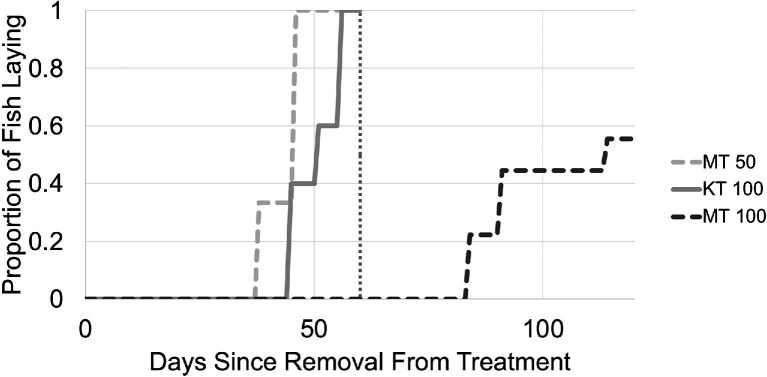 Figure 5
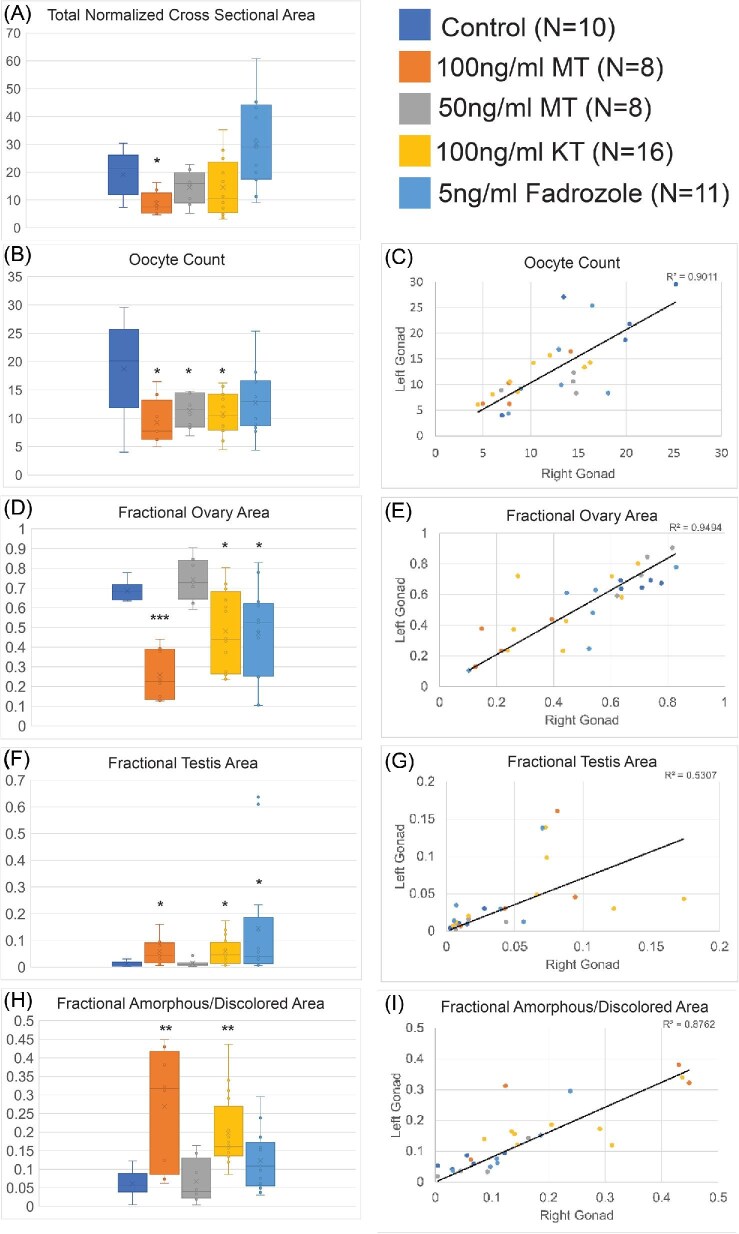 Figure 6
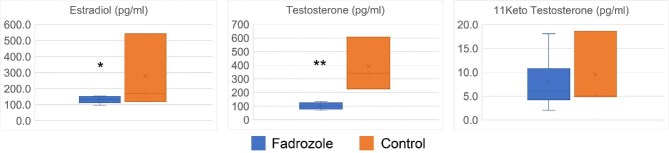 Figure 7
Peer Reviews
No public reviews on file for this paper yet. If you reviewed it on a platform where reviews are public (OpenReview, ICLR, NeurIPS, ICML), you can paste yours below so the community can read it here.
Videos
No videos yet. Explain this paper in a talk, walkthrough, or lecture? Add one.
Taxonomy
TopicsGenetic and Clinical Aspects of Sex Determination and Chromosomal Abnormalities · Reproductive biology and impacts on aquatic species · Animal Behavior and Reproduction