Coronaviruses reprogram the tRNA epitranscriptome to favor viral protein expression
Elena Muscolino, Mireia Puig-Torrents, Jaime Buigues Bisquert, Diogo Correa Mendonca, Marc Talló-Parra, Gemma Perez-Vilaro, Omar Caño-Prades, Gavin R. Meehan, Karen Kerr, Vanessa Herder, Miguel Chillón, Alfredo Castello, Rafael Sanjuan, Arvind H. Patel, Juana Díez

TL;DR
Coronaviruses alter tRNA modifications to improve their protein production despite using inefficient codons, which could be a target for antiviral therapies.
Contribution
The study identifies specific tRNA modifications reprogrammed by coronaviruses to enhance viral protein expression.
Findings
SARS-CoV-2 and HCoV-OC43 reprogram tRNA modifications to decode suboptimal codons efficiently.
The reprogramming is driven by altered expression of tRNA modifying enzymes.
The modifications align with stress-induced changes that favor stress response protein expression.
Abstract
Coronaviruses genomes are enriched in suboptimal A- and U-ending codons, which are typically associated with reduced translation efficiency due to limited cognate tRNA availability. How coronavirus efficiently express their proteins despite this limitation remains unclear. By analyzing their codon usage, we identify four tRNA modifications—inosine (I), queuosine (Q), 5-methylcarboxymethyluridine/ 5-methylcarboxymethyl-2-thiouridine (mcm5U/mcm5s2U), and 5-methylcytidine/ 5-formylcytidine (m5C/f5C)—as essential for decoding their suboptimal codons. Notably, SARS-CoV-2 and HCoV-OC43 infections, representing severe and mild human infections, respectively, reprogram these modifications to favor viral protein synthesis. Mechanistically, this reprogramming was driven by altered expression of the corresponding tRNA modifying enzymes. Since both viruses induced DNA damage and oxidative…
Genes, proteins, chemicals, diseases, species, mutations and cell lines named across the full text — each resolved to its canonical identifier and authoritative record.
Click any figure to enlarge with its caption.
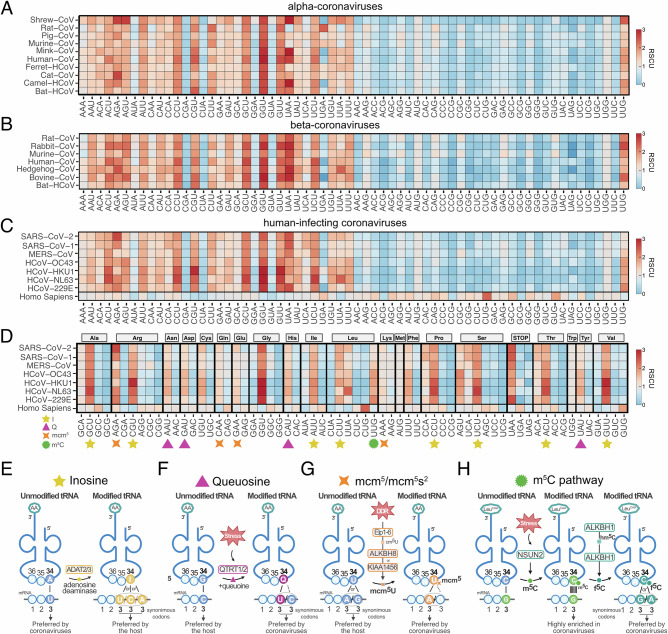 Figure 1
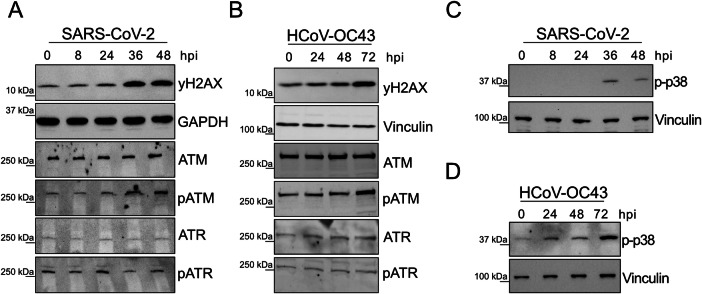 Figure 2
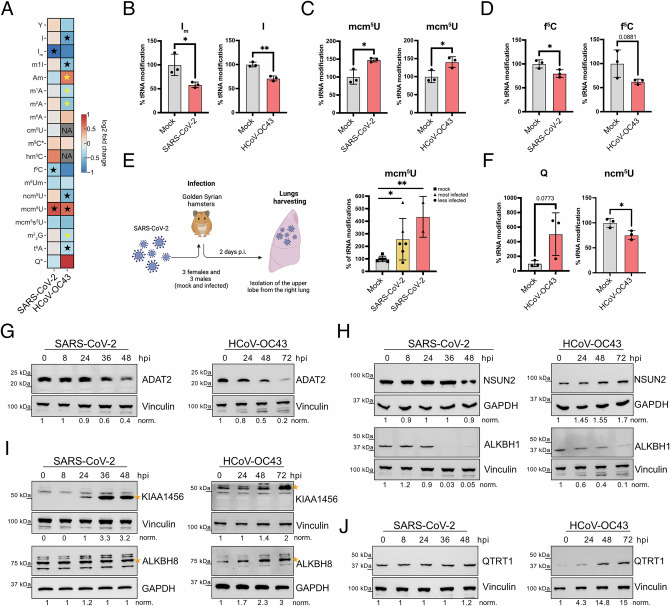 Figure 3
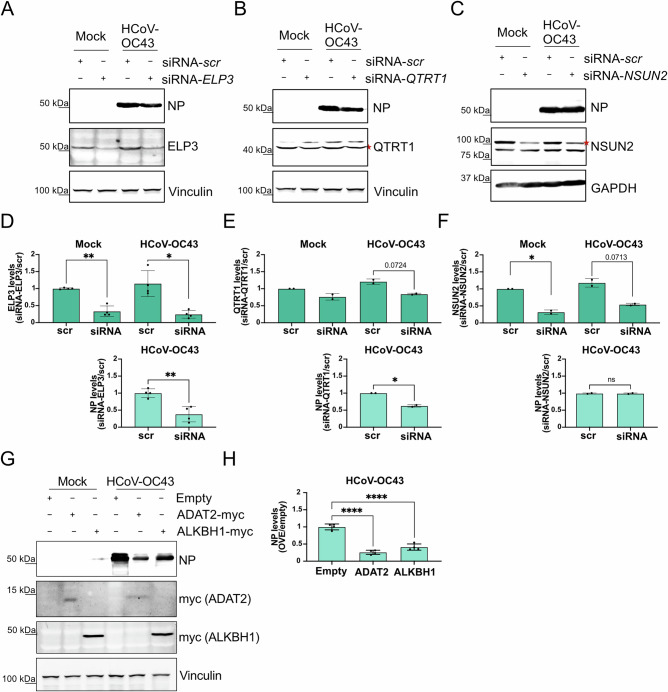 Figure 4
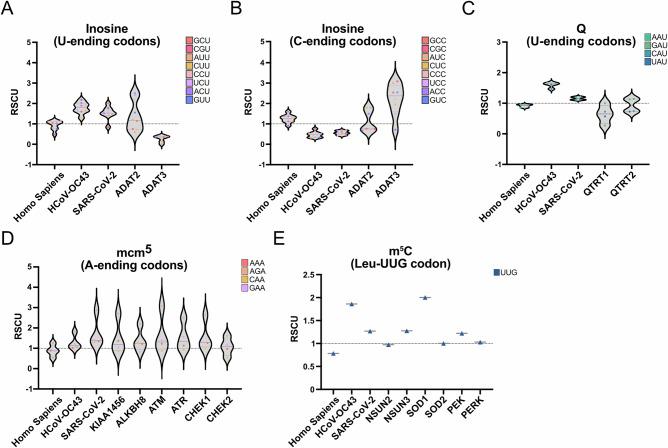 Figure 5
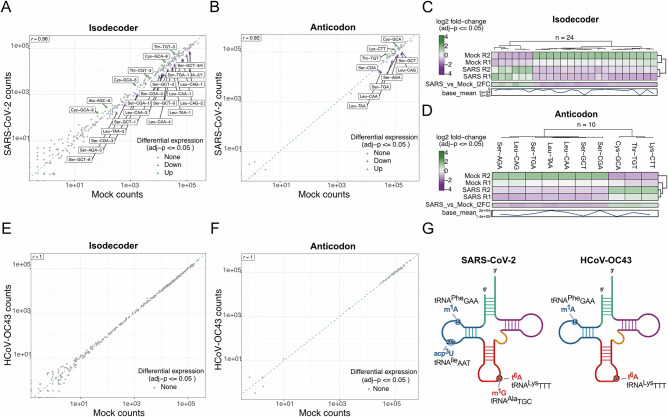 Figure 6
Peer Reviews
No public reviews on file for this paper yet. If you reviewed it on a platform where reviews are public (OpenReview, ICLR, NeurIPS, ICML), you can paste yours below so the community can read it here.
Videos
No videos yet. Explain this paper in a talk, walkthrough, or lecture? Add one.
Taxonomy
TopicsRNA modifications and cancer · RNA and protein synthesis mechanisms · RNA regulation and disease