Multi-omics analysis of associations between host demographics and saliva metabolome, sugar profiles, and microbiome profiles
Stefania Noerman, Anders Esberg, Carina I. Mack, Hany Ahmed, Björn Egert, Elise Nordin, Carl Brunius, Kati Hanhineva, Ingegerd Johansson, Rikard Landberg

TL;DR
This study explores how age, sex, and BMI relate to saliva's molecular and microbial profiles, showing that age is the strongest factor affecting these profiles.
Contribution
The study provides a comprehensive multi-omics analysis of saliva linking host demographics to metabolome, sugar, and microbiome profiles.
Findings
Age explained up to 30% of variance in metabolite features, 17% in sugars, and 25% in microbial species.
Older participants had higher levels of caffeine and trigonelline, while younger participants had higher urocanic acid.
Younger individuals had more saccharolytic bacteria, while older individuals had more anaerobic species.
Abstract
Omics profiling of saliva is an emerging research area with potential to uncover molecular signatures associated with oral and systemic health. We conducted a comprehensive multi-omics analysis of saliva to investigate associations between host demographics (age, sex, body mass index (BMI)) and molecular profiles. Saliva from 423 participants (16–79-years-old) were analyzed using LC-MS metabolomics (9,380 metabolite features for 416 participants), GC×GC-MS sugar profiling (69 sugars for 200 participants), and full-length 16S rDNA sequencing (500 microbial species for 420 participants). We used random forest modeling, multivariate OPLS analysis, and partial correlation networks for data integration. Age emerged as the strongest demographic factor, explaining up to 30% of variance in metabolite features, 17% in sugars, and 25% in microbial species, while sex showed moderate and BMI…
Genes, proteins, chemicals, diseases, species, mutations and cell lines named across the full text — each resolved to its canonical identifier and authoritative record.
Click any figure to enlarge with its caption.
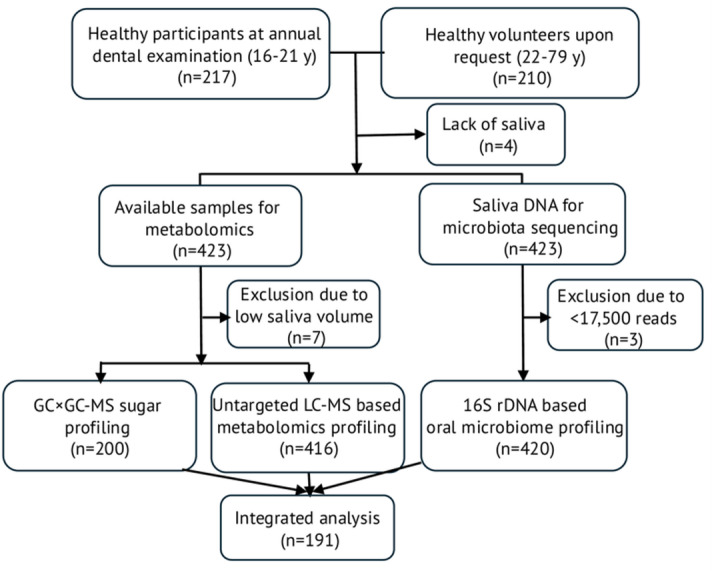 Figure 1
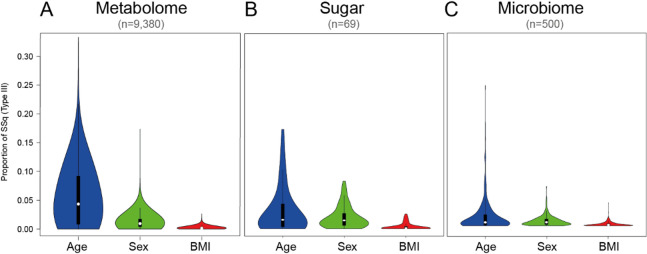 Figure 2
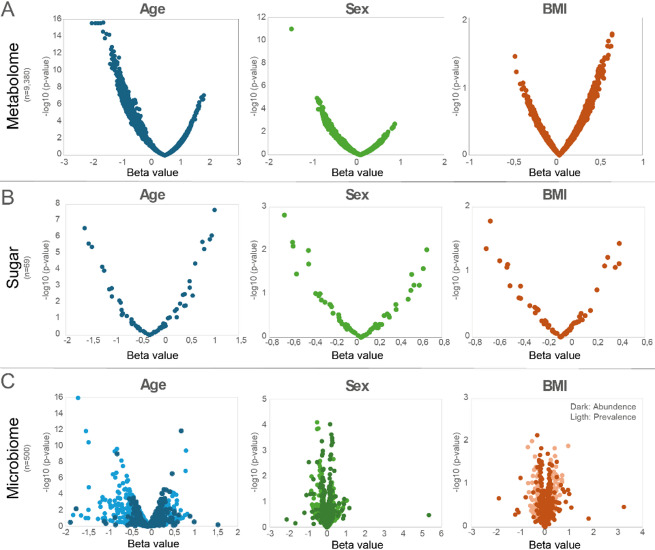 Figure 3
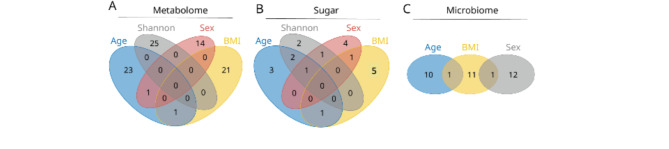 Figure 4
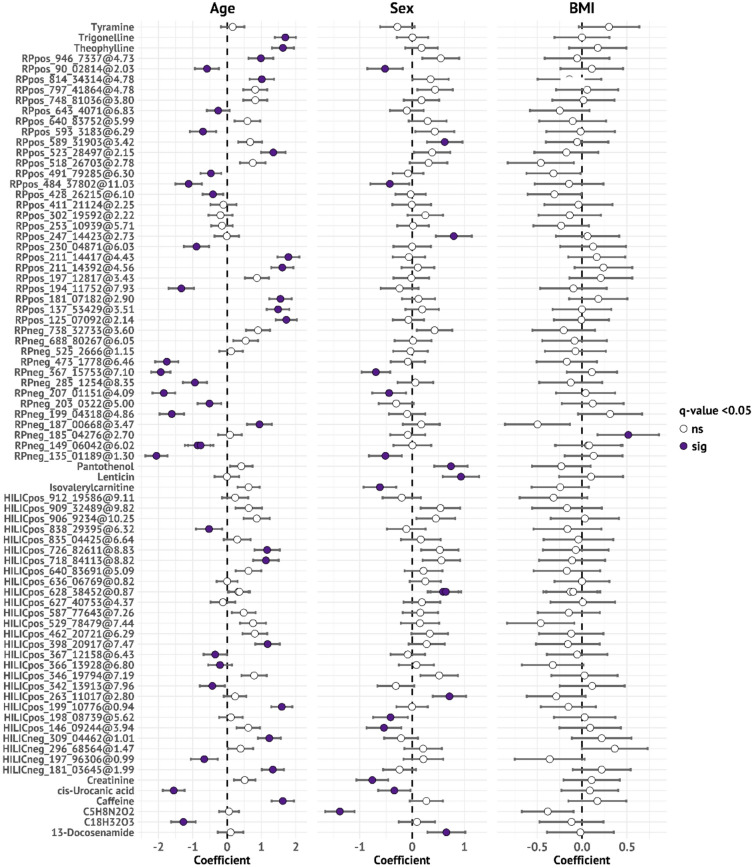 Figure 5
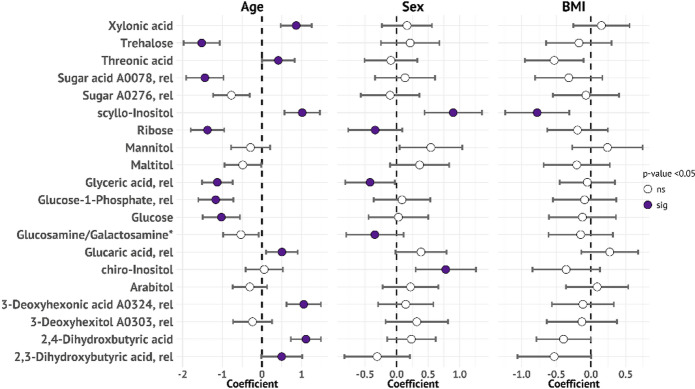 Figure 6
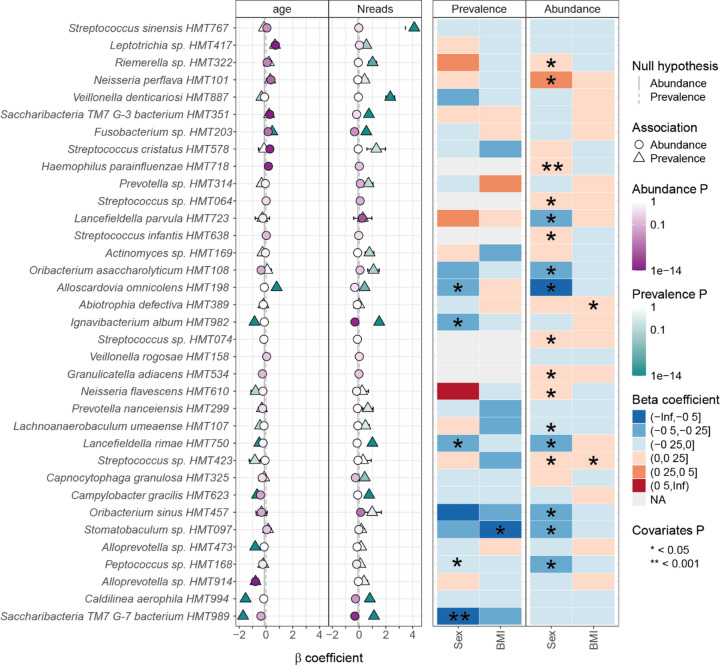 Figure 7
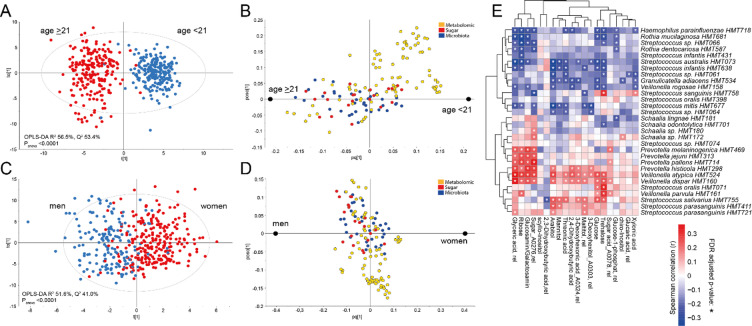 Figure 8
Peer Reviews
No public reviews on file for this paper yet. If you reviewed it on a platform where reviews are public (OpenReview, ICLR, NeurIPS, ICML), you can paste yours below so the community can read it here.
Videos
No videos yet. Explain this paper in a talk, walkthrough, or lecture? Add one.
Taxonomy
TopicsSalivary Gland Disorders and Functions · Oral microbiology and periodontitis research · Metabolomics and Mass Spectrometry Studies