Immunocompromised Status Definition in Observational Studies Using Electronic Health Records: A Scoping Review and a Proposal for a Phenotype Identification Algorithm
Judit Riera‐Arnau, Nicoletta Luxi, Fabio Riefolo, Martín Solorzano, Irene Pazos, Elena Ballarín, Lise Skovgaard Svingel, Lorenzo Chiusaroli, Elisa Martín‐Merino, Elisa Barbieri, María Lopez‐Lasanta, Sima Mohammadi, Denis Rotta, Alexandra Pacurariu, Catherine Cohet

TL;DR
This paper proposes a new algorithm to identify immunocompromised individuals in electronic health records, addressing challenges due to the dynamic nature of immune status.
Contribution
The first systematic attempt to define immunocompromised populations in EHR data using a modular phenotype algorithm.
Findings
HIV/AIDS and organ transplantation were the most frequently used diagnoses to define immunocompromised status.
Common immunosuppressive drugs included methotrexate, corticosteroids, and TNF-alpha inhibitors.
A modular algorithm combining diagnoses, medications, and procedures was developed to identify immunocompromised individuals in EHRs.
Abstract
Immunocompromised individuals experience an impaired immune function due to conditions that might be either congenital or acquired over the course of their lives. Epidemiological studies often rely on clinical definitions which, in some cases, benefit from being translated into machine‐readable algorithms for application to electronic health records (EHRs) databases. The transient nature of certain immunocompromised states and the variability of phenotypes, definitions, coding practices, and data availability entangle this operation. To address these challenges, we conducted a scoping review of existing immunocompromised status definitions in MEDLINE, focusing on epidemiologic and pharmacoepidemiologic studies involving immunocompromised populations. Data extraction was guided by clinical experts, categorizing conditions and medications into seven categories: genetic/hereditary…
Genes, proteins, chemicals, diseases, species, mutations and cell lines named across the full text — each resolved to its canonical identifier and authoritative record.
Click any figure to enlarge with its caption.
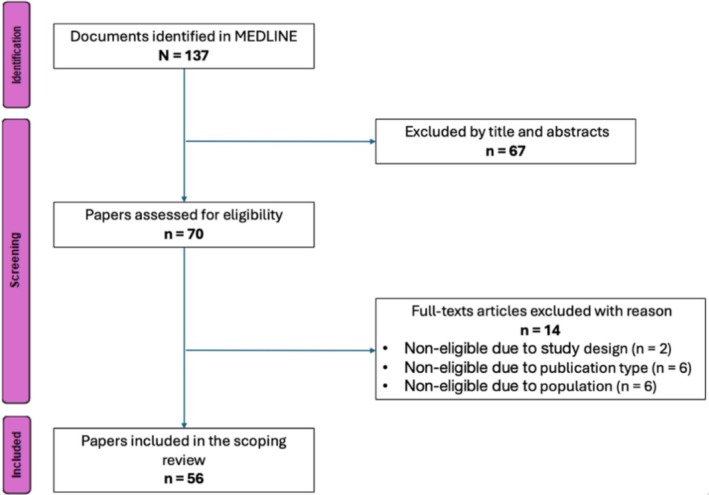 Figure 1
Peer Reviews
No public reviews on file for this paper yet. If you reviewed it on a platform where reviews are public (OpenReview, ICLR, NeurIPS, ICML), you can paste yours below so the community can read it here.
Videos
No videos yet. Explain this paper in a talk, walkthrough, or lecture? Add one.
Taxonomy
TopicsRenal Transplantation Outcomes and Treatments · Immunodeficiency and Autoimmune Disorders · Rheumatoid Arthritis Research and Therapies