Methodological Challenges of Emulating a Target Trial to Assess Effectiveness of Timing of PCSK9 Inhibitor Treatment Initiation Post Myocardial Infarction
Thomas Cars, Stefan Gustafsson, Queenie Chan, Nafeesa Dhalwani, Shia T. Kent, Andrew Briggs, Chris P. Gale, Anselm Gitt, J. Wouter Jukema, Philippe Gabriel Steg, Johan Sundström, Stefan James, Emil Hagström, M. Alan Brookhart

TL;DR
The study explores challenges in comparing early versus late initiation of PCSK9 inhibitor treatment after heart attacks using a method called clone-censor-weighting.
Contribution
The paper evaluates the clone-censor-weight method's effectiveness in reducing bias when comparing treatment timing in real-world data.
Findings
Very few patients started PCSK9i within 12 months post-MI, and these patients differed in age, LDL-C levels, and use of ezetimibe.
Clone-censor-weighting reduced immortal time bias but struggled with covariate balance due to small and imbalanced groups.
Truncation of weights improved stability but introduced some covariate imbalances.
Abstract
Studies comparing treatment strategies based on initiation timing—such as starting PCSK9 inhibitor (PCSK9i) therapy sooner versus later after a myocardial infarction (MI)—are prone to immortal time bias. Clone‐censor‐weight methods can address these issues and allow the researcher to emulate a trial in which patients are assigned to protocols dictating when PCSK9i is initiated. This study aimed to evaluate the comparability of patients in a clone‐censor‐weight setup who initiated a PCSK9i within 12 months post‐MI versus non‐initiators. We included adult patients hospitalized for MI in Sweden (2015–2021) and followed them for 3 years. We considered two treatment strategies: initiating PCSK9i within 12 months versus not initiating PCSK9i during the same period. We applied the clone‐censor‐weight method to address immortal time bias and assessed remaining bias using covariate balance…
Genes, proteins, chemicals, diseases, species, mutations and cell lines named across the full text — each resolved to its canonical identifier and authoritative record.
Click any figure to enlarge with its caption.
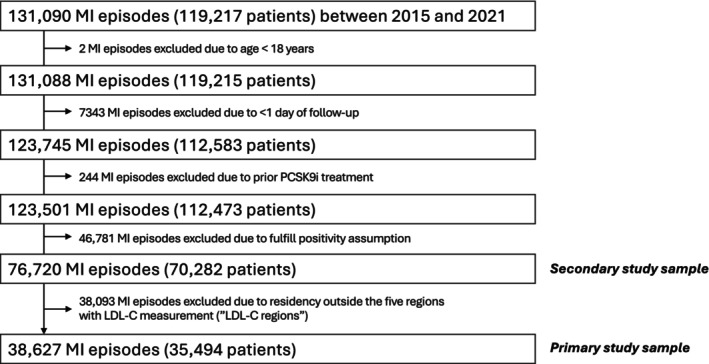 Figure 1
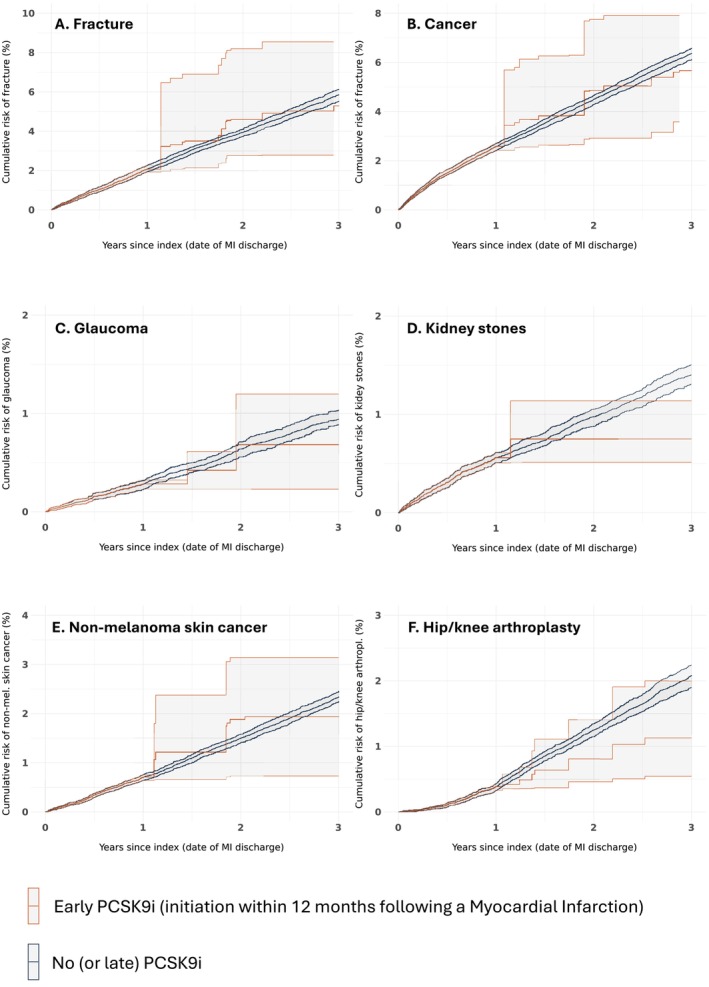 Figure 2
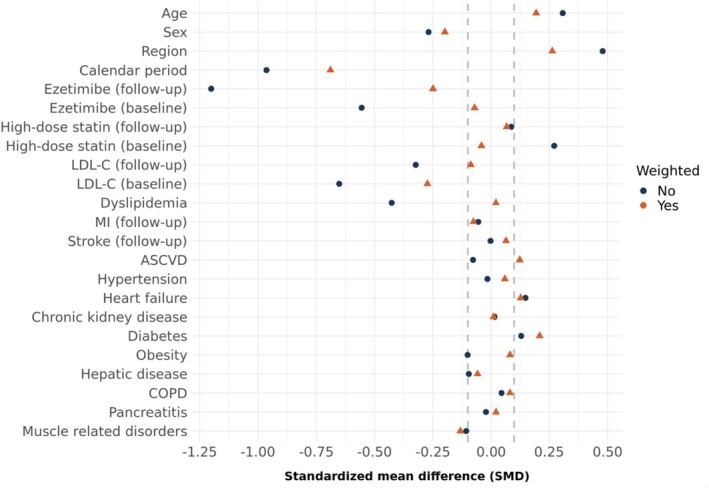 Figure 3
Peer Reviews
No public reviews on file for this paper yet. If you reviewed it on a platform where reviews are public (OpenReview, ICLR, NeurIPS, ICML), you can paste yours below so the community can read it here.
Videos
No videos yet. Explain this paper in a talk, walkthrough, or lecture? Add one.
Taxonomy
TopicsLipoproteins and Cardiovascular Health · Advanced Causal Inference Techniques · Medication Adherence and Compliance