Deviation in development of dorsal association tracts during preadolescence links to concurrent and future cognitive performance and transdiagnostic psychopathology
Danni Wang, Christopher J. Hammond, Betty Jo Salmeron, Xiang Xiao, Laura Murray, Hong Gu, Tianye Zhai, Annika Quam, Justine Hill, Hieu Nguyen, Hanbing Lu, Amy Janes, Thomas J. Ross, Yihong Yang

TL;DR
The study finds that deviations in brain white matter development during preadolescence are linked to cognitive performance and future psychiatric disorders.
Contribution
The study introduces tract-specific brain age models to link white matter development to cognition and psychopathology.
Findings
Deviations in association and limbic/subcortical white matter tracts correlate with current and future cognitive and psychiatric outcomes.
Delayed brain age in dorsal association tracts predicts psychiatric disorders across diagnoses.
The spatial pattern of association tracts aligns with high-order brain networks and mitochondrial maps.
Abstract
Many psychiatric disorders begin during adolescence, coinciding with the rapid development of brain white matter (WM). However, it remains unclear whether deviations from normal WM development during this period contribute to psychopathology. In this study, we developed normative models of brain age based on specific WM tracts using three large-scale developmental datasets ( ~ 10,000 subjects). We found that tract-specific deviations in WM development of association and limbic/subcortical systems were linked to concurrent and future cognition and psychopathology. The spatial pattern of the association system aligned closely with high-order brain networks and mitochondrial maps. Importantly, delayed brain-age especially in dorsal association tracts predicted psychiatric disorders across diagnoses and disorder onset over a 2-year follow-up. By identifying tract-specific WM development…
Genes, proteins, chemicals, diseases, species, mutations and cell lines named across the full text — each resolved to its canonical identifier and authoritative record.
Click any figure to enlarge with its caption.
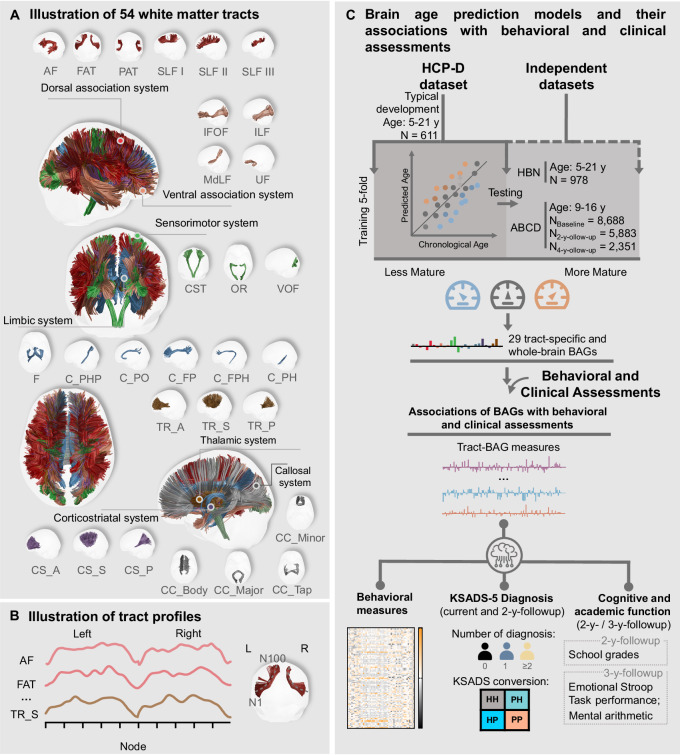 Figure 1
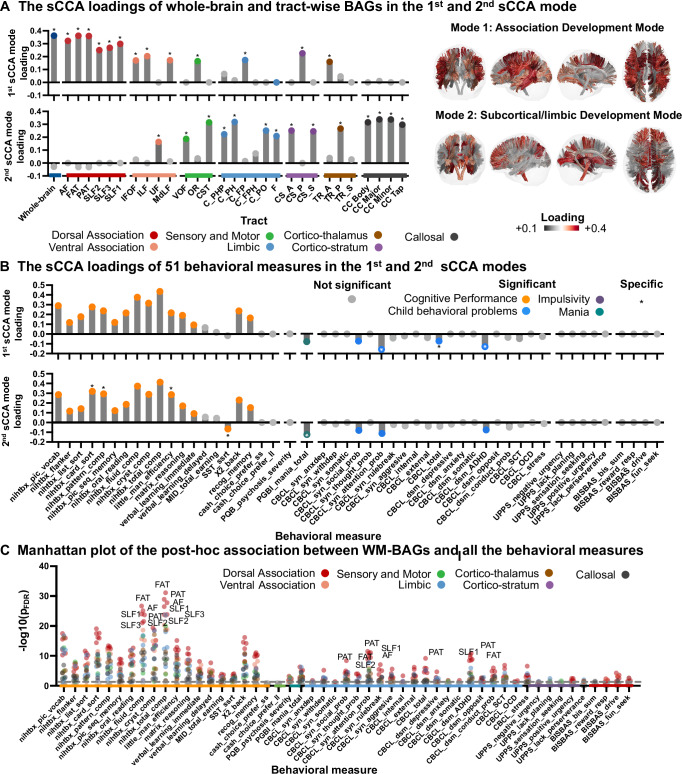 Figure 2
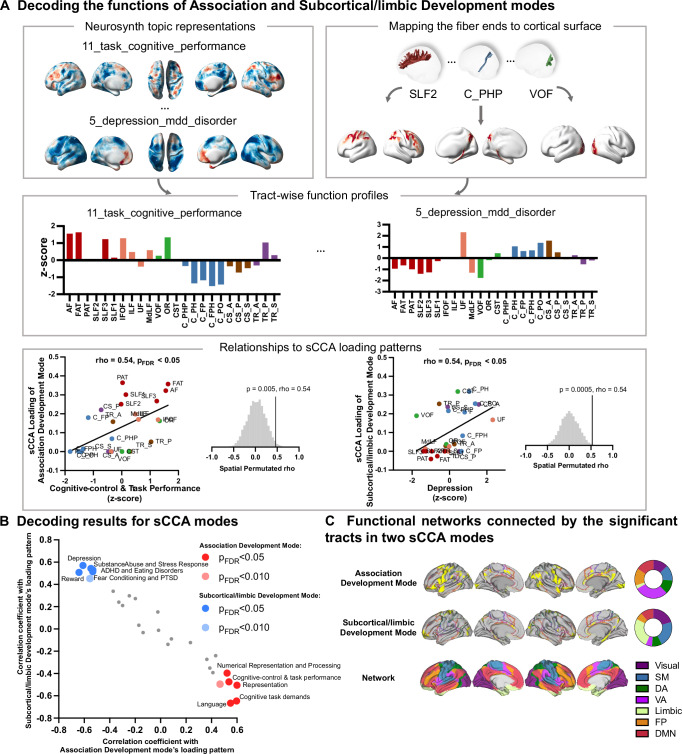 Figure 3
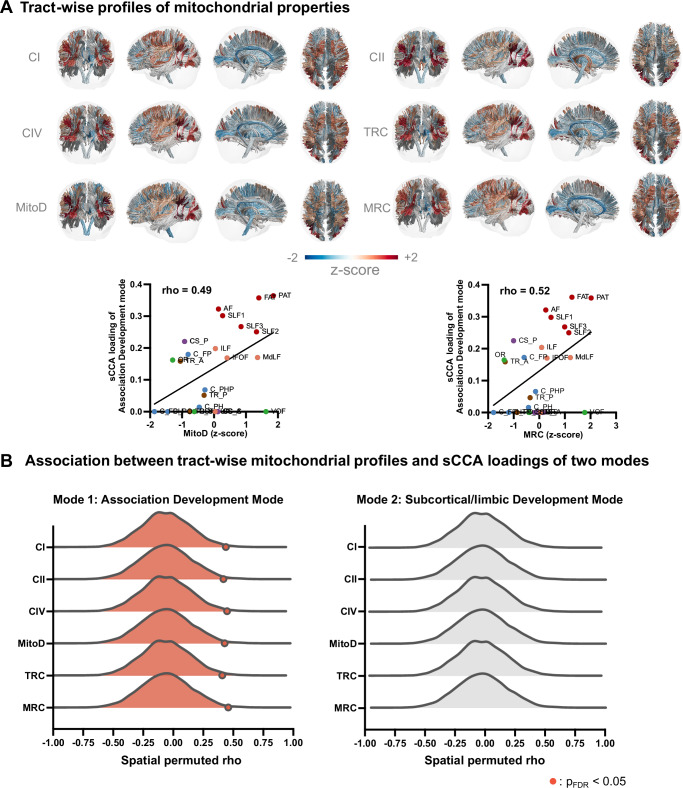 Figure 4
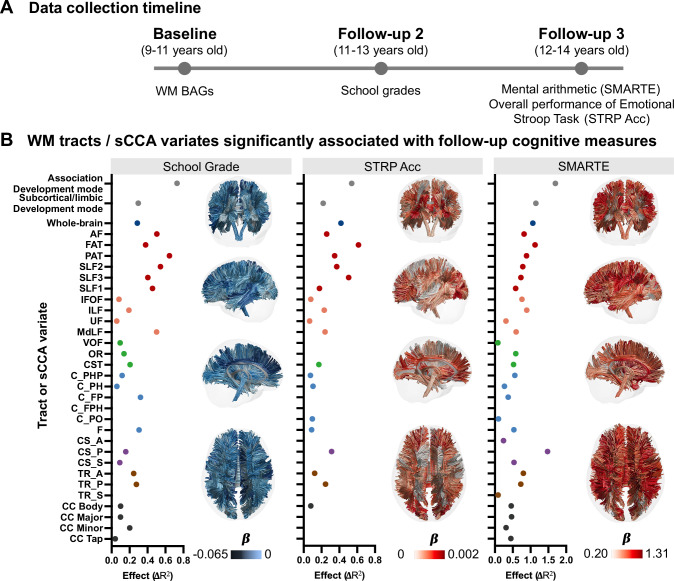 Figure 5
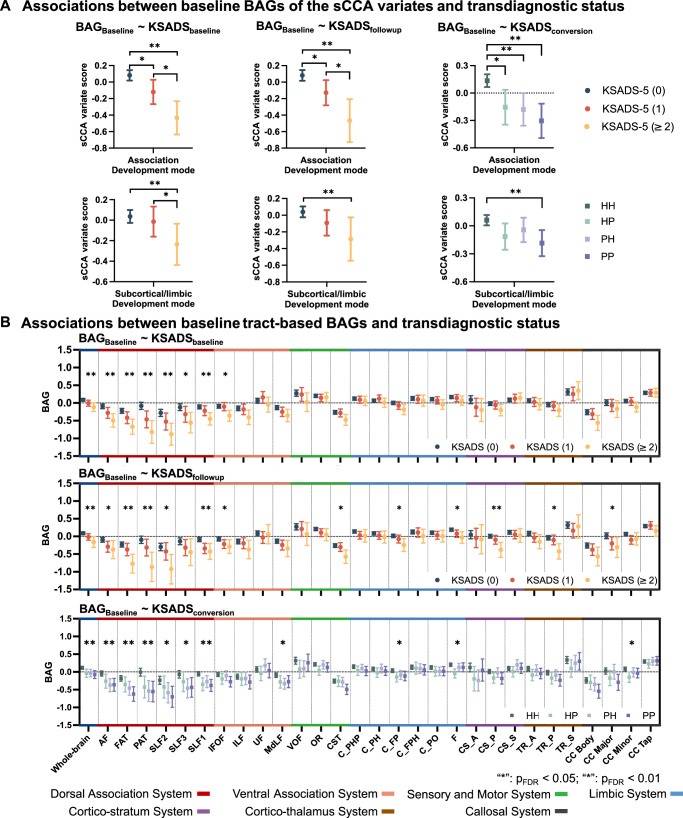 Figure 6
Peer Reviews
No public reviews on file for this paper yet. If you reviewed it on a platform where reviews are public (OpenReview, ICLR, NeurIPS, ICML), you can paste yours below so the community can read it here.
Videos
No videos yet. Explain this paper in a talk, walkthrough, or lecture? Add one.
Taxonomy
TopicsAdvanced Neuroimaging Techniques and Applications · Functional Brain Connectivity Studies · Face Recognition and Perception