PRPF8-associated retinitis pigmentosa variant induces human neural retina-autonomous photoreceptor defects
Felix Zimmann, Poulami Banik, Jan Kubovčiak, Mathys Delattre, Prasoon K. Thakur, Martin Čapek, Michal Kolář, Eva Hrubá, Robert Dobrovolný, Zuzana Cvačková, Tomáš Bárta, David Staněk

TL;DR
This study shows how a PRPF8 mutation causes photoreceptor defects in the retina, independent of other cell types.
Contribution
A novel hiPSC-based model of RP demonstrates photoreceptor degeneration independent of RPE involvement.
Findings
PRPF8-Y2334N causes photoreceptor defects and outer segment thinning in retinal organoids.
Splicing alterations in disease-related genes suggest common targets for splicing factor mutations.
Misexpression of circRNAs may serve as early biomarkers for RP-related splicing defects.
Abstract
Retinitis pigmentosa (RP) is an inherited retinal disorder characterized by the progressive loss of photoreceptors that currently lacks effective treatment. Here, we investigated the effects of the PRPF8-Y2334N variant on neural retina cells using human induced pluripotent stem cell (hiPSC)-derived retinal organoids. Expression of PRPF8-Y2334N variant resulted in photoreceptor defects, including thinning of the outer segment layer. This indicates that the neural retina is impacted independently of retinal pigment epithelium (RPE). At the molecular level, we observed relatively minor changes in mRNA expression in multiple retinal cells. We also found splicing alterations in genes associated with neural and retinal diseases, including those involved in intraflagellar transport, suggesting that these genes may represent common targets of splicing factor mutations. Finally, we detected the…
Genes, proteins, chemicals, diseases, species, mutations and cell lines named across the full text — each resolved to its canonical identifier and authoritative record.
Click any figure to enlarge with its caption.
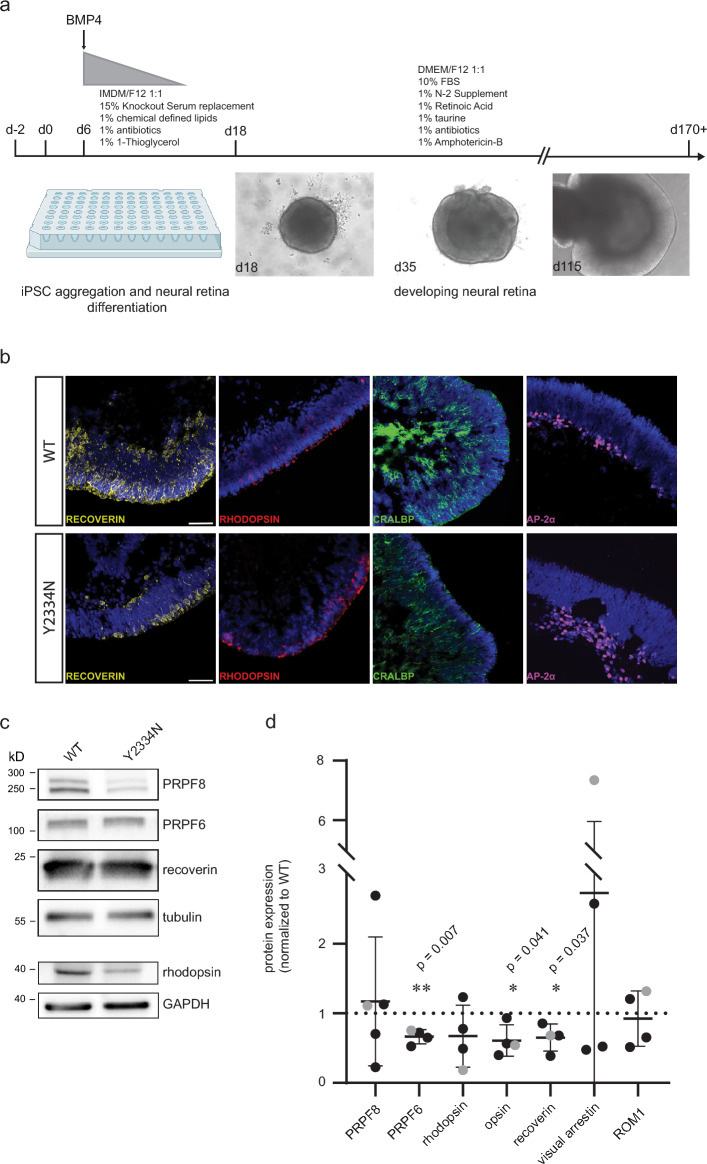 Figure 1
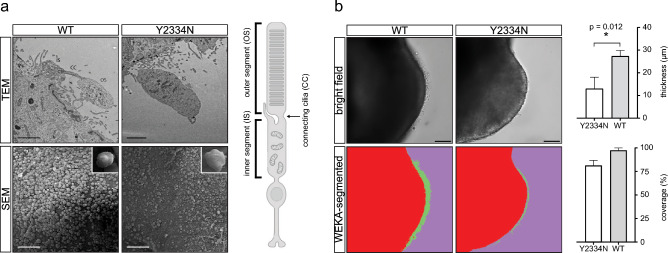 Figure 2
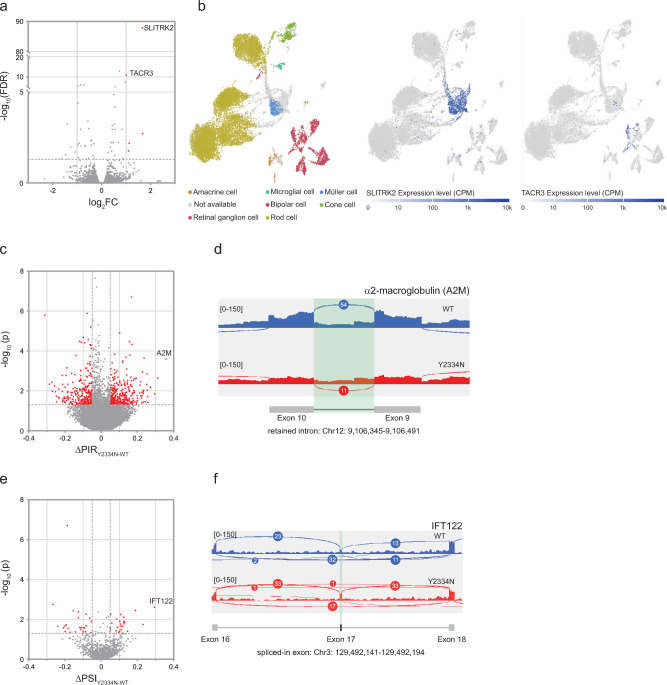 Figure 3
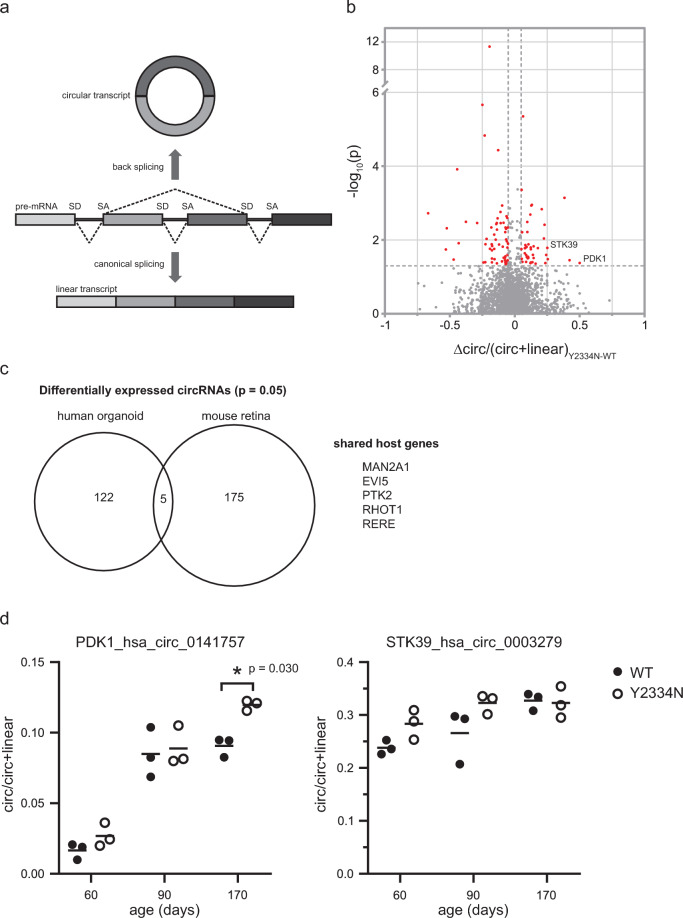 Figure 4
Peer Reviews
No public reviews on file for this paper yet. If you reviewed it on a platform where reviews are public (OpenReview, ICLR, NeurIPS, ICML), you can paste yours below so the community can read it here.
Videos
No videos yet. Explain this paper in a talk, walkthrough, or lecture? Add one.
Taxonomy
TopicsRetinal Development and Disorders · Retinoids in leukemia and cellular processes · Ocular Disorders and Treatments