Genotype-based prevalence of Birt-Hogg-Dubé syndrome in the healthcare and genomic registry populations – breaking the ‘rare disease’ status?
Izabela Broniarek, David J. Kwiatkowski, Neil Rajan, Kuniaki Seyama, Marcin Drzewiecki, Ireneusz Stolarek, Luiza Handschuh, Marek Figlerowicz, Piotr Kozlowski, Katarzyna Klonowska

TL;DR
This study shows that Birt-Hogg-Dubé syndrome is much more common than previously thought, especially in diverse populations.
Contribution
The study reveals that BHD-causing FLCN variants are significantly more prevalent in genomic registry populations than previously estimated.
Findings
FLCN variants are 75 to 180 times more prevalent in a multi-ethnic genomic registry population.
Current prevalence estimates for Birt-Hogg-Dubé syndrome may be outdated and underrepresent non-European populations.
The findings suggest a need for updated prevalence and penetrance estimates for BHD and similar syndromes.
Abstract
The phenotype-based prevalence of Birt-Hogg-Dubé syndrome (BHD) is commonly estimated at 1 in 200,000–500,000. However, we demonstrate that BHD-causing FLCN variants are 75 to 180 times more prevalent in the multi-ethnic large genomic registry population. We highlight the urgent need for updated prevalence and penetrance estimates for BHD and other tumor suppressor gene syndromes, particularly among underrepresented non-European populations.
Genes, proteins, chemicals, diseases, species, mutations and cell lines named across the full text — each resolved to its canonical identifier and authoritative record.
Click any figure to enlarge with its caption.
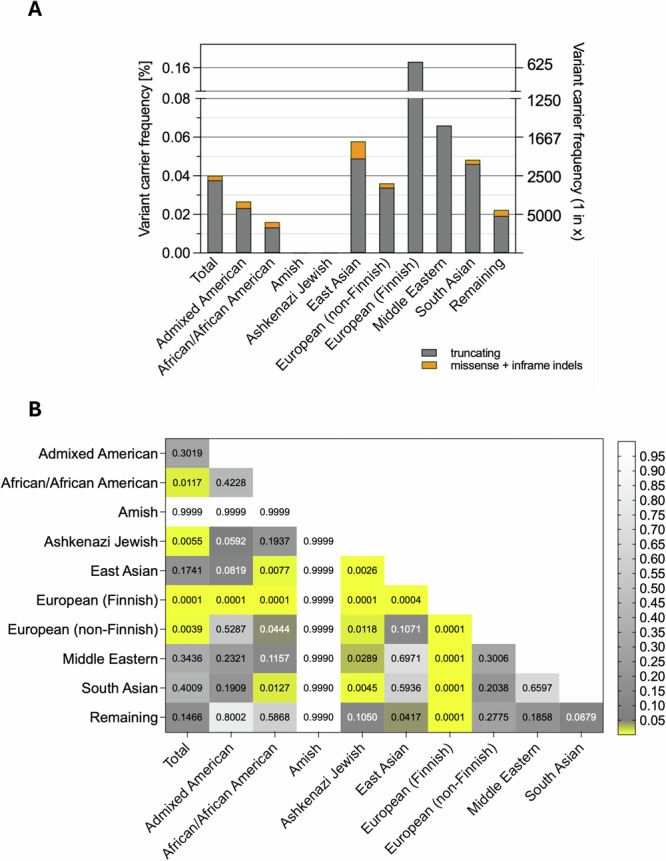 Figure 1
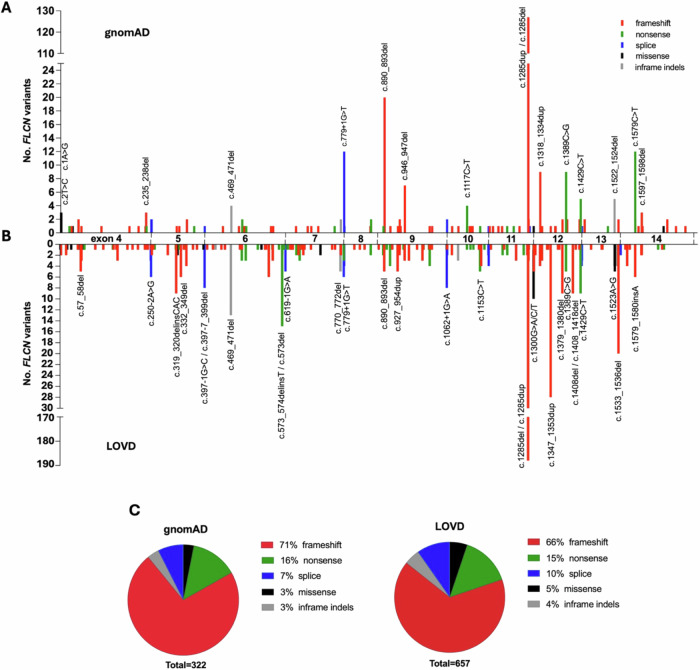 Figure 2
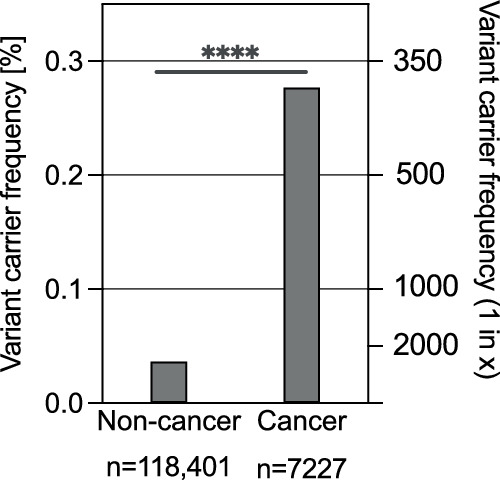 Figure 3
Peer Reviews
No public reviews on file for this paper yet. If you reviewed it on a platform where reviews are public (OpenReview, ICLR, NeurIPS, ICML), you can paste yours below so the community can read it here.
Videos
No videos yet. Explain this paper in a talk, walkthrough, or lecture? Add one.
Taxonomy
TopicsRenal cell carcinoma treatment · Tuberous Sclerosis Complex Research · Bladder and Urothelial Cancer Treatments