Molecular tension indicators reveal unexpectedly complex regulation of tension in live mouse organs
Keita Fujiwara, Katsunori Fujiki, Tomoya O. Akama, Katsuhiko Shirahige, Ichiro Shiojima, Tomoyuki Nakamura, Maretoshi Hirai

TL;DR
New molecular tension indicators reveal that mechanical forces in mouse organs are regulated in complex and varied ways.
Contribution
A FRET-free molecular tension sensor was developed for high-resolution in vivo visualization of mechanical forces.
Findings
The new sensor allows visualization of subtle tension changes from color tone under superresolution microscopy.
H11 knock-in mice showed molecule-specific and heterogeneous regulation of mechanical load in tissues.
Mechanical force regulation in live mouse organs is more complex than previously understood.
Abstract
Since the emergence of molecular tension sensors, the understanding of mechanical forces has advanced substantially. However, visualizing molecular tension in mammalian tissues has remained challenging owing to the technical constraints of the Förster resonance energy transfer (FRET)-based molecular tension sensors. Here, we develop a molecular tension sensor based on circularly permuted EGFP with an elastic linker, which is inserted into either αActinin or αCatenin and then fused with mCherry at the C-terminus to simultaneously visualize tension and the amount of sensor protein. This single-fluorophore tension indicator enables subtle tension changes to be visualized simply from color tone under superresolution microscopy. We further generate H11 knock-in mice expressing these indicators, revealing a molecular-specific regulation of mechanical load within tissues. Thus, our molecular…
Genes, proteins, chemicals, diseases, species, mutations and cell lines named across the full text — each resolved to its canonical identifier and authoritative record.
Click any figure to enlarge with its caption.
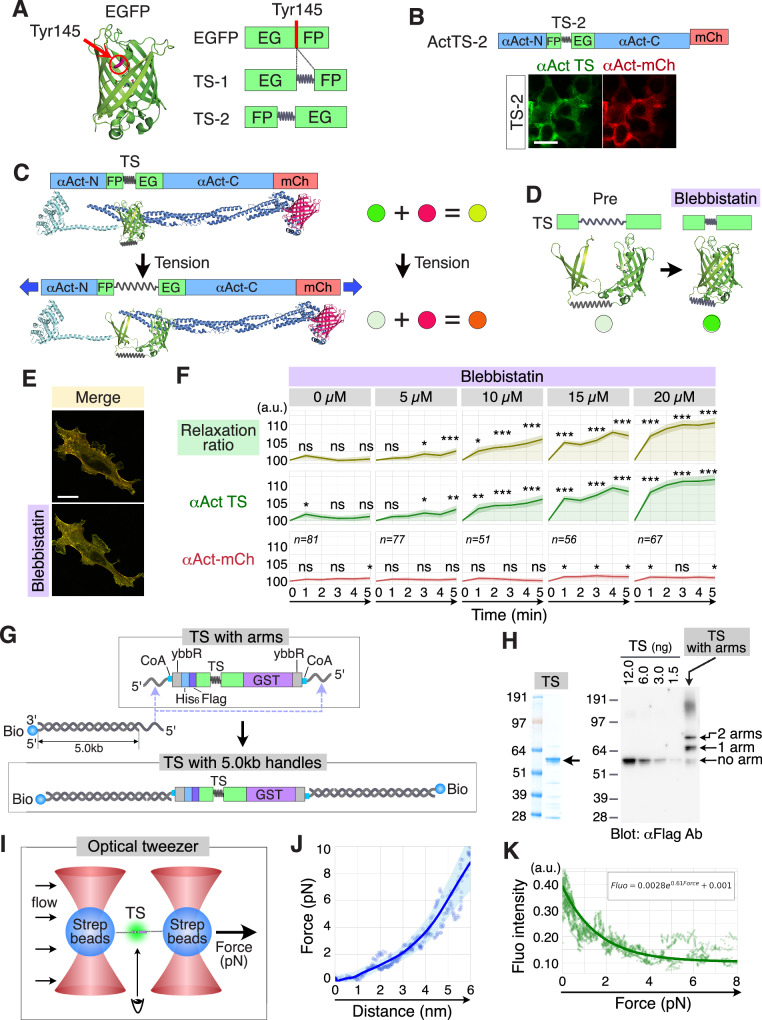 Figure 1
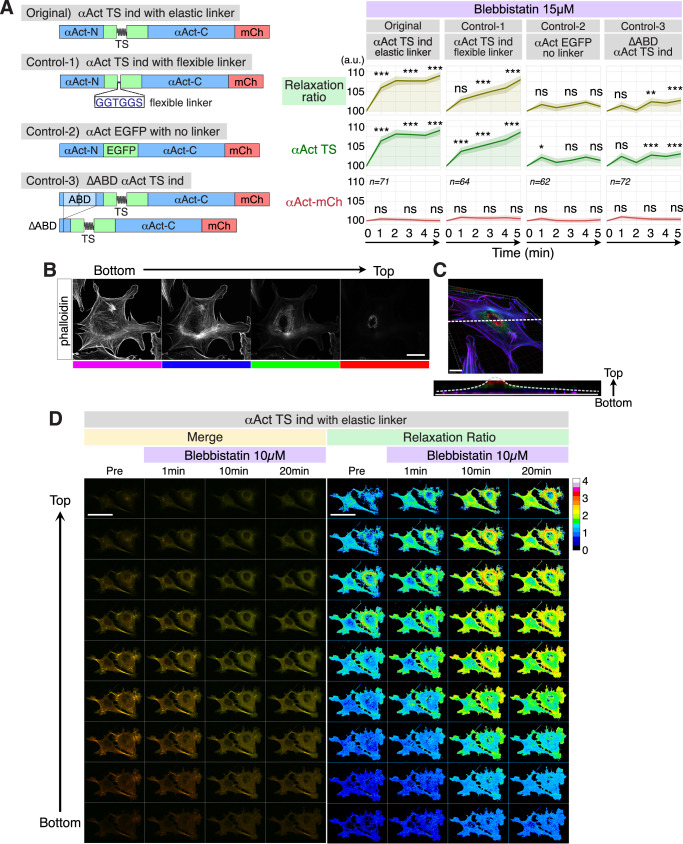 Figure 2
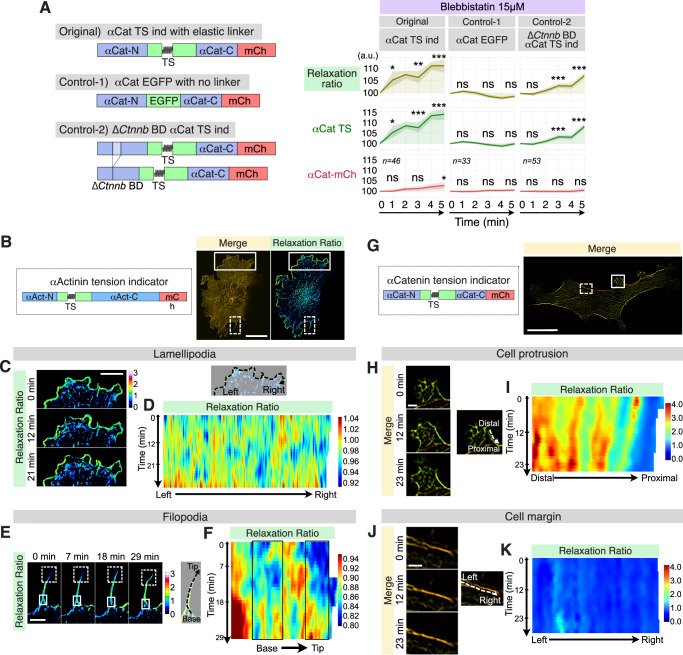 Figure 3
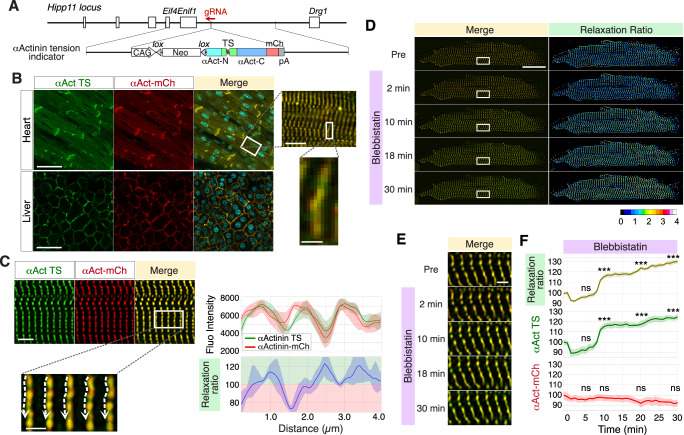 Figure 4
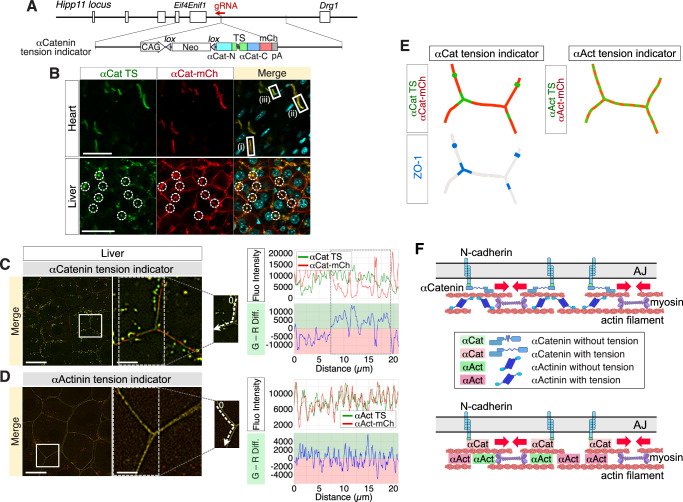 Figure 5
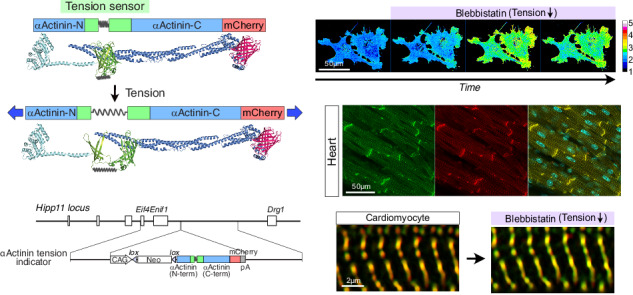 Figure 6
Peer Reviews
No public reviews on file for this paper yet. If you reviewed it on a platform where reviews are public (OpenReview, ICLR, NeurIPS, ICML), you can paste yours below so the community can read it here.
Videos
No videos yet. Explain this paper in a talk, walkthrough, or lecture? Add one.
Taxonomy
TopicsForce Microscopy Techniques and Applications · Cellular Mechanics and Interactions · Advanced Materials and Mechanics