Comprehensive cross-sectional and longitudinal comparison of sixteen markers of biological aging from the Berlin Aging Study II
Valentin Max Vetter, Johanna Drewelies, Jan Homann, Sandra Düzel, Laura Deecke, Philippe Jawinski, Simone Kühn, Elisa Kubala, Sebastian Markett, Michael Mülleder, Markus Ralser, Ulman Lindenberger, Christina M. Lill, Denis Gerstorf, Lars Bertram, Ilja Demuth

TL;DR
This study compares 16 aging markers in over 1000 older adults to find which best predict future health issues like frailty and cardiovascular risk.
Contribution
The study provides a comprehensive comparison of 16 biological aging markers and their predictive power for age-related health outcomes.
Findings
Allostatic Load Index and DunedinPACE showed strongest associations with age-related health outcomes.
These two markers improved prediction accuracy of future health risks by up to 24 percentage points.
The study highlights individual strengths and limitations of various aging indicators.
Abstract
The disproportionate increase in lifespan compared to healthspan over the past decades results in a growing proportion of life marked by diseases, even if incidence rates are falling in some cases. However, not everyone ages at the same pace and some people remain in good health and preserve physical and cognitive function into old age. To quantify inter-individual differences in the biological aging process, numerous indicators of biological age have been developed. In this study, we analyzed 16 measures of biological aging including epigenetic clocks, proteomics clock, telomere length, and SkinAge, laboratory composite markers (BioAge, Allostatic Load), psychological aging, and Brain Age. These age markers were evaluated cross-sectionally as well as longitudinally in the context of age-associated outcomes covering frailty, mobility, cognitive function, depressive symptoms, autonomy…
Genes, proteins, chemicals, diseases, species, mutations and cell lines named across the full text — each resolved to its canonical identifier and authoritative record.
Click any figure to enlarge with its caption.
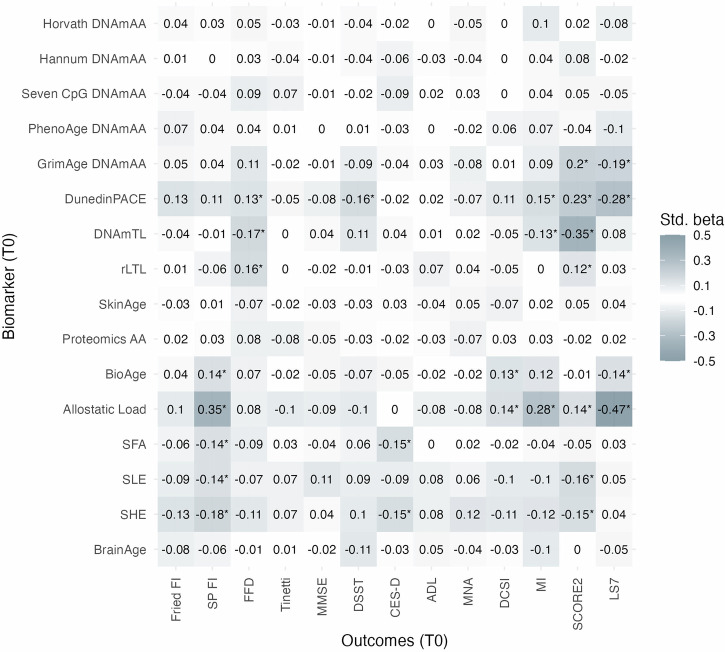 Figure 1
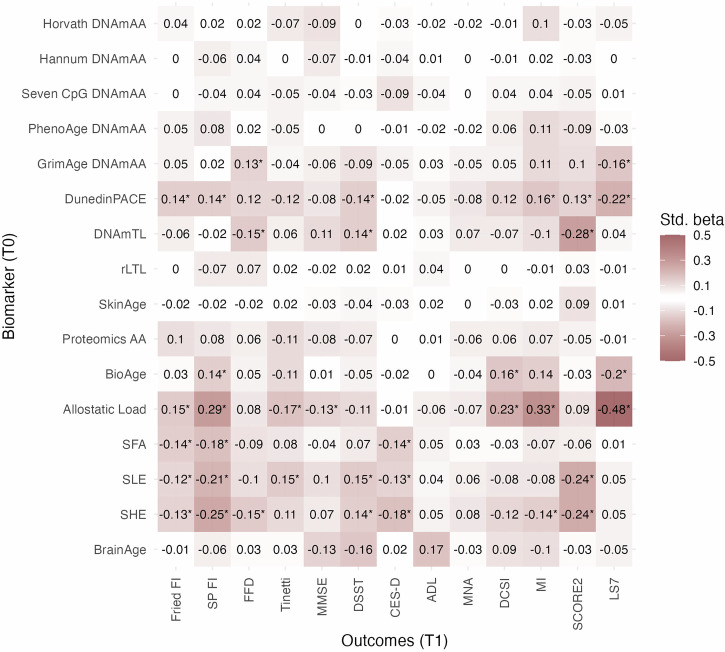 Figure 2
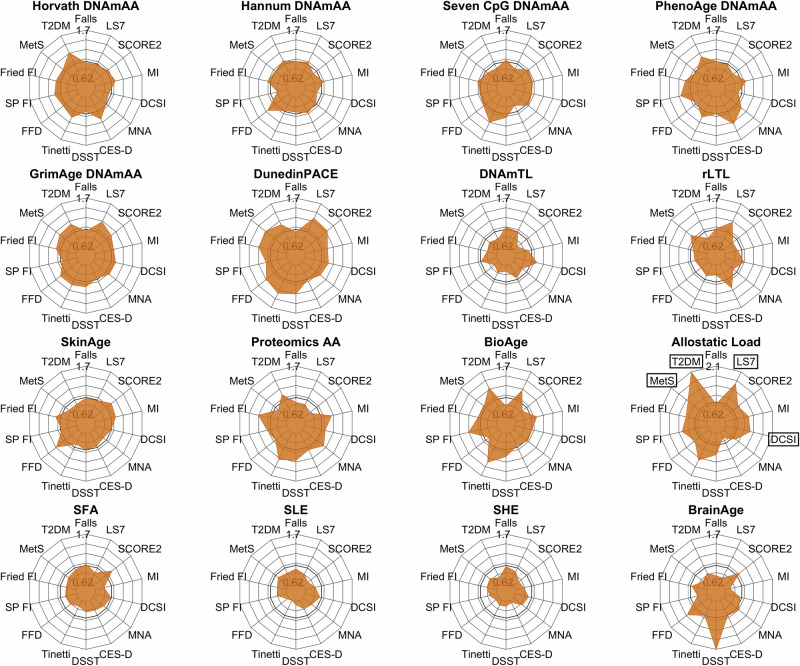 Figure 3
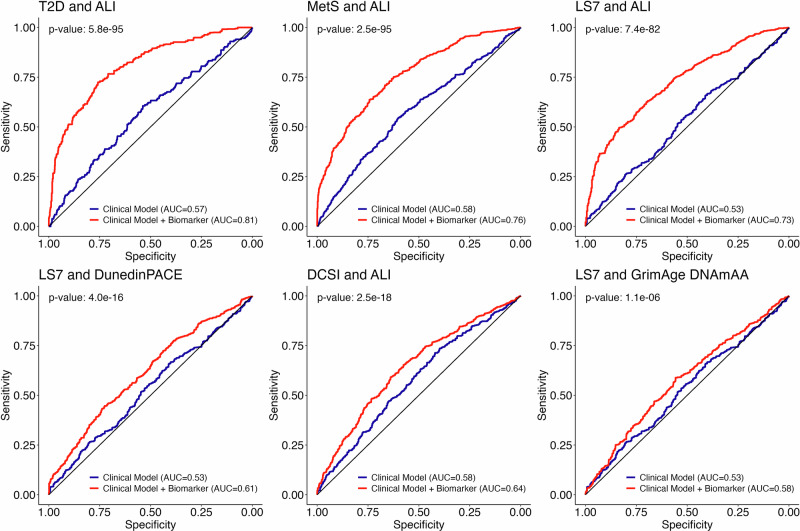 Figure 4
Peer Reviews
No public reviews on file for this paper yet. If you reviewed it on a platform where reviews are public (OpenReview, ICLR, NeurIPS, ICML), you can paste yours below so the community can read it here.
Videos
No videos yet. Explain this paper in a talk, walkthrough, or lecture? Add one.
Taxonomy
TopicsEpigenetics and DNA Methylation · Genetics, Aging, and Longevity in Model Organisms · Health, Environment, Cognitive Aging