Elucidating motion patterns in sperm cell motion with dynamic mode decomposition
Petr Šimánek, Jakub Hořenín, Islam S. M. Khalil, Veronika Magdanz, Anke Klingner, Alexander Kovalenko

TL;DR
This study uses a mathematical technique to understand how sperm cells move faster when grouped together, focusing on synchronized tail movements.
Contribution
The novelty lies in applying dynamic mode decomposition to analyze and quantify sperm motility patterns and flagellar synchronization.
Findings
Synchronized flagellar movements are key to increased velocity in sperm bundles.
DMD identifies dominant frequencies, amplitudes, and velocities in sperm motion.
The method can distinguish healthy sperm and has broader applications in flagellar-driven organisms.
Abstract
The study employs dynamic mode decomposition (DMD) to elucidate the underlying mechanisms contributing to the enhanced motility observed in sperm bundles, primarily focusing on the role of flagellar synchronization. The decomposition reveals that synchronized flagellar movements might be a key factor enabling sperm cells to attain higher velocities when connected in bundles. Through DMD, periodical characteristics of individual periodical motion patterns, such as frequency, amplitude, and modal growth/decay rates (from DMD eigenvalues), are characterized, elucidating main parameters of the dynamic behavior of these biological systems, such as dominant frequencies of periodical motion, as well as amplitudes and velocities. The implications of this research extend beyond understanding sperm bundle dynamics, as the methodology is adaptable for identifying healthy sperm cells based on their…
Genes, proteins, chemicals, diseases, species, mutations and cell lines named across the full text — each resolved to its canonical identifier and authoritative record.
Click any figure to enlarge with its caption.
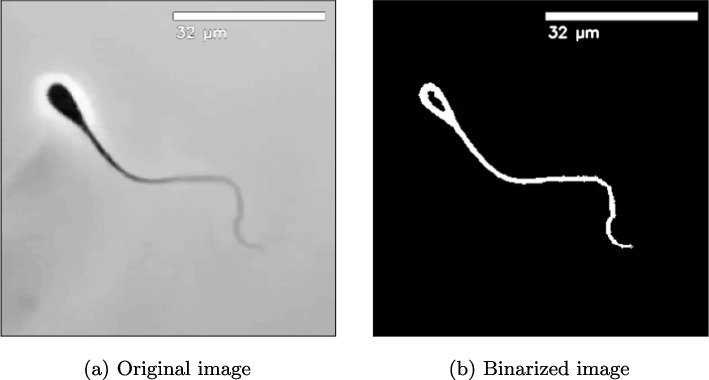 Figure 1
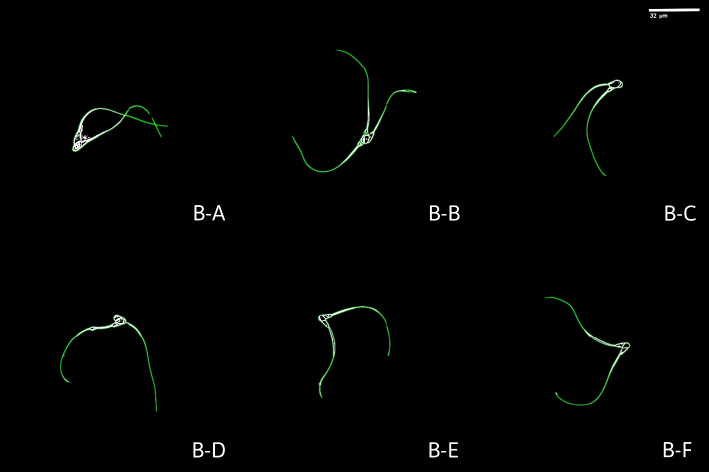 Figure 2
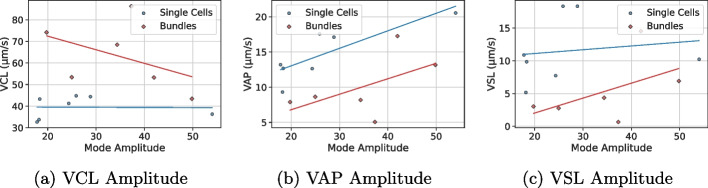 Figure 3
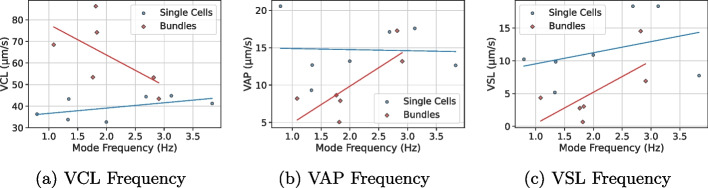 Figure 4
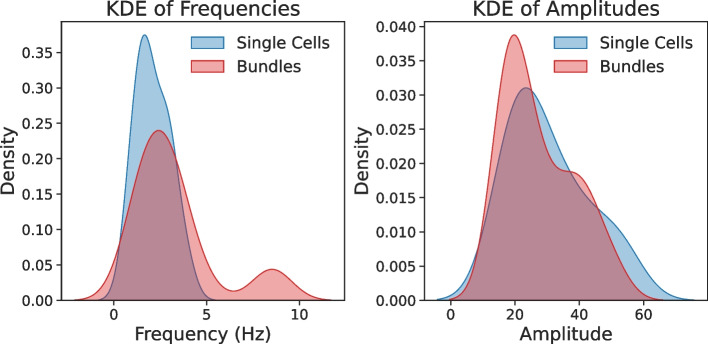 Figure 5
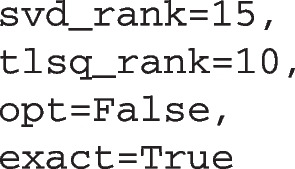 Figure 6
Peer Reviews
No public reviews on file for this paper yet. If you reviewed it on a platform where reviews are public (OpenReview, ICLR, NeurIPS, ICML), you can paste yours below so the community can read it here.
Videos
No videos yet. Explain this paper in a talk, walkthrough, or lecture? Add one.
Taxonomy
TopicsMicro and Nano Robotics · Orbital Angular Momentum in Optics · Microtubule and mitosis dynamics