TWIST1 drives endothelial-to-mesenchymal-transition to stabilize atherosclerotic plaques
Blanca Tardajos Ayllon, Mannekomba Diagbouga, Ankita Das, Siyu Tian, Andreas Edsfeldt, Joanna Kalucka, Jovana Serbanovic-Canic, Emily Chambers, Jiangming Sun, Chrysostomi Gialeli, Mark Dunning, Sheila E. Francis, Xiuying Li, Akiko Mammoto, Michael Simons, Helle F. Jørgensen

TL;DR
This study shows that TWIST1 promotes a cell change in blood vessels that can stabilize dangerous cholesterol plaques in arteries, challenging previous assumptions.
Contribution
The study reveals that TWIST1-driven endothelial-to-mesenchymal transition can stabilize atherosclerotic plaques rather than destabilize them.
Findings
TWIST1 promotes endothelial-to-mesenchymal transition in advanced atherosclerotic plaques.
Endothelial TWIST1 increases plaque stability by boosting collagen and reducing necrosis and macrophage accumulation.
TWIST1 enhances endothelial cell migration and proliferation via PELP1 and AEBP1-dependent pathways.
Abstract
Rupture of unstable atherosclerotic plaques is a major cause of mortality. Endothelial-to-mesenchymal transition associates with advanced atherosclerotic plaques and contributes to plaque progression. We examined the role of Twist1, a transcription factor that drives endothelial-to-mesenchymal transition, in plaque progression by inducible deletion from endothelial cells in hypercholesterolemic mice (Twist1ECKO Apo-/-). Single-cell RNA sequencing coupled to endothelial cell-tracking reveals that Twist1 promotes endothelial-to-mesenchymal transition in advanced atherosclerotic plaques. Histological analyses demonstrate that endothelial Twist1 promotes plaque growth and hallmarks of plaque stability (collagen, ACTA2-positive cells) and reduces features of instability (necrosis, macrophage accumulation). Analysis of cultured human aortic endothelial cells shows that TWIST1 contributes to…
Genes, proteins, chemicals, diseases, species, mutations and cell lines named across the full text — each resolved to its canonical identifier and authoritative record.
Click any figure to enlarge with its caption.
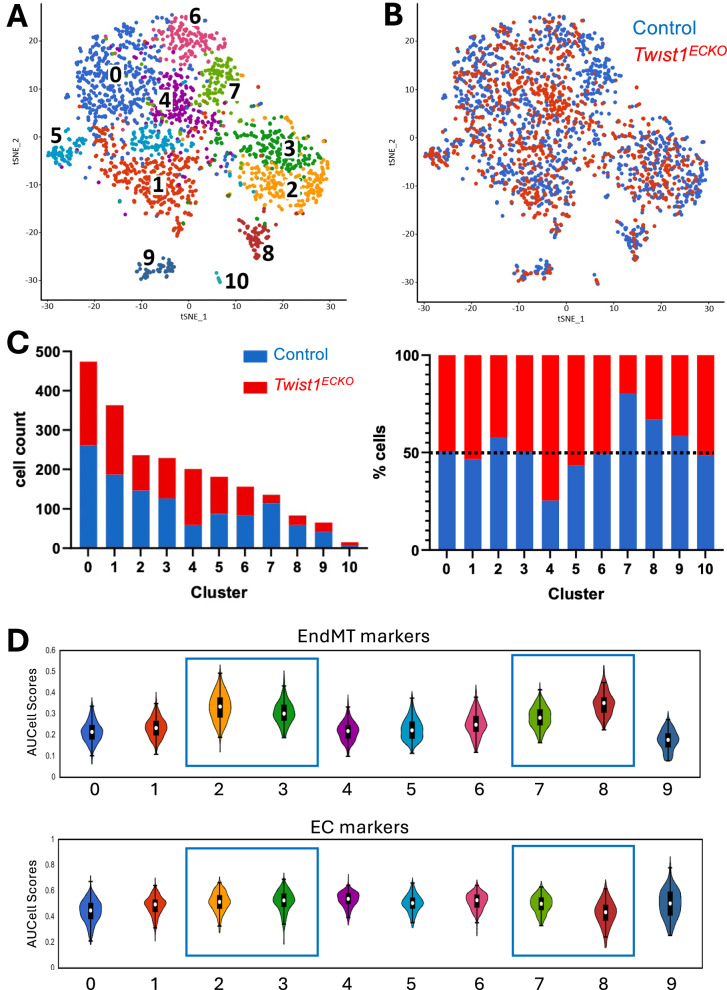 Figure 1
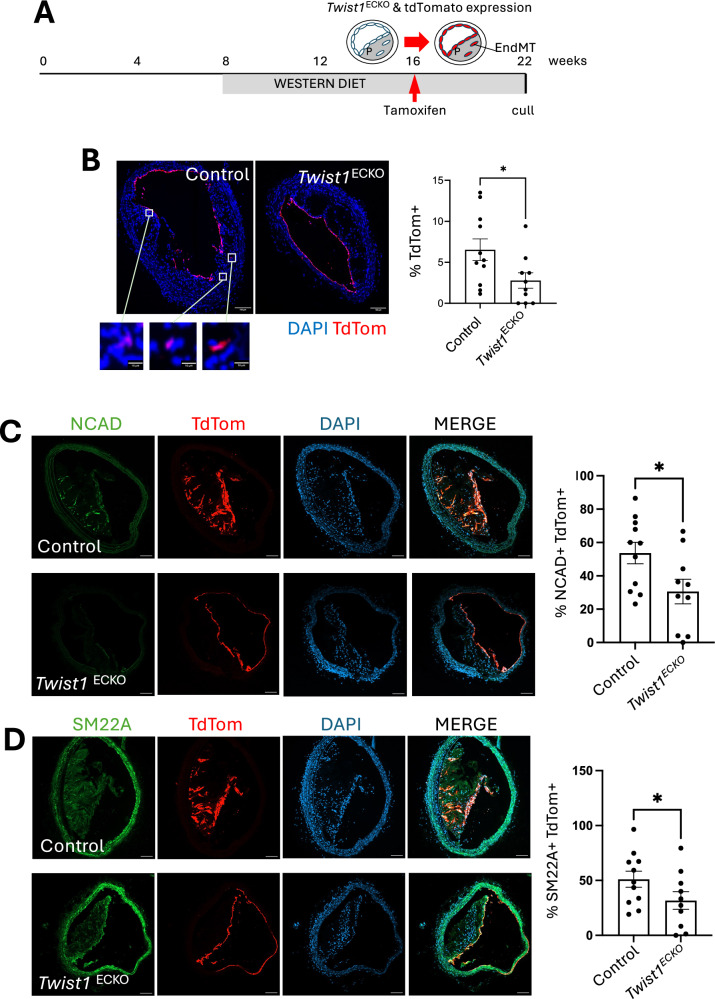 Figure 2
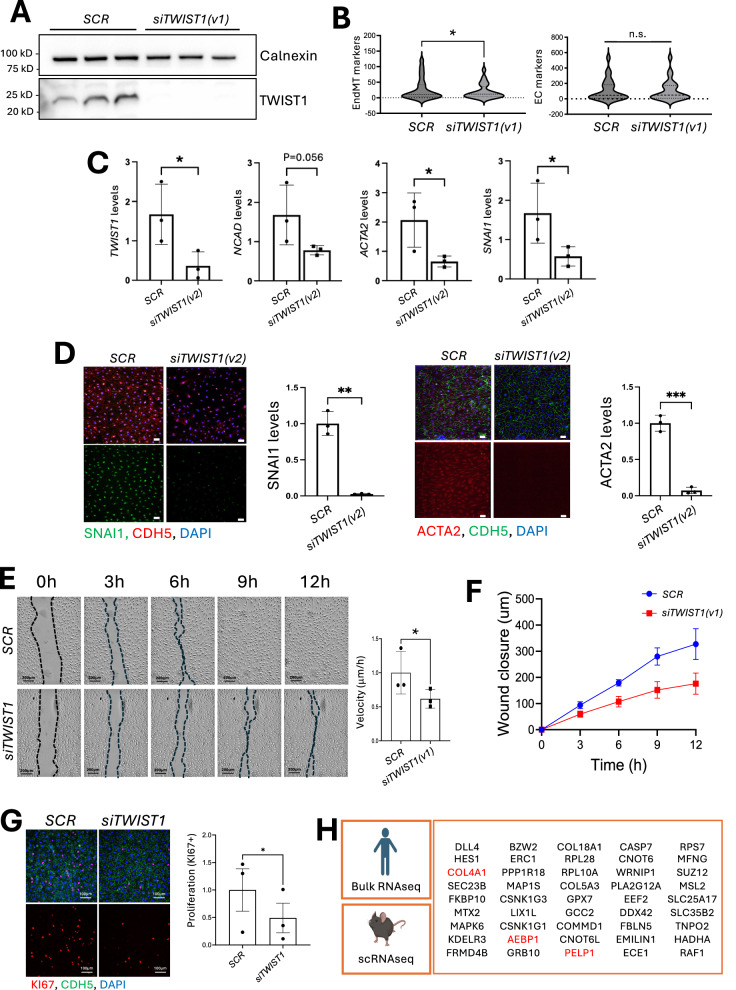 Figure 3
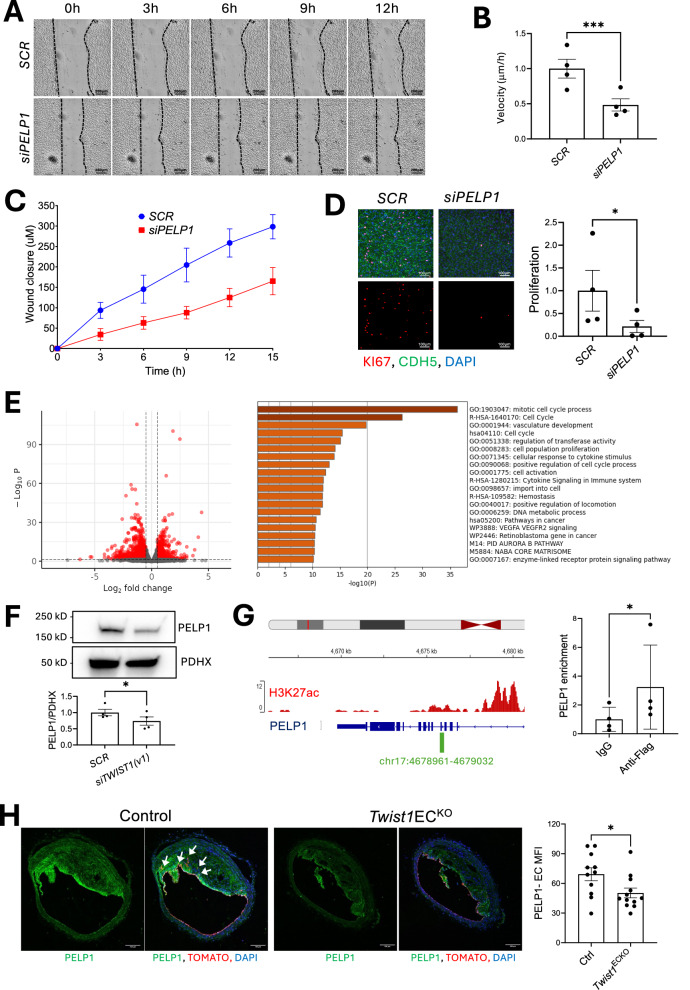 Figure 4
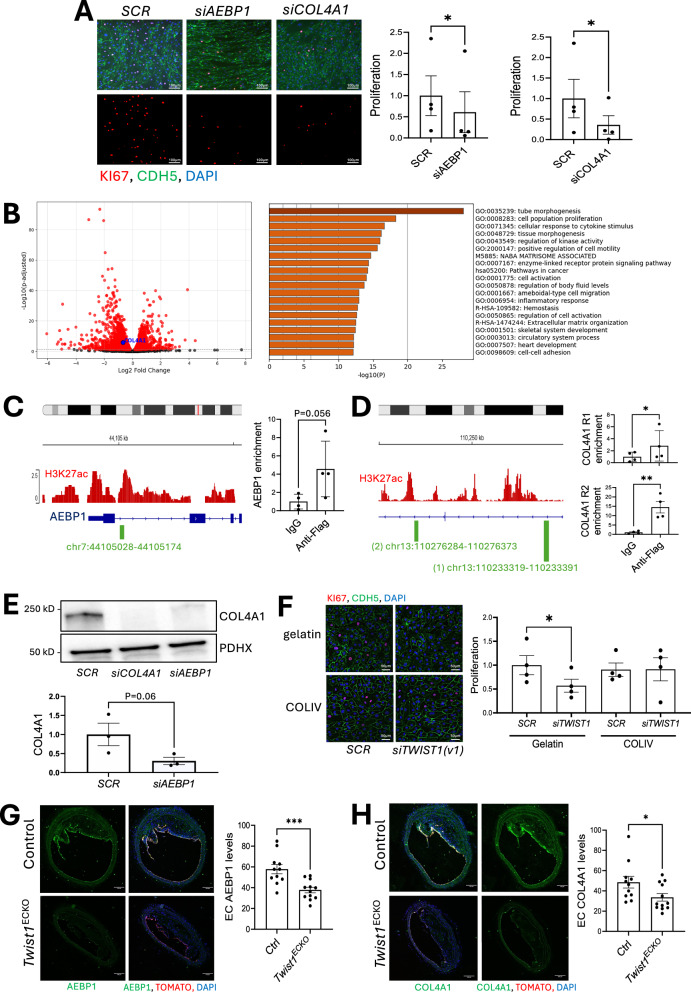 Figure 5
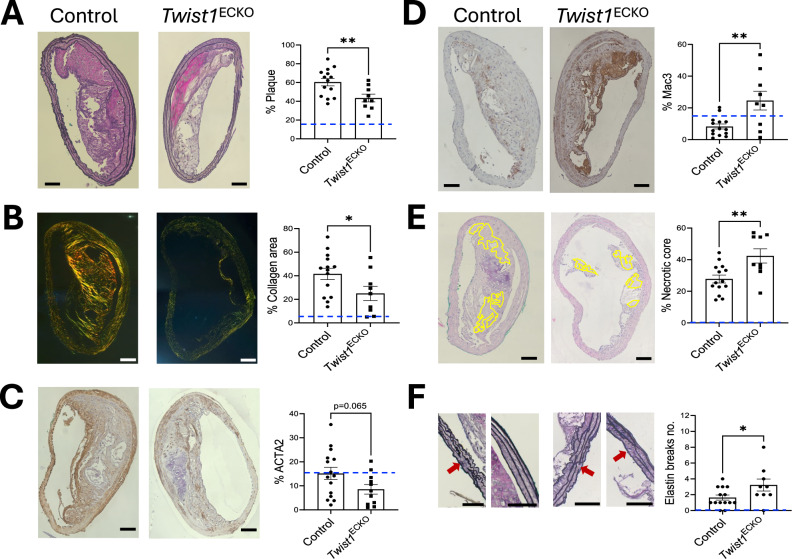 Figure 6
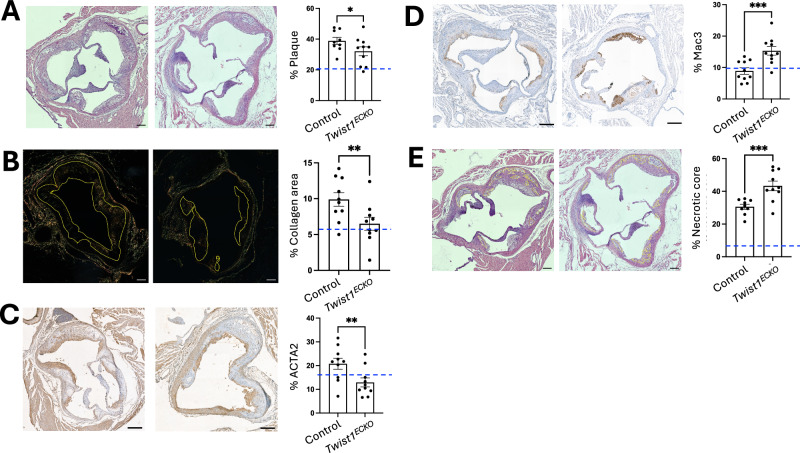 Figure 7
Peer Reviews
No public reviews on file for this paper yet. If you reviewed it on a platform where reviews are public (OpenReview, ICLR, NeurIPS, ICML), you can paste yours below so the community can read it here.
Videos
No videos yet. Explain this paper in a talk, walkthrough, or lecture? Add one.
Taxonomy
TopicsSingle-cell and spatial transcriptomics · Hippo pathway signaling and YAP/TAZ · Congenital heart defects research