PMMA/pPFPA membrane with low content of modified TiO2 nanoparticles for effective retention of pharmaceuticals from water
Mariia Pasichnyk, Christian Schmitt, Martina Plank, Kristin Kerst, Wei Wang, Muhannad Al Aiti, Gianaurelio Cuniberti, André Lerch, Patrick Théato

TL;DR
This paper introduces a new membrane with TiO2 nanoparticles that can effectively remove pharmaceuticals from water through filtration and photocatalysis.
Contribution
The novel membrane combines low TiO2 nanoparticle content with PMMA/pPFPA polymers to achieve enhanced water treatment performance.
Findings
The membrane's pore size decreased by 85%, improving structural stability and uniformity.
Photocatalytic degradation achieved 100% removal of pharmaceuticals within 2 hours.
The membrane showed 50–70% retention of pharmaceuticals through sorption.
Abstract
In this work, we addressed the issue of pharmaceutical pollution in water by developing new polymer-based membranes with superior separation and photocatalytic properties. The membranes were prepared via the phase-inversion method using poly(methyl methacrylate) (PMMA) and poly(pentafluorophenyl acrylate) (pPFPA) as the main polymers. To enhance absorption capacity and activate photocatalytic properties, modified TiO₂ nanoparticles (TiO2, mod.) were introduced in low concentration. Two porous membranes were fabricated: M1, consisting of PMMA, pPFPA, and TiO2, mod. nanoparticles; and M2, containing the same components as M1 but additionally supplemented with high molecular weight poly(ethylene glycol) (PEG) and polyvinylpyrrolidone (PVP). The incorporation of high-molecular-weight PEG and PVP reduced void formation in the membrane structure, resulting in a denser morphology with smaller…
Genes, proteins, chemicals, diseases, species, mutations and cell lines named across the full text — each resolved to its canonical identifier and authoritative record.
Click any figure to enlarge with its caption.
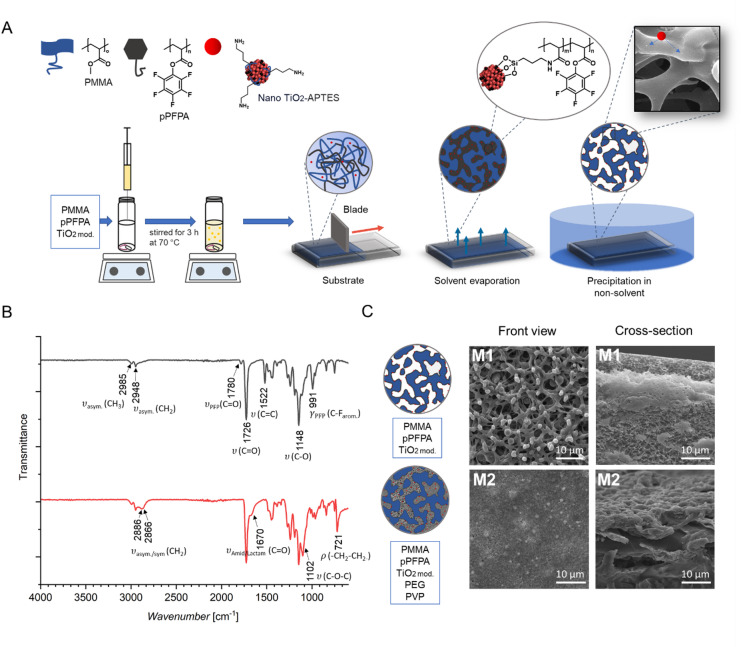 Figure 1
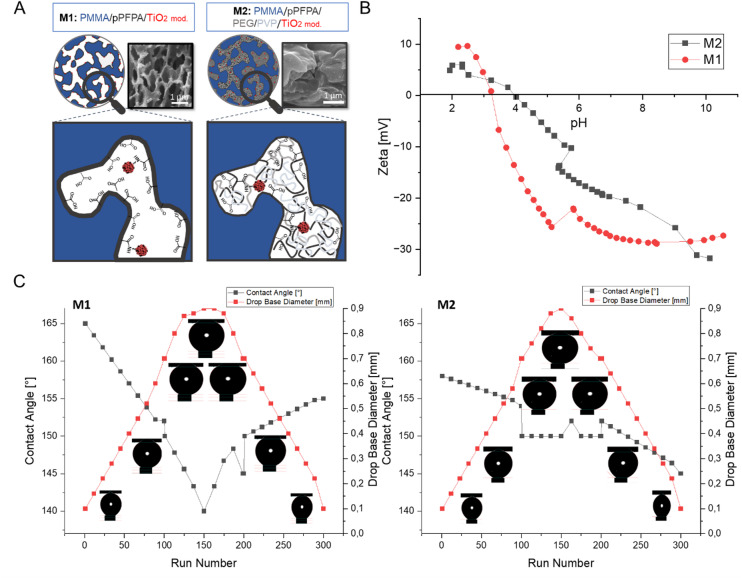 Figure 4
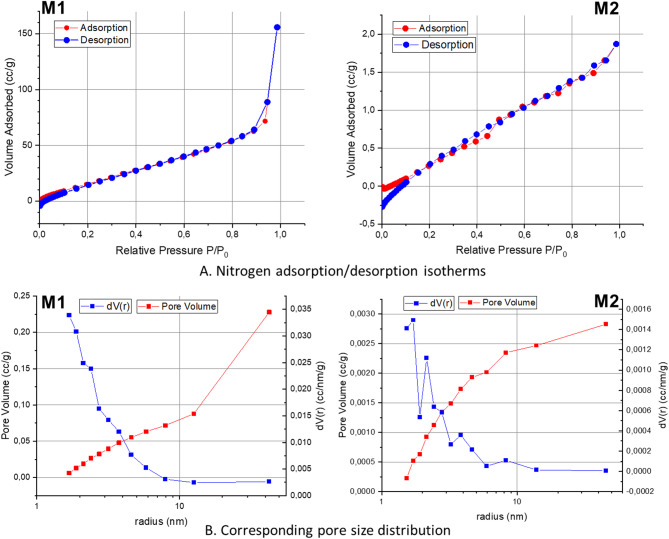 Figure 7
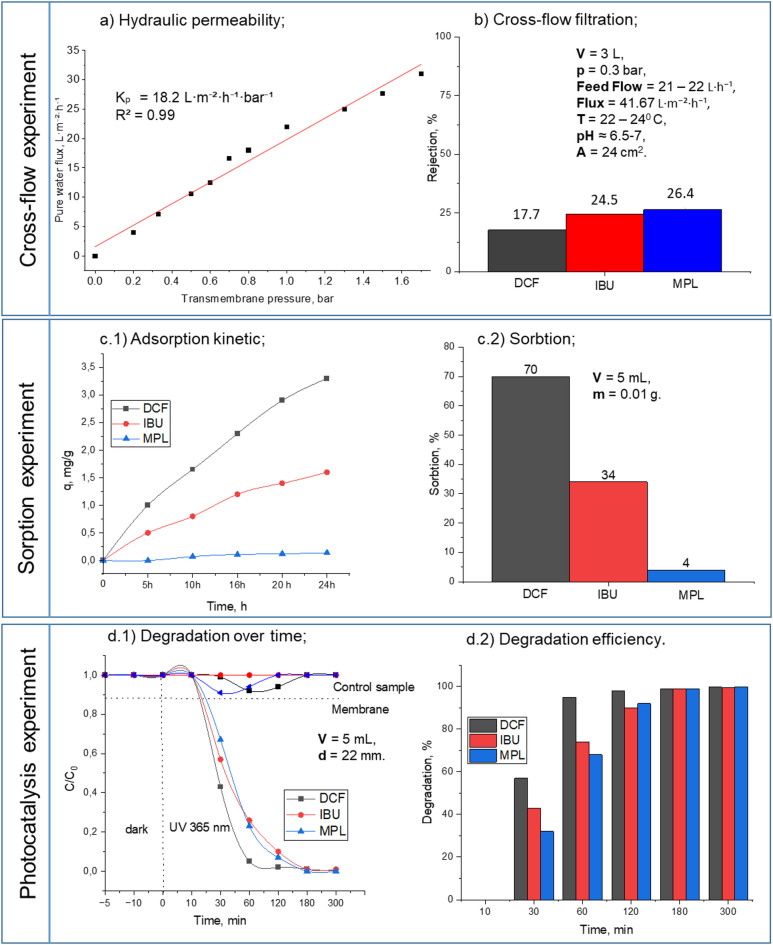 Figure 8
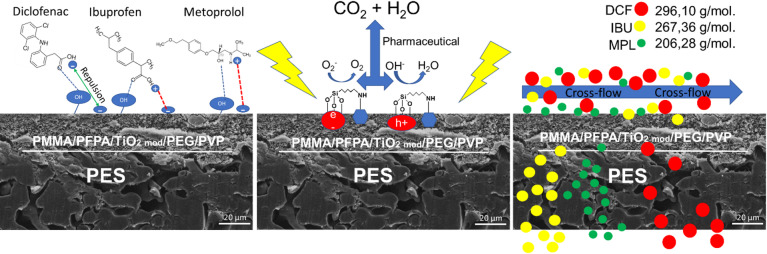 Figure 5
Peer Reviews
No public reviews on file for this paper yet. If you reviewed it on a platform where reviews are public (OpenReview, ICLR, NeurIPS, ICML), you can paste yours below so the community can read it here.
Videos
No videos yet. Explain this paper in a talk, walkthrough, or lecture? Add one.
Taxonomy
TopicsMembrane Separation Technologies · Nanopore and Nanochannel Transport Studies · Adsorption and biosorption for pollutant removal