Predictive modelling of the COMATOSE transporter reveals a conserved ligand binding pocket for acyl-CoAs
Foteini Bifsa, Katie Simmons, Stephen P. Muench, Alison Baker

TL;DR
This paper uses predictive modeling to identify a conserved binding pocket for acyl-CoAs in the COMATOSE transporter, helping to understand its transport mechanism.
Contribution
The study reveals a conserved ligand binding pocket for acyl-CoAs in the COMATOSE transporter using AlphaFold2/3 models and biochemical data.
Findings
AlphaFold2/3 models identified key residues in the acyl-CoA binding pocket of COMATOSE.
The D863/Q864/T867 triad and S810 are proposed to play structural and recognition roles in substrate binding.
Conservation scores and alignments with human homologues support the identified binding pocket.
Abstract
The ABCD subfamily is comprised of mainly peroxisomal ABC transporter proteins which are found in most eukaryotes. They import a range of substrates of the peroxisomal β oxidation pathway. In plants there is a single peroxisomal ABC transporter AtABCD1 also known as COMATOSE (CTS), PXA1, PED3 or ACN1. Substrates are acyl CoAs and CTS possesses intrinsic acyl CoA thioesterase activity (ACOT), which has subsequently been demonstrated in human and yeast homologues. Even though there is no sequence similarity to any known thioesterases, the CoA moiety is cleaved at some point during transport and most likely released within the peroxisome. While there is a wealth of published biochemical and genetic data on CTS, the precise transport mechanism remains unknown. To gain insights into the CTS transport cycle we have utilised AlphaFold2/3 to produce high confidence models allowing us to explore…
Genes, proteins, chemicals, diseases, species, mutations and cell lines named across the full text — each resolved to its canonical identifier and authoritative record.
Click any figure to enlarge with its caption.
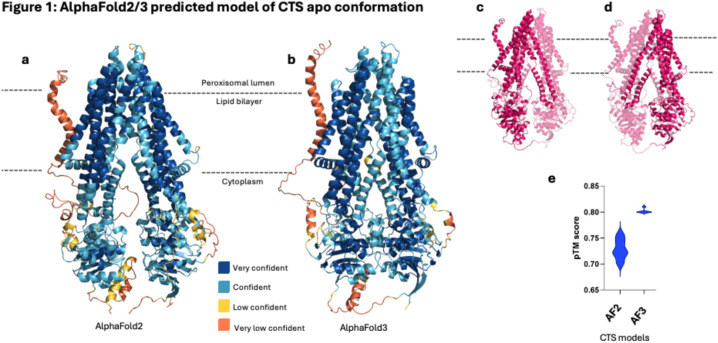 Figure 1
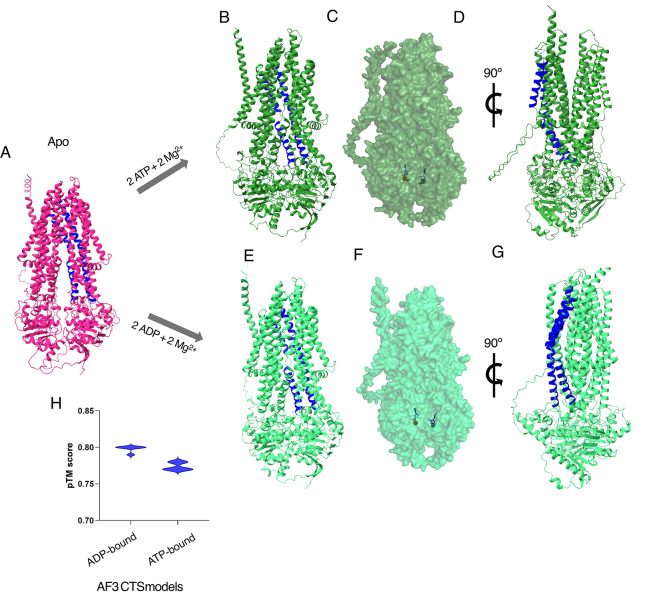 Figure 2
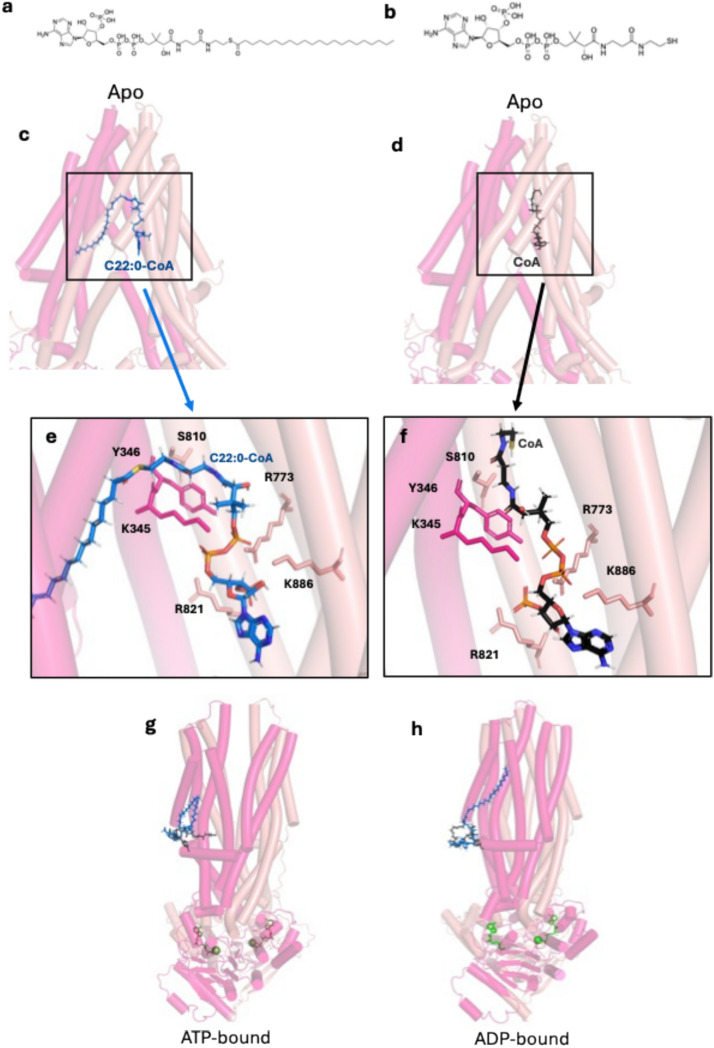 Figure 3
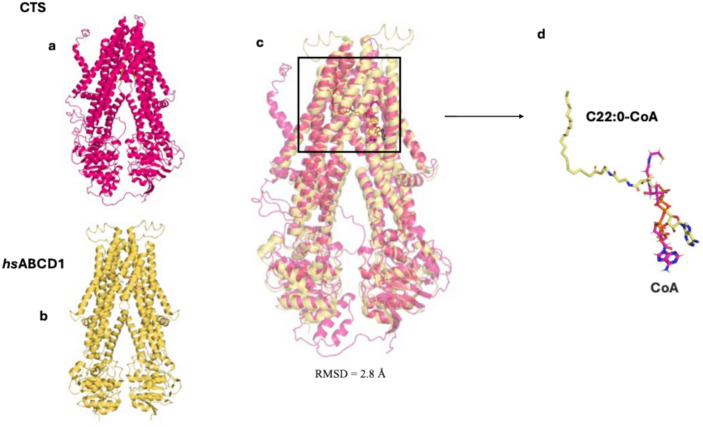 Figure 4
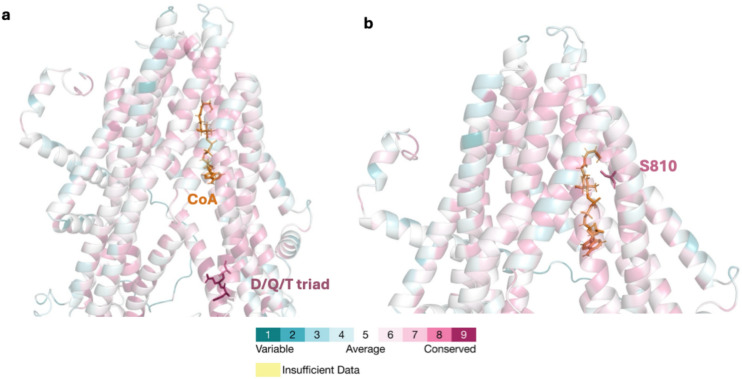 Figure 5
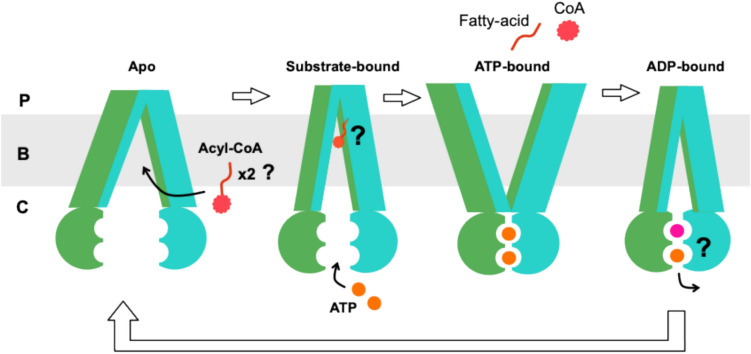 Figure 6
Peer Reviews
No public reviews on file for this paper yet. If you reviewed it on a platform where reviews are public (OpenReview, ICLR, NeurIPS, ICML), you can paste yours below so the community can read it here.
Videos
No videos yet. Explain this paper in a talk, walkthrough, or lecture? Add one.
Taxonomy
TopicsPeroxisome Proliferator-Activated Receptors · Neurological diseases and metabolism · Metabolism and Genetic Disorders