H pilin cyclisation and pilus biogenesis are promiscuous but electrostatic perturbations impair conjugation efficiency
Shan He, Naito Ishimoto, Joshua L. C. Wong, Sophia David, Julia Sanchez-Garrido, Mikhail Bogdanov, Konstantinos Beis, Gad Frankel

TL;DR
The study shows that specific amino acid changes in a bacterial pilus disrupt DNA transfer due to electrostatic interactions with recipient cell membranes.
Contribution
The work reveals that electrostatic interactions between pilus and recipient membrane phospholipids are critical for efficient conjugation.
Findings
Substituting Asp69 with amino acids of varying side chain sizes affects conjugation efficiency in a size-dependent manner.
Positive charges at Gly1 or Asp69 abolish conjugation due to unfavorable electrostatic interactions with recipient membranes.
Conjugation is restored in recipients lacking phosphatidylethanolamine, confirming the role of membrane phospholipids.
Abstract
During conjugation, plasmid DNA is transferred from donor to recipient bacteria via the plasmid-encoded mating pilus, formed as thin helical assemblies of polymerised pilin subunits. In the IncHI1 R27 plasmid-encoded pilus, the TrhA pilin undergoes cyclisation (via a peptide bond between Gly1 and Asp69), essential for conjugation. Gly1 and Asp69 are exposed on the pilus surface and conserved in all TrhA pilins in the Plascad database. Substituting Asp69 with Asn, Ala, Gly, or Arg does not prevent cyclisation or pilus formation, which remains structurally indistinguishable from the wild type. Conjugation efficiency of the Asp69 substitutions across multiple recipient species correlates with side chain size, in the order Asp69Asn > Asp69Ala > Asp69Gly. However, Asp69Arg, as well as Asp69Lys and Gly1Lys substitutions abolish conjugation, likely due to the positively charged pilus surface…
Genes, proteins, chemicals, diseases, species, mutations and cell lines named across the full text — each resolved to its canonical identifier and authoritative record.
Click any figure to enlarge with its caption.
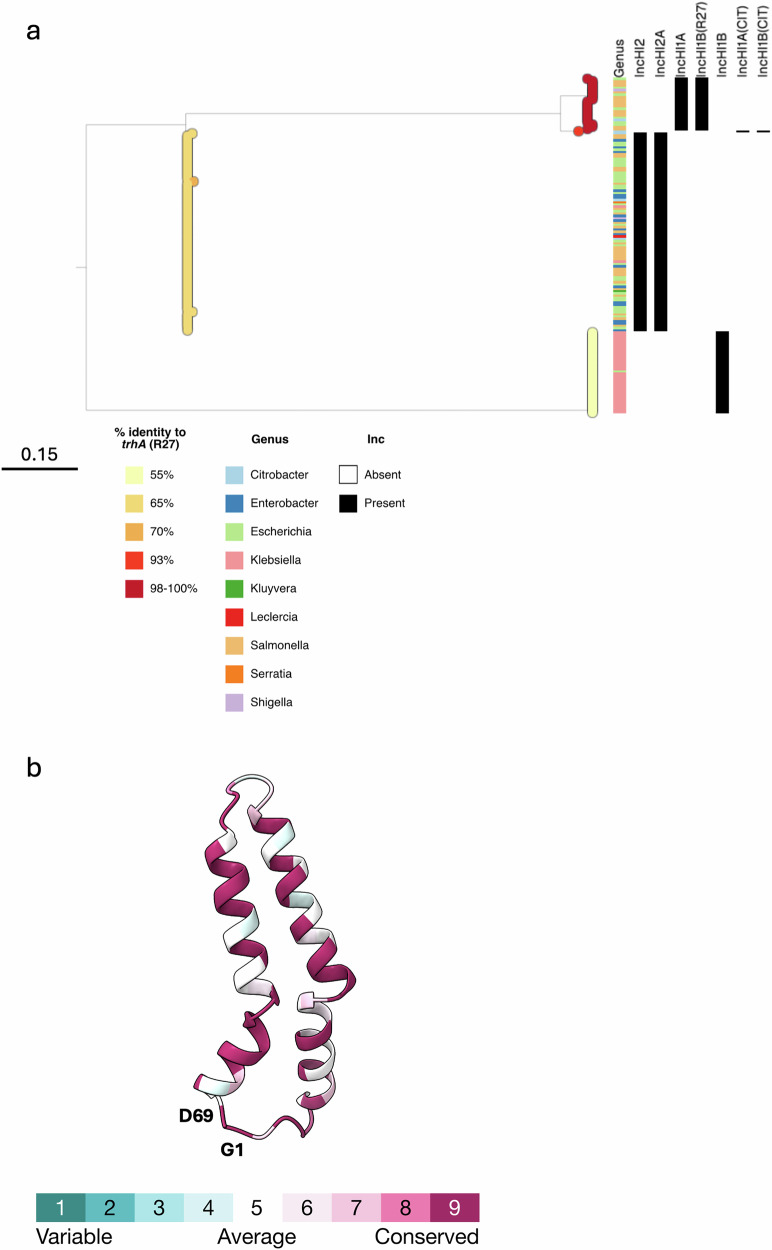 Figure 1
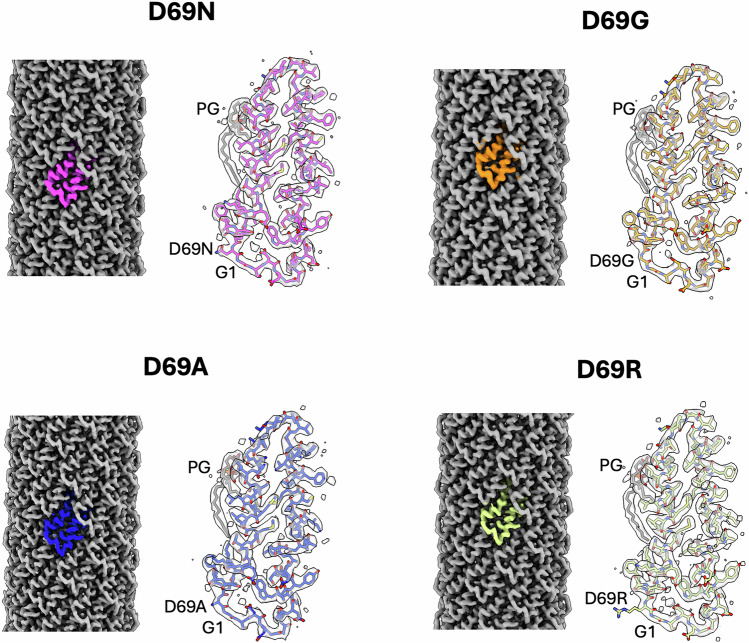 Figure 2
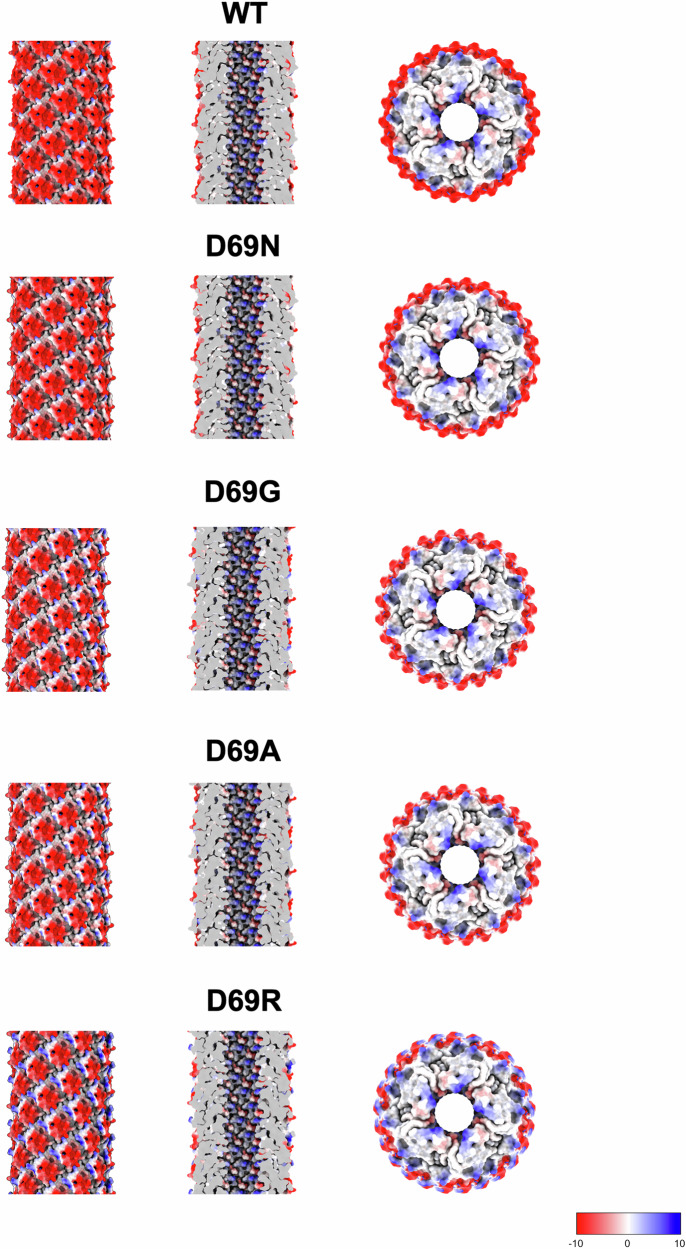 Figure 3
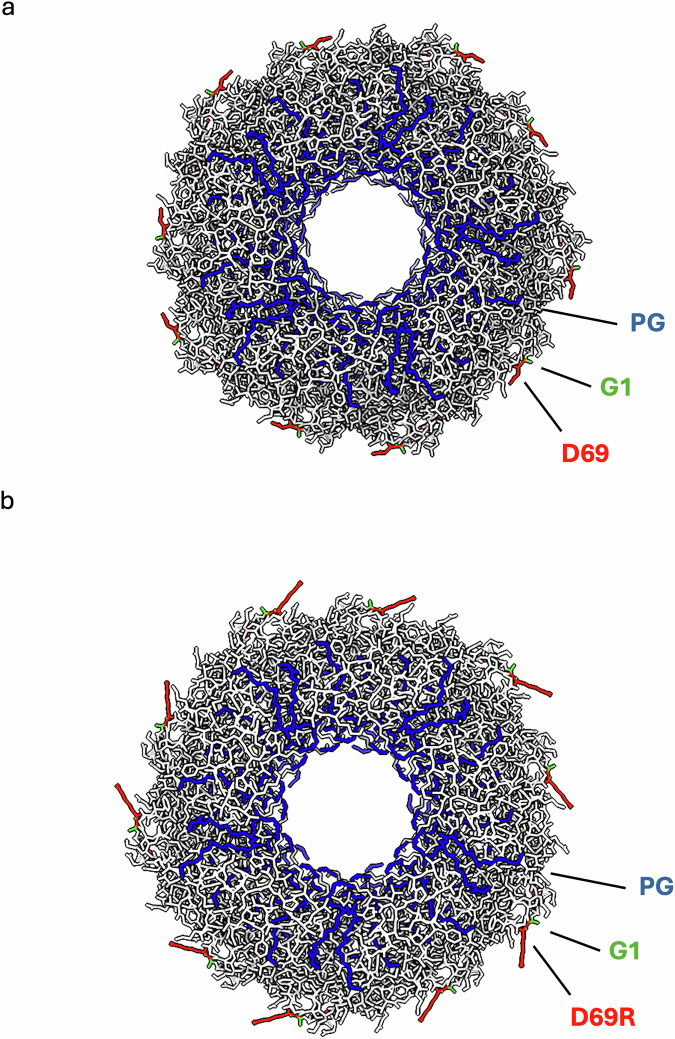 Figure 4
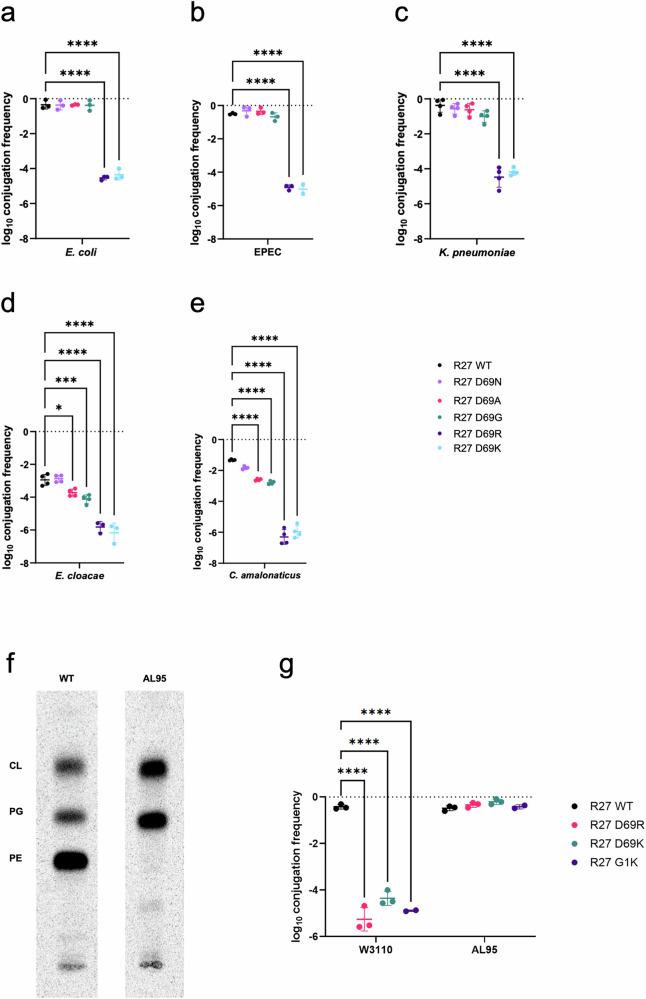 Figure 5
Peer Reviews
No public reviews on file for this paper yet. If you reviewed it on a platform where reviews are public (OpenReview, ICLR, NeurIPS, ICML), you can paste yours below so the community can read it here.
Videos
No videos yet. Explain this paper in a talk, walkthrough, or lecture? Add one.
Taxonomy
TopicsBiochemical and Structural Characterization · Bacterial Genetics and Biotechnology · Animal Genetics and Reproduction