Evaluation of non-canonical p53 functions in DNA replication and recombination for variant classification
Rebecca Jansche, Benedikt Heitmeir, Ulrike Faust, Helmut Pospiech, Christian Sutter, Christian Albig, Finja Hennig, Wolfgang Janni, Rita Schmutzler, Jan Hauke, Andreas C. Joerger, Lisa Wiesmüller

TL;DR
This study explores how non-canonical functions of p53 in DNA replication and recombination can help classify TP53 variants as benign or pathogenic.
Contribution
The study introduces recombination-based assays as a novel method for classifying TP53 variants of unknown significance.
Findings
Recombination measurements clearly separate benign and pathogenic TP53 variants.
Eight TP53 variants of unknown significance showed activities consistent with benign or pathogenic classifications.
Recombination-based assays correlate with existing functional scores for TP53.
Abstract
Pathogenic germline TP53 variants predispose to diverse Li-Fraumeni syndrome (LFS) phenotypes and a broad cancer spectrum, whereby carriers of hypomorphic variants cluster in a cohort with attenuated disease onset and an overrepresentation of breast cancer (BC). Recently, functional assays have gained importance among the criteria used to predict the pathogenicity of hereditary breast and ovarian cancer (HBOC) risk-gene variants. Experimental assays scoring p53 functions in transcription and growth control have contributed to variant classification, yet a significant fraction of TP53 variants remain of unknown significance (VUS). To understand whether non-canonical functions of p53 in the fidelity control of DNA replication may aid variant classification, we subjected 23 TP53 VUS and 20 control variants identified in the German Consortium for HBOC (GC-HBOC) to assays that monitor…
Genes, proteins, chemicals, diseases, species, mutations and cell lines named across the full text — each resolved to its canonical identifier and authoritative record.
Click any figure to enlarge with its caption.
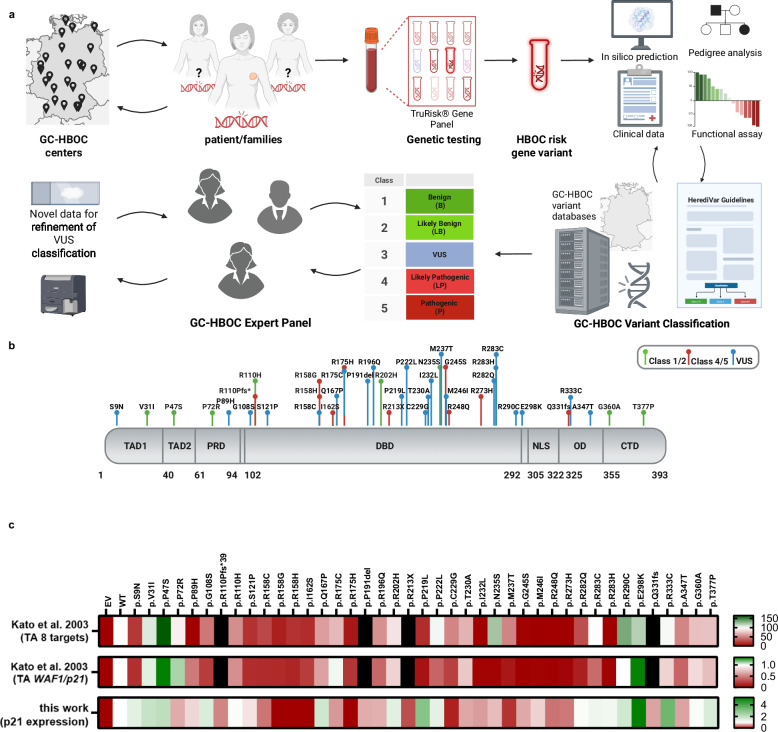 Figure 1
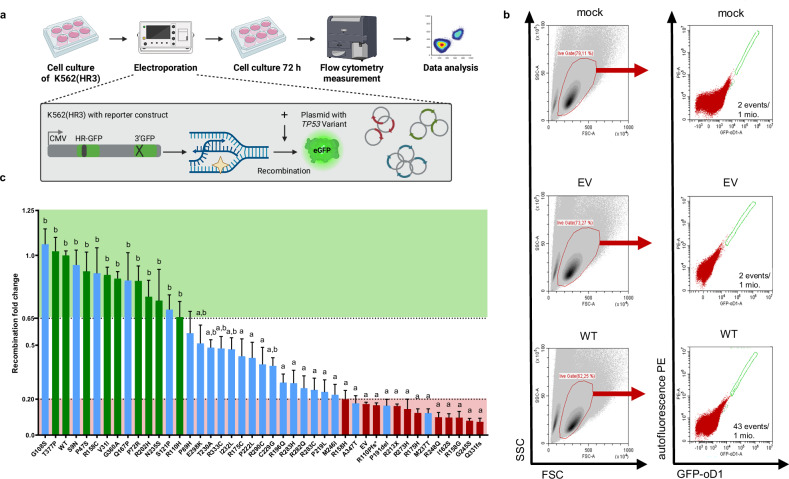 Figure 2
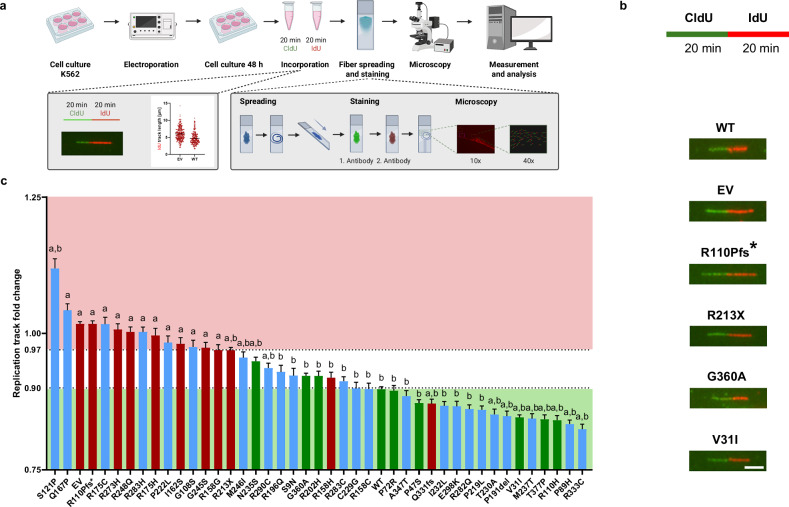 Figure 3
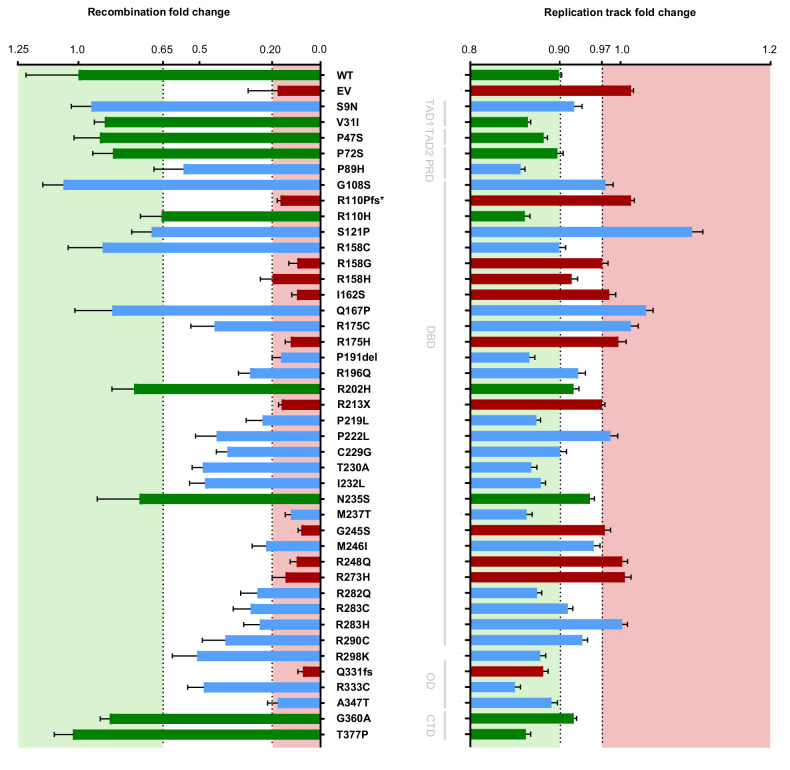 Figure 4
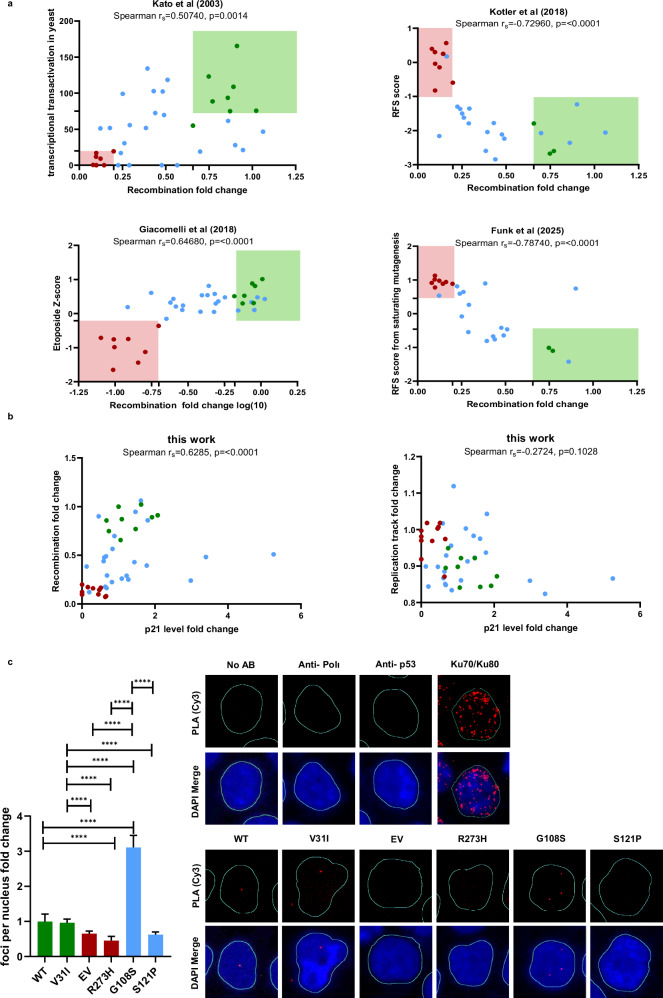 Figure 5
 Figure 6
 Figure 7
 Figure 8
Peer Reviews
No public reviews on file for this paper yet. If you reviewed it on a platform where reviews are public (OpenReview, ICLR, NeurIPS, ICML), you can paste yours below so the community can read it here.
Videos
No videos yet. Explain this paper in a talk, walkthrough, or lecture? Add one.
Taxonomy
TopicsCancer-related Molecular Pathways · BRCA gene mutations in cancer · DNA Repair Mechanisms