Mutational profiles of spontaneous and radiation-related mammary carcinomas in a rat model of Brca1 haploinsufficiency
Yuzuki Nakamura, Kazuhiro Daino, Atsuko Ishikawa, Shizuko Kakinuma, Yukiko Nishimura-Yano, Kento Nagata, Masaru Takabatake, Mayumi Nishimura, Tomoji Mashimo, Kazumasa Inoue, Tatsuhiko Imaoka

TL;DR
This study examines how BRCA1 haploinsufficiency influences the development of breast cancer in rats, finding that it reduces the need for driver mutations.
Contribution
The study reveals that Brca1 haploinsufficiency enables carcinogenesis without typical driver mutations.
Findings
Brca1L63X/+ rats had higher mammary carcinoma incidence than wild-type rats after radiation.
Radiation-associated carcinomas in Brca1L63X/+ rats had fewer cancer-driver mutations than in wild-type rats.
Some carcinomas in Brca1L63X/+ rats lacked detectable driver mutations from SNVs, InDels, or CNVs.
Abstract
Female carriers of a heterozygous germline mutation in BRCA1/2 have a high risk of breast cancer. Although recent research has suggested that genomic instability via BRCA1/2 haploinsufficiency contributes to the early phase of BRCA-associated carcinogenesis, insights into the role of BRCA haploinsufficiency in carcinogenesis are lacking. We previously reported that the Brca1L63X/+ rat, a model of Brca1 haploinsufficiency carcinogenesis, exhibits a significantly higher incidence of mammary carcinomas than wild-type rats exposed to ionizing radiation; notably, the carcinomas retained a wild-type Brca1 allele. To explore the mutation spectrum underlying Brca1 haploinsufficiency, we performed whole-exome sequencing of spontaneous and radiation-associated mammary carcinomas in wild-type and Brca1L63X/+ rats. Mammary tumors from wild-type and Brca1L63X/+ rats did not differ significantly…
Genes, proteins, chemicals, diseases, species, mutations and cell lines named across the full text — each resolved to its canonical identifier and authoritative record.
Click any figure to enlarge with its caption.
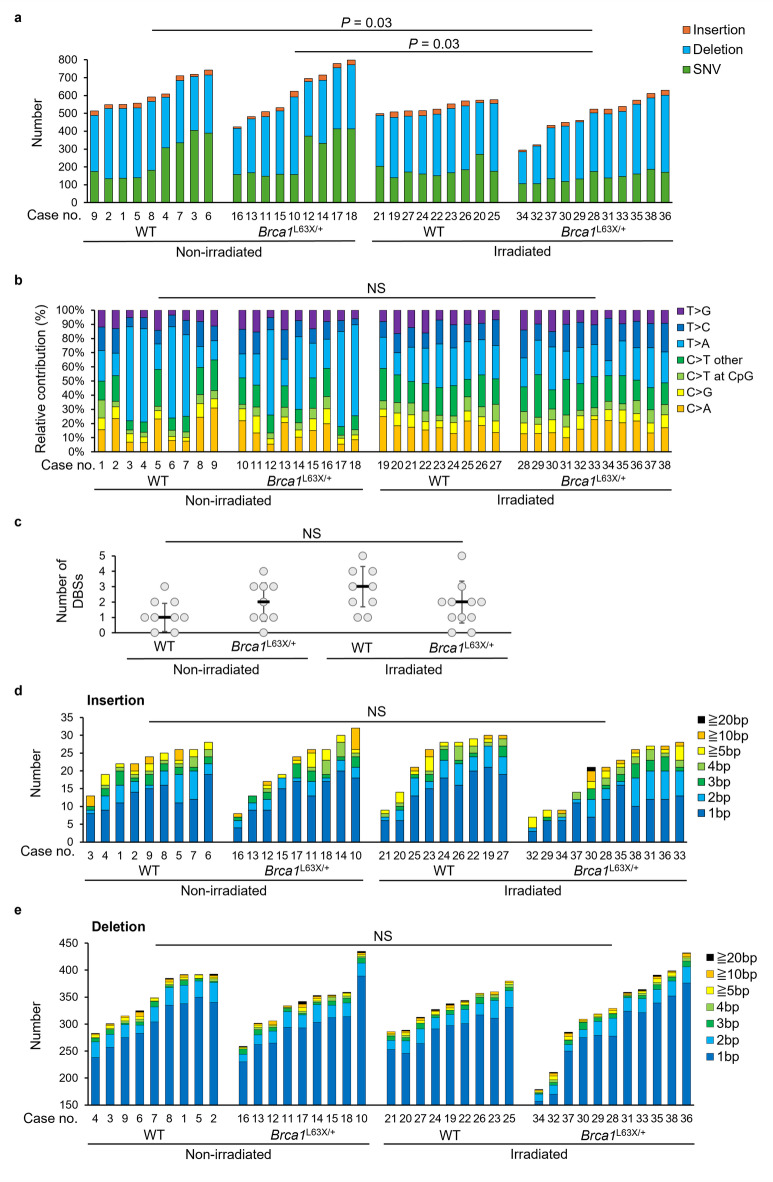 Figure 1
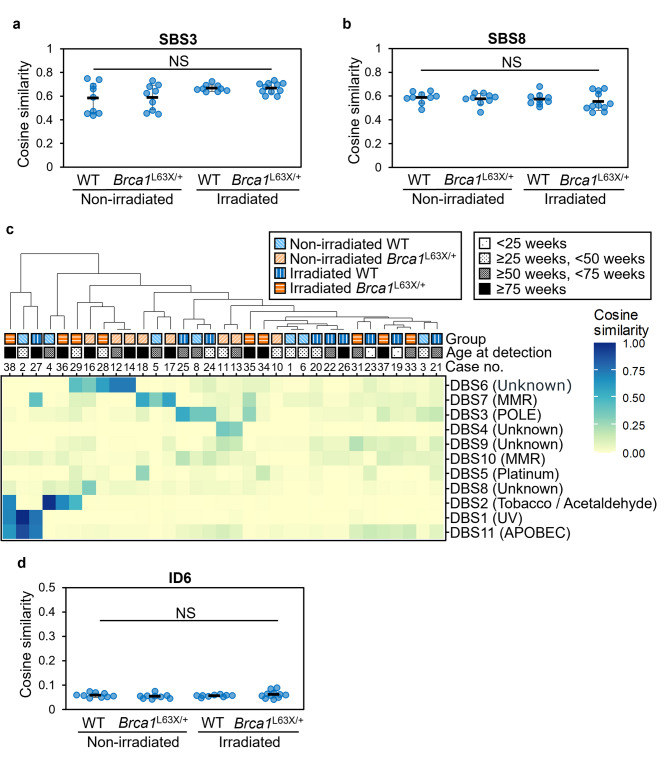 Figure 2
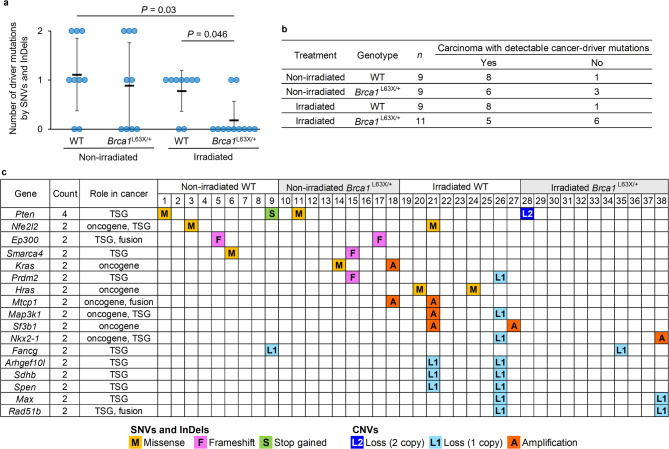 Figure 3
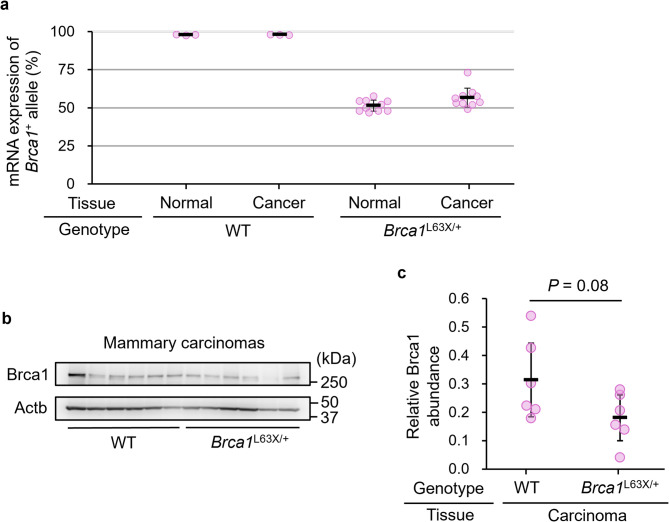 Figure 4
Peer Reviews
No public reviews on file for this paper yet. If you reviewed it on a platform where reviews are public (OpenReview, ICLR, NeurIPS, ICML), you can paste yours below so the community can read it here.
Videos
No videos yet. Explain this paper in a talk, walkthrough, or lecture? Add one.
Taxonomy
TopicsGenetic factors in colorectal cancer · BRCA gene mutations in cancer · Genomic variations and chromosomal abnormalities