Graphene Aerogel-Based Flexible Pressure Sensor for Physiological Signal Detection and Human–Machine Interaction
Zihan Wang, Zeshang Zhao, Qiyang Tu, Chengpeng Yao, Zhao Liu, Chengzhi Zhou, Luxiang Xu, Shijie Guo, Chuizhou Meng, Gaofeng Shao, Huanyu Cheng, Li Yang

TL;DR
A new flexible pressure sensor made from graphene aerogel can detect subtle pressures and is used for physiological monitoring and human-machine interaction.
Contribution
A high-sensitivity, stable pressure sensor using reduced graphene oxide aerogel for smart robotics and human-machine interfaces.
Findings
The sensor has a sensitivity of 698.96 kPa−1 and detects pressures as low as 1 Pa.
It maintains stability over 20,000 cycles and enables teleoperation with 100% food recognition accuracy.
The sensor can be used as an artificial electronic skin for spatial pressure mapping.
Abstract
Reduced graphene oxide aerogel (rGOA) was prepared via freeze-casting, featuring an ultra-light density (10 mg cm−3) and a unique anisotropic structure, which bring advantages to pressure sensing.The rGOA-based pressure sensor exhibits a sensitivity as high as 698.96 kPa−1, a detection range as wide as 100 kPa, and a cyclic stability of over 20,000 cycles.The integration of rGOA with manipulators enables teleoperation, stable grasping of fragile objects with force-feedback and 100% accuracy in food recognition. Reduced graphene oxide aerogel (rGOA) was prepared via freeze-casting, featuring an ultra-light density (10 mg cm−3) and a unique anisotropic structure, which bring advantages to pressure sensing. The rGOA-based pressure sensor exhibits a sensitivity as high as 698.96 kPa−1, a detection range as wide as 100 kPa, and a cyclic stability of over 20,000 cycles. The integration of…
Genes, proteins, chemicals, diseases, species, mutations and cell lines named across the full text — each resolved to its canonical identifier and authoritative record.
Click any figure to enlarge with its caption.
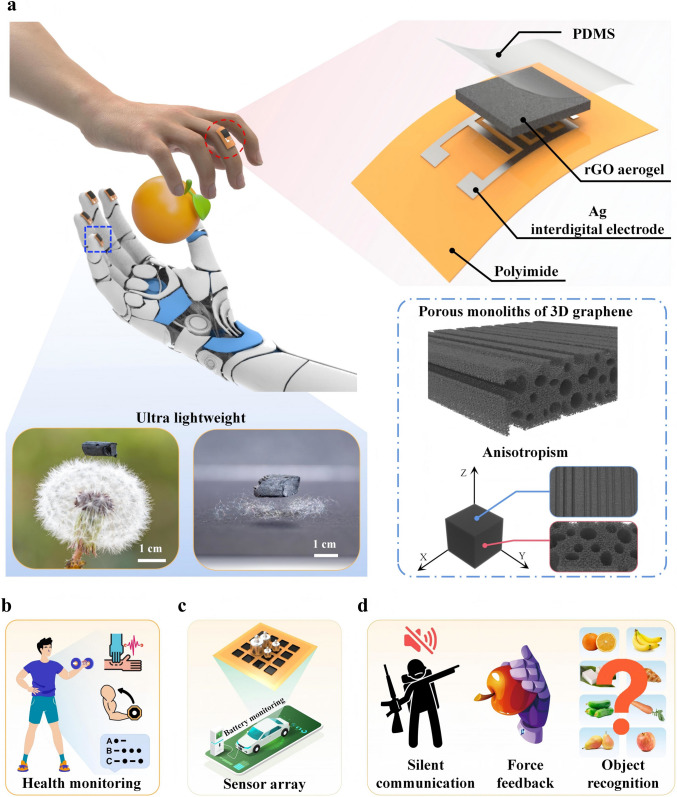 Figure 1
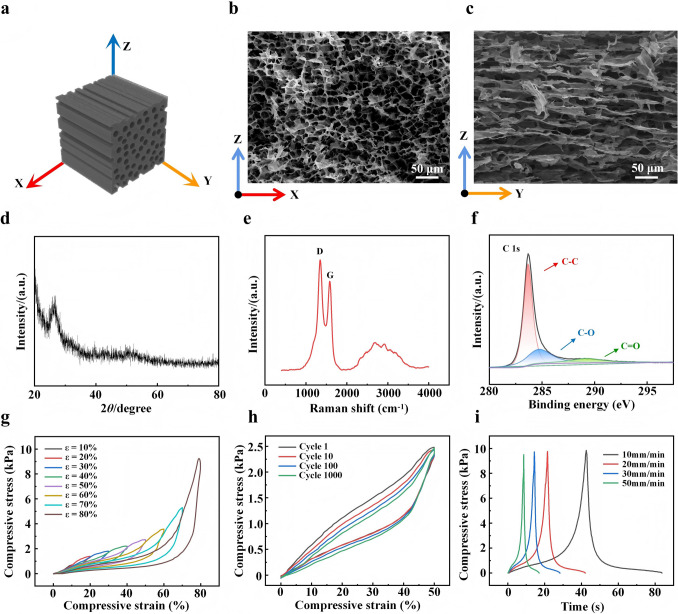 Figure 2
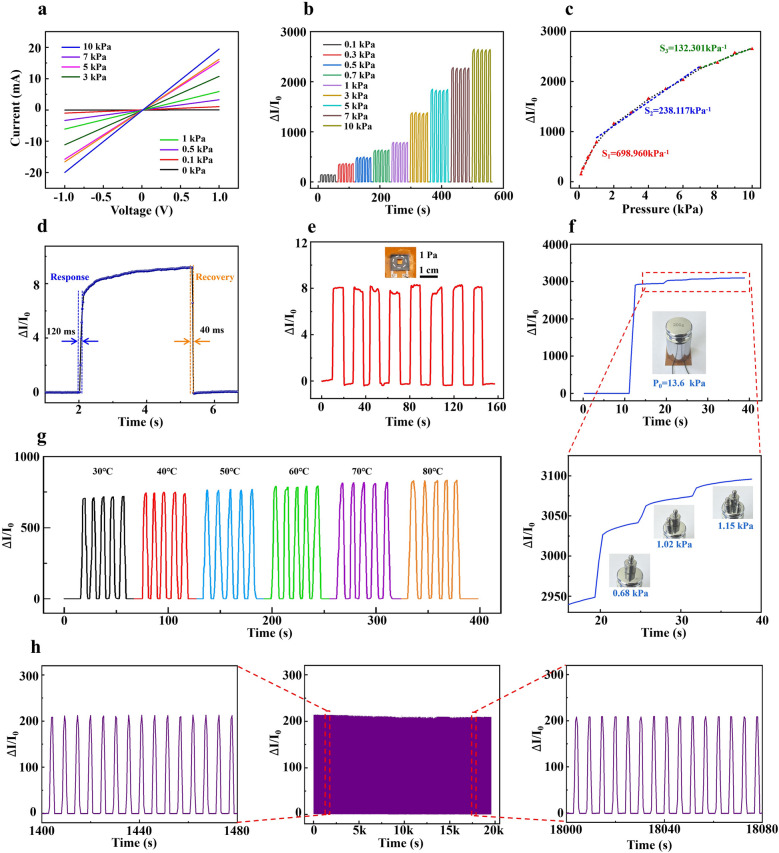 Figure 3
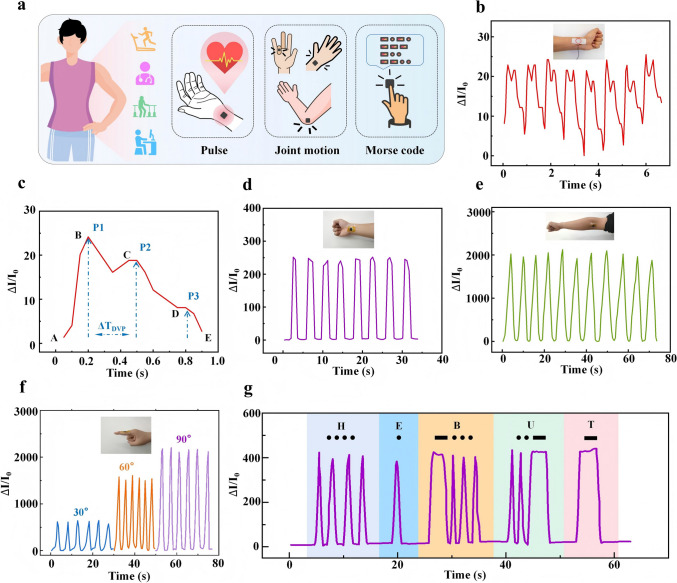 Figure 4
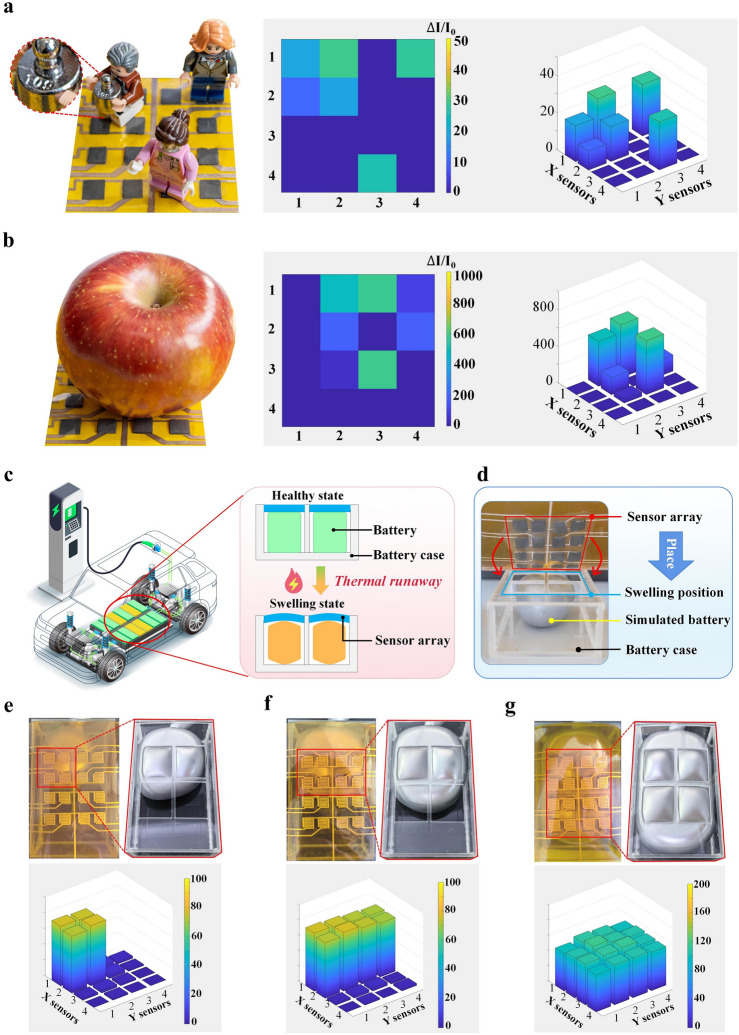 Figure 5
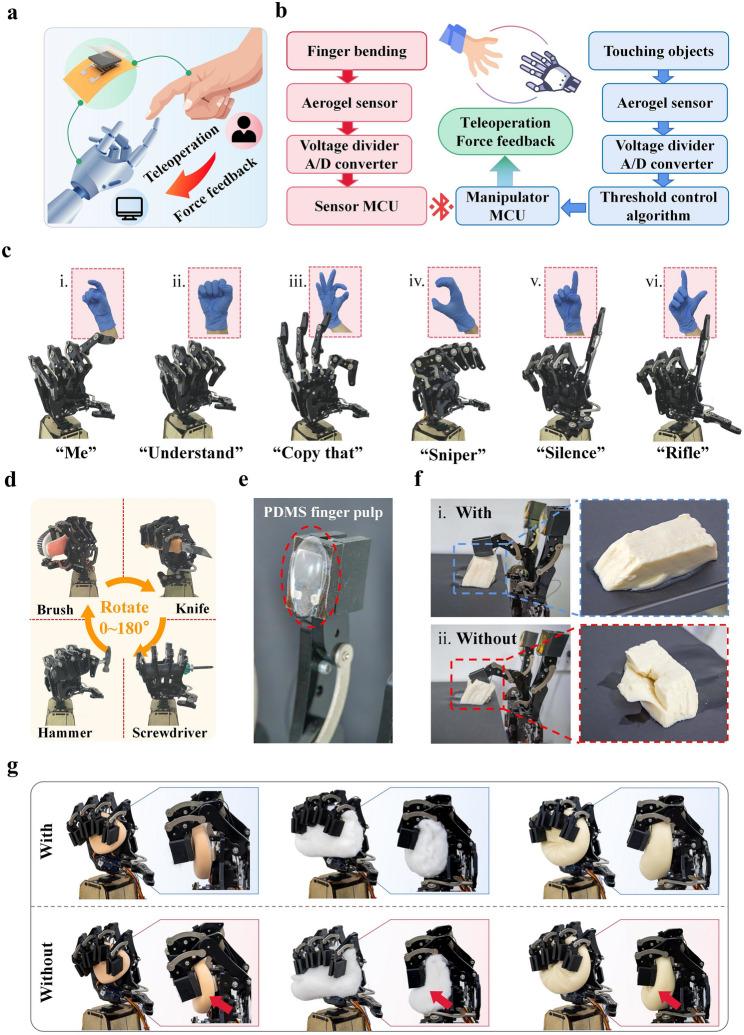 Figure 6
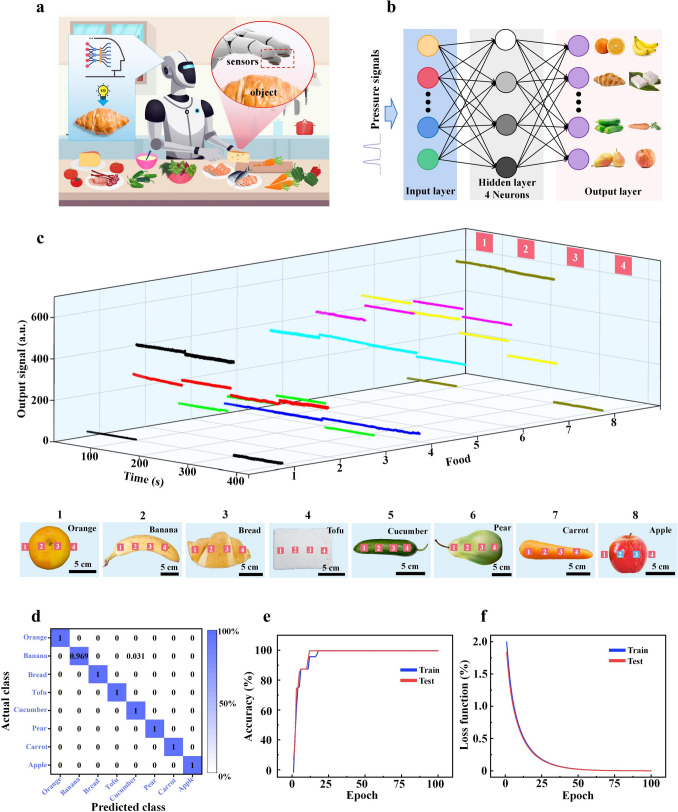 Figure 7
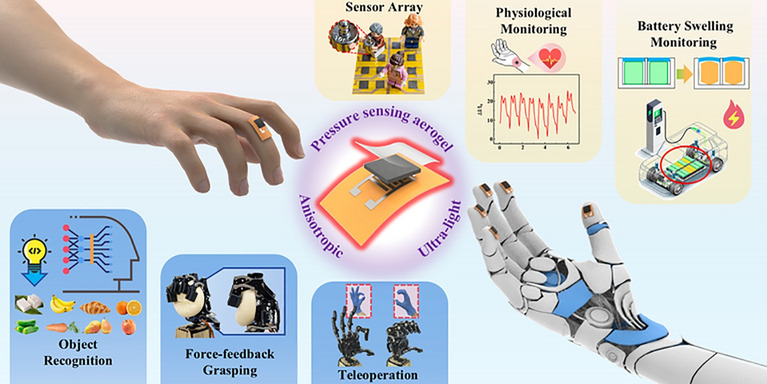 Figure 8
Peer Reviews
No public reviews on file for this paper yet. If you reviewed it on a platform where reviews are public (OpenReview, ICLR, NeurIPS, ICML), you can paste yours below so the community can read it here.
Videos
No videos yet. Explain this paper in a talk, walkthrough, or lecture? Add one.
Taxonomy
TopicsAdvanced Sensor and Energy Harvesting Materials · Dielectric materials and actuators · Advanced Materials and Mechanics