GT‐Seq Panel Development for Species Identification and Parentage Analysis of Closely Related Hybridising Scaphirhynchus Sturgeons
Junman Huang, Richard Flamio, Nathan R. Campbell, Aaron J. DeLonay, Amy C. Buhman, Edward J. Heist

TL;DR
This study develops a genetic tool to identify sturgeon species and their hybrids, aiding conservation efforts by distinguishing hatchery and wild populations.
Contribution
A novel GT-seq SNP panel is developed for species identification and parentage analysis in hybridizing Scaphirhynchus sturgeons.
Findings
The S-loci panel reliably classifies pure species and hybrids with up to 70% missing data.
The P-loci panel enables high-confidence parentage assignment with ≥ 80% typed loci.
The panel provides critical information for managing Pallid Sturgeon conservation programs.
Abstract
Hatchery supplementation is vital for conserving dwindling fish populations. Effective augmentation requires distinguishing hatchery‐origin from wild individuals and accurately identifying species, particularly in systems where closely related species coexist. Genetic monitoring is key to quantifying genetic differences, but conventional markers do not distinguish hybrids, especially backcrosses. Misidentifying hybrids in hatchery programs compromises wild gene pools because hatchery broodstock contributes to numerous offspring being released into the wild. Here, we present a workflow for developing and evaluating the Genotyping‐in‐Thousands by sequencing (GT‐seq) single nucleotide polymorphism (SNP) panel for North American river sturgeons (Scaphirhynchus spp.). This panel is designed to detect complex hybrid classes and to determine parent‐offspring relationships. Our species…
Genes, proteins, chemicals, diseases, species, mutations and cell lines named across the full text — each resolved to its canonical identifier and authoritative record.
Click any figure to enlarge with its caption.
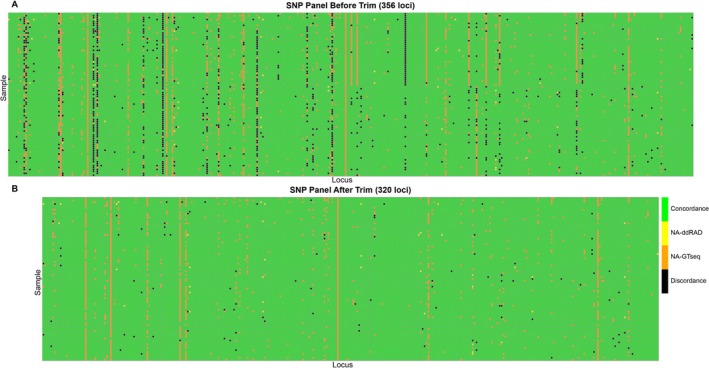 Figure 1
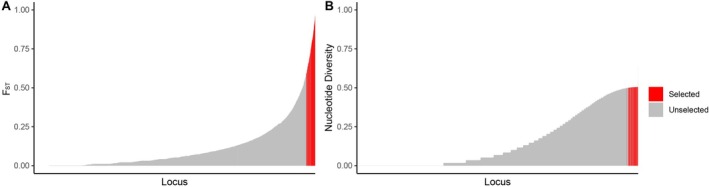 Figure 2
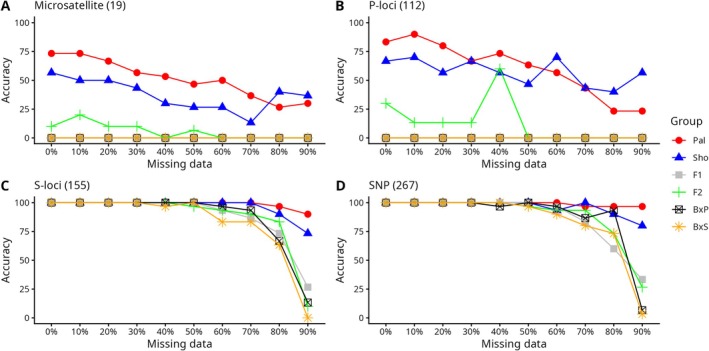 Figure 3
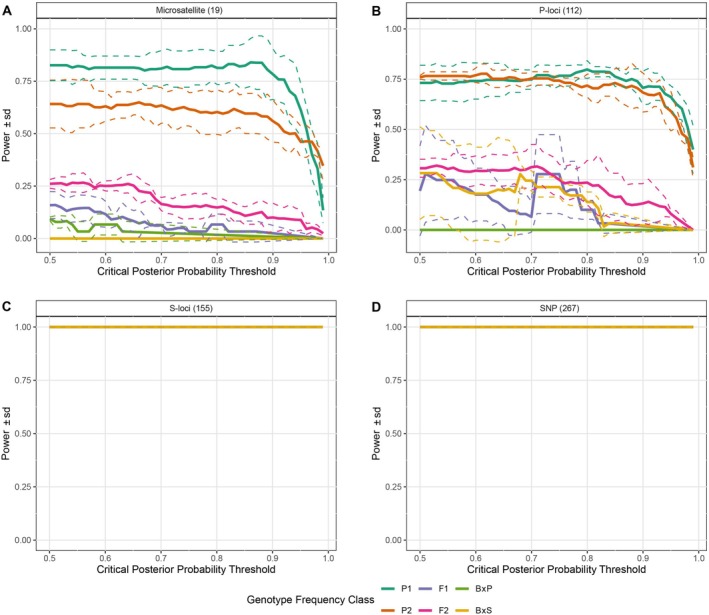 Figure 4
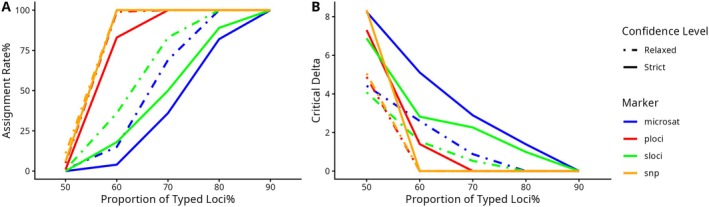 Figure 5
 Figure 6
Peer Reviews
No public reviews on file for this paper yet. If you reviewed it on a platform where reviews are public (OpenReview, ICLR, NeurIPS, ICML), you can paste yours below so the community can read it here.
Videos
No videos yet. Explain this paper in a talk, walkthrough, or lecture? Add one.
Taxonomy
TopicsGenetic diversity and population structure · Genetic and phenotypic traits in livestock · Reproductive biology and impacts on aquatic species