Blood Flow Restriction Therapy Stimulates Intercellular Mitochondria Transfer and Improves Muscle Regeneration and Shoulder Function in a Murine Rotator Cuff Injury Model
Nesa Milan, Aboubacar Wague, Luke Sang, Alex Youn, Ryan Sadjadi, Yusef Samimi, Cristhian Montenegro, Miguel Lizarraga, Justin Lau, Allan I. Basbaum, Michael R. Davies, Hubert T. Kim, Brian T. Feeley, Jarret A.P. Weinrich, Xuhui Liu

TL;DR
Blood flow restriction therapy improves muscle regeneration and shoulder function after rotator cuff injury in mice by stimulating mitochondrial transfer from fibro-adipogenic progenitors to muscle cells.
Contribution
This study is the first to demonstrate that BFR enhances muscle recovery after rotator cuff injury via intercellular mitochondrial transfer.
Findings
BFR increases FAP-mediated mitochondrial transfer in mouse supraspinatus muscle after rotator cuff injury.
BFR-treated mice show reduced muscle atrophy, fatty infiltration, and fibrosis after injury.
BFR improves forepaw weightbearing and stride length in mice with rotator cuff injuries.
Abstract
Rotator cuff (RC) tears are among the most common causes of shoulder dysfunction in sports medicine. Muscle atrophy and degeneration are important risk factors for RC tendon retearing and suboptimal recovery of shoulder function after tendon repair. Although blood flow restriction (BFR) can stimulate muscle regeneration after lower extremity trauma and anterior cruciate ligament reconstruction, the mechanisms that underlie BFR remain unknown, and its application to RC tears has not yet been explored. The authors hypothesized that BFR induces transfer of mitochondria from intramuscular fibro-adipogenic progenitors (FAPs) to myocytes, enhances muscle regeneration, and improves shoulder function after RC injury. Controlled laboratory study. To assess mitochondrial transfer after BFR, the authors used Prrx1-Cre/MitoTag reporter mice, in which FAP mitochondria are labeled. Mice underwent…
Genes, proteins, chemicals, diseases, species, mutations and cell lines named across the full text — each resolved to its canonical identifier and authoritative record.
Click any figure to enlarge with its caption.
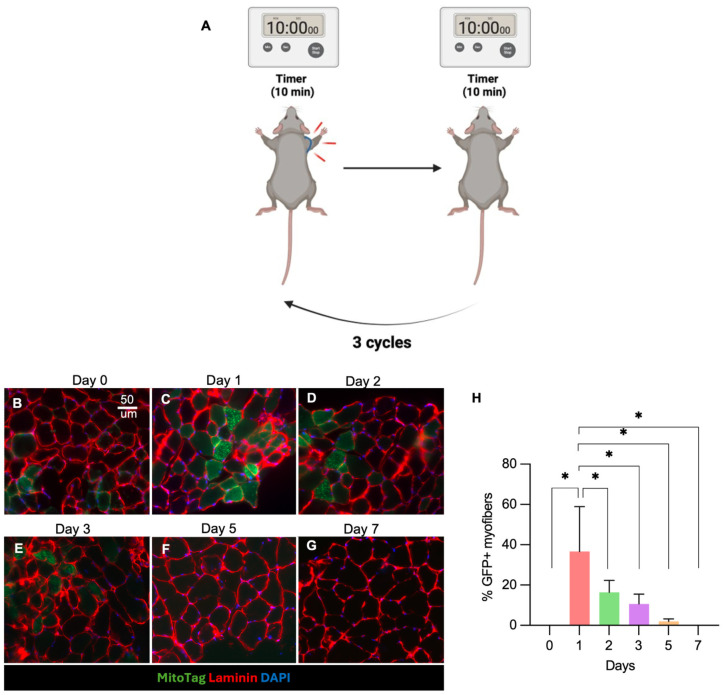 Figure 1
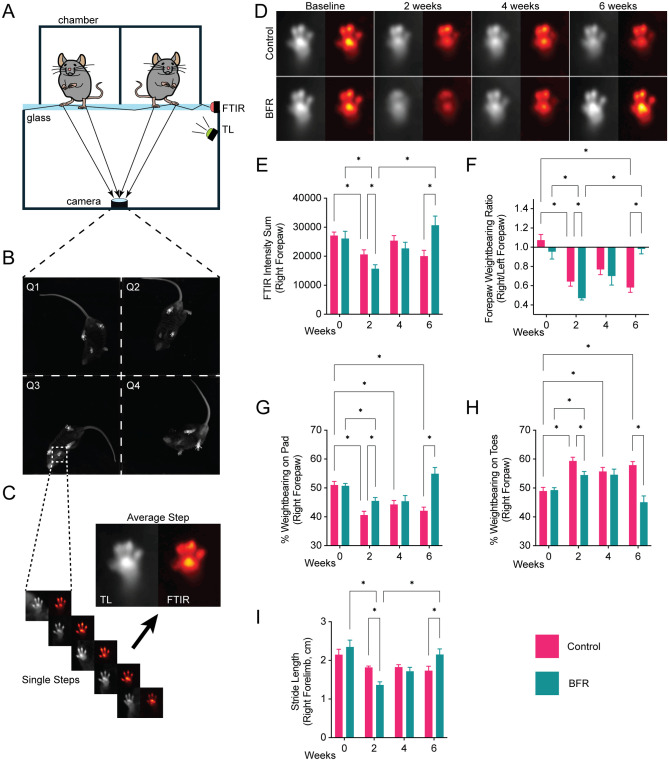 Figure 2
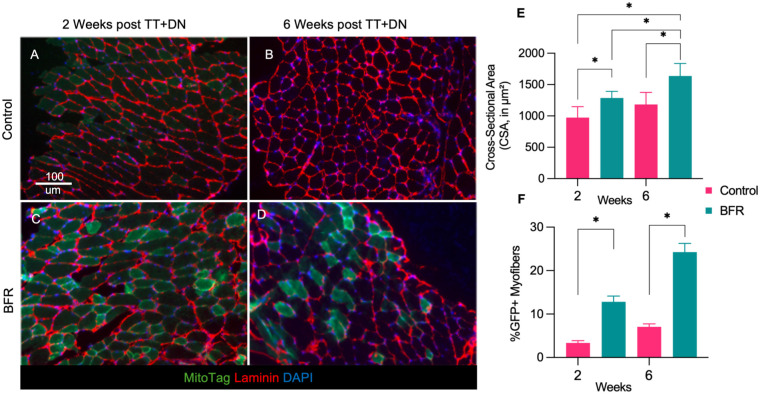 Figure 3
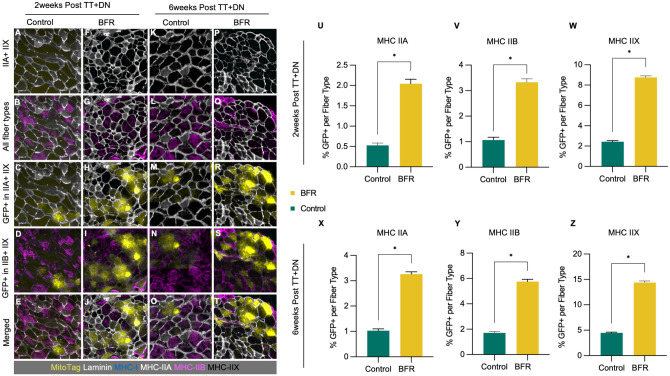 Figure 4
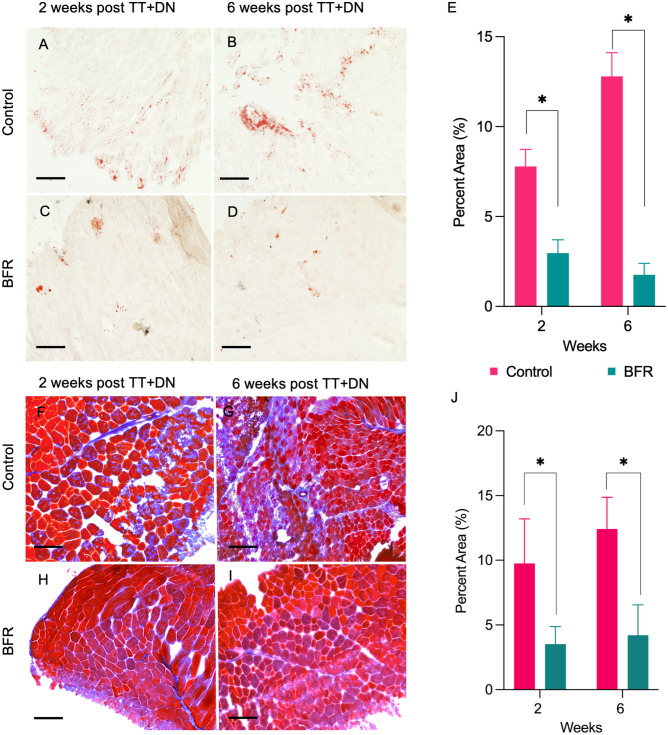 Figure 5
 Figure 6
Peer Reviews
No public reviews on file for this paper yet. If you reviewed it on a platform where reviews are public (OpenReview, ICLR, NeurIPS, ICML), you can paste yours below so the community can read it here.
Videos
No videos yet. Explain this paper in a talk, walkthrough, or lecture? Add one.
Taxonomy
TopicsMuscle Physiology and Disorders · Cardiovascular and exercise physiology · Tendon Structure and Treatment