Sex-dependent rescue of memory and synaptic deficits in AD model mice by increasing PSD-95 palmitoylation
Yixing Du, Katie Prinkey, Andrew Q. Pham, Amber Lawrence, Celeste Morales, Maureen Dinata, Marlenne Gutierrez, Ahmed Khalil, Medha Sharma, Robert A. Rissman, Mehreen Manikkoth, Ian Baick, Haritha Karthikeyan, Kim Dore

TL;DR
A drug that increases PSD-95 palmitoylation improves memory and synaptic function in female Alzheimer's model mice, but not in males.
Contribution
The study identifies a sex-specific therapeutic strategy for Alzheimer's disease by targeting PSD-95 palmitoylation.
Findings
Female AD model mice have reduced PSD-95 palmitoylation and memory deficits not seen in males.
Palmostatin B treatment rescues memory and synaptic deficits in female AD mice.
The drug's effects are not due to changes in amyloid plaques or astrogliosis.
Abstract
PSD-95, a major scaffolding protein, requires palmitoylation to remain at synapses where it plays critical roles in synaptic structure and function. Here, we show that PSD-95 palmitoylation is specifically reduced in the hippocampus of female Alzheimer’s disease (AD) model mice. Accordingly, these mice have significant memory deficits that are not observed in male AD model mice. Systemic injections of Palmostatin B, a depalmitoylating enzyme inhibitor (including the one acting on PSD-95), rescues memory deficits in female AD model mice and restores PSD-95 palmitoylation levels. Importantly, both synaptic structure and function are impaired in female AD model mice, and these deficits are normalized in Palmostatin B injected animals. This drug has no effects on amyloid plaques or GFAP levels, indicating that the rescue of behavioral and synaptic deficits is not due to effects on plaque or…
Genes, proteins, chemicals, diseases, species, mutations and cell lines named across the full text — each resolved to its canonical identifier and authoritative record.
Click any figure to enlarge with its caption.
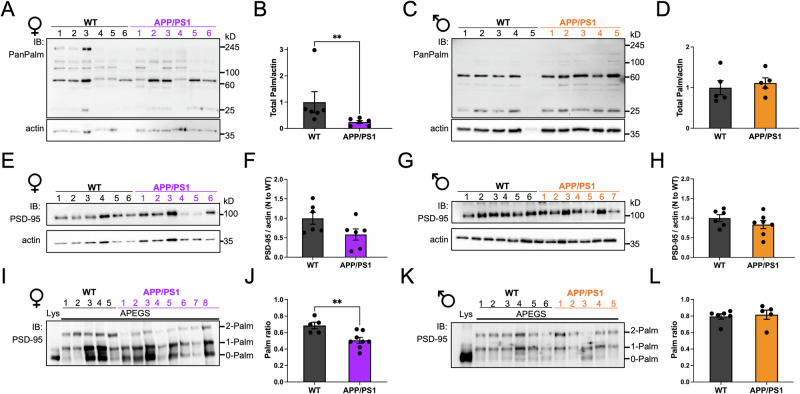 Figure 1
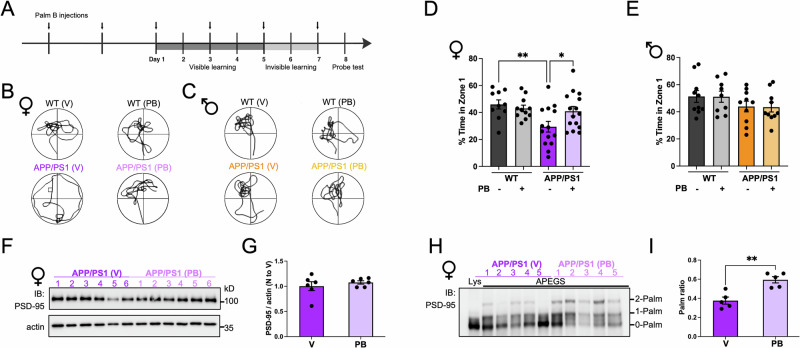 Figure 2
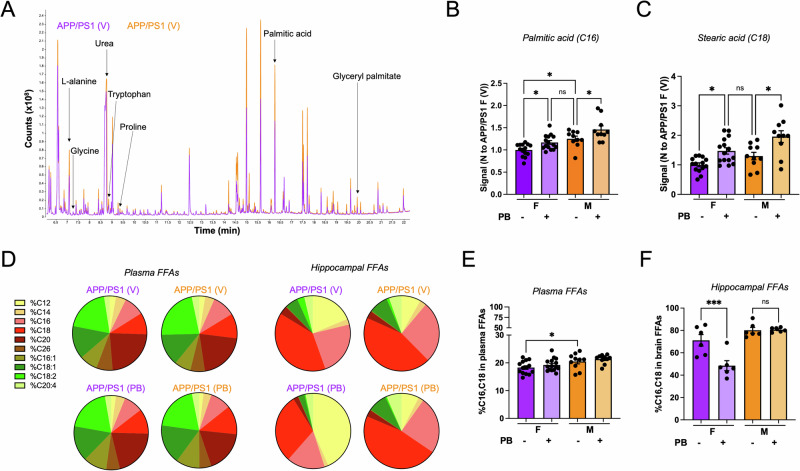 Figure 3
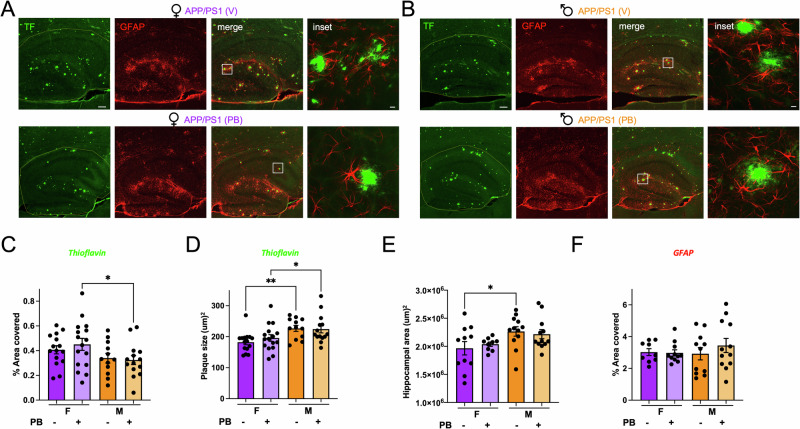 Figure 4
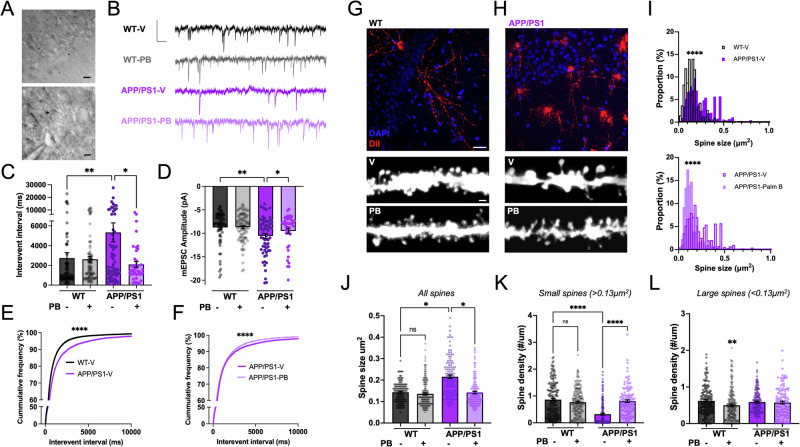 Figure 5
Peer Reviews
No public reviews on file for this paper yet. If you reviewed it on a platform where reviews are public (OpenReview, ICLR, NeurIPS, ICML), you can paste yours below so the community can read it here.
Videos
No videos yet. Explain this paper in a talk, walkthrough, or lecture? Add one.
Taxonomy
TopicsAlzheimer's disease research and treatments · 14-3-3 protein interactions · Neuroscience and Neuropharmacology Research