Beyond readthrough: ataluren restores mitochondrial function and reduces oxidative stress in FANCA-mutated cells via mTOR–DRP1 modulation
Matilde Balbi, Elisa Guidi, Anca Manuela Hristodor, Fabio Corsolini, Vanessa Cossu, Roberta Bottega, Martina Serra, Sara Pestarino, Martina Bartolucci, Marco Cipolli, Stefano Regis, Valentino Bezzerri, Enrico Cappelli, Silvia Ravera

TL;DR
Ataluren improves mitochondrial function and reduces oxidative stress in Fanconi anemia cells, beyond its known readthrough effect.
Contribution
Ataluren's metabolic and redox benefits in FA cells are revealed, independent of mutation type and involving mTOR–DRP1 modulation.
Findings
Ataluren improves ATP/AMP ratio and oxidative phosphorylation efficiency in FA cells.
Ataluren reduces lipid peroxidation and oxidative DNA damage without affecting glycolysis.
Ataluren lowers DRP1 and mTOR-S6 signaling, suggesting modulation of mitochondrial dynamics.
Abstract
Fanconi anemia (FA) is a rare inherited bone marrow failure syndrome characterized by genomic instability, mitochondrial dysfunction, and oxidative stress. While the therapeutic potential of ataluren, a translational readthrough-inducing drug, has been investigated in FA cells carrying nonsense mutations, its broader metabolic impact remains unclear. Here, we demonstrate that ataluren (tested at 2.5, 5, and 10 μM) modulates cellular energy metabolism and redox homeostasis in FA lymphoblasts harboring either nonsense or missense mutations in the FANCA gene. At low doses (2.5 μM for 72 h), ataluren improved the ATP/AMP ratio, enhanced oxidative phosphorylation efficiency, and reduced lipid peroxidation and oxidative DNA damage. These effects were independent of mutation type and were not associated with compensatory glycolysis, as lactate dehydrogenase activity remained unchanged.…
Genes, proteins, chemicals, diseases, species, mutations and cell lines named across the full text — each resolved to its canonical identifier and authoritative record.
Click any figure to enlarge with its caption.
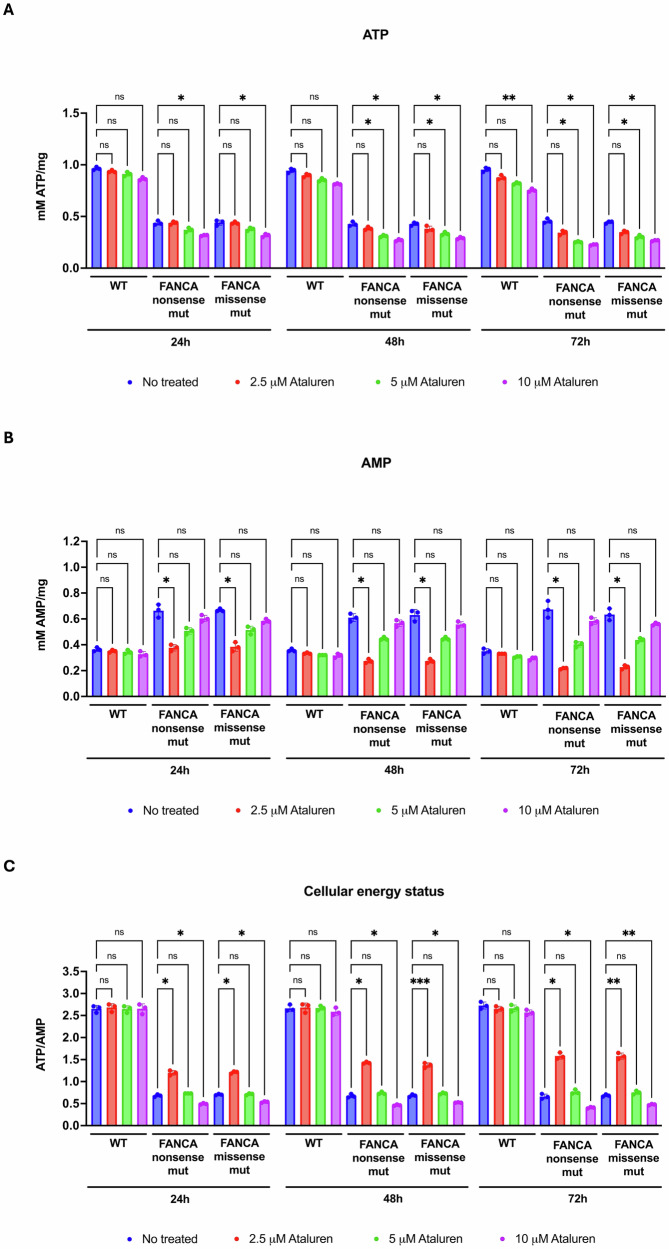 Figure 1
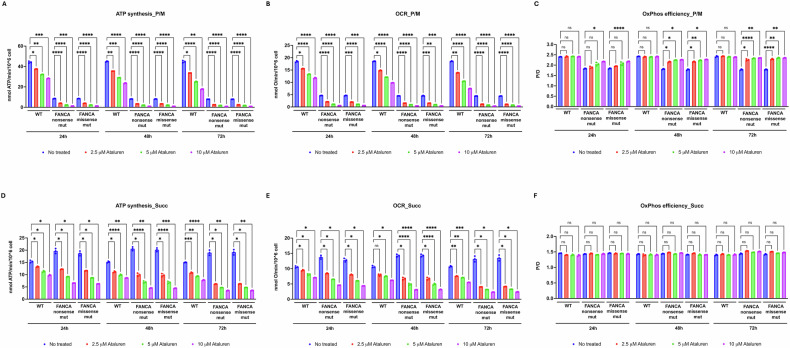 Figure 2
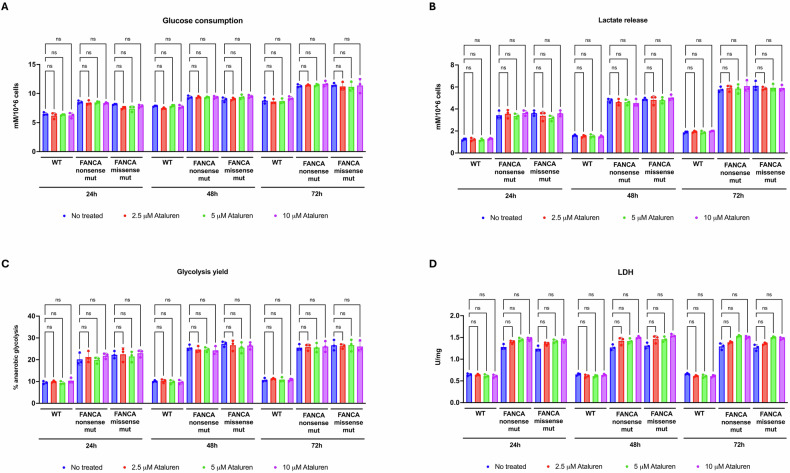 Figure 3
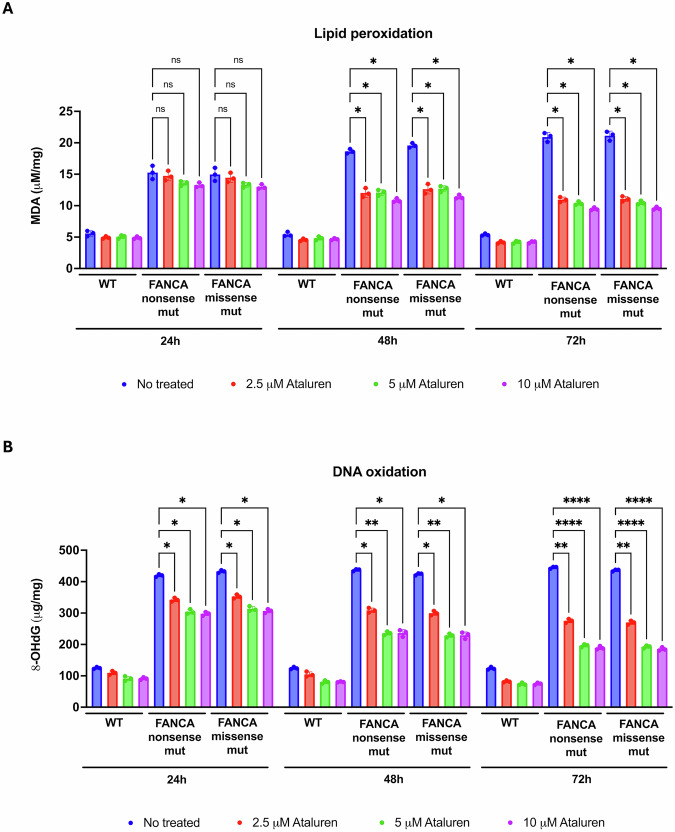 Figure 4
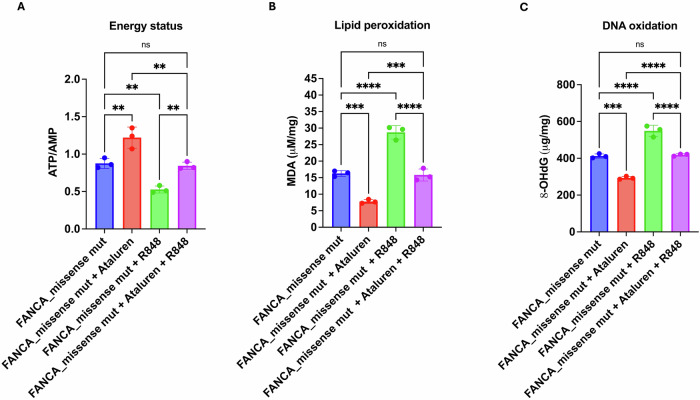 Figure 5
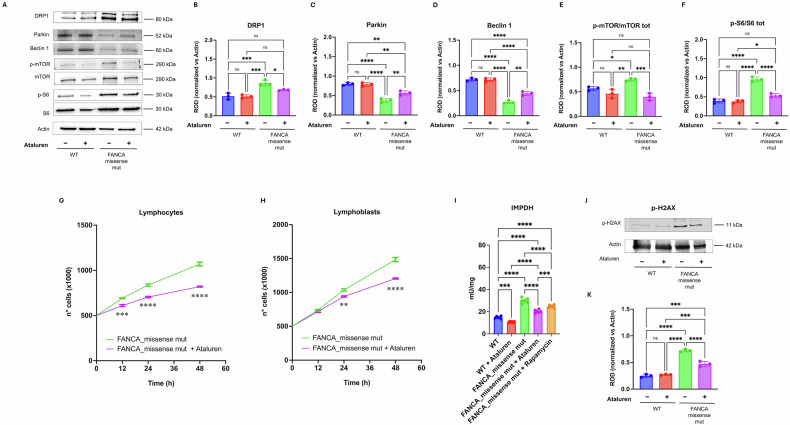 Figure 6
Peer Reviews
No public reviews on file for this paper yet. If you reviewed it on a platform where reviews are public (OpenReview, ICLR, NeurIPS, ICML), you can paste yours below so the community can read it here.
Videos
No videos yet. Explain this paper in a talk, walkthrough, or lecture? Add one.
Taxonomy
TopicsDNA Repair Mechanisms · Mitochondrial Function and Pathology · Biochemical and Molecular Research