Targeting fatty acid synthase suppresses tumor development in NF2/CDKN2A-deficient pleural mesothelioma
Sivasundaram Karnan, Akinobu Ota, Muhammad Nazmul Hasan, Hideki Murakami, Md. Lutfur Rahman, Md Wahiduzzaman, Md Towhid Ahmed Shihan, Nushrat Jahan, Lam Quang Vu, Ichiro Hanamura, Akihito Inoko, Miho Riku, Hideaki Ito, Yoshifumi Kaneko, Yinzhi Lin, Toshinori Hyodo

TL;DR
Blocking fatty acid synthase (FASN) with cerulenin slows tumor growth in a type of lung cancer linked to asbestos exposure.
Contribution
Cerulenin, a FASN inhibitor, shows strong antiproliferative effects in NF2/CDKN2A-deficient pleural mesothelioma cells and tumors.
Findings
FASN is frequently expressed in NF2/p16-deficient PM tumors but rarely in NF2/p16-intact tumors.
Cerulenin inhibits mitochondrial fission by targeting DRP1 in NF2/p16-deficient cells.
Disruption of FASN increases ubiquitination of DRP1, suggesting a role in PM tumorigenesis.
Abstract
Pleural mesothelioma (PM) is an uncommon yet deadly cancer linked to asbestos exposure. The lack of effective early diagnosis and treatment leads to reduced life expectancy among patients with PM. This study aims to identify a novel molecular target inhibitor to develop more effective therapeutics for PM. Our drug screening assay showed that the fatty acid synthase (FASN) inhibitor cerulenin demonstrates strong and selective antiproliferative properties against NF2/CDKN2A(p16)-deficient PM cells, surpassing the effects of C75, cisplatin or pemetrexed. FASN protein is frequently detected in NF2/p16-deficient PM tumor-derived tissues (15/15, 100%), but rarely in NF2/p16-intact PM tumors (8/25, 32%). Notably, cerulenin administration successfully reduced the growth of NF2/p16-deficient PM tumors in xenografted mice. Cerulenin inhibits mitochondrial fission by targeting dynamin-related…
Genes, proteins, chemicals, diseases, species, mutations and cell lines named across the full text — each resolved to its canonical identifier and authoritative record.
Click any figure to enlarge with its caption.
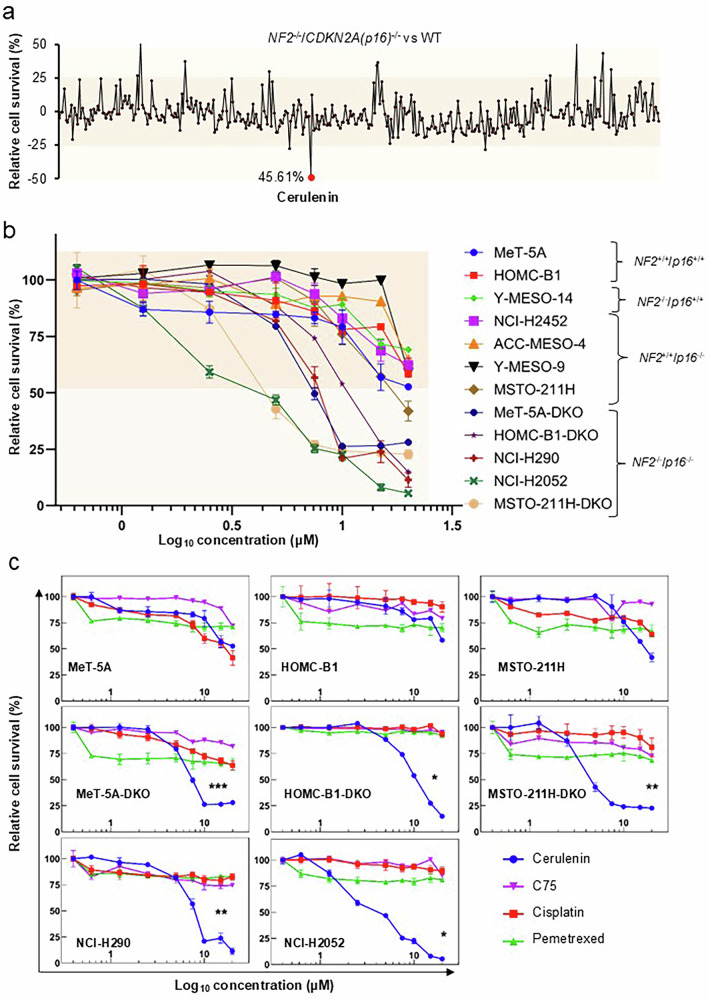 Figure 1
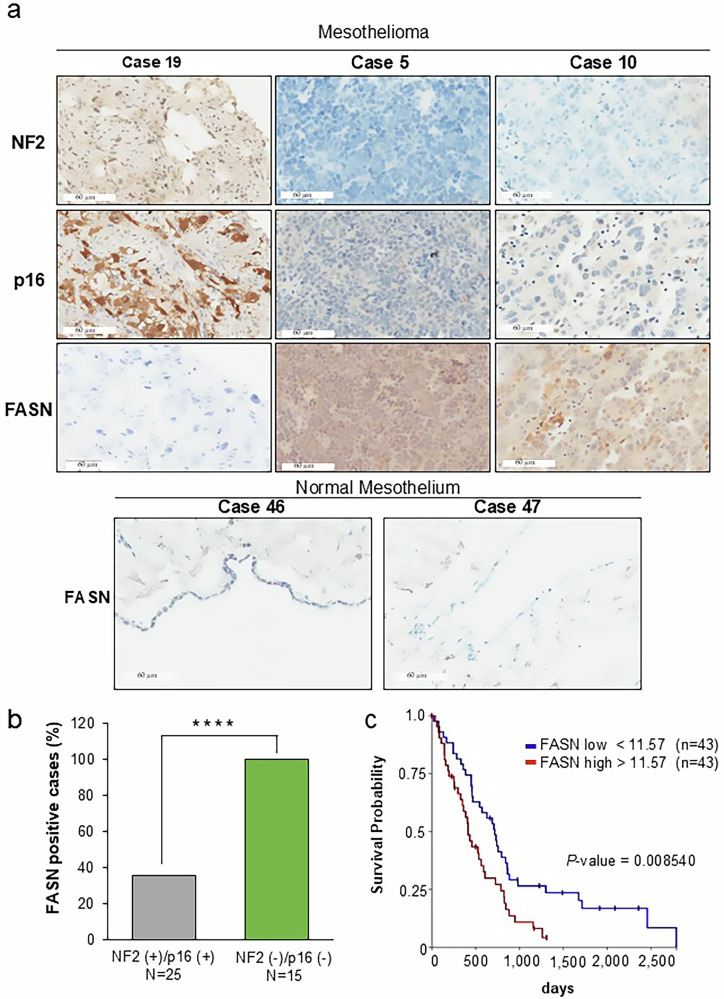 Figure 2
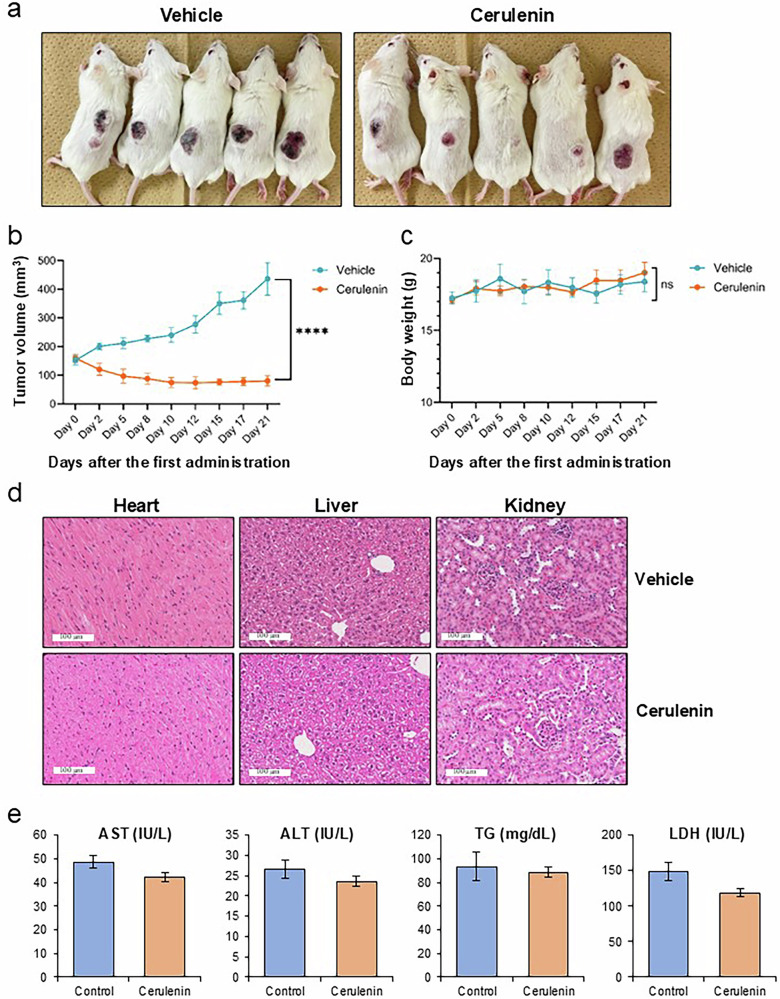 Figure 3
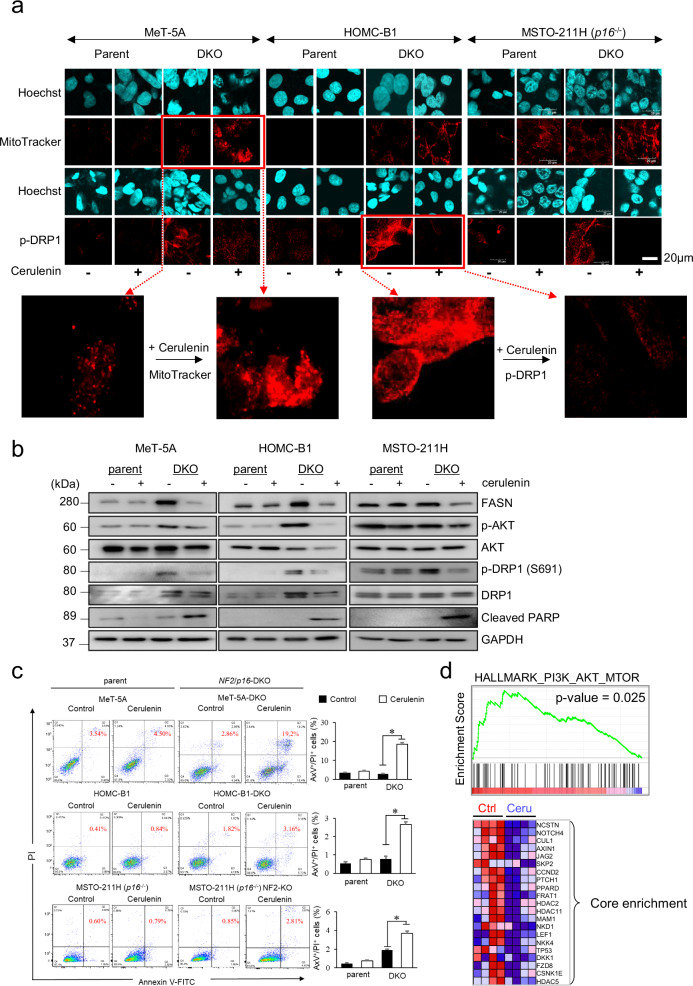 Figure 4
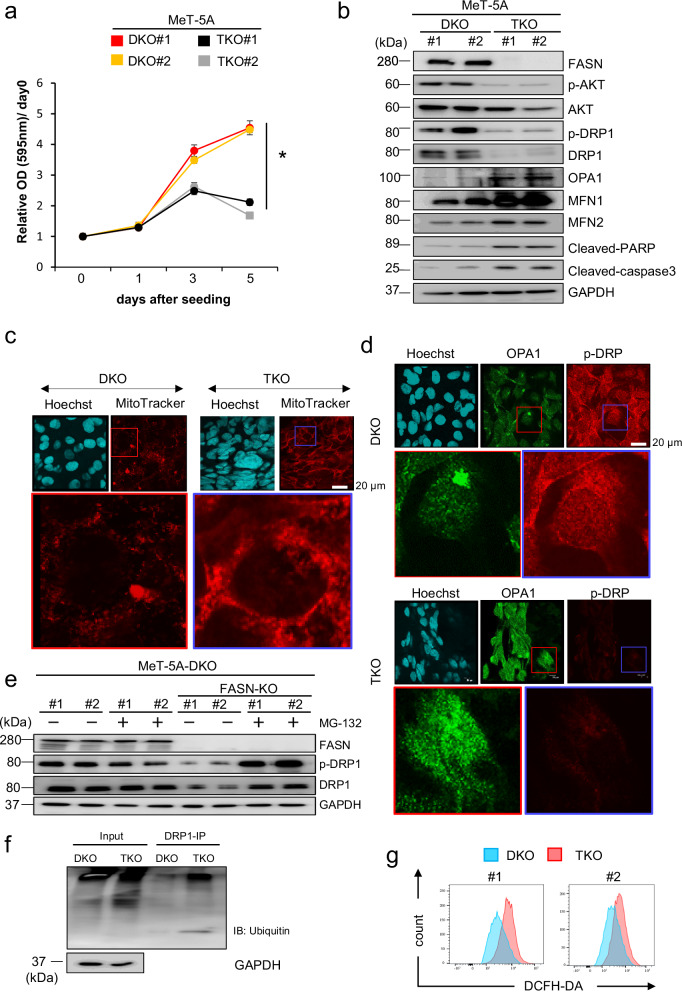 Figure 5
Peer Reviews
No public reviews on file for this paper yet. If you reviewed it on a platform where reviews are public (OpenReview, ICLR, NeurIPS, ICML), you can paste yours below so the community can read it here.
Videos
No videos yet. Explain this paper in a talk, walkthrough, or lecture? Add one.
Taxonomy
TopicsCancer, Lipids, and Metabolism · Sphingolipid Metabolism and Signaling · Lipid metabolism and biosynthesis