Impact of body mass index on aortic valve stenosis and its clinical outcomes in early adulthood: a long-term study of young men
Martin Lindgren, Silvana Kontogeorgos, Amir Djekic, Martin Adiels, Susanne J. Nielsen, Josefina Robertson, Zacharias Mandalenakis, Maria Åberg, N. David Åberg, Demir Djekic

TL;DR
This study shows that higher body mass index in young men increases the risk of developing aortic valve stenosis and worsens outcomes later in life.
Contribution
The study reveals a novel link between adolescent BMI and long-term risk of aortic valve stenosis and its clinical outcomes.
Findings
Low BMI in adolescence is associated with reduced risk of aortic valve stenosis in early adulthood.
Higher BMI in youth increases the risk of aortic valve stenosis and leads to worse survival and cardiovascular outcomes.
Obese individuals with aortic valve stenosis face significantly higher mortality and heart failure risks.
Abstract
We investigated associations between body mass index (BMI) in adolescence with development of aortic valve stenosis (AVS) in early adulthood, and clinical outcomes among those who develop AVS. We used data from 1 701 390 men (mean age, 18.3 ± 0.8 years) enrolled in compulsory conscription for military service in Sweden from 1969 to 2005. Anthropometrics, blood pressure, fitness, muscle strength and IQ were recorded at baseline. Over a median follow-up of 32 years (IQR, 24–41 years), 5766 men were diagnosed with AVS (mean age 54.7 ± 9.4 years). After multivariable adjustment, individuals with a BMI of < 18.5 kg/m2, compared to those with a low-normal BMI (20.0–<22.5 kg/m2) showed lower risk (HR 0.70; 95% CI 0.61–0.80) of AVS. Higher BMI categories were progressively associated with increased risk, reaching HR 1.91 (95% CI 1.12–3.25) for BMI 35–50 kg/m². Further on, those diagnosed with…
Genes, proteins, chemicals, diseases, species, mutations and cell lines named across the full text — each resolved to its canonical identifier and authoritative record.
Click any figure to enlarge with its caption.
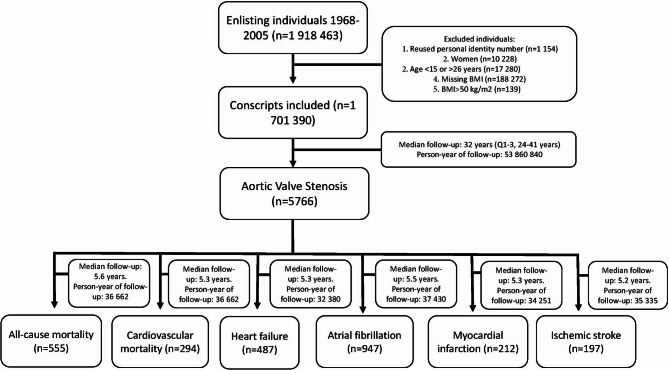 Figure 1
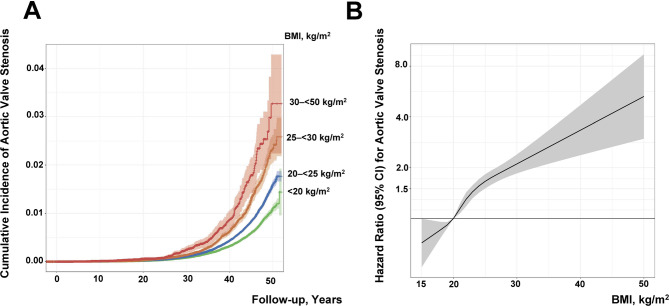 Figure 2
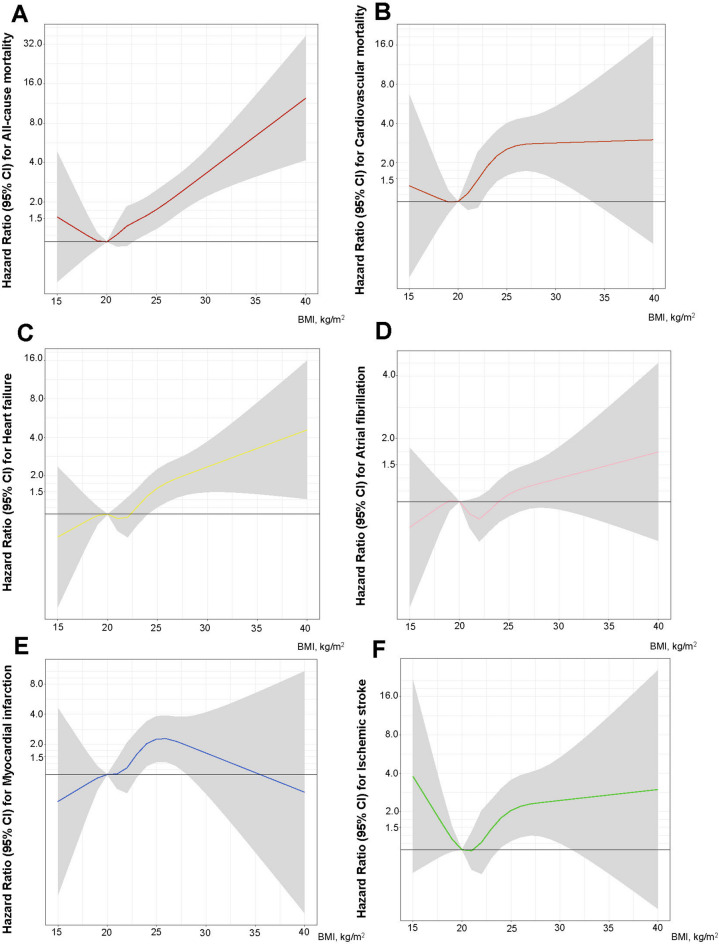 Figure 3
Peer Reviews
No public reviews on file for this paper yet. If you reviewed it on a platform where reviews are public (OpenReview, ICLR, NeurIPS, ICML), you can paste yours below so the community can read it here.
Videos
No videos yet. Explain this paper in a talk, walkthrough, or lecture? Add one.
Taxonomy
TopicsCardiac Valve Diseases and Treatments · Congenital Heart Disease Studies · Aortic Disease and Treatment Approaches