Zoonotic Tuberculosis as a One Health Challenge: Global Evidence, Transmission Dynamics, and Policy Gaps in Indonesia
Tyagita Hartady, Faisal Amri Satrio, Syahrul Maulana, Dwi Wahyuda Wira, Endang Yuni Setyowati, Annas Salleh

TL;DR
Zoonotic tuberculosis from animals to humans is underdiagnosed in Indonesia, requiring better surveillance and food safety to control its spread.
Contribution
The paper highlights Indonesia as a high-risk area for zoonotic TB due to weak diagnostics and food safety practices, emphasizing the need for integrated One Health strategies.
Findings
Zoonotic TB in Indonesia is underdiagnosed due to limited diagnostics and informal food practices.
Bovine TB and co-infections in livestock increase human exposure risks through dairy and beef value chains.
Strengthened One Health systems are critical for controlling zoonotic TB transmission.
Abstract
What are the main findings? Zoonotic tuberculosis (Mycobacterium bovis) is underdiagnosed and underreported in LMICs.zTB likely exceeds the estimated 1–1.5% of global human TB cases due to limited diagnostics.Rising bovine TB, raw milk consumption, and informal slaughtering increase human exposure in Indonesia.Livestock co-infections complicate zTB detection and may enhance bacterial shedding.Strengthened One Health surveillance, diagnostics, and food-safety systems are critical for zTB control. Zoonotic tuberculosis (Mycobacterium bovis) is underdiagnosed and underreported in LMICs. zTB likely exceeds the estimated 1–1.5% of global human TB cases due to limited diagnostics. Rising bovine TB, raw milk consumption, and informal slaughtering increase human exposure in Indonesia. Livestock co-infections complicate zTB detection and may enhance bacterial shedding. Strengthened One…
Genes, proteins, chemicals, diseases, species, mutations and cell lines named across the full text — each resolved to its canonical identifier and authoritative record.
Click any figure to enlarge with its caption.
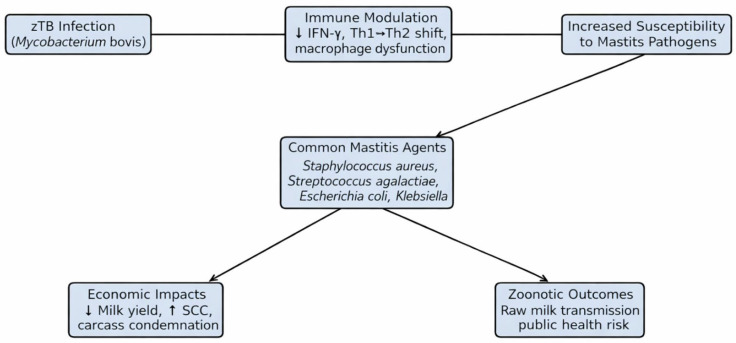 Figure 1
- —Padjadjaran University
- —Ministry of Education, Culture, Research, and Technology of the Republic of Indonesia
Peer Reviews
No public reviews on file for this paper yet. If you reviewed it on a platform where reviews are public (OpenReview, ICLR, NeurIPS, ICML), you can paste yours below so the community can read it here.
Videos
No videos yet. Explain this paper in a talk, walkthrough, or lecture? Add one.
Taxonomy
TopicsTuberculosis Research and Epidemiology · Zoonotic diseases and public health · Milk Quality and Mastitis in Dairy Cows
1. Introduction
Tuberculosis (TB) remains one of the most devastating infectious diseases affecting humanity, with profound impacts on public health, socioeconomic development, and global health security [1]. Despite decades of concerted international control efforts, TB continues to cause substantial morbidity and mortality, particularly in low- and middle-income countries (LMICs) [2,3]. According to the World Health Organization (WHO), an estimated 10.6 million people developed TB globally in 2023, with approximately 1.3 million deaths attributed to the disease, making TB the leading cause of death from a single infectious agent worldwide [4]. These figures underscore the persistent gap between global TB elimination targets and current epidemiological realities.
The overwhelming majority of human TB cases are caused by Mycobacterium tuberculosis, a pathogen highly adapted to human hosts and primarily transmitted via airborne droplets [5,6,7]. However, zoonotic tuberculosis (zTB), defined as TB caused by members of the Mycobacterium tuberculosis complex (MTBC) transmitted between animals and humans, represents a neglected yet clinically and epidemiologically significant component of the global TB burden [8,9,10]. zTB is most commonly associated with Mycobacterium bovis (M. bovis), the principal causative agent of bovine tuberculosis. However, increasing evidence highlights the role of other MTBC members, including M. caprae, M. africanum, and M. orygis [11,12].
Historically, M. bovis was a major cause of human TB before the widespread introduction of milk pasteurization, meat inspection, and systematic bovine TB control programs in high-income countries [13,14]. These interventions led to dramatic declines in zTB incidence across Europe and North America during the twentieth century. Nevertheless, zTB remains endemic in many LMICs, where livestock production systems are characterized by close human–animal contact, limited veterinary oversight, informal slaughter practices, and inadequate food-safety regulations [15]. In such settings, livestock are integral not only to food security but also to cultural identity, social capital, and household income, amplifying the public health implications of animal diseases.
In animals, bovine TB causes chronic disease characterized by weight loss, reduced productivity, infertility, and increased mortality [16]. Economic consequences include decreased milk and meat production, trade restrictions, and financial losses associated with carcass condemnation [17]. These impacts disproportionately affect smallholder farmers, perpetuating cycles of poverty and vulnerability [18]. In humans, zTB contributes to both pulmonary and extrapulmonary diseases, often with diagnostic delays and suboptimal treatment outcomes [19].
Despite its recognized zoonotic potential, the true contribution of zTB to the global TB epidemic remains poorly quantified. WHO estimates suggest that zTB accounts for approximately 1–2% of all human TB cases worldwide, corresponding to an estimated 140,000 new cases and 12,000 deaths annually. However, these figures likely represent substantial underestimates due to diagnostic limitations, lack of routine MTBC speciation, fragmented surveillance systems, and weak coordination between the public health and veterinary sectors [20]. In many endemic countries, human TB diagnostics focus on detecting MTBC without species differentiation, whereas veterinary surveillance for bovine TB is sporadic or absent.
The challenge of zTB is further compounded by the global crisis of antimicrobial resistance (AMR). Drug-resistant TB threatens the effectiveness of current treatment regimens and undermines the progress toward TB elimination [21]. While AMR is most commonly discussed in the context of M. tuberculosis, the resistance dynamics in zTB are equally concerning [22]. M. bovis is intrinsically resistant to pyrazinamide, a cornerstone of first-line TB therapy, and can acquire additional resistance through chromosomal mutations under antimicrobial pressure [23]. The intersection of zTB and AMR highlights the need for integrated cross-sectoral responses.
Indonesia represents a particularly important yet understudied setting for zTB. The country consistently ranks among nations with the highest TB burden globally and hosts one of the largest livestock populations in Southeast Asia [24]. Livestock production in Indonesia is dominated by smallholder and backyard systems in which cattle, buffaloes, goats, and poultry are raised in proximity to human dwellings. Informal milk distribution, limited pasteurization, and uneven enforcement of slaughterhouse regulations create favorable conditions for zoonotic transmission [25,26]. Nevertheless, zTB remains largely absent from national TB control priorities and policy discourse.
The One Health approach, which recognizes the interconnectedness of human, animal, and environmental health, provides a comprehensive framework for addressing zTB [27]. By integrating surveillance, diagnostics, policy, and community engagement across sectors, the One Health strategy offers a pathway to more effective and sustainable control. This review synthesizes global evidence on zTB, examines available data and policy contexts from Indonesia, explores the emerging challenge of AMR, and identifies strategic opportunities for implementing One Health-based interventions at the human–livestock interface.
2. Materials and Methods
2.1. Study Design and Conceptual Framework
This study was designed as a One Health-oriented integrative original research study, combining systematic evidence synthesis, comparative epidemiological analysis, and policy evaluation to characterize zTB agents, transmission pathways, antimicrobial resistance (AMR) mechanisms, and surveillance gaps, with a focused institutional and regulatory assessment in Indonesia. The analytical framework integrated human, animal, and environmental health components in accordance with the established One Health principles [13,17]. This study aimed to generate actionable insights to strengthen zTB control strategies and antimicrobial resistance mitigation efforts.
2.2. Data Sources and Literature Identification
Primary data sources included peer-reviewed scientific literature indexed in PubMed, Scopus, and Web of Science, as well as surveillance reports and policy documents from the World Health Organization (WHO), Food and Agriculture Organization (FAO), World Organisation for Animal Health (WOAH; formerly OIE), and relevant Indonesian government agencies. Additional sources included molecular epidemiology and whole-genome sequencing (WGS) studies of the Mycobacterium tuberculosis complex (MTBC). Search terms were applied in various combinations and included “zoonotic tuberculosis,” “Mycobacterium bovis,” “Mycobacterium orygis,” “MTBC speciation,” “bovine tuberculosis,” “antimicrobial resistance,” “One Health,” and “Indonesia.” The literature search covered publications from 1990 to 2025, capturing both historical tuberculosis control programs and recent advances in molecular epidemiology.
2.3. Eligibility Criteria
The included studies met at least one of the following criteria: identification or characterization of zoonotic MTBC members; analysis of transmission pathways between humans, livestock, wildlife, or the environment; molecular or phenotypic characterization of AMR in MTBC; and evaluation of TB diagnostics, surveillance systems, or policy frameworks.
Exclusion criteria included studies unrelated to MTBC and non-systematic opinion pieces without empirical or policy relevance.
2.4. Data Extraction and Analytical Approach
Data were extracted into structured matrices capturing MTBC species and host range, transmission routes, drug resistance determinants, diagnostic approaches, and surveillance and policy characteristics. Qualitative synthesis was complemented by a comparative regional analysis (LMICs versus high-income countries) and a case study of Indonesia.
2.5. Manuscript Preparation
During the preparation of this manuscript, the authors used ChatGPT (GPT-5.2; OpenAI, San Fransisco, CA, USA) for the purposes of generating the draft text, data collection, and assisting in the conceptualization of graphical elements. The authors have reviewed and edited the output and take full responsibility for the content of this publication.
3. Results and Discussion
3.1. Etiology and Diversity of zTB Agents
Members of the M. tuberculosis complex cause zTB, a group of closely related mycobacteria that can infect humans and a wide range of domestic and wild animals. MTBC members share more than 99% genomic similarity, yet exhibit distinct host preferences, virulence profiles, and epidemiological characteristics. Understanding this diversity is essential for accurate diagnosis, surveillance, and control.
3.1.1. M. bovis as the Principal Zoonotic Agent
M. bovis is the most important zTB agent and the primary cause of bovine tuberculosis worldwide. Unlike Mycobacterium tuberculosis, which is highly adapted to humans, M. bovis exhibits a broad host range, infecting cattle, buffaloes, goats, pigs, deer, a wide range of wildlife species, and humans [28]. This ecological versatility facilitates cross-species transmission and complicates eradication efforts.
From a clinical perspective, M. bovis infection in humans is indistinguishable from M. tuberculosis infection based on clinical presentation, radiological findings, and routine microbiological diagnostics [29]. However, a critical therapeutic distinction is that M. bovis is intrinsically resistant to pyrazinamide (PZA), a first-line anti-tuberculosis drug that is essential for shortening the treatment duration [30]. This resistance results from mutations or deletions in pncA, which encodes pyrazinamidase, the enzyme required to convert PZA into its active form, pyrazinoic acid [31]. Failure to correctly identify M. bovis infection may therefore lead to inappropriate treatment regimens, prolonged infectiousness, and an increased risk of treatment failure [32].
3.1.2. Emerging Zoonotic MTBC Members
Beyond M. bovis, other MTBC members have increasingly been recognized as zoonotic pathogens. M. caprae has been reported in goats, cattle, and humans in several European countries and is often associated with small ruminant farming systems [33,34]. M. africanum, traditionally considered a human-adapted pathogen, has been detected in animal reservoirs and contributes substantially to the TB burden in West Africa [35,36].
Recently, M. orygis has emerged as a zoonotic agent of concern in South and Southeast Asia [37]. Initially identified in antelopes and cattle, M. orygis has since been isolated from patients with TB, particularly in India, Bangladesh, and neighboring regions [38,39]. Molecular epidemiological studies suggest bidirectional transmission between humans and livestock, challenging the traditional dichotomy between human and animal TB.
These findings highlight the limitations of focusing exclusively on M. bovis and underscore the need for comprehensive MTBC speciation in both human and animal TB surveillance systems.
3.2. Susceptibility to Secondary Bacterial Infections in Livestock Affected by zTB
zTB transmission occurs through complex and interrelated pathways, involving direct contact, environmental exposure, and foodborne routes. The relative importance of these pathways varies across settings, livestock management practices, and cultural behaviors.
3.2.1. Foodborne Transmission of Zoonotic Tuberculosis via Unpasteurized Dairy Products
The ingestion of unpasteurized milk and dairy products from infected animals has historically been the most common route of zTB transmission to humans [40,41]. This route is frequently associated with extrapulmonary TB manifestations, including cervical lymphadenitis, gastrointestinal TB, genitourinary TB, and skeletal disease [42]. In many LMICs, the consumption of raw milk persists due to cultural preferences, perceived health benefits, lack of refrigeration, and limited access to pasteurized products.
3.2.2. Aerosol Transmission and Occupational Exposure to Zoonotic Tuberculosis
Aerosol transmission plays a significant role in occupational settings. Farmers, abattoir workers, butchers, veterinarians, and livestock traders are at an increased risk of inhaling infectious aerosols during close contact with infected animals, carcasses, or contaminated environments [43]. Pulmonary TB caused by M. bovis is clinically indistinguishable from M. tuberculosis, often leading to misclassification and underreporting [44]. M. bovis pulmonary infection is a form of pulmonary tuberculosis that is indistinguishable from other forms of the disease clinically, radiographically, and symptomatically, including chronic cough, fever, and weight loss hemopstysis, as well as characteristic changes in chest imaging. Since the standard diagnostic algorithm used in most tuberculosis control programmes is based on smear microscopy, “undifferentiating” GeneXpert assays, or culture without species-level identification, M. bovis infections are frequently reported in error as M. tuberculosis cases. This diagnostic shortcoming, combined with a lack of access to mycobacterial speciation and molecular typing in many low- and middle-income areas, contributes significantly to the under-recognition and underreporting of zoonotic tuberculosis.
3.2.3. Transmission of Tuberculosis in Livestock and Wildlife Reservoirs
In livestock, TB transmission occurs primarily via the respiratory route, facilitated by close confinement, poor ventilation, and high stocking densities [45]. Wildlife reservoirs, such as badgers in the United Kingdom, white-tailed deer in North America, and wild boars in Europe, play a critical role in maintaining infection cycles and reintroducing TB into livestock populations [46]. These multihost systems pose major challenges for eradication (Table 1 and Figure 1).
3.2.4. Environmental Persistence
MTBC organisms can persist in soil, water, and organic matter for extended periods under favorable conditions, particularly in tropical environments characterized by moderate temperatures and high humidity [47]. Environmental persistence may enable indirect transmission and complicate control efforts, especially in extensive farming systems [48,49].
3.3. Global Epidemiology and Burden of zTB
Estimating the global burden of zTB remains a challenge. WHO estimates suggest that zTB accounts for approximately 1–2% of all human TB cases globally, corresponding to roughly 140,000 new cases and 12,000 deaths annually. However, these figures likely represent substantial underestimates.
3.3.1. Regional Patterns
Sub-Saharan Africa bears a disproportionate burden of zTB, driven by endemic bovine TB, extensive livestock dependence, and high HIV prevalence [50,51]. In South Asia, the increasing detection of M. orygis and M. bovis highlights the diversity of zTB agents and transmission pathways [37,39].
In high-income countries, the incidence of zTB has declined owing to long-standing bovine TB control programs and food-safety regulations. Nevertheless, sporadic cases persist, often linked to wildlife reservoirs, migration, or consumption of unregulated animal products [50,52] (Table 2 and Table 3).
3.3.2. Vulnerable Populations
ZTB disproportionately affects marginalized populations, including rural farmers, informal slaughterhouse workers, and communities with limited access to healthcare [54]. Socioeconomic factors, such as poverty, malnutrition, and HIV co-infection, exacerbate susceptibility and disease severity [55].
3.4. Antimicrobial Resistance and zTB
3.4.1. Molecular Basis of Antimicrobial Resistance in MTBC
Antimicrobial resistance (AMR) in the M. tuberculosis complex arises primarily through chromosomal mutations rather than horizontal gene transfer, distinguishing mycobacteria from many other bacterial pathogens [56]. These mutations alter drug targets, metabolic pathways, and drug activation processes, thereby reducing drug susceptibility [57,58].
M. bovis exhibits intrinsic resistance to pyrazinamide (PZA), a key first-line anti-TB drug [59,60,61]. This resistance is attributed to mutations or deletions in the pncA gene, which encodes pyrazinamidase—an enzyme required for the conversion of the prodrug pyrazinamide to its active form, pyrazinoic acid [62]. As a result, standard six-month TB regimens are ineffective against M. bovis, necessitating longer and modified treatment protocols.
Beyond intrinsic resistance, M. bovis and other zoonotic MTBC members can acquire resistance through point mutations in genes encoding drug targets (Table 4):
- Isoniazid resistance is commonly associated with mutations in the katG gene (notably Ser315Thr), which impair prodrug activation, and in the inhA promoter region, leading to target overexpression [63]
- Rifampicin resistance arises from mutations in the rpoB gene, particularly within the rifampicin resistance-determining region (RRDR), resulting in drug binding to RNA polymerase [64]
- Streptomycin resistance is linked to mutations in rpsL and rrs, affecting ribosomal protein S12 and 16S rRNA, respectively [65].
Whole-genome sequencing (WGS) studies increasingly demonstrate that resistance-conferring mutations in M. bovis mirror those observed in M. tuberculosis, confirming shared evolutionary pathways under antimicrobial pressure [66] (Table 4).
3.4.2. Zoonotic Transmission of Drug-Resistant Strains
Although historically considered rare, drug-resistant zTB is increasingly being documented. Reports from Europe, Africa, and Latin America have described M. bovis isolates resistant to isoniazid, rifampicin, and ethambutol in both humans and cattle [67,68]. Molecular epidemiological studies have confirmed the bidirectional transmission of resistant strains between livestock and humans, particularly in settings with close occupational contact [69,70].
The public health implications of this study are significant. Misclassification of zTB as drug-susceptible M. tuberculosis may lead to treatment failure, prolonged infectiousness, and an increased risk of resistance amplification. In addition, the undetected transmission of resistant strains within livestock populations can act as a silent reservoir, undermining TB elimination efforts.
3.4.3. Livestock Antimicrobial Use and Selection Pressure
Although first-line anti-TB drugs are not authorized for use in livestock, indirect antimicrobial pressure plays a crucial role in the emergence of resistance. In many LMICs, broad-spectrum antibiotics such as tetracyclines, fluoroquinolones, and aminoglycosides are extensively used in animal husbandry for disease prevention and growth promotion [71,72].
Environmental contamination of soil, water, and animal microbiota with antimicrobial residues creates selective pressure that may facilitate the survival and persistence of resistant mycobacterial populations [73,74]. Fluoroquinolone resistance is of particular concern, as these drugs are critical components of multidrug-resistant TB (MDR-TB) treatment regimens in humans [75,76]. Experimental studies have demonstrated that subinhibitory antimicrobial exposure can induce stress responses and mutagenesis in mycobacteria, potentially accelerating the development of resistance [77].
3.4.4. Implications for One Health AMR Control
The convergence of zTB and antimicrobial resistance (AMR) underscores the urgency of integrating antimicrobial stewardship into the One Health framework. Coordinated surveillance of drug resistance across human and animal health sectors, combined with molecular typing and whole-genome sequencing (WGS), is essential for identifying transmission pathways and emerging resistance hotspots [78,79]. Failure to address AMR in the context of zTB risks undermines global tuberculosis elimination targets and further exacerbates the already substantial burden of drug-resistant TB.
3.5. Diagnostic Gaps and Fragmented One Health Surveillance in zTB Control
Routine tuberculosis diagnostics are capable of detecting members of the Mycobacterium tuberculosis complex (MTBC) but do not differentiate species [80]. Species-level identification requires culture-based methods and advanced molecular techniques, which remain inaccessible in many low-income and middle-income countries [81]. Veterinary surveillance for bovine tuberculosis is often limited, and human and animal health systems frequently operate in silos, constraining integrated detection and response efforts [82].
3.6. zTB in Indonesia: Policy, Regulatory, and Institutional Context
3.6.1. National TB Control Framework
Indonesia’s TB control efforts are primarily guided by the National TB Control Program (NTP) under the Ministry of Health, which is aligned with the WHO End TB Strategy. The NTP focuses predominantly on M. tuberculosis transmission in humans, with a strong emphasis on case detection, standardized treatment, and management of drug-resistant TB.
However, zTB is not explicitly addressed in the national TB guidelines. Diagnostic algorithms rely heavily on Gene Xpert MTB/RIF, which detects MTBC but does not differentiate species, resulting in systematic under-recognition of M. bovis and other zoonotic MTBC infections [83].
3.6.2. Veterinary and Livestock Health Regulations
Animal health governance in Indonesia is overseen by the Ministry of Agriculture, and bTB is recognized as a notifiable disease under veterinary law. However, the implementation of surveillance and control measures remains inconsistent. Economic constraints, lack of compensation mechanisms, and resistance from smallholder farmers constrain test-and-slaughter programs [84].
Routine ante-mortem and post-mortem inspections in abattoirs vary in quality, particularly in informal slaughter settings where most rural livestock processing occurs [85]. Molecular confirmation of bTB is rarely performed, and data sharing between the veterinary and public health sectors is minimal [86].
3.6.3. Antimicrobial Use and Stewardship Policy in Indonesia
Indonesia has taken steps to address antimicrobial resistance through the National Action Plan on Antimicrobial Resistance (NAP-AMR), which formally adopts the One Health Approach [87]. The plan includes objectives related to antimicrobial stewardship, surveillance, and public awareness across both the human and animal health sectors [88,89].
Despite this policy framework, its enforcement remains weak. Over-the-counter access to antibiotics for livestock is common, and veterinary oversight is limited, particularly in smallholder and backyard farming systems [90,91]. Surveillance of antimicrobial resistance in animal pathogens rarely includes mycobacteria, creating a critical blind spot in efforts to address zoonotic tuberculosis-associated resistance.
3.6.4. One Health Institutional Challenges
Although Indonesia has formally endorsed the One Health principles, operationalization remains fragmented. Human health, veterinary services, and environmental agencies operate largely in silos, with limited data integration and joint risk assessment [92,93].
zTB exemplifies these challenges. The absence of joint surveillance systems, limited laboratory capacity for MTBC speciation, and a lack of cross-sectoral training hinder effective control. Strengthening interministerial coordination, investing in diagnostic infrastructure, and integrating zTB into NTP and veterinary disease control programs are critical priorities.
3.6.5. Strategic Opportunities for Indonesia
Indonesia is well-positioned to strengthen zTB control through the following measures:
- Integration of MTBC speciation into reference laboratories, with targeted surveillance in high-risk occupational groups;
- Expansion of AMR monitoring to include zoonotic pathogens, with community education on food safety and occupational risk;
- Strengthening compensation mechanisms to support livestock disease reporting.
Such measures would significantly advance Indonesia’s commitment to the One Health initiative and contribute to global efforts to eliminate TB.
3.7. One Health Challenges and Strategic Opportunities
zTB exemplifies the critical importance of the One Health approach, which integrates human, animal, and environmental health, particularly at the human–animal interface, where the risk of transmission is greatest [94,95,96]. The epidemiology of zTB is shaped by the combined influence of livestock production systems, food handling and processing practices, occupational exposure, and the environmental persistence of members of the Mycobacterium tuberculosis complex (MTBC). In many low- and middle-income settings, including Indonesia, smallholder farming systems, close human–animal contact, inadequate milk pasteurization, and limited biosecurity measures collectively facilitate ongoing zoonotic transmission and the perpetuation of zTB.
A key priority within the One Health framework is strengthening harmonized laboratory capacity. The limited availability of diagnostic tools capable of discriminating M. bovis and other zoonotic members of the Mycobacterium tuberculosis complex (MTBC) from Mycobacterium tuberculosis has contributed to substantial underreporting due to the misdiagnosis of zTB cases [97,98]. Expanding access to molecular diagnostic tools, including PCR-based assays and whole-genome sequencing, would substantially improve the early detection and accurate identification of zTB.
Integrating zTB into national tuberculosis control programmes represents a critical opportunity to strengthen TB prevention and control. Currently, most TB programs remain largely focused on human-to-human transmission, with limited consideration of animal reservoirs or zoonotic sources of infection [99]. The incorporation of zTB into TB control frameworks would enable the systematic collection of animal contact information during case and contact investigations, targeted screening of high-risk occupational groups—including farmers, abattoir and meat-processing workers, and veterinarians—and the adaptation of treatment guidelines to account for zTB-specific considerations, particularly in settings where M. bovis circulation is documented.
Strengthening veterinary surveillance is equally critical to the successful implementation of a One Health approach. In many endemic countries, surveillance for bovine tuberculosis remains limited and is often largely reliant on abattoir-based monitoring [100]. Enhancing veterinary surveillance systems would enable earlier detection of infection in cattle and reduce the risk of spillover transmission to humans. However, the absence of adequate compensation schemes for livestock culled as part of disease control programmes represents a major barrier to compliance among cattle owners. Strengthening veterinary services, together with the introduction of effective compensation mechanisms, would therefore support improved management of zoonotic transmission of M. bovis and enhance bovine tuberculosis control in endemic settings.
Antimicrobial stewardship represents a cross-cutting priority within the One Health framework, as inappropriate antimicrobial use in both the human and animal health sectors can indirectly undermine tuberculosis control efforts. Although M. bovis is intrinsically resistant to pyrazinamide, misdiagnosis of zTB and the use of standard treatment regimens may result in suboptimal clinical outcomes and prolonged infection [101]. Effective antimicrobial stewardship, together with appropriate diagnostic and treatment practices, is essential to ensure optimal case management while minimizing unnecessary selective pressure on members of the Mycobacterium tuberculosis complex.
Finally, community engagement and risk communication are essential for sustainable zTB control. Education programs promoting milk pasteurization, safe meat handling, improved animal husbandry, and occupational protection have been shown to be effective in lowering zoonotic transmission rates [102]. In Indonesia, strategic opportunities exist through networks in the local community, farmer cooperatives, and religious and traditional leaders to convert the principles of One Health into culturally sensitive and context-specific interventions. Altogether, these strategic opportunities point out that the effective control of zTB is not just a question of technical and biomedical solutions but requires sustained political will, intersectoral coordination, and community involvement based on a strong One Health approach.
4. Discussion
zTB is a persistent yet under-recognized component of the global tuberculosis burden, arising from diverse members of the Mycobacterium tuberculosis complex that circulate across human, livestock, wildlife, and environmental reservoirs. This study highlights that zTB is sustained through interconnected foodborne, aerosol, occupational, and wildlife-mediated transmission pathways, disproportionately affecting marginalized populations in low- and middle-income countries. The intrinsic resistance of M. bovis to pyrazinamide, together with the increasing detection of acquired resistance among zoonotic MTBC members, underscores the critical association between zTB and antimicrobial resistance.
Diagnostic limitations, particularly the lack of routine MTBC speciation, continue to drive the underestimation of zTB and inappropriate treatment. The case study from Indonesia illustrates how fragmented surveillance systems, limited veterinary control measures, and weak intersectoral coordination hinder effective detection and response, despite formal commitments to the One Health approach and antimicrobial resistance mitigation. Addressing zTB requires integrated One Health strategies that align human and animal health surveillance, strengthen laboratory capacity for species-level diagnosis, and embed antimicrobial stewardship across sectors. Recognising zTB as a core component of national tuberculosis control programmes is essential to achieving sustainable tuberculosis elimination and mitigating the growing threat of drug-resistant disease.
The reference list from the paper itself. Each links out to its DOI / PubMed record.
- 1Farnia P. Velayati A.A. Ghanavi J. Farnia P. Tuberculosis: An Ongoing Global Threat Proteins in Mycobacterium Tuberculosis: Functions and Therapeutic Advances Springer Nature Cham, Switzerland 2025131
- 2Silva S. Arinaminpathy N. Atun R. Goosby E. Reid M. Economic impact of tuberculosis mortality in 120 countries and the cost of not achieving the Sustainable Development Goals tuberculosis targets: A full-income analysis Lancet Glob. Health 20219 e 1372 e 137910.1016/S 2214-109X(21)00299-034487685 PMC 8415897 · doi ↗ · pubmed ↗
- 3Mrema L. Prevalence and risks of tuberculosis multimorbidity in low and middle-income countries: A meta-review Tanzan. J. Health Res.20222310.1136/bmjopen-2022-060906 PMC 952868136175100 · doi ↗ · pubmed ↗
- 4World Health Organization Global Tuberculosis Report 2023 WHO Geneva, Switzerland 2023 Available online: https://www.who.int/publications/i/item/9789240083851(accessed on 30 December 2025)
- 5Herfst S. Böhringer M. Karo B. Lawrence P. Lewis N.S. Mina M.J. Russel C.J. Steel J. de Swart R.L. Menge C. Drivers of airborne human-to-human pathogen transmission Curr. Opin. Virol.201722222910.1016/j.coviro.2016.11.00627918958 PMC 7102691 · doi ↗ · pubmed ↗
- 6Chai Q. Zhang Y. Liu C.H. Mycobacterium tuberculosis: An adaptable pathogen associated with multiple human diseases Front. Cell. Infect. Microbiol.2018815810.3389/fcimb.2018.0015829868514 PMC 5962710 · doi ↗ · pubmed ↗
- 7Coleman M. Martinez L. Theron G. Wood R. Marais B. Mycobacterium tuberculosis transmission in high-incidence settings—New paradigms and insights Pathogens 202211122810.3390/pathogens 1111122836364978 PMC 9695830 · doi ↗ · pubmed ↗
- 8Thoen C. Lo Bue P. de Kantor I. The importance of Mycobacterium bovis as a zoonosis Vet. Microbiol.200611233934510.1016/j.vetmic.2005.11.04716387455 · doi ↗ · pubmed ↗