Chemical Profile, Antimicrobial and Anti-AChE of the Volatile Fraction of the Unexplored Bryophyte Polytrichadelphus purpureus Mitt. from Ecuador
James Calva, Yamil Andrade

TL;DR
This study explores the chemical and antimicrobial properties of a rare bryophyte from Ecuador, identifying its volatile compounds and their potential bioactivity.
Contribution
The paper reports the first chemical and bioactivity analysis of the volatile fraction of Polytrichadelphus purpureus.
Findings
The volatile fraction contains 86 compounds, with sesquiterpene hydrocarbons, alcohols, and alkanes as major groups.
The volatile fraction showed moderate antimicrobial activity against Gram-positive bacteria and a fungus.
It exhibited weak acetylcholinesterase inhibition, but not enough to suggest therapeutic use alone.
Abstract
Polytrichadelphus purpureus is a bryophyte distributed in tropical and subtropical regions. It represents an underexploited source of bioactive metabolites. In this study, the volatile fraction (VF) obtained by steam distillation was analyzed by gas chromatography (GC-MS and GC-FID) on a DB-5ms capillary column, identifying 86 volatile compounds, representing the 97% of the volatile profile. Sesquiterpene hydrocarbons (23.6%), alcohols (15.6%), and alkanes (14.1%) were the major group compounds. Major components include (Z)-falcarinol (14%), hexacosane (4%), β-Curcumene (3%), and oleic acid (3%), among others. In addition, the volatile fraction exhibited moderate in vitro inhibitory activity against Gram-positive bacteria (E. faecium, S. aureus), fungus A. niger at concentrations of 250 µg/mL and 500 µg/mL, respectively, and E. faecalis and L. monocytogenes (250–500 µg/mL) and a weak…
Genes, proteins, chemicals, diseases, species, mutations and cell lines named across the full text — each resolved to its canonical identifier and authoritative record.
Click any figure to enlarge with its caption.
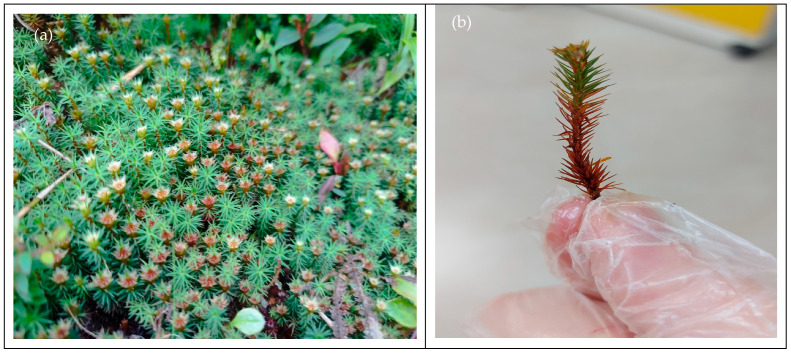 Figure 1
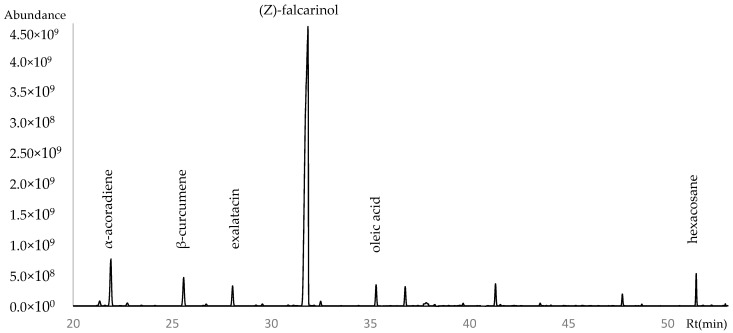 Figure 2
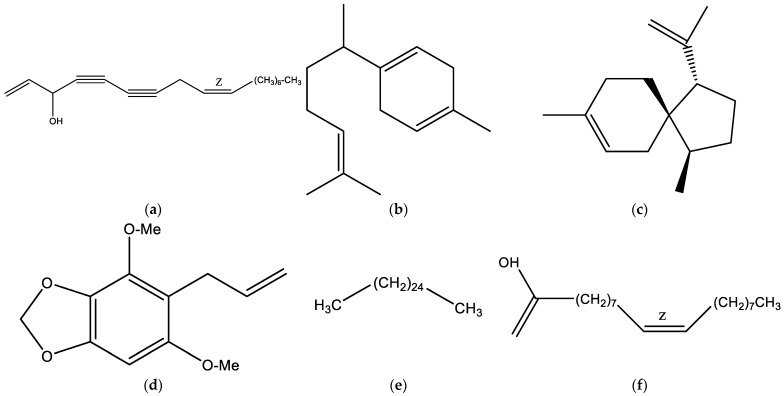 Figure 3
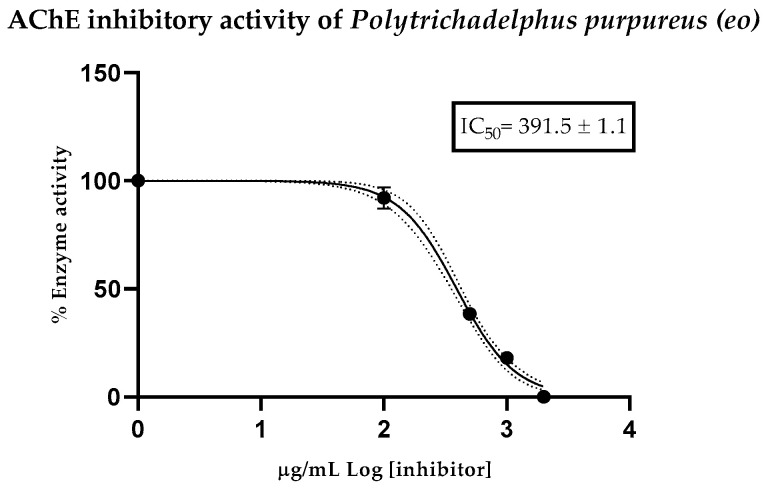 Figure 4
- —Universidad Técnica Particular de Loja
Peer Reviews
No public reviews on file for this paper yet. If you reviewed it on a platform where reviews are public (OpenReview, ICLR, NeurIPS, ICML), you can paste yours below so the community can read it here.
Videos
No videos yet. Explain this paper in a talk, walkthrough, or lecture? Add one.
Taxonomy
TopicsBryophyte Studies and Records · Lichen and fungal ecology · Fungal Biology and Applications
1. Introduction
Bryophytes, often overlooked as simple non-vascular plants, are emerging as a rich and underexplored source of bioactive secondary metabolites with significant pharmacological potential [1] with approximately 23,000 species described, constituting the second largest group of plants after Magnoliophyta (Angiosperms) [2,3,4]. They show low morphological complexity and a high degree of chemical diversification [5]. These ancient terrestrial organisms, which grow in humid environments as mats or cushions on soil, rocks, or vascular plants, produce a wide array of terpenoids, phenolics, and other unique compounds with documented antimicrobial, anti-inflammatory, antioxidant, and neuroprotective activities [3,5,6,7].
Recent reviews indicate that bryophytes are emerging as a promising source of volatile metabolites with complex chemical profiles as terpenes, alcohols, ketones and aromatic compounds, with compositional profiles varying across species and environment, suggesting finely regulated metabolic adaptation [6,7]. From a nutritional perspective, bryophytes lack value for human consumption, and no evidence supports their use as food [8]. Nevertheless, several species have been traditionally used in regions such as China and North America to manage fractures, snake bites, burns, upper respiratory tract infections, injuries, and certain neurological disorders, typically through decoctions, powders, or oily extracts from the plant material [9,10], further suggesting a therapeutic potential that modern science is only beginning to validate. However, the vast majority of research has focused on a few well-studied genera, leaving many species, particularly within the family Polytrichaceae, critically underexplored.
The Polytrichaceae family exhibits its greatest diversity in Southeast Asia and South America [11], comprising around 200 species and 19 genera, including Polytrichadelphus [12]. In Brazil, the family is represented by 6 genera and 30 species [13] while in Argentina, is represented by five genera, the Atrichum, Oligotrichum, Pogonatum, Polytrichum, and Psilopilum [14,15], distributed primarily in humid montane forests and high-altitude páramo vegetation of the Andean and sub-Andean regions. Polytrichaceae stands out for its bioactive potential, evidenced in studies of species such as Polytrichum commune with the presence of bornyl acetate, biformen [16], and α-pinene in Polytrichastrum alpinum [17]. Both profiles are associated with antioxidant, anti-inflammatory, antimicrobial, and central nervous system modulating activities, findings that suggest significant pharmacological potential for the family. Polytrichadelphus, a genus of the moss family (Polytrichaceae) comprising approximately 22 species [18] most of which are distributed in mountainous areas of South America, particularly in the Andes. Information on this genus is considered scarce, with only its descent from a Gondwanan ancestor represented by P. magellanicus [19]. Ecologically, these species grow on substrates on slopes, on rock and soil [20]. Although several bryophytes have documented ethnobotanical applications, no specific traditional uses have been reported for P. purpureus, highlighting the exploratory nature of this study.
The present study represents the first comprehensive characterization of the volatile fraction of P. purpureus using gas chromatography coupled with mass spectrometry (GC-MS) and flame ionization detection (GC-FID), allowing for accurate and quantitative identification of its volatile components. In addition, the inhibitory activity on acetylcholinesterase was evaluated for the first time, as well as its antimicrobial effects against Gram-positive and Gram-negative bacteria and its antifungal activity, taking the activity of the Polytrichaceae family as a starting point. Therefore, we hypothesize that the volatile fraction of Polytrichadelphus purpureus (Figure 1) has a unique chemical composition, rich in bioactive terpenoids. This composition may confer moderate antioxidant and neuroprotective activities that could surpass or complement those of more commonly studied species. In a world that is always looking for natural and sustainable options, studies like this one serve two purposes. First, they expand our knowledge. Second, they broaden the range of ways in which mosses can be used in pharmacology. Mosses have traditionally been overlooked in this field, so it is great to see them receiving attention.
2. Results
2.1. Chemical Composition of Volatile Fraction
A total of 86 volatile compounds were identified by GC-MS, accounting for 97.35–97.55% of the total volatile content in the three samples analyzed. The chemical profile of VF from P. purpureus was characterized by the presence of hydrocarbon sesquiterpenes, which constituted approximately (23.6%) of the total, followed by alcohols (15.6%) and alkanes (14.1%). Among the major components were (Z)-falcarinol (14%), hexacosane (4%), oleic acid (3%), valencene (3%), α-acoradiene (3.8%), and exalatacin (3.8%). The detailed chemical composition of the VF is presented in Table 1, while the chromatogram is illustrated in Figure 2 and Figure 3.
2.2. Antimicrobial and Antifungal Activity
The antibacterial and antifungal activities of P. purpureus Mitt. VF were evaluated against reference pathogenic strains using the broth microdilution method. Ampicillin, Ciprofloxacin, and Amphotericin B were used as positive controls. The study included three Gram-positive cocci, three Gram-negative bacilli, one fungus, and one Gram-positive bacillus, respectively, as listed in Table 2. The VF exhibited moderate inhibition of the growth of Enterococcus faecium and Staphylococcus aureus at a concentration of 250 µg/mL, as well as Aspergillus niger at 500 µg/mL. In addition, moderate activity was observed against Enterococcus faecalis and Listeria monocytogenes at concentrations of 250 µg/mL and 500 µg/mL, respectively.
2.3. Inhibition of Acetylcholinesterase
The acetylcholinesterase enzyme was graphically represented as the logarithm of the VF concentration versus the normalized reaction response rate, allowing the determination of the mean inhibitory concentration value. VF was evaluated for the first time, obtaining an IC_50_ value of 391.5 ± 1.1 μg/mL, indicating relatively low inhibitory potency. The positive control used was Donepezil, a synthetic drug used in the treatment of dementia such as Alzheimer’s, with an IC_50_ value of 12.40 ± 1.35 μg/mL Figure 4.
3. Discussion
The chemical analysis of the volatile fraction from Polytrichadelphus purpureus Mitt., obtained by steam distillation, revealed a low yield obtained (0.08% w/w) that falls within the range previously reported for other bryophyte species, where volatile fractions rarely exceed 0.18% under hydrodistillation conditions [21,22]. This limited yield reflects the absence of specialized secretory structures such as glandular trichomes or resin canals that are characteristic of volatile-oil-producing vascular plants and enable higher accumulation of terpenoid compounds [23,24]. In contrast, volatile metabolite biosynthesis in bryophytes occurs in a more diffuse cellular manner, resulting in inherently lower concentrations of extractable volatiles [25]. The compositional profile identified 87 compounds. Our results confirm the hypothesis that this species produces an VF with a unique and highly bioactive chemical profile, dominated by sesquiterpenes and characterized by abundance of (Z)-falcarinol (~14%) followed by hexacosane, (E,E)-α-farnesene, α-acoradiene, exalatacin, valencene, oleic acid, and hydrocinnamyl acetate (2.50–3.8%). No previous reports of VF in this species have been found. However, a study of the genus by Yücel [16] reported the identification of 35 chemical compounds in the volatile fraction of Polytrichum commune (Hedw.) grown in Turkey, accounting for 95.48% of the total components. The major components were Biformene (13.06%), bornyl acetate (8.10%) and α-pinene (6.53%). Comparison between the VF of P. purpureus reported herein and the volatile fraction of P. commune reveals both shared and distinctive chemical features, which may reflect interspecific variation within the genus as well as geographic and ecological influences on secondary metabolite biosynthesis [26,27].
The majority compound (Z)-falcarinol is not only a significant chemical finding, but also a functional indicator of clinical interest. This polyunsaturated alkyne has been widely associated with significant biological properties, including antimicrobial activity —demonstrated by inhibition of spore germination in fungi at 20–200 μg/mL and antibacterial effects against resistant strains of Staphylococcus aureus at non-toxic concentrations [28], anti-inflammatory effects [29], antidiabetic activity through α-glucosidase inhibition [30], and antioxidant properties associated with activation of the Nrf2/HO-1 endogenous antioxidant pathway [31]. Another major compound was the hexacosane, which, according to the results of an antimicrobial test, showed moderately high activity against Klebsiella pneumoniae, Salmonella typhi, Staphylococcus staphyloides, and Proteus vulgaris [32]. Another representative compound in our oil was β-curcumene. This compound has been reported to exhibit larvicidal, antimicrobial, and pesticidal activity against Aedes, Culex, and Armigeres species [33]. Although several major constituents have well-documented biological activities, potential synergistic interactions among the multiple compounds cannot be excluded. Such interactions may significantly contribute to the overall biological activity.
Consistent with this chemical profile, the VF of P. purpureus exhibited selective antimicrobial activity against Gram-positive bacteria. Moderate inhibition of E. faecium and S. aureus was observed at 250 µg/mL, and moderate activity against E. faecalis and L. monocytogenes (250–500 µg/mL), with no effect on Gram-negative strains, suggesting a mechanism of action with affinity for less complex membranes, such as Gram-positive bacteria, whose cell wall lacks the lipopolysaccharide barrier characteristic of Gram-negative bacteria, whose layer limits the penetration of hydrophobic compounds, explaining the ineffectiveness of VF and wind products [34,35].
Although there are no previous studies that have directly evaluated the VF activity of P. purpureus, our results can be contextualized with research conducted on related species within the Polytrichaceae family. Karpiński [36] reported weak to moderate activity of extracts from Polytrichum juniperinum and P. piliferum against E. faecalis, S. aureus, and S. pyogenes, but not against E. coli or K. pneumoniae. The greater potency of P. purpureus VF compared to these extracts can be attributed to its lipophilic nature, which facilitates interaction with the lipid bilayer of Gram-positive bacterial membranes, altering their functionality and fluidity [37].
In addition, moderate antifungal activity was observed against Aspergillus niger, a filamentous fungus widely distributed in natural and clinical environments and responsible for food spoilage and opportunistic mycoses. Although Aruna and Krishnappa [38] had already described the antifungal activity of Pogonatum microstomum against Candida albicans and Trichophyton rubrum, our finding extends the spectrum of action of Polytrichaceae metabolites to filamentous fungi such as A. niger, suggesting a broader role in defense against microbial competitors. Although the volatile components exhibited moderate growth inhibition against Gram-positive strains, MBC assays did not distinguish its bactericidal or bacteriostatic nature. Future studies using these methods would be helpful to understand exactly how the cells are working.
Another novel finding of this study is the acetylcholinesterase (AChE) inhibitory activity of P. purpureus VF, with an IC_50_ value of 391.5 ± 1.1 μg/mL. While this activity is considerably lower in potency than the positive control donepezil (IC_50_ = 12.40 ± 1.35 µg/mL), it represents the first report of AChE inhibition for any species within the genus Polytrichadelphus or the Polytrichaceae family. The only precedent for anticholinesterase activity in a bryophyte volatile fraction was reported for Syzygiella rubricaulis, a liverwort species from Ecuador, which exhibited a considerably more potent IC_50_ of 26.75 ± 1.03 μg/mL [39]. Moderate acetylcholinesterase inhibitory activity was observed, consistent with the presence of sesquiterpenoids; however, further in vivo studies are required to assess the neuroprotective relevance. Although other bryophytes, especially liverworts, have demonstrated anti-AChE activity attributable to the presence of bibenzyls [40], terpenes including ent-longipinane-type sesquiterpenoids and labdane diterpenoids isolated from Marsupella alpina and Scapania undulata, respectively [41,42], and phenolic compounds such as flavonoids from Marchantia polymorpha [43], mosses of the Polytrichaceae family have been mainly targeted for their antimicrobial and antioxidant properties, as previously documented for Polytrichum commune and Pogonatum microstomum [44,45]. In this context, our findings not only fill a critical knowledge gap in bryophyte chemistry but also establish P. purpureus represents a novel chemosystematic record for bryophytes, with potential for further exploration in natural product chemistry.
4. Materials and Methods
4.1. Plant Collection
The aerial parts of P. purpureus were collected in the sector “El Tiro”, on the provincial border between Loja and Zamora provinces in southern Ecuador, at an altitude of 2372 m. a.s.l. The latitude was 3°59′10″ S and the longitude was 79°10′23″ W. It was collected in May-July 2024 under the following climatic conditions estimated using data from the WorldClim v2.1 global climate database [46] mean air temperature of 17 °C, with a maximum of 21 °C and a minimum of 14 °C; average relative humidity of approximately 82%; mean wind speed of 1.8 m s^−1^; and a mean monthly precipitation of around 80 mm. These values represent the typical climatic conditions for the Andean montane environment of southern Ecuador during the wet-to-dry seasonal transition. All specimens were collected from the same specific community to ensure uniformity in environmental growth conditions and population source. The specimen was identified by Jorge Luis Armijos, a botanist at the Herbarium and Museum of Biological Collections of the UTPL. A voucher specimen has been deposited at the Herbarium of the Universidad Técnica Particular de Loja (UTPL).
4.2. Extraction of Volatile Compounds
The collected plant material was divided into three subsamples per collection and distilled using fresh material immediately after harvesting. Before extraction, the material was finely chopped to increase the surface area and improve the efficiency of the distillation process. The VF was extracted by steam distillation using a modified Dean-Stark apparatus and the procedure described by Jaramillo S.P. et al. [47]. The extraction was performed in three individual systems. In each unit, c.a 200 g of plant material was introduced and subjected to a continuous 4 h process at a temperature of approximately 100 °C. The VF was transferred to 2 mL amber bottles to preserve its physicochemical properties through refrigerated storage at −7 °C. It should be noted that this process was carried out in triplicate to ensure reproducibility and statistical reliability. Finally, the yield was determined as percent mass (g) of volatile fraction per mass (g) of plant material (% w/w) [48].
4.3. Chemical Composition of the Volatile Components
In order to determine the chemical composition of the VF, chemical analysis was performed using gas chromatography coupled with mass spectrometry (GC-MS), supplemented by flame ionization detection (GC/FID).
4.4. Qualitative Analysis
The chemical composition of the VF was performed using a Thermo Fisher Scientific Trace 1310 series 7200002174 gas chromatograph (Waltham, MA, USA) coupled with a Thermo Fisher Scientific ISQ 7000 mass spectrophotometer (GC-MS). For this purpose, three 1 μL volumes of a VF solution dissolved in hexane were injected in split ratio mode (40:1) into the non-polar DB5-ms capillary column (5% phenyl-methylpolysiloxane, 30 m × 0.25 mm × 0.25 μm). The column temperature was set at 50 °C with an increase of 3 °C/minute until reaching 230 °C. Helium was used as the carrier gas (1 mL/min) with an initial pressure of 6.49 psi and an average pressure of 35 cm/s [49].
The compounds were identified by comparing the mass spectra tentatively assigned based on GC-MS fragmentation patterns and the calculated linear retention indices (LRI) described in the literature NIST [50] and Adams 2007 [51]. A value of ±20 units was considered acceptable. The LRI was calculated using the method of Van Den Dool and Kratz [52], employing a mixture of n-alkanes (C10-C25) injected under chromatographic conditions of the VFs.
4.5. Quantitative Analysis
The compounds were determined using the same Thermo Fisher Scientific Trace 1310 gas chromatograph, which had a flame ionization detector (GC-FID). 1 µL of the volatile fraction was dissolved (1:100) in hexane solution and injected into the DB5-ms capillary column using helium as the carrier gas. For FID detection, a hydrogen-air gas mixture was used to quantify the ions produced by the combustion of the different compounds present in the VF of interest. Percentages were calculated by the peak area normalization method using GC-FID data.
4.6. Antimicrobial Activity
Antimicrobial activity was measured using broth microdilution techniques, following the methodology described by Cartuche et al. [53]. The activity was evaluated using bacterial strains from the American Type Culture Collection (ATCC). Gram-positive microorganisms (E. faecalis ATCC ^®^ 19433, E. faecium ATCC ^®^ 27270, S. aureus ATCC ^®^ 25923, L. monocytogenes ATTC ^®^ 19115) and Gram-negative microorganisms (E. coli (O157:H7) ATCC^®^ 43888, P. aeruginosa ATCC^®^ 10145, S. enterica Typhimurium WDCM 00031, derived ATCC^®^ 14028) and the fungus Aspergillus niger ATCC^®^ 6275. The bacteria were cultured in Mueller-Hinton medium for 24 h at a temperature of 37 °C and the fungus in Sabouraud broth at a temperature of 28–30 °C for 72 h.
Due to the hydrophobic nature of volatile fractions, dimethyl sulfoxide (DMSO) was used as a cosolvent to ensure complete solubility in the aqueous broth medium. The VF was prepared at a concentration of 10 mg/mL in 1% DMSO. Dilutions were performed in concentrations of 250 µg/mL to 500 µg/mL. Microbial suspensions were adjusted to 0.5 McFarland standard (approx. 1.5 × 10^8^ CFU/mL) and subsequently diluted 1:100. Then, 100 µL of the VF and 100 µL of the microbial suspension were added to each microdilution. A negative control of 5% DMSO and positive controls of specific antibiotics were used: ciprofloxacin (1 mg/mL) and ampicillin (1 g/mL) for bacteria and erythromycin (1 mg/mL) and amphotericin B (250 µg/mL) for fungi. Antimicrobial activity was evaluated by turbidity in bacteria and mycelial growth in fungi. After incubation, bacterial growth was assessed by measuring optical density (OD) at 600 nm using a microplate reader EPOCH 2 (BioTek, Santa Clara, CA, USA). In the case of fungi, resazurin was used as a color indicator of viability (blue to pink). All assays were performed in triplicate (n = 3), and results are reported as mean values with standard deviations.
4.7. Acetylcholinesterase Activity
The AChE inhibitory capacity of VF from P. purpureus was evaluated following the method described by Chouit et al. [54], with modifications applied by Cartuche et al. [53]. The reaction mixture was prepared using a Tris buffer solution (pH 8.0), acetylcholine (ATCh, 15 mM in PBS, pH 7.4), DTNB (3 mM in Tris), and the volatile fraction sample. After pre-incubation for three minutes at 25 °C with constant stirring, acetylcholinesterase (0.5 U/mL) was added to initiate the reaction. Product release was measured at 405 nm using an EPOCH 2 microplate reader (BioTek) over 60 nm. Due to the hydrophobic nature of the VF, methanol was employed as a cosolvent to ensure initial solubility; the VF was prepared as a stock solution at 10 mg/mL in methanol and subsequently diluted to achieve final assay concentrations of 1000, 500, 100, 50, and 10 µg/mL. The final methanol concentration in the reaction mixture did not exceed 10% (v/v), a level previously verified to have no significant effect on AChE activity. To account for potential turbidity or background absorbance, sample blanks (containing all reagents except the enzyme) were included for each concentration, and their absorbance values were subtracted from the corresponding reaction wells. The reaction rate was determined using a calibration curve with DTNB and L-GSH at various concentrations. Methanol (10% v/v) served as the negative control, and donepezil hydrochloride was used as a positive control (IC_50_ = 12.40 ± 1.35 µM). All assays were performed in triplicate (n = 3).
Precise structure-activity correlations require further investigation due to the possibility of synergistic interactions. Future bioassay-guided fractionation is necessary to isolate the active constituents and determine their specific contributions.
5. Conclusions
This study is the first report on the chemical composition and biological activities of the volatile fraction of P. purpureus, a neotropical moss previously unexplored phytochemically and pharmacologically. Eighty-six volatile compounds were identified, notably (Z)-falcarinol as the major component (14%). The VF showed a moderate antimicrobial activity against Gram-positive pathogens (Enterococcus faecium, Staphylococcus aureus) and the fungus Aspergillus niger. In addition, moderate to low AChE inhibitory activity (IC_50_ = 392 µg/mL) was reported for the first time in the Polytrichaceae family, expanding its bioactive profile beyond antimicrobial activity. Collectively, these findings position P. purpureus VF as a promising and previously untapped source of natural metabolites with potential relevance for human health. They also highlight the potential of bryophytes as an under-explored source of chemical diversity. This work establishes a basis for future studies to optimize its bioactive constituents, elucidate their mechanisms of action, and advance the sustainable utilization of neotropical mosses in drug discovery.
The reference list from the paper itself. Each links out to its DOI / PubMed record.
- 1Villagrán Moraga C. Biogeographic history of bryophytes in Chile Gayana Bot.2020777311410.4067/S 0717-66432020000200073 · doi ↗
- 2Asakawa Y. Ludwiczuk A. Chemical constituents of bryophytes: Structures and biological activity J. Nat. Prod.20178164166010.1021/acs.jnatprod.6b 0104629019405 · doi ↗ · pubmed ↗
- 3Asakawa Y. Ludwiczuk A. Nagashima F. Phytochemical and biological studies of bryophytes Phytochemistry 201391528010.1016/j.phytochem.2012.04.01222652242 · doi ↗ · pubmed ↗
- 4Zotz G. Plants on plants-the biology of vascular epiphytes Sci. Rev.20161528210.1007/978-3-319-39237-0 · doi ↗
- 5Ludwiczuk A. Asakawa Y. Identification of secondary metabolites in liverworts: A chemosystematic approach J. AOAC Int.2014971234124310.5740/jaoacint.SGE Ludwiczuk 25902971 · doi ↗ · pubmed ↗
- 6Herrera R.S. Verdecia D.M. Ramírez J.L. García M. Cruz A.M. Secondary metabolites of Leucaena leucocephala. Their relationship with certain climatic factors, different expressions of digestibility, and primary metabolites Cuban J. Agric. Sci.201751107116
- 7Suárez-Medina K. Coy-Barrera E. Diversity of naturally occurring bioactive organic compounds: A uniqueness manifested by plasticity in secondary metabolism J. Basic Sci.20161225226910.18359/rfcb.2031 · doi ↗
- 8Motti R. Palma A.D. de Falco B. Bryophytes Used in Folk Medicine: An Ethnobotanical Overview Sci. Hortic.2023913710.3390/horticulturae 9020137 · doi ↗