Synthesis, Physical and Ion-Conducting Properties of 1,2,3-Triazolium Ionic Liquids
Imen Abdelhedi Miladi, Maha Chikhaoui, Malak Alaa Eddine, Anatoli Serghei, Hatem Ben Romdhane, Eric Drockenmuller

TL;DR
This paper describes the synthesis and properties of new 1,2,3-triazolium ionic liquids with various substituents, highlighting their thermal stability and ionic conductivity.
Contribution
The study introduces a novel series of 1,2,3-triazolium ionic liquids with diverse substituents and evaluates their structure-property relationships.
Findings
The PEGylated TIL derivative shows the lowest glass transition temperature (−76 °C) and highest thermal stability (345 °C).
The same TIL derivative exhibits the highest ionic conductivity (6.5 × 10⁻⁴ S cm−1 at 30 °C).
Abstract
1,4-Disubstituted 1,2,3-triazoles are readily obtained by copper(I)-catalyzed azide–alkyne 1,3-dipolar cycloaddition (CuAAC)—the most widespread illustration of click chemistry to date. 1,2,3-Triazoles form a vast and easily accessible library of precursors for synthesizing 1,2,3-triazolium ionic liquids (TILs). A series of four 1,3,4-trisubstituted TILs with N-1-n-octyl, N-3-methyl and different C-4 substituents (i.e., aromatic, aliphatic, PEGylated and perfluorinated groups) is synthesized in two steps involving: (i) CuAAC to generate 1,2,3-triazole precursors and (ii) N-alkylation of the 1,2,3-triazole groups with methyl iodide to afford the corresponding 1,2,3-triazolium salts with iodide counter-anions. A thorough investigation of the correlations between structure and properties is carried out using NMR spectroscopy, high-resolution mass spectrometry, differential scanning…
Genes, proteins, chemicals, diseases, species, mutations and cell lines named across the full text — each resolved to its canonical identifier and authoritative record.
Click any figure to enlarge with its caption.
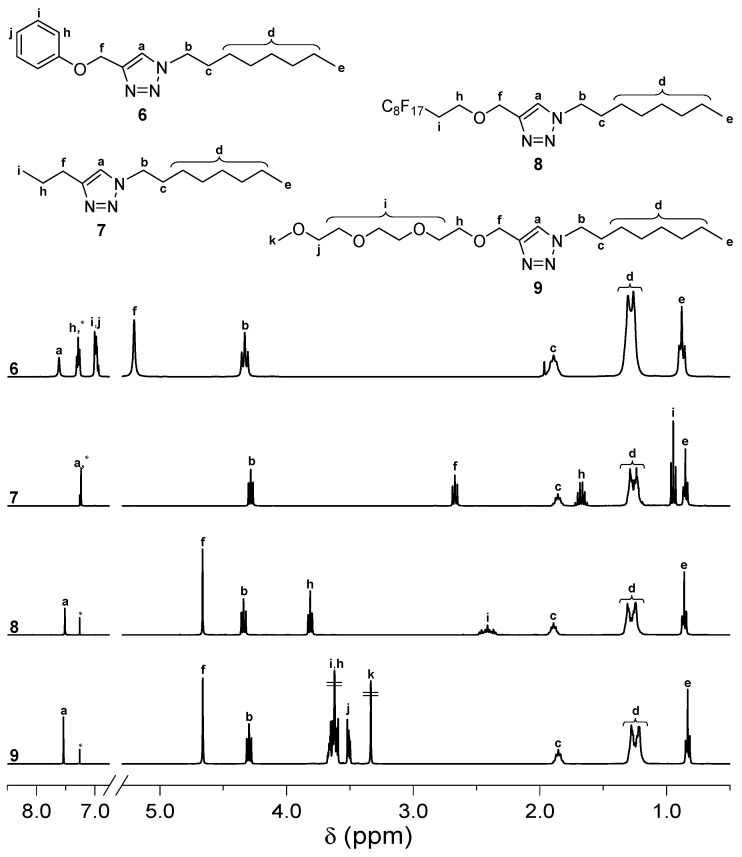 Figure 1
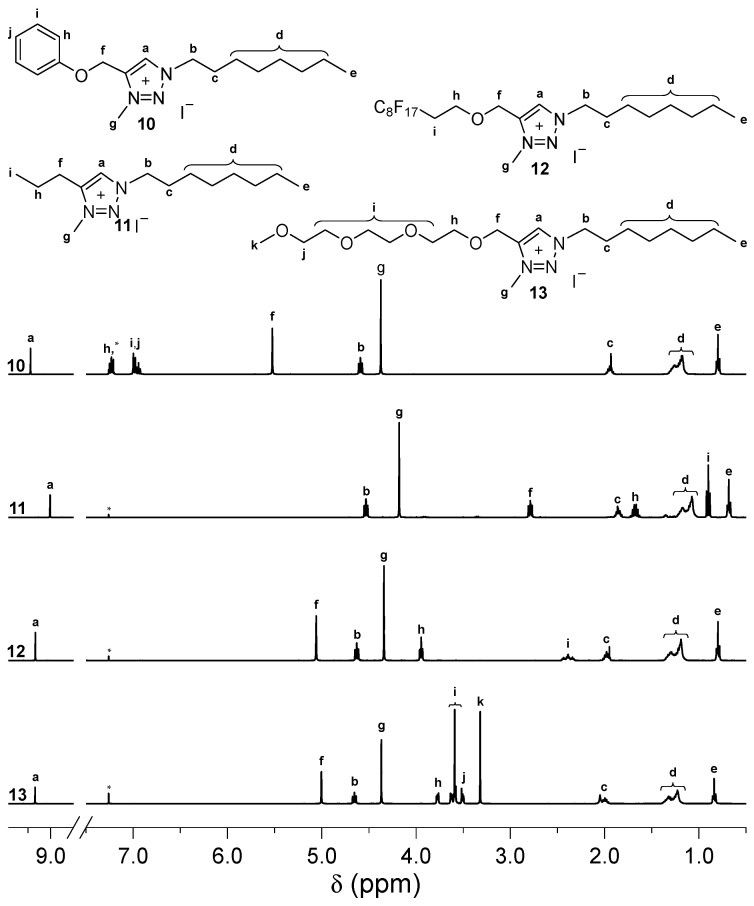 Figure 2
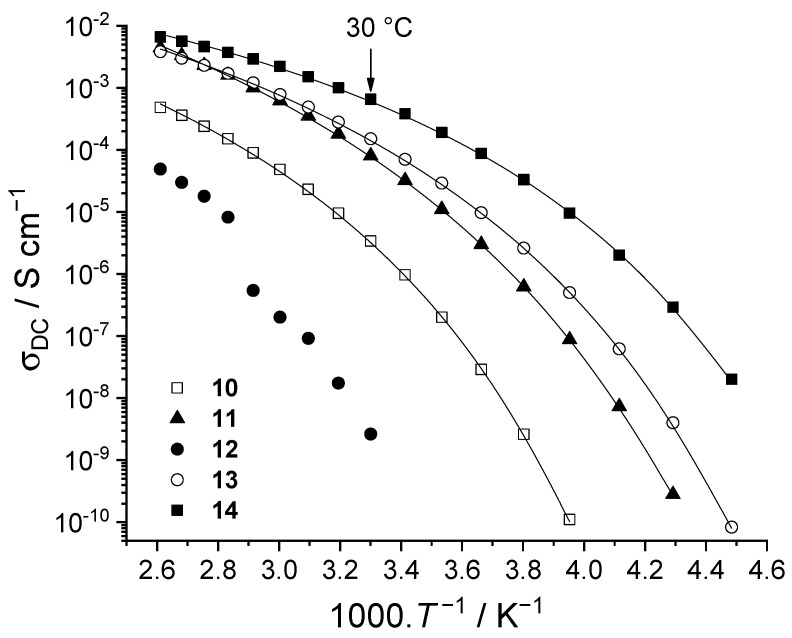 Figure 3
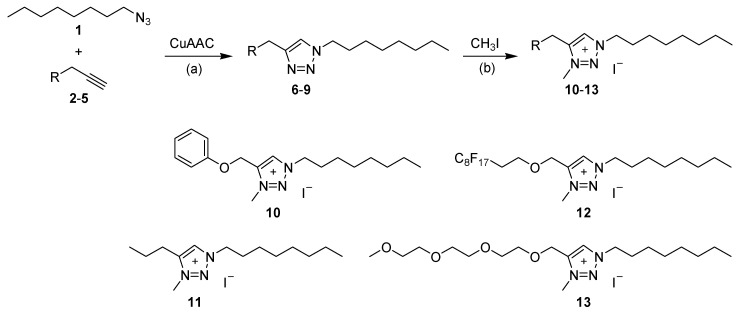 Figure 4
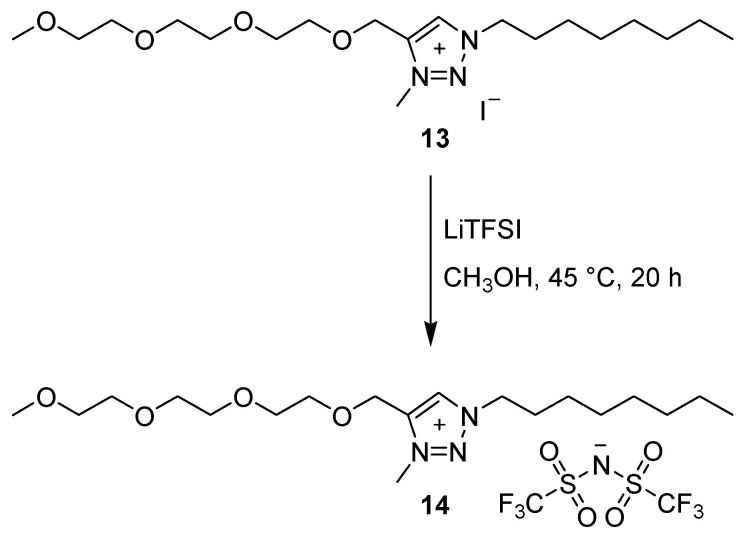 Figure 5
- —Agence Nationale de la Recherche (ANR)
- —French National Research Agency
Peer Reviews
No public reviews on file for this paper yet. If you reviewed it on a platform where reviews are public (OpenReview, ICLR, NeurIPS, ICML), you can paste yours below so the community can read it here.
Videos
No videos yet. Explain this paper in a talk, walkthrough, or lecture? Add one.
Taxonomy
TopicsIonic liquids properties and applications · N-Heterocyclic Carbenes in Organic and Inorganic Chemistry · Click Chemistry and Applications
1. Introduction
Ionic liquids (ILs) are organic salts that melt at temperatures below 100 °C [1,2]. Their many appealing features include negligible vapor pressure, wide usable temperature range, broad structural design, low flammability, large electrochemical stability window, and enhanced ionic conductivity, which has generated strong interest in academia and industry [3,4]. ILs have been used as solvents for catalysis [5], as task-specific organocatalysts [6], as well as key components in separation technologies [7], gas separation membranes [8], energy storage [9,10], propellant fuels [11] and pharmaceutics [12]. In addition, the spectacular development of a myriad of poly(ionic liquids) (PILs) is testament to the attention that ILs have attracted from polymer materials scientists [13,14,15]. The versatile functionality, broad structural design and idiosyncratic properties of ILs stem from the vast array of possible combinations of cations (e.g., ammonium, boronium, sulfonium, phosphonium, guanidinium, pyrrolidinium, piperidinium, pyridinium, imidazolium, 1,2,4- and 1,2,3-triazoliums) and anions (e.g., halides, carboxylates, inorganic (per)fluorides or (per)fluorinated sulfonimides) [2,3,16,17]. 1,2,3-triazolium ILs (TILs) have attracted increasing attention over the last decade [18,19,20], as their 1,2,3-triazole precursors constitute essential intermediates that are frequently obtained by the copper(I)-catalyzed azide–alkyne cycloaddition (CuAAC) reaction—the most widespread illustration of click chemistry to date [21,22,23,24]. The structural design of TILs relies on the key attributes of CuAAC (i.e., wide application scope, high yields, functional tolerance and orthogonal reactivity) as well as on the straightforward N-alkylation of 1,2,3-triazole intermediates and anion-exchange reactions. TILs have been applied as anticancer drugs [25], antimicrobial agents [26], and in catalysis [27,28], metal extraction [29,30], supramolecular chemistry [31], energy conversion [32], and polymer science [33]. Understanding the correlations between the structure and properties of TILs is crucial to improving their performance and scope of application. In this article, we report on the synthesis of a series of four 1,3,4-trisubstituted TILs with N-1-n-octyl, N-3-methyl and various C-4 substituents (i.e., aromatic, aliphatic, PEGylated and fluorinated groups) issued from 1,2,3-triazole precursors in order to contribute to the understanding of the structure–property correlations with the aim of maximizing their ionic conductivity. Firstly, TILs with iodide counter-anions were synthesized in two steps involving: (i) CuAAC reaction between n-octyl azide and various alkynes to generate four 1,2,3-triazole precursors; and (ii) the N-alkylation of the 1,2,3-triazole groups with methyl iodide. The PEGylated TIL underwent ion metathesis to produce the corresponding TIL with a bis(trifluoromethylsulfonyl)imide counter-anion, which improved its thermal (Td10), physical (Tg), and ion-conducting (σ_DC_) properties. The correlations between the structures and properties of the synthesized TILs are thoroughly discussed based on characterizations using NMR spectroscopy, high-resolution mass spectrometry, differential scanning calorimetry, thermogravimetric analysis and broadband dielectric spectroscopy.
2. Results and Discussion
A series of four 1,4-disubstituted 1,2,3-triazoles was first synthesized using copper(I)-catalyzed azide–alkyne cycloaddition (CuAAC) between n-octyl azide 1 and terminal alkynes 2-5 as the precursors (Scheme 1). Following purification by column chromatography, 1-n-octyl-1,2,3-triazoles 6-9 were obtained in yields of 88%, 91%, 85% and 82%, respectively, and their structures and purities were confirmed by ^1^H NMR, ^13^C NMR and ^19^F NMR (Figure 1 and Figures S1 and S2). Electrospray-ionization high-resolution mass spectrometry (ESI-HRMS) also confirmed their structures by detecting a single-charge peak corresponding to the [M+H]^+^ adduct for each of them (Table S1). The corresponding 1,3,4-trisubstituted 1-n-octyl-3-methyl-1,2,3-triazolium iodides 10-13 were then synthesized by N-alkylation of the N-3 position of 1,2,3-triazoles 6-9 using methyl iodide in acetonitrile. They were obtained in almost quantitative yields after the solvent and excess methyl iodide were evaporated under vacuum (Table 1). Combining positive and negative modes ESI-HRMS enabled the detection of single peaks corresponding to, respectively, the 1,2,3-triazolium cations [C]^+^ and [C^+^ + 2I^−^]^−^ adducts, proving the purity of TILs 10-13 (Table S1). The ^1^H NMR spectra of 1,2,3-triazolium iodides 10-13 (Figure 2) confirmed the quantitative N-alkylation of the 1,2,3-triazole groups. This was revealed by the appearance of a single signal corresponding to the 1,2,3-triazolium proton at 9.45, 9.01, 9.34 and 9.34 ppm for 10-13. In contrast, those of 1,2,3-triazoles 6-9 were detected at 7.61, 7.23, 7.51 and 7.54 ppm, respectively (Figure 2). Additionally, the appearance of a signal from the N-3 methyl protons at 4.37, 4.18, 4.34 and 4.37 ppm for TILs 10-13 with an expected 3:1 integration ratio relative to the 1,2,3-triazolium proton was also considered proof of the quantitative N-alkylation reaction. Furthermore, the signals of the N-1 and C-4 methylene groups shifted significantly downfield after the N-alkylation reaction due to the higher charge density and electron-withdrawing effect of the 1,2,3-triazolium group compared to the 1,2,3-triazole group. The quantitative N-alkylation was corroborated by comparing the ^13^C NMR spectra of 1,2,3-triazoles 6-9 (Figure S1) with those of TILs 10-13 (Figure S2). However, while a downfield shift was observed for C-4 methylene groups after N-alkylation, the N-1 methylene groups were shifted upfield. 1,2,3-Triazole 8 and TIL 12 display identical ^19^F NMR spectra (Figure S3).
The phase transition temperatures (Tg and Tm) of TILs 10-13 were investigated using differential scanning calorimetry (DSC, Figure S4) while their thermal stability was assessed by determining their temperature at 10% weight loss (Td10) using thermogravimetric analysis (TGA, Table 1). The chemical nature of the C-4 substituent significantly impacts the physical state of TILs as aromatic TIL 10 and fluorinated TIL 12 are, due to the presence of π-stacking or fluorophilic intermolecular interactions, crystalline solids (Tm = 69 and 97 °C, respectively), while aliphatic TIL 11 and PEGylated TIL 12 are low Tg liquids (Tg = −64 and −60 °C, respectively). These features are consistent with those of previously described TILs with analogous substituents [34,35,36,37]. However, the C-4 substituent only moderately affects the thermal stability of TILs, as evidenced by the range of Td10 values from 185 to 205 °C in the following increasing order: 10 < 12 < 13 < 11 (Figure S5). This is consistent with the known limited thermal stability of halide-containing ILs [38].
The temperature dependence of the ionic conductivity of TILs 10-13 under anhydrous conditions was studied using broadband dielectric spectroscopy (BDS) and σ_DC_ was plotted as a function of the reciprocal temperature (Figure 3). Except for TIL 12, the evolution of σ_DC_ with temperature shows a continuous decrease with decreasing temperature. The transition observed for fluorinated TIL 12 is clearly related to its crystallization (Tm = 97 °C, Table 1), wherein the crystalline phase promotes freezing of the liquid electrolyte and reduces ion transport. However, although TIL 10 is also a crystalline solid (Tm = 69 °C), no comparable transition was observed in the temperature dependence of σ_DC_. This is most likely due to the slower crystallization kinetics of TIL 10 compared to TIL 12, which does not allow for crystallization within the timeframe of the BDS measurements. Nevertheless, the σ_DC_ values of TILs 10-13, as measured under anhydrous conditions, depended strongly on the chemical structure of the C-4 substituent, and increased in the following order:
σ_DC_ (30 °C, S cm^−1^): 12 (C_8_F_17_CH_2_CH_2_OCH_2_, 2.6 × 10^−9^) << 10 (PhOCH_2_, 3.4 × 10^−6^) < 11 (CH_3_CH_2_CH_2_, 8.0 × 10^−5^) < 13 (CH_3_OCH_2_CH_2_OCH_2_CH_2_OCH_2_CH_2_OCH_2_, 1.5 × 10^−4^)
Due to its higher ionic conductivity, which is promoted by the flexible triethylene glycol segment [39], TIL 13 underwent an anion-exchange reaction using lithium bis(trifluoromethylsulfonyl)imide, yielding TIL 14 with a bis(trifluoromethylsulfonyl)imide (TFSI) counter-anion (Scheme 2).
The structure and purity of TIL 14 were assessed using ESI-HRMS, ^1^H NMR, ^13^C NMR and ^19^F NMR spectroscopy. The structure was confirmed by the appearance of a single peak corresponding to the 1,2,3-triazolium cation [C]^+^ in positive-mode ESI-HRMS, and the quantitative ion metathesis reaction was corroborated by the detection of a single peak corresponding to the TFSI anion [TFSI]^−^ together to the absence of [I]^−^ and [C^+^ + 2I^−^]^−^ adducts in negative-mode ESI-HRMS (Table S1). Replacing the iodide counter-anion with the larger, asymmetric, more delocalized and weakly coordinating TFSI counter-anion caused the N-1/C-4 methylene and N-3 methyl signals to shift upfield in both the ^1^H and ^13^C NMR spectra (Figures S6 and S7). Furthermore, the presence of the TFSI counter-anion in TIL 14 was confirmed by the appearance of a quadruplet at 119.7 ppm on the ^13^C NMR spectrum of (Figure S7) and a singlet at −78.66 ppm on the ^19^F NMR spectrum (Figure S8). Moreover, the TFSI counter-anion induced a 16 °C decrease in Tg and a remarkable improvement in thermal stability with a 150 °C increase in Td10 (Table 1, Figure S5), on a par with previously reported values for TFSI-containing TILs [40,41]. Finally, TIL 14 demonstrated the highest ionic conductivity of the series (σ_DC_ at 30 °C = 6.5 × 10^−4^ S cm^−1^). The evolutions of σ_DC_ with temperature for all TILs but TIL 12 exhibit a Vogel–Fulcher–Tammann (VFT) dependence and were thus fitted using the VFT Equation (1) (Table S2):
where σ_∞_ is the ionic conductivity in the limit of high temperatures, B is the fitting parameter related to the effective activation energy of ionic conduction, which is related to the energy barrier that the ions must overcome to move from one site to another. For ILs, B typically ranges between 800 and 1500 K, corresponding to activation energies between 0.05 and 0.2 eV. T0, the Vogel temperature, is often interpreted as the ideal glass transition temperature and usually lies 40 K to 60 K below Tg. The higher the value of T0, the more fragile the ionic conductor is, leading to a higher non-Arrhenius dependence of ionic conductivity as a function of inverse temperature.
3. Materials and Methods
3.1. Materials
Phenyl propargyl ether (2, >90%), 1-pentyne (3, 99%), diisopropylethylamine (DIPEA, 99%), copper (I) iodide triethylphosphite (CuI.P(OEt)3, 97%), lithium bis(trifluoromethylsulfonyl)imide (LiTFSI, 99.95%), iodomethane (99.5%) and all solvents with the purest grade were purchased from Merck (Darmstadt, Germany) and used as received. n-Octyl azide 1 [42], 3,3,4,4,5,5,6,6,7,7,8,8,9,9,10,10,10-heptadecafluorodecyl propargyl ether 4 [43], and 2,5,8,11-tetraoxatetradec-13-yne 5 [44], were synthesized as previously described.
3.2. Characterization Methods
^1^H NMR spectra were recorded on a Bruker DRX400 Spectrometer (Billerica, MA, USA) in CDCl_3_ at room temperature. Mass spectra were acquired on a ThermoFinnigan LCQ Advantage ion trap instrument (San Jose, CA, USA), detecting positive (+) or negative (−) ions in the ESI. High-resolution mass spectrometry was performed on all intermediates on a THERMOQUEST Finnigan MAT 95 XL (Waltham, MA, USA) using the “peak matching” method. Differential scanning calorimetry experiments were performed on a DSC Q200 (TA Instruments, New Castle, DE, USA) at a heating rate of 10 °C/min under a helium flow of 25 mL min^−1^. Tg and Tm values were measured during the second heating cycle. Thermogravimetric analysis (TGA) was performed on a TGA Q500 apparatus (TA Instruments) at a heating rate of 10 °C min^−1^ and a helium flow of 60 mL min^−1^. Ionic conductivities were measured using a high-resolution Alpha-Analyzer (Novocontrol GmbH, Montabaur, Germany) assisted by a Quatro temperature controller (Richmond, ON, USA). The sample was prepared by placing the ionic liquid between two freshly polished platinum electrodes followed by heating at 120 °C for 4 h under a flow of pure nitrogen. The thickness of the sample cell was controlled by 100 µm thick Teflon spacers (Goodfellow, Lille, France). Frequency sweeps were performed isothermally from 10 MHz to 0.1 Hz by applying a sinusoidal voltage of 0.1 V over a range of temperature from 120 to −60 °C. The temperature was controlled by heating the sample under flow of pure nitrogen, which excludes the presence of oxygen and humidity in the measurement chamber. The thermal stability was set to be better than 0.1 K in absolute values with relative variations less than 0.2 K min^−1^.
3.3. General Procedure for the Synthesis of 1-n-Octyl-1,2,3-Triazoles by Copper(I)-Catalyzed Azide–Alkyne 1,3-Dipolar Cycloaddition
Synthesis of 6. CuI.P(OEt)3 (0.06 g, 0.2 mmol) and DIPEA (1.97 g, 15.2 mmol) were added to a solution of n-octyl azide 1 (2.35 g, 15.2 mmol) and phenyl propargyl ether 2 (2.00 g, 15.2 mmol) in tetrahydrofuran (50 mL). The mixture was stirred under argon for 24 h at 45 °C before being evaporated to dryness under reduced pressure. The crude product was purified by column chromatography using a 3:2 mixture of petroleum ether and ethyl acetate to yield after evaporation of the solvents under reduced pressure 6 as an off-white crystalline solid (3.83 g, Yield 88%). ^1^H NMR (400 MHz, CDCl_3_, δ, ppm): 7.61 (s, 1H), 7.31–7.25 (m, 2H), 7.08–6.93 (m, 3H), 5.20 (s, 2H), 4.33 (t, J = 7.5 Hz, 2H), 1.96–1.87 (m, 2H), 1.40–1.26 (m, 10H), 0.88 (t, J = 6.9 Hz, 3H). ^13^C NMR (100 MHz, CDCl_3_, δ, ppm): 158.0, 129.3, 121.0, 120.6, 114.6, 61.8, 50.3, 31.5, 30.1, 29.0-28.7, 26.3, 22.4, 13.9. ESI-HRMS (m/z): [M + H]^+^ calcd for C_17_H_26_N_3_O, 288.2070; Found, 288.2067.
Synthesis of 7. The general procedure for copper(I)-catalyzed azide–alkyne 1,3-dipolar cycloaddition was applied to a mixture of n-octyl azide 1 (2.50 g, 16.1 mmol), 1-pentyne 3 (1.10 g, 16.1 mmol), CuI.P(OEt)3 (0.08 g, 0.21 mmol) and DIPEA (2.08 g, 16.1 mmol) in tetrahydrofuran (50 mL). The crude pale brown oily product was purified by column chromatography using a 4:1 mixture of petroleum ether and ethyl acetate to yield after evaporation of the solvents under reduced pressure 7 as a brown liquid (3.27 g, Yield 91%). ^1^H NMR (400 MHz, CDCl_3_, δ, ppm): 7.23 (s, 1H), 4.28 (t, J = 7.3 Hz, 2H), 2.67 (t, J = 7.6 Hz, 2H), 1.89–1.82 (m, 2H), 1.72–1.62 (m, 2H), 1.34-1.17 (m, 10H), 0.95 (t, J = 7.6 Hz, 3H), 0.88 (t, J = 6.9 Hz, 3H). ^13^C NMR (100 MHz, CDCl_3_, δ, ppm): 148.1, 120.4, 50.1, 31.7, 30.3, 29.0–28.9, 27.7, 22.7, 22.6, 14.0, 13.7. ESI-HRMS (m/z): [M + H]^+^ calcd for C_13_H_26_N_3_, 224.2121; Found, 224.2115.
Synthesis of 8. The general procedure for copper(I)-catalyzed azide–alkyne 1,3-dipolar cycloaddition was applied to a mixture of n-octyl azide 1 (2.50 g, 16.1 mmol), 7,7,8,8,9,9,10,10,11,11,12,12,13,13,14,14,14-heptadecafluoro-4-oxatetradeca-1-yne 4 (8.08 g, 16.1 mmol), CuI.P(OEt)3 (0.08 g, 0.21 mmol) and DIPEA (2.08 g, 16.1 mmol) in tetrahydrofuran (50 mL). The crude pale brown oily product was purified by column chromatography using a 1:1 mixture of methylene chloride and ethyl acetate to yield after evaporation of the solvents under reduced pressure 8 as a brown liquid (9.01 g, Yield 85%). ^1^H NMR (400 MHz, CDCl_3_, δ, ppm): 7.51 (s, 1H), 4.66 (s, 2H), 4.34 (t, J = 7.6 Hz, 2H), 3.81 (t, J = 7.5 Hz, 2H), 2.48-2.32 (m, 2H), 1.89 (m, 2H), 1.34–1.20 (m, 10H), 0.86 (t, J = 6.9 Hz, 3H). ^13^C NMR (100 MHz, CDCl_3_, δ, ppm): 144.5, 122.2, 122.0-105.0, 64.6, 62.2, 50.4, 31.7, 31.4, 30.3, 29.0–28.9, 26.4, 22.5, 14.0. ^19^F NMR (376 MHz, CDCl_3_, δ, ppm): −80.92 (s, 3F), −113.49 (s, CF3CF2CF2CF2CF2CF2CF2CF2CF2, 2F), −121.79 (s, 2F), −122.04 (s, 4F), −122.84 (s, 2F), −123.74 (s, 2F), −126.25 (s, 2F). ESI-HRMS (m/z): [M + H]^+^ calcd for C_21_H_25_F_17_N_3_O, 658.1721; Found, 658.1714.
Synthesis of 9. The general procedure for copper(I)-catalyzed azide–alkyne 1,3-dipolar cycloaddition was applied to a mixture of n-octyl azide 1 (2.50 g, 16.1 mmol), 2,5,8,11-tetraoxatetradec-13-yne 5 (3.25 g, 16.1 mmol), CuI.P(OEt)3 (0.08 g, 0.21 mmol) and DIPEA (2.08 g, 16.1 mmol) in tetrahydrofuran (50 mL). The crude pale brown oily product was purified by column chromatography using a 4:1 mixture of petroleum ether and ethyl acetate to yield after evaporation of the solvents under reduced pressure 9 as brown liquid (4.72 g, Yield 82%). ^1^H NMR (400 MHz, CDCl_3_, δ, ppm): 7.54 (s, 1H), 4.66 (s, 2H), 4.30 (t, J = 7.3 Hz, 2H), 3.69-3.58 (m, 10H), 3.52–3.50 (m, 2H), 3.34 (s, 3H), 1.86 (m, 2H), 1.31–1.18 (m, 10H), 0.83 (t, J = 6.9 Hz, 3H). ^13^C NMR (100 MHz, CDCl_3_, δ, ppm): 145.0, 122.3, 71.8, 70.6-70.4, 69.6, 64.6, 58.9, 50.3, 31.6, 30.2, 28.9-28.8, 26.4, 22.5, 14.0. ESI-HRMS (m/z): [M + H]^+^ calcd for C_18_H_36_N_3_O_4_, 358.2700; Found, 358.2709.
3.4. General Procedure for the Synthesis of 1-n-Octyl-3-Methyl-1,2,3-Triazolium Iodides by N-Alkylation of 1,2,3-Triazoles
Synthesis of 10. Iodomethane (8.13 mL, 130.5 mmol) was added drop wise to a solution of 6 (3.75 g, 13.1 mmol) in acetonitrile (50 mL) and the reaction mixture was stirred for 24 h at 60 °C. Solvent and excess iodomethane were evaporated under reduced pressure to yield 10 as an off-white crystalline solid (5.32 g, Yield 95%). ^1^H NMR (400 MHz, CDCl_3_, δ, ppm): 9.45 (s, 1H), 7.28–7.18 (m, 2H), 7.01–6.91 (m, 3H), 5.52 (s, 2H), 4.59 (t, J = 7.5 Hz, 2H), 4.37 (s, 3H), 1.99–1.90 (m, 2H), 1.34–1.13 (m, 10H), 0.80 (t, J = 6.9 Hz, 3H). ^13^C NMR (100 MHz, CDCl_3_, δ, ppm): 156.4, 139.4, 130.7, 129.6, 122.3, 114.7, 58.8, 54.2, 39.9, 31.4, 29.2, 28.8–28.5, 25.8, 22.3, 13.8. ESI-HRMS (m/z): [C]^+^ calcd for C_18_H_28_N_3_O, 302.2227; Found, 302.2222. [C^+^ + 2I^−^]^−^ calcd for C_18_H_28_I_2_N_3_O, 556.0327; Found, 556.0337.
Synthesis of 11. The general procedure for N-alkylation of 1,2,3-triazoles was applied to a mixture of 7 (3.00 g, 13.4 mmol) and iodomethane (8.37 mL, 134.3 mmol) in acetonitrile (50 mL) yielding after evaporation of the solvent and excess iodomethane 11 as a brown viscous oil (4.70 g, Yield 96%). ^1^H NMR (400 MHz, CDCl_3_, δ, ppm): 9.01 (s, 1H), 4.53 (t, J = 7.5 Hz, 2H), 4.18 (s, 3H), 2.79 (t, J = 7.6 Hz, 2H), 1.93–1.82 (m, 2H), 1.74–1.62 (m, 2H), 1.26–1.00 (m, 10H), 0.90 (t, J = 7.6 Hz, 3H), 0.68 (t, J = 6.9 Hz, 3H). ^13^C NMR (100 MHz, CDCl_3_, δ, ppm): 143.8, 128.7, 53.6, 38.6, 31.0, 28.9, 28.3-28.1, 25.5, 25.1, 21.9, 20.1, 13.5, 13.1. ESI-HRMS (m/z): [C]^+^ calcd for C_14_H_28_I_2_N_3_, 238.2278; Found, 238.2273. [C^+^ + 2I^−^]^−^ calcd for C_14_H_28_I_2_N_3_, 492.0377; Found, 492.0367.
Synthesis of 12. The general procedure for N-alkylation of 1,2,3-triazoles was applied to a mixture of 8 (8.60 g, 13.1 mmol) and iodomethane (8.14 mL, 130.6 mmol) in acetonitrile (50 mL), yielding after evaporation of the solvent and excess iodomethane 12 as a brown viscous oil (9.95 g, Yield 95%). ^1^H NMR (400 MHz, CDCl_3_, δ, ppm): 9.34 (s, 1H), 5.06 (s, 2H), 4.63 (t, J = 7.6 Hz, 2H), 4.34 (s, 3H), 3.95 (t, J = 7.5 Hz, 2H), 2.45-2.36 (m, 2H), 1.95 (m, 2H), 1.35–1.17 (m, 10H), 0.80 (t, J = 6.9 Hz, 3H). ^13^C NMR (100 MHz, CDCl_3_, δ, ppm): 139.8, 130.5, 122.7–104.8, 63.5, 60.9, 54.3, 39.5, 31.4, 31.0, 29.3, 28.7–28.6, 25.9, 22.3, 13.8. ^19^F NMR (376 MHz, CDCl_3_, δ, ppm): −81.05 (s, 3F), −113.49 (s, 2F), −121.84 (s, 2F), −122.14 (s, 4F), −122.95 (s, 2F), −123.74 (s, 2F), −126.37 (s, 2F). ESI-HRMS (m/z): [C]^+^ calcd for C_22_H_27_F_17_N_3_O, 672.1877; Found, 672.1862. [C^+^ + 2I^−^]^−^ calcd for C_22_H_27_F_17_I_2_N_3_O, 925.9978; Found, 925.9953.
Synthesis of 13. The general procedure for N-alkylation of 1,2,3-triazoles was applied to a mixture of 9 (4.45 g, 12.4 mmol) and iodomethane (7.74 mL, 124.3 mmol) in acetonitrile (45 mL), yielding after evaporation of the solvent and excess iodomethane 13 as a brown viscous oil (5.90 g, Yield 95%). ^1^H NMR (400 MHz, CDCl_3_, δ, ppm): 9.34 (s, 1H), 5.00 (s, 2H), 4.65 (t, J = 7.3 Hz, 2H), 4.37 (s, 3H), 3.78-3.76 (m, 2H), 3.63-3.56 (m, 8H), 3.52-3.49 (m, 2H), 3.32 (s, 3H), 2.00 (m, 2H), 1.34–1.20 (m, 10H), 0.84 (t, J = 6.9 Hz, 3H). ^13^C NMR (100 MHz, CDCl_3_, δ, ppm): 140.4, 130.6, 71.7, 70.5–69.9, 60.8, 58.8, 54.2, 39.3, 31.5, 29.4, 28.8–28.7, 26.0, 22.5, 14.0. ESI-HRMS (m/z): [C]^+^ calcd for C_19_H_38_N_3_O_4_, 372.2857; Found, 372.2858. [C^+^ + 2I^−^]^−^ calcd for C_19_H_38_I_2_N_3_O_4_, 626.0957; Found, 626.0975.
3.5. Synthesis of 1-n-Octyl-3-Methyl-1,2,3-Triazolium 14 by Ion-Exchange Reaction
A solution of 13 (1.26 g, 2.59 mmol) and lithium bis(trifluoromethylsulfonyl)imide (0.78 g, 2.73 mmol) in methanol (15 mL) was heated for 20 h at 45 °C. The solution was evaporated to dryness under vacuum, the crude product was dissolved in water (10 mL) and extracted three times with dichloromethane (3 × 50 mL). The organic phase was dried with MgSO_4_, filtered and passed through a thin layer of neutral alumina. The resulting solution was evaporated to dryness under reduced pressure to give 14 as a brown liquid (1.25 g, Yield 74%). ^1^H NMR (400 MHz, CDCl_3_, δ, ppm): 8.45 (s, 1H), 4.77 (s, 2H), 4.47 (t, J = 7.4 Hz, 2H), 4.25 (s, 3H), 3.68–3.64 (m, 2H), 3.63–3.52 (m, 8H), 3.51–3.47 (m, 2H), 3.29 (s, 3H), 1.95–1.92 (m, 2H), 1.38–1.22 (m, 10H), 0.84 (t, J = 6.6 Hz, 3H). ^13^C NMR (100 MHz, CDCl_3_, δ, ppm): 140.6, 129.3, 119.7 (q, J = 321.5 Hz, 2C), 71.7, 70.4–70.0, 60.1, 58.6, 54.0, 39.4, 31.4, 29.0, 28.7–28.5, 26.0, 25.9, 22.3, 13.8. ^19^F NMR (376 MHz, CDCl_3_, δ, ppm): −78.66 (s, 6F). ESI-HRMS (m/z): [C]^+^ calcd for C_19_H_38_N_3_O_4_, 372.2857; Found, 372.2854. [TFSI]^−^ calcd for C_2_F_6_NO_4_S_2_, 279.9178; Found, 279.9179.
4. Conclusions
We have reported a straightforward route for synthesizing of 1,3,4-trisubstituted-1,2,3-triazolium ionic liquids by combining the robust features of CuAAC click chemistry with N-alkylation of 1,2,3-triazole groups and ion-exchange reactions. The physical state of the resulting TILs (Tg and Tm) was strongly impacted by variation in the C-4 substituent. Their thermal stability and ion-conducting properties were particularly affected by the nature of the counter-anion. The most desirable properties (Tg = −76 °C, Td10 = 345 °C, σ_DC_ at 30 °C = 6.5 × 10^−4^ S cm^−1^) were achieved with the TFSI counter-anion and the PEGylated C-4 substituent. This versatile strategy demonstrates high functional tolerance and orthogonality. It is therefore anticipated that it will contribute to the further expansion of the range of task-specific TILs using functional synthetic precursors. The wide structural design related to the chemical structures of the counter anion and the N-1 and C-4 substituents allows applications involving ionic conductivity, phase separation, lubrication, rheology, catalysis and surface properties to be addressed.
The reference list from the paper itself. Each links out to its DOI / PubMed record.
- 1Welton T. Room-Temperature Ionic Liquids. Solvents for Synthesis and Catalysis Chem. Rev.1999992071208310.1021/cr 980032 t 11849019 · doi ↗ · pubmed ↗
- 2Singh S.K. Savoy A.W. Ionic Liquids Synthesis and Applications: An Overview J. Mol. Liq.202029711203810.1016/j.molliq.2019.112038 · doi ↗
- 3Davis J.H. Task-Specific Ionic Liquids Chem. Lett.2004331072107710.1246/cl.2004.1072 · doi ↗
- 4Greer A.J. Jacquemin J. Hardacre C. Industrial Applications of Ionic Liquids Molecules 202025520710.3390/molecules 2521520733182328 PMC 7664896 · doi ↗ · pubmed ↗
- 5Pârvulescu V.I. Hardcare C. Catalysis in Ionic Liquids Chem. Rev.20071072615266510.1021/cr 050948 h 17518502 · doi ↗ · pubmed ↗
- 6Pandolfi F. Bortolami M. Feroci M. Fornari A. Scarano V. Rocco D. Recent Advances in Imidazolium-Based Dicationic Ionic Liquids as Organocatalysts: A Mini-Review Materials 20221586610.3390/ma 1503086635160810 PMC 8838660 · doi ↗ · pubmed ↗
- 7Han D. Row K.H. Recent Applications of Ionic Liquids in Separation Technology Molecules 2010152405242610.3390/molecules 1504240520428052 PMC 6257230 · doi ↗ · pubmed ↗
- 8Friess K. Izák P. KárászováM. Pasichnyk M. LančM. Nikolaeva D. Luis P. Jansen J.C. Review on Ionic Liquid Gas Separation Membranes Membranes 2021119710.3390/membranes 1102009733573138 PMC 7911519 · doi ↗ · pubmed ↗