From Stigma to Therapy: Pharmacological Insights into Saffron Bioactives for Major Non-Communicable Diseases
Catarina Campos, Yahya Ramadan Elfardi, El Mehdi Darrag, Hassan Laouane, Rosa Perestrelo, Latifa Bouissane, José S. Câmara

TL;DR
This review explores how compounds from saffron may help treat major non-communicable diseases like cancer, diabetes, and neurodegenerative disorders.
Contribution
The paper provides a comprehensive review of preclinical and clinical evidence for saffron bioactives in non-communicable diseases.
Findings
Saffron bioactives show anti-inflammatory, antioxidant, and neuroprotective effects through Nrf2 and NF-κB pathways.
They have potential in treating neurologic disorders, mild cognitive impairment, and some metabolic and oncological diseases.
Study variability in design and standardization limits conclusive clinical application.
Abstract
Crocus sativus L. (saffron), a sterile geophyte of the Iridaceae family, has been traditionally used in culinary and medicinal practices and is currently gaining attention as a source of pharmacologically active metabolites. The main bioactive compounds (BACs) of saffron, crocin, crocetin, picrocrocin, and safranal, are associated with a wide range of biological activities, including anti-inflammatory, antioxidant, immunomodulatory, antimicrobial, antiproliferative, and antidiabetic properties, among others. This review aims to comprehensively and critically summarize the preclinical and clinical evidence for saffron-derived BACs in the context of the most prevalent non-communicable diseases. A literature search of the main scientific databases was conducted to identify peer-reviewed articles on neurodegenerative disorders, cancer, cardiovascular diseases, and diabetes mellitus, with…
Genes, proteins, chemicals, diseases, species, mutations and cell lines named across the full text — each resolved to its canonical identifier and authoritative record.
Click any figure to enlarge with its caption.
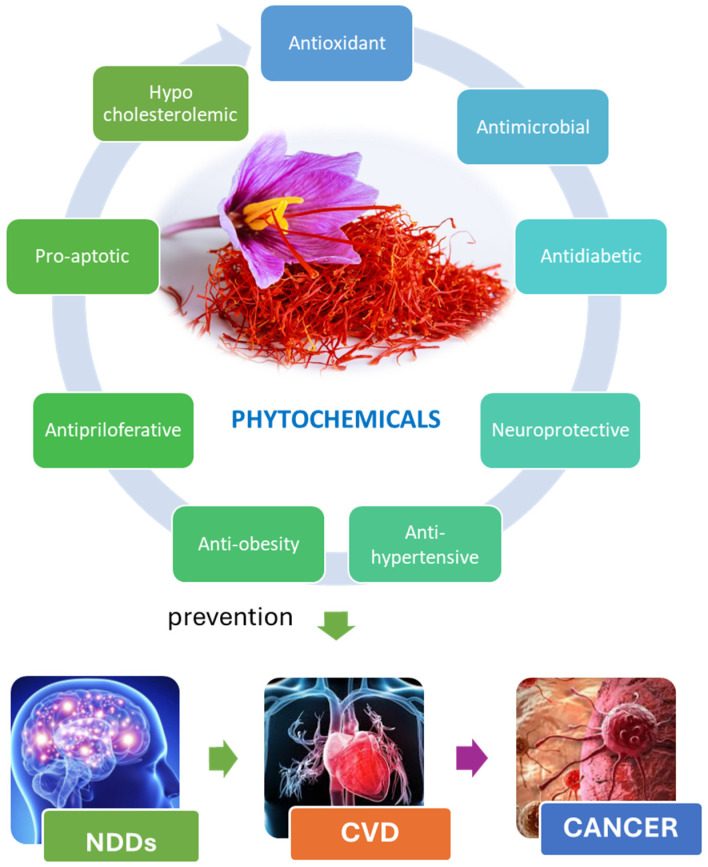 Figure 1
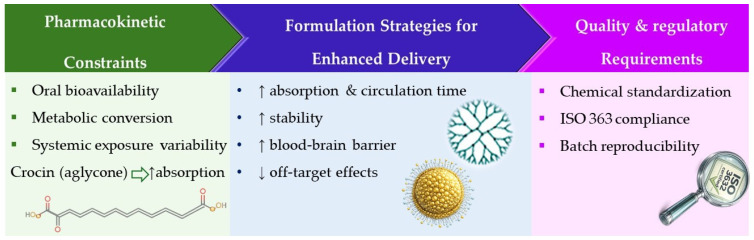 Figure 2
- —CQM Base Fund
- —Programmatic Fund
- —PRIMA
Peer Reviews
No public reviews on file for this paper yet. If you reviewed it on a platform where reviews are public (OpenReview, ICLR, NeurIPS, ICML), you can paste yours below so the community can read it here.
Videos
No videos yet. Explain this paper in a talk, walkthrough, or lecture? Add one.
Taxonomy
TopicsSaffron Plant Research Studies · Sunflower and Safflower Cultivation · Neurological Disease Mechanisms and Treatments
1. Introduction
Natural products remain one of the main sources of pharmacologically bioactive compounds (BACs) and have played a fundamental role in the development of new drugs. Plant-derived metabolites have been extensively investigated due to their structural diversity, biological activity, and relatively positive safety properties. Crocus sativus L. of the Iridaceae family, commonly known as saffron, has garnered substantial attention among medicinal plants due to the presence of a diversity of BACs and its established therapeutic properties [1]. Saffron is one of the most expensive spices in the world, due to intense and time-consuming manual cultivation and the number of flowers required for production, factors that contribute to its limited availability and pharmaceutical relevance [2,3,4,5,6].
Many civilizations have long employed saffron to alleviate a variety of illnesses, such as gastrointestinal issues and inflammatory conditions, among others. In recent years, a growing body of scientific evidence supporting several of these traditional uses has shown the potential of saffron and its main ingredients—crocins, crocetin, safranal, and picrocrocin—as pharmacologically relevant compounds. Numerous in vitro and in vivo studies have demonstrated that these BACs possess antioxidant, anti-inflammatory, neuroprotective, anticancer, and cardioprotective properties [2,7,8,9,10,11].
The biological activities of saffron are specifically described by its ability to modulate the important molecular mechanisms involving oxidative stress, inflammation, apoptosis, and neurotransmission. Several studies have shown that the BACs of saffron can modulate the neurotransmitter systems involving serotonin and dopamine, as well as the signaling mechanisms. The rising interest in saffron as a potential candidate for the development of novel therapeutic strategies, particularly in the treatment of neurological disorders, cancer, and chronic inflammatory diseases, has a solid basis in these mechanisms [10,12,13,14]. The translation of saffron BACs to pharmaceutical uses remains a challenge, despite the increasing number of preclinical and clinical trials. The use of BACs in clinical settings is currently challenged by concerns regarding absorption, pharmacokinetics, uniformity of dosage, and safety for long-term use. Furthermore, the interpretation of results is complicated by the diversity of study designs and the convergence of pharmaceutical and nutraceutical approaches [6,15,16,17,18,19].
The present review provides a comprehensive narrative synthesis of the pharmacological effects of saffron and its principal BACs, with a specific focus on molecular mechanisms, therapeutic relevance, and translational challenges. By integrating evidence from in vitro studies, animal models, and clinical trials, this review critically assesses saffron’s potential as a multi-target pharmacological agent and identifies key limitations and future directions for its development within pharmaceutical and integrative medicine frameworks. Considering the scope of disease areas covered, this review is intended to be a broad narrative overview rather than an exhaustive systematic evaluation of each disease, with a focus on critically evaluating study quality, level of evidence, gaps between preclinical findings and clinical applicability, and limitations across sections.
2. Method
This review trails a comprehensive narrative synthesis approach based on a structured and comprehensive literature search conducted in 2025. The keywords “Crocus sativus”, “saffron”, “crocin”, “crocetin”, “safranal”, “picrocrocin”, “neurodegenerative diseases”, “mental disorders”, “cancer”, “cardiovascular disease”, “metabolic disorders”, and “clinical trials” were combined and searched on scientific databases such as PubMed, Scopus, Web of Science, and Google Scholar to achieve peer-reviewed articles published between January 2000 and January 2026.
Eligibility criteria were established based on the PICO(S) elements: population (animal models, human participants, and disease-relevant cellular systems); intervention (whole saffron, standardized extracts, parts of saffron, or specific saffron-derived compounds); study type (in vitro, in vivo, and controlled or observational human clinical studies); and outcomes (disease-relevant pharmacological endpoints, namely, biochemical, functional, clinical, and mechanistic). Studies that focused on culinary or general nutraceuticals without disease-focused pharmacodynamics were excluded on the basis of pharmacological relevance. Non-English articles and non-peer-reviewed publications were also excluded. The initial search identified 312 records. After removal of duplicates (n = 58), 254 articles were screened by title, abstract, and date of publication. Subsequently, 95 studies were included in the final synthesis.
No formal meta-analysis was performed due to heterogeneity in the study design, formulation, and outcome measurements. Although no standardized risk of bias tool was applied, included studies were critically appraised based on study rigor, extract standardization, endpoint robustness, and translational relevance, with more weight given to controlled clinical trials compared to preclinical studies.
3. BACs with Pharmaceutical Relevance
The pharmaceutical potential of saffron is primarily attributed to a restricted number of BACs that have demonstrated consistent activity in both preclinical and clinical studies. Perhaps due to its complex chemical composition, pharmacological research has focused on a small set of BACs, namely crocins, crocetin, safranal, and picrocrocin, which are considered the main drivers of its therapeutic effects (Table 1).
The carotenoid derivatives crocin and its aglycone crocetin, which give saffron its distinctive color, are the most well-investigated BACs from a pharmacological perspective. Crocetin is a lipophilic dicarboxylic acid that results from intestinal hydrolysis, while crocins are water-soluble glycosylated apocarotenoids. According to pharmacological investigations, these BACs demonstrate anti-inflammatory and antioxidant properties, mostly by modulation of inflammatory mediators and oxidative stress pathways. Crocins and crocetin have also been shown to exert neuroprotective, cardioprotective, and anticancer properties by influencing signaling pathways, such as nuclear factor κB (NF-κB), nuclear factor erythroid 2-related factor 2 (Nrf2), and phosphatidylinositol 3-kinase/protein kinase B (PI3K/Akt). Remarkably, crocetin has shown to be more bioavailable than crocins, indicating its potential for drug development [10,12,13,18,19,20]. Another pharmacologically noteworthy BAC that gives saffron its distinctive scent is safranal, a monoterpene aldehyde resulting from saffron processing. Neuroprotective, anticancer, anticonvulsant, antidepressant, and antioxidant properties have all been correlated with safranal. These effects are thought to be mediated by interactions with the central nervous system, involving the regulation of oxidative stress and apoptotic signaling, as well as the modulation of gamma-aminobutyric acid neurotransmission-related (GABAergic) and serotonergic pathways. Safranal is more quickly absorbed due to its volatility and lipophilicity, even though additional research is needed to understand its pharmacokinetic behavior and long-term safety [19,23,24,25].
In contrast, picrocrocin, a glycosylated monoterpene, has received less research attention and is mostly acknowledged for its role in the bitter flavor of saffron. Nonetheless, novel research suggests that picrocrocin may support saffron’s overall pharmacological activity and contribute to its anti-inflammatory and antioxidant characteristics. Rather than acting as a stand-alone medicinal agent, its contribution seems to be especially significant in synergistic combinations with other saffron BACs [19,26,27].
From a structure-activity relationship, the pharmacological effects of saffron BACs are correlated with their chemical structure. The large conjugated polyene backbone of crocetin is responsible for its high redox activity, whereas glycosylation in crocin improves water solubility but reduces passive diffusion across cell membranes. Conversely, the lipophilic and volatile aldehyde group of safranal promotes blood–brain barrier penetration and interaction with neuronal pathways. These structural features interactively modulate affinity for targets, intracellular distribution, metabolic half-life, and ultimately pharmacological response, thus emphasizing the impact of chemical structure in determining therapeutic application [7,9,19].
Further preclinical research supports the potential meaning of saffron BACs in neurodegenerative and neuropsychiatric illnesses by showing that they have neuroprotective effects through reduction of neuroinflammation, prevention of amyloid aggregation, and modulation of neurotransmitter systems. Inhibition of tumor cell proliferation, activation of apoptosis, and suppression of tumor development and spreading pathways have all been linked to anticancer activity. Furthermore, saffron-derived BACs have demonstrated metabolic and cardioprotective advantages, such as improvement of lipid profiles, reduction of oxidative damage, enhancement of insulin sensitivity, and regulation of blood glucose levels (Figure 1) [14,28,29].
Moreover, saffron contains minor compounds, such as flavonoids (kaempferol, luteolin, and quercetin glycosides), phenolic acids (chlorgenic acid and gallic acid), anthocyanins (delphinidin, cyanidin, and petunidin derivatives), vitamins, minerals (Mg, P, Ca, K, and Na), carbohydrates, and amino acids in addition to these primary BACs [19,30,31]. Phenolic compounds, especially flavonoids, mostly found in saffron tepals, are well known for their antioxidant and anti-inflammatory activities. However, their direct contribution to saffron’s therapeutic properties is restricted by their very low concentrations and the lack of robust pharmacological evidence. Hence, rather than being the main focus of pharmaceutical development, these BACs are regarded as secondary contributors [9,19,27,32].
4. Pharmacological Effects of Saffron in Non-Communicable Diseases
Saffron’s main BACs, namely crocin, crocetin, picocrocin, and safranal, possess several pharmacological effects. Several studies have reported that these BACs demonstrated antioxidant, anti-inflammatory, anticancer, antidepressant, hypoglycemic, hypolipidemic, memory-enhancing effects, and many others [3,19].
4.1. Neurodegenerative and Neuropsychiatric Disorders
Alzheimer’s disease, Parkinson’s disease, multiple sclerosis, cerebral ischemia, and mental illness are among the distinct groups of conditions recognized as neurodegenerative diseases and related neuropsychiatric disorders. These conditions share common pathological mechanisms, including oxidative stress, chronic neuroinflammation, mitochondrial dysfunction, protein aggregation, excitotoxicity, impaired autophagy, and apoptosis. Nonetheless, the majority of existing treatments are still symptomatic and frequently have negative side effects. Table 2 summarizes the neuroprotective and neuromodulatory properties of saffron and its main BACs.
4.1.1. Alzheimer’s Disease
Alzheimer’s disease is depicted by the deposition of amyloid-beta (Aβ) peptides in neurons, causing the formation of senile plaques, while hyperphosphorylated tau protein accumulation forms neurofibrillary tangles. These pathological processes are enhanced by the increased oxidative stress and activation of apoptosis, including caspase-3-mediated neuronal cell death. Saffron has been proposed to interfere with this particular pathway by blocking the deposition of Aβ plaques and reducing Aβ-induced neurotoxicity [50]. By reducing Aβ-induced synaptic loss, neuronal apoptosis, and dendritic degeneration in vulnerable brain regions such as the hippocampus and frontal cortex, crocin (30 mg/kg/day) has displayed neuroprotective effects in experimental Alzheimer’s disease models, indicating its ability to maintain neuronal architecture and viability [35]. By altering peptide aggregation pathways, BACs derived from saffron directly affect Aβ pathogenesis at the molecular level. In this sense, trans-crocin-4 and crocetin redirected Aβ_1–40_ assembly toward non-toxic species, thereby inhibiting fibrillogenesis and reducing the burden of pathogenic oligomers [33].
Beyond aggregation control, crocetin has emerged as a potent enhancer of Aβ clearance through activation of macroautophagy via the STK11/LKB1 (serine/threonine kinase 11)-mediated AMP-activated protein kinase (AMPK) pathway. In transgenic animal models for Alzheimer’s disease, crocetin has been demonstrated to successfully cross the blood–brain barrier, cause lysosomal degradation of Aβ, alleviate neuroinflammation, and obviously enhance cognitive functions [22]. In mild to moderate patients with Alzheimer’s disease who were undergoing conventional cholinesterase inhibitor treatment, administration of saffron supplements (15 mg, 2 times daily) alleviated systemic levels of oxidative stress and pro-inflammation, implying an additive biochemical effect, even when cognitive functions were not obviously observed [20]. Furthermore, the concomitant pre-administration of a standardized saffron dosage (Repron^®^, 10 mg/kg/day) showed alleviation of the cognitive and visual disturbances caused by neuroinflammation in vivo, which emphasizes the use of anti-inflammatory modulation and the retina as a biomarker in the therapeutic response of Alzheimer’s disease [8].
4.1.2. Parkinson’s Disease
Parkinson’s disease is caused by damage to dopaminergic neurons in the substantia nigra, likely due to oxidative stress, inflammation, and acetylcholinesterase activity, and is associated with tremors, muscle rigidity, imbalance, and delayed movements. It has been reported that lead, a neurotoxic metal element, could contribute to disease development.
In models of toxin and metal-induced Parkinson’s disease, crocin and saffron extracts preserved the integrity of both dopaminergic and noradrenergic systems, restored tyrosine hydroxylase expression in nigrostriatal and mesocorticolimbic pathways, and improved locomotor function significantly, thereby affirming a potent protective function for crocin and saffron extracts against environment-related dopaminergic neurotoxicity in vivo [36]. At the mechanistic level, crocin activates pro-survival signaling cascades, including PI3K/Akt/mTOR, suppresses apoptosis, attenuates α-synuclein accumulation, and enhances dopaminergic neurotransmission. These effects were further reinforced by the upregulation of Parkinson’s disease-relevant microRNAs, including miRNA-7 and miR-NA-221 [38]. In rotenone-induced PD models, crocin alleviated motor deficits, preserved striatal dopamine levels, and mitigated oxidative and inflammatory stress [38]. Translational relevance is supported by current randomized clinical evidence demonstrating that oral crocin supplementation (60 mg/day) improved motor function and activities of daily living in patients with idiopathic Parkinson’s disease when used as an adjunct to standard dopaminergic therapy, with a favorable safety profile [37].
4.1.3. Multiple Sclerosis
Multiple sclerosis is a chronic autoimmune disease characterized by central nervous system demyelination, leading to myelin sheath destruction and impairing neuron signal transmission. It affects physical, mental, cognitive, and motor activity [39].
In a cuprizone-induced model of multiple sclerosis, crocin administration attenuated demyelination-associated motor deficits and depressive-like behaviors, improving locomotor coordination and reflexive motor performance, while normalizing systemic and central oxidative stress markers, including malondialdehyde, superoxide dismutase, glutathione peroxidase, and total antioxidant status. These findings highlight its capacity to counteract oxidative stress-driven oligodendrocyte dysfunction and secondary neuroinflammation [39].
Clinical assays demonstrated that a nanoformulated crocin-selenium complex (Cor@SeNs) improved cognitive performance in multiple sclerosis patients, particularly in verbal learning, memory retention, and information processing speed, alongside enhancements in total antioxidant capacity [40]. The observed clinical efficacy was mechanistically attributed to the synergistic antioxidant actions of crocin and selenium-dependent selenoproteins, combined with improved bioavailability and blood–brain barrier penetration conferred by nanoparticle delivery, enabling effective modulation of redox homeostasis and mitochondrial dysfunction, key upstream drivers of neurodegeneration in multiple sclerosis [40]. Additional clinical evidence suggested that saffron may also exert immunomodulatory effects, as treatment in relapsing-remitting multiple sclerosis patients was associated with reduced circulating matrix metalloproteinase-9 (MMP-9), a key mediator of T-cell migration across the blood–brain barrier, and increased levels of its endogenous inhibitor, tissue inhibitor of metalloproteinases-1 (TIMP-1), indicating attenuation of pathological immune cell trafficking to the central nervous system [41].
4.1.4. Cerebral Ischemia
Cerebral ischemia results from a disturbed blood flow to the brain, leading to neuronal damage through inflammation, oxidative stress, and apoptosis processes. Angiogenesis and neurogenesis are linked with stroke recovery.
In experimental models of focal cerebral ischemia/reperfusion, the administration of saffron improved neurological and motor outcomes, preserved neuronal integrity in cortical and hippocampal regions, and reduced infarct-associated histopathological damage. These effects were associated with reduced lipid peroxidation, nitric oxide production, and caspase-3 and Bax expression, alongside the restoration of endogenous antioxidant defenses [42]. Upregulation of vascular endothelial growth factor (VEGF) suggested enhanced angiogenesis and neurotrophic support as critical contributors to post-ischemic recovery [42].
In a post-stroke model, saffron’s chronic suppressive effects encompassed a reduction in astrogliosis and glial scar tissue within the penumbra, decreased pro-inflammatory cytokine expression accompanied by an increase in anti-inflammatory factors, and promoted neuronal survival and functional recovery, indicating modulation of glial reactions post-stroke [43]. The translational relevance was supported by the existence of clinical trial data that have found that oral aqueous extracts of saffron were correlated with reduced stroke severity and decreased circulating biomarkers of neuronal and glial injury in hospitalized patients, while increasing blood levels of brain-derived neurotrophic factor [44].
4.1.5. Mental Illness
Saffron has been cited in Canadian clinical guidance documents as a potential adjunctive option for mood disorders, based on emerging clinical evidence [51]. Several clinical trials have reported its antidepressant and anxiolytic properties for most age groups, as its principal BAC, crocin, acts as a pleiotropic modulator of mental illness, particularly depressive and anxiety-related disorders.
At the molecular level, crocin exerted antidepressant-like effects through activation of neuroplasticity-associated signaling cascades, notably the BDNF–mTOR–ERK pathway, resulting in enhanced synaptic protein expression, dendritic growth, and reversal of stress-induced depressive behaviors. Pharmacological blockade of mTOR signaling abolishes these effects, confirming pathway dependency [45]. Ex vivo studies in humans suggested the capability of the circulating metabolites produced post-saffron consumption to protect human neurons against the actions of oxidative stress by enhancing the production of brain-derived neurotrophic factor (BDNF), promoting the secretion of dopamine and serotonin, inhibiting the expression of the serotonin transporter, and decreasing serotonin metabolism, which collectively resemble the mechanisms of action of selective serotonin reuptake inhibitor (SSRI) antidepressants [46].
Preclinical behavioral studies demonstrated the capacity of saffron extracts to reduce anhedonia and depression-like responses generated in stress animal paradigms, which depict the involvement of antioxidant and monoaminergic mechanisms in affect regulation [47]. Further clinical trials reported improvements in self-perceived mental health status and quality of life in people experiencing subclinical levels of depression, as measured by changes in amino acid pathways, without evidence of the impact of saffron supplements regarding systemic indices of inflammation as well as hypothalamic-pituitary-adrenal system activity [48]. In patients with major depressive disorder, saffron exhibited antidepressant efficacy comparable to the SSRI sertraline, including older populations, highlighting its clinical relevance and favorable tolerability profile [49].
Despite the research discussed above suggesting potential pharmacological effects of saffron and its BACs, there are certain limitations to these studies. Firstly, most in vitro studies have applied concentrations that may not be within the range of physiological plasma concentrations, following oral administration. Consequently, there are concerns regarding the pharmacological relevance of these studies. Secondly, in vivo studies, while providing positive effects of saffron, have not characterized the pharmacokinetic profile of the BACs. In addition, the formulation of the extract was not standardized in most of these studies. It is also important to note that while conducting in vivo studies, the effects of BACs have not been studied in the scope of human disease. In most of the clinical studies, small sample sizes, short durations of administration, and heterogeneous formulations were assessed. Moreover, the positive effects of BAC in vitro studies suggest the possibility of publication bias. These factors highlight translational gaps and underscore the need for standardized formulations, rigorous pharmacokinetic evaluation, and appropriately powered randomized controlled trials.
4.2. Oncological Disease
Saffron has been extensively investigated for its anticancer potential, mainly attributed to its BACs, which act through multiple molecular mechanisms involved in tumor initiation and progression. These mechanisms include the inhibition of DNA and RNA synthesis, suppression of cancer cell proliferation, induction of apoptosis and autophagy, inhibition of angiogenesis and metastasis, and modulation of oncogenes and tumor suppressor gene expression (Table 3).
Saffron and its BACs, especially crocin and safranal, exhibited broad-spectrum anticancer actions across numerous tumor types via pleiotropic and convergent molecular routes. Mechanistic, preclinical, and translational evidence suggests that crocin inhibits key oncogenic signaling pathways, most remarkably the PI3K/Akt/mTOR, thereby inhibiting tumor cell proliferation and inducing apoptosis in hormone-related and solid malignancies. In thyroid and cervical cancer models, reactivation of this pathway reversed the observed antitumor efficacy, proving mechanistic specificity [12,58]. Outside growth inhibition, crocin decreased pro-inflammatory cytokine production in breast cancer cells and downregulates protein kinase C theta (PRKCQ)-dependent nuclear factor kappa B (NF-κB) activation. This disrupts the inflammatory microenvironment that advances tumor growth [13].
Saffron’s anticancer profile is beyond improved by epigenetic and genomic stability mechanisms. In prostate cancer models, saffron treatment induced apoptotic cell death while simultaneously downregulating DNA methyltransferases, DNA repair intermediates, and oncogenic regulators, such as AR, c-Myc, and NF-κB, indicating its capability to target tumor plasticity and resistance pathways [29]. In colorectal cancer models, altering the IL-17/Th17 axis, downregulating PD-L1 expression, and reestablishing the balance of CD4/CD8 T cells within the tumor microenvironment were reported, indicating potential enhancement of immune checkpoint-based immunotherapy [66].
Formulation techniques, as a whole, also influenced therapeutic outcomes. For example, nanoencapsulated crocin increased the sensitivity of triple-negative breast cancer cells to doxorubicin by inducing mitochondrial apoptosis and cell-cycle arrest, which overcomes innate chemoresistance [54]. Safranal was reported to exert antimetastatic effects in aggressive breast cancer, causing apoptosis, mitochondrial dysfunction, and extensive dysregulation of glycoprotein sialylation implicated in cell adhesion, migration, and survival, according to complementary data from proteomic and sialiomic investigations [55]. Crocin’s anti-angiogenic and anti-metastatic properties were further supported by in vivo studies, especially through the suppression of VEGF and MMP-9 signaling. In breast and hepatocellular carcinoma models, respectively, synergistic tumor growth inhibition was observed when mixed with metformin or the multi-kinase inhibitor sorafenib [57,61].
As summarized in Table 3, saffron extracts and their BACs demonstrated antiproliferative, pro-apoptotic, and anti-angiogenic potential activities in a wide diversity of in vitro and in vivo studies. The majority of the studies employed supraphysiological concentrations in vitro approaches, and numerous in vivo studies lacked detailed reporting of randomization, blinding, and extract characterization. The mechanistic evidence for saffron and its BACs on human cancer is largely based on gene or protein expression studies, which lack functional validation. Nevertheless, pharmacokinetic issues, poor bioavailability, and differences in the extracts’ composition, together with the lack of sufficient human randomized clinical trials, limit the clinical applicability of saffron and its BACs, although they appear to have potential biological acceptability.
4.3. Cardiovascular and Metabolic Disorders
Chronic hyperglycemia, oxidative stress, inflammation, endothelial dysfunction, mitochondrial damage, and insulin and vascular signaling pathway disregulations are just a few of the numerous pathomechanisms commonly seen in cardiovascular and metabolic diseases, such as diabetes mellitus, which remain an important global health concern with significant burdens. Type 2 diabetes mellitus contributes to the vast majority of prevalent cases due to of genetic predisposition as well as environmental factors [78]. Table 4 summarizes the relevant cardiometabolic protective effects of saffron and its main BACs.
Saffron-derived BACs modulate cholesterol metabolism at the level of lipid homeostasis through non-statin mechanisms, such as downregulation of PCSK9 and sortilin, suppression of SREBP-1/2 signaling, and upregulation of LDL receptor expression. In hypercholesterolemic models, these pathways were correlated with enhanced LDL clearance and declined hepatic inflammation without directly inhibiting 3-hydroxy-3-methylglutaryl (HMG)-CoA reductase [26,79].
Crocetin has demonstrated protective effects in diabetes-related vascular and renal complications. By reducing advanced glycation products, oxidative stress, and inflammatory mediators, suppressing transforming growth factor-b1 (TGF-β1) signaling, and restoring glyoxalase-I and paraoxonase-1 activities, crocetin decreased diabetic nephropathy and improved insulin resistance, dyslipidemia, and renal structural integrity [21].
Saffron supplementation, especially when combined with resistance training, improved lipid profiles and reduced pro-inflammatory adipokines such as leptin and resistin, supporting improved endothelial and cardiometabolic health in hypertensive individuals. These systemic metabolic benefits were also extended to vascular inflammation and cardiovascular risk modulation in humans [82]. Additionally, saffron improved wound healing by stimulating angiogenesis, fibroblast migration, collagen deposition, and VEGF overexpression in diabetic wound models, suggesting potential benefits in microvascular dysfunction [86].
The hypoglycemic and cardioprotective effects of saffron and its BACs were demonstrated through preclinical research, mainly via antioxidant, anti-inflammatory, and pathway-modulating activities. These studies were carried out on animal models (mainly STZ-induced models), which did not reflect human disease well and lacked reporting of the approaches applied, such as randomization, blinding, and dose translation. As highlighted in recent comprehensive analyses of plant-derived antioxidants [88,89], discrepancies frequently arise between preclinical efficacy and human therapeutic benefit due to differences in bioavailability, metabolism, dosing, and disease heterogeneity.
Similarly, clinical trials have shown improvements in metabolic and cardiovascular (e.g., ox-LDL and MCP-1) markers, although results vary and were often short-term and surrogate outcomes, such as reduction in HbA1c, reducing blood pressure, and preventing cardiovascular events. Variability in formulation, dosage, and study duration, as well as population characteristics, also limited the overall comparability of clinical trial results.
5. Pharmacokinetics, Bioavailability, Formulation Challenges, and Toxicological Considerations of Saffron BACs
Saffron and its BACs demonstrate a pharmacological fingerprint, but pharmacokinetic restrictions, related to absorption, bioavailability, and tissue distribution, restrict their practical translation.
Crocin is a hydrophilic, glycosylated metabolite with limited intestinal absorption in its natural state. The most absorbable and systemically accessible metabolite of crocin is its aglycone, crocetin, which is quickly hydrolyzed by intestinal epithelial enzymes and gut microbes after oral treatment [15,90]. As a result, crocetin is frequently recognized as the primary mediator of saffron’s systemic biological effects, being easily absorbed and measurable in plasma within 1–2 h after ingestion and being able to overcome biological barriers, according to in vivo pharmacokinetic studies.
Preclinical data support crocetin’s neuroprotective efficacy in conditions such as Alzheimer’s disease, Parkinson’s disease, cerebral ischemia, and multiple sclerosis partly due to its capacity to achieve central nervous system compartments either intrinsically or through formulation-assisted delivery [15,90,91]. However, fast metabolism, short and formulation-dependent plasma half-life, and interindividual variability in absorption remain a frontier in the global bioavailability of saffron BACs.
Advanced formulation techniques have been investigated to overcome these matters. In preclinical models, nanoformulations, such as nanoparticles loaded with crocin or crocetin, nanoemulsions, liposomes, cyclodextrin inclusion complexes, and polymeric carriers, have shown improved chemical stability, cellular uptake, extended circulation time, and improved targeting [91,92,93]. In oncology and neurodegeneration models, nanoparticle-based delivery systems improved blood–brain barrier penetration and increased tumor cells’ sensitivity to conventional chemotherapeutic agents. This improves therapeutic efficacy while possibly lowering required doses and off-target effects. These results, however, remain mostly preclinical and require additional clinical validation (Figure 2).
From a clinical perspective, doses up to 200–400 mg/day of whole saffron extract have been used in cardiometabolic and inflammatory conditions, while human-relevant dosing ranges for saffron preparations usually fall between 15 and 60 mg/day for standardized extracts in neuropsychiatric and neurological trials [90,94]. Saffron demonstrates an appropriate safety and tolerability outline across these dosage ranges, with side effects similar to those of a placebo or traditional medications [90]. Crucially, when properly designed, formulation-enhanced delivery systems do not show increased cytotoxicity in neural or peripheral cell models, demonstrating their translational safety [91,92,94].
Variability in extract composition remains a main barrier to pharmaceutical development and regulatory approval. Cultivar, geographic origin, harvesting conditions, and post-harvest processing have a meaningful influence on the chemical composition of saffron. Therefore, to guarantee repeatable pharmacokinetics, effectiveness, and safety, quality control and standardization techniques are necessary. In addition to compliance with ISO saffron grading standards (ISO 3632), which categorize saffron quality based on spectrophotometric indices of coloring strength (crocin), aroma (safranal), and bitterness (picrocrocin), current regulatory frameworks place an emphasis on chemical standardization based on key marker compounds. Given its function as the metabolic precursor of crocetin and its direct impact on systemic exposure and central nervous system availability, crocin content is becoming more widely acknowledged as one of these markers [91,92,95]. Perhaps ISO 3632 was initially developed for culinary quality evaluation; hence, the establishment of pharmacopoeial standards specifically designed for medicinal extracts, considering the BAC’s concentration, purity, and limits of contaminants, as well as batch-to-batch consistency, will be crucial to support pharmaceutical development and clinical translation.
6. Conclusions
The pharmacological potential of saffron arises from its unique profile of BACs, namely crocin, crocetin, safranal, and picrocrocin. These BACs play a principal role in mediating antioxidant, anti-inflammatory, neuroprotective, and metabolic effects, while safranal contributes relevant neuromodulatory and cytoprotective properties.
According to preclinical and clinical evidence, these BACs may be beneficial for a wide range of non-communicable diseases. However, several challenges still limit the clinical use of BACs from saffron, including heterogeneity in results and weakened clinical conclusions. Future research should focus on standardizing uses of saffron extract preparation or its BACs in doses and improving formulation, also using long-term clinical trials to obtain reliable and more accurate results that can be compared and properly evaluated. Establishing rigorous research standards will be decisive in determining whether saffron can transition from a promising phytochemical source to a clinically actionable pharmacological entity.
The reference list from the paper itself. Each links out to its DOI / PubMed record.
- 1Elfardi Y.R. El Boukhari R. Fatimi A. Bouissane L. The Multifaceted Therapeutic Potential of Saffron: An Overview Based on Research and Patents Drugs Drug Candidates 2024343745410.3390/ddc 3030026 · doi ↗
- 2Marrone G. Urciuoli S. Di Lauro M. Cornali K. Montalto G. Masci C. Vanni G. Tesauro M. Vignolini P. Noce A. Saffron (Crocus sativus L.) and Its By-Products: Healthy Effects in Internal Medicine Nutrients 202416231910.3390/nu 1614231939064764 PMC 11279474 · doi ↗ · pubmed ↗
- 3Spence C. Saffron: The Colourful Spice Int. J. Gastron. Food Sci.20233410082110.1016/j.ijgfs.2023.100821 · doi ↗
- 4Acharya B.S. Ghalehgolabbehbahani A. Hamido S. Zinati G. Bozzolo A. Archer L. Wendelberger K. Das S. Thapa R. Panday D. Saffron (Crocus sativus L.): The Golden Spice—Management, Challenges, and Opportunities for Sustainable Production in the United States J. Agric. Food Res.20252110197010.1016/j.jafr.2025.101970 · doi ↗
- 5Chauhan S. Tiwari A. Verma A. Padhan P.K. Verma S. Gupta P.C. Exploring the Potential of Saffron as a Therapeutic Agent in Depression Treatment: A Comparative Review Yale J. Biol. Med.20249736538110.59249/XURF 454039351321 PMC 11426294 · doi ↗ · pubmed ↗
- 6Sut S. Gherardi G. Ruzza F. Caudullo G. Shrestha S.S. Sorrenti V. Dall’Acqua S. Saffron the “Red Gold” and Its CNS Activity: A Challenge for Future Applications in Nutraceuticals J. Food Biochem.20242024667260810.1155/2024/6672608 · doi ↗
- 7Ziani A. Bekkouch O. Ouahhoud S. Baddaoui S. Ben’Mbarek S. Bekkouch A. Khoulati A. Jaouadi B. Choi J. Choi M. Phytochemistry, Biological Activities, Molecular Mechanisms, and Toxicity of Saffron (Crocus sativus L.): A Comprehensive Overview Antioxidants 202514143310.3390/antiox 1412143341462633 PMC 12729493 · doi ↗ · pubmed ↗
- 8Di Paolo M. Corsi F. Cerri C. Bisti S. Piano I. Gargini C. A Window to the Brain: The Retina to Monitor the Progression and Efficacy of Saffron Repron® Pre-Treatment in an LPS Model of Neuroinflammation and Memory Impairment Pharmaceuticals 202316130710.3390/ph 1609130737765115 PMC 10536337 · doi ↗ · pubmed ↗