Ambient-Stable mRNA Medicines: Emerging Paradigms in Dry and Solid-State Formulation
Mohamed El-Tanani, Syed Arman Rabbani, Adil Farooq Wali, Frezah Muhana, Alaa A. A. Aljabali, Yahia El-Tanani, Rakesh Kumar

TL;DR
This paper reviews strategies to make mRNA medicines stable at room temperature, enabling easier global distribution without cold storage.
Contribution
The paper introduces emerging solid-state formulation methods and advanced design strategies for cold-chain-independent mRNA therapeutics.
Findings
Solid-state stabilization methods like lyophilization and spray-freeze-drying improve mRNA stability.
Self-amplifying RNA and nano-glass frameworks show promise for room-temperature stability.
Combining molecular research with process development can enable durable mRNA medicines.
Abstract
The medical field now uses mRNA therapeutics to deliver fast programmable treatment options through versatile vaccination platforms. The worldwide adoption of mRNA therapeutics faces a major obstacle because these molecules require extreme cold storage and transportation systems. mRNA stability establishes a fundamental scientific and industrial challenge which requires researchers to unite formulation design with process control and material engineering for cold-chain independence. Current knowledge about RNA hydrolysis and lipid oxidation and water-mediated degradation is combined with new methods for solid-state stabilization through lyophilization and spray-freeze-drying and thin-film technologies. Mechanism such as vitrification, water replacement and excipient RNA interactions are assessed to establish the fundamental chemical properties needed for extended product stability.…
Genes, proteins, chemicals, diseases, species, mutations and cell lines named across the full text — each resolved to its canonical identifier and authoritative record.
Click any figure to enlarge with its caption.
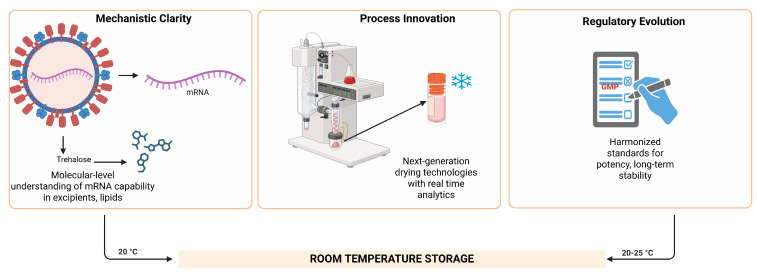 Figure 1
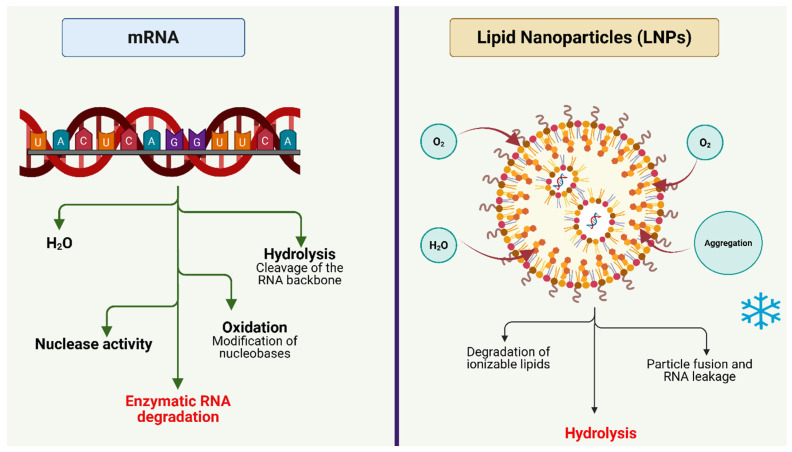 Figure 2
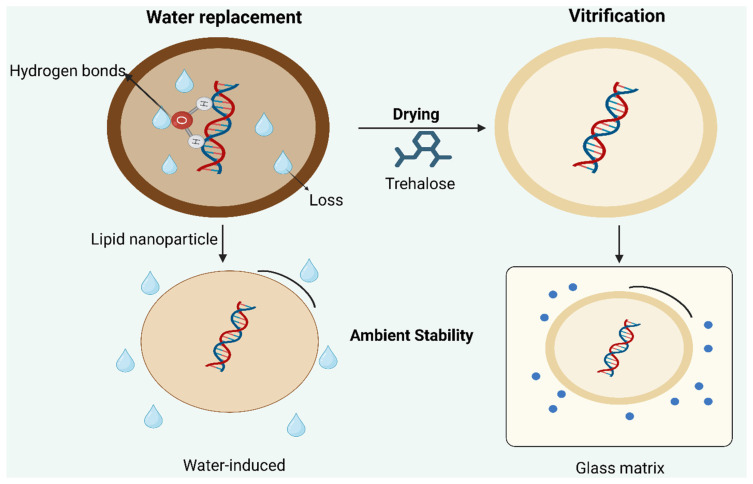 Figure 3
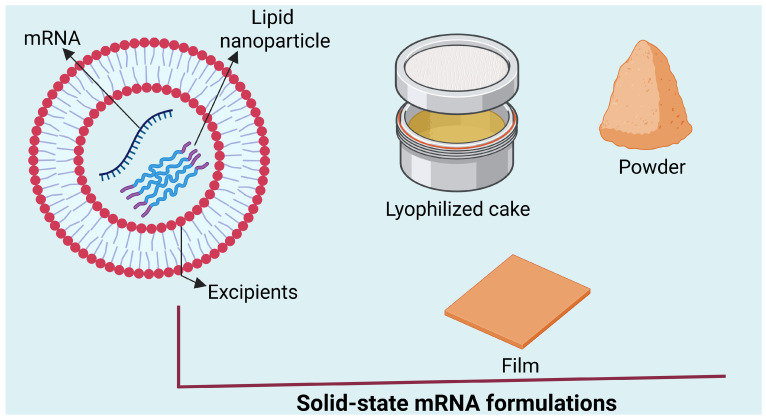 Figure 4
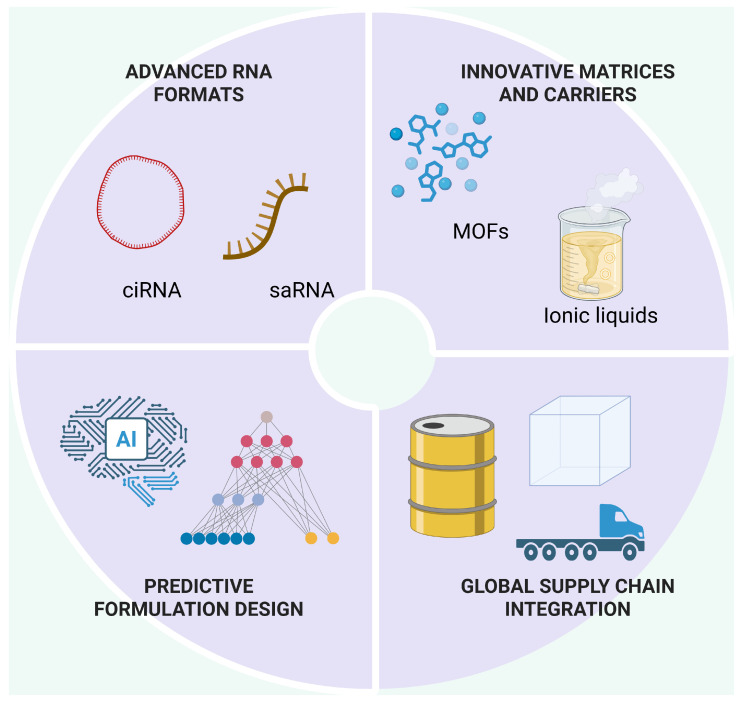 Figure 5
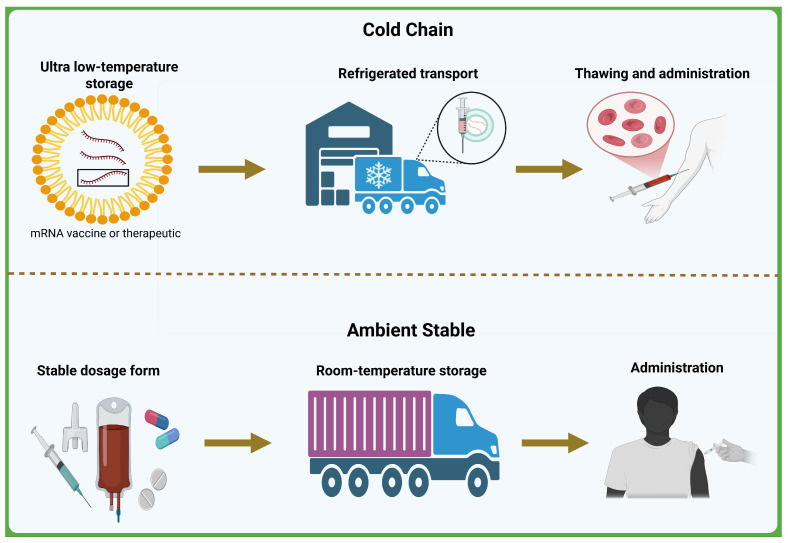 Figure 6
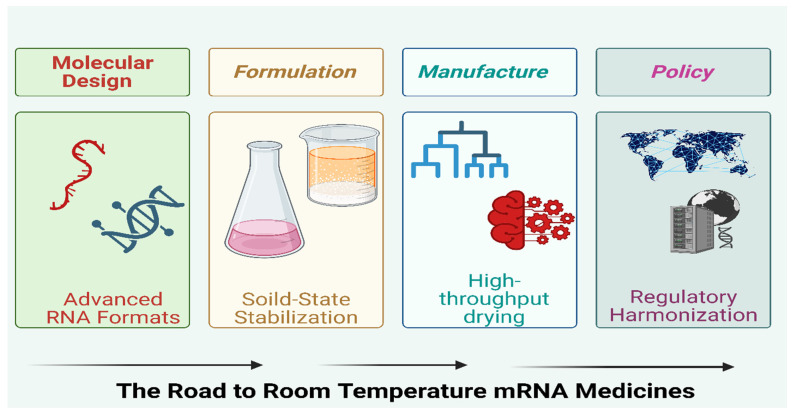 Figure 7
Peer Reviews
No public reviews on file for this paper yet. If you reviewed it on a platform where reviews are public (OpenReview, ICLR, NeurIPS, ICML), you can paste yours below so the community can read it here.
Videos
No videos yet. Explain this paper in a talk, walkthrough, or lecture? Add one.
Taxonomy
TopicsRNA Interference and Gene Delivery · Protein purification and stability · RNA Research and Splicing
1. Introduction
The medical field now uses mRNA technology to create vaccines and treatments which generate specific biological responses through programmable mechanisms [1]. The fast design process and large-scale production capabilities and strong immune response properties have made mRNA the leading therapy for infectious diseases and cancer treatment and rare genetic disorder management [1,2]. The worldwide success of mRNA vaccines against COVID-19 proved that nucleic acid-based medicines could move from design to clinical use within months instead of years [3]. The successful deployment of mRNA vaccines against COVID-19 revealed a major weakness that blocks wider medical applications of mRNA technology because mRNA molecules degrade easily [4].
The chemical structure of mRNA makes it more prone to degradation than DNA. The single-stranded structure of mRNA together with its reactive ribose backbone makes it highly vulnerable to hydrolytic and oxidative degradation which results in structural breakdown when exposed to body fluids or environmental conditions [5]. The current mRNA-based vaccines and treatments require storage at sub-zero temperatures between −20 °C and −80 °C as they lose their effectiveness when exposed to heat [6]. The storage requirements for mRNA-based products create substantial operational and financial challenges as they need specialized freezers and temperature monitoring systems and continuous dry ice or liquid nitrogen supply [6]. The storage requirements for mRNA-based products create significant challenges for low- and middle-income countries because these nations lack stable power grids and proper refrigerated transportation systems [7]. The COVID-19 pandemic revealed how vaccine and therapeutic access depended more on delivery systems than scientific capabilities [7].
The degradation of mRNA occurs through various dependent pathways which affect its stability at the molecular level. The ribose 2′-hydroxyl group in mRNA triggers intramolecular transesterification reactions that break down the phosphodiester backbone, and guanine and adenine bases become modified through oxidative reactions when pH levels rise or metal ions appear [5]. The protection of mRNA from nucleases and improved cellular entry becomes possible through its encapsulation within lipid nanoparticles (LNPs) [8]. The stability of LNP carriers faces challenges because ionizable lipids tend to degrade through oxidation, and hydrolysis and freeze–thaw cycles lead to phase separation and RNA release [9]. The storage of mRNA at low temperatures slows down degradation reactions but does not prevent them from happening while making production and distribution operations more complicated [6].
The requirement for cold-chain infrastructure has become the primary barrier which prevents mRNA therapeutics from advancing. The requirement for cold storage increases production costs and generates additional greenhouse gas emissions through refrigerated transportation while creating therapy access inequalities between areas with cooling systems and those without [7]. The development of mRNA technology for chronic disease treatment requires researchers to create stable formulations which maintain their effectiveness under normal and room-temperature conditions [10]. The achievement of clinical and commercial success depends on these applications requiring storage stability for multiple years and fast reconstitution and consistent product potency.
The study of mRNA formulation stability remains a critical matter, although scientists have not given it sufficient attention. Scientists dedicate most of their research to mRNA sequence optimization and immunogenicity reduction and delivery system development, but they spend little time studying physical degradation processes and stabilization techniques [4,8]. The current stability research investigates vaccine formulations, but therapeutic applications need different storage conditions because they must endure for extended periods and multiple dosages. The scientific community depends on mRNA stability engineering to advance their research while organizations can use this field to develop their operations [9,10].
This review shows that mRNA medical treatments need formulation stability as their basic requirement for stability. This study investigates mRNA degradation processes through laboratory tests while it explains stability factors present in both liquid and solid forms and assesses new methods for developing heat-resistant mRNA preparations. This review evaluates all essential factors which enable laboratory discoveries to become available sustainable medical treatments for patients. It combines information from chemistry, materials science, pharmaceutical engineering and public health to establish a method for creating mRNA medications which maintains their effectiveness when stored at room temperature. Finally, this review establishes a theoretical framework to create mRNA medicines which maintain their effectiveness under normal temperature conditions for worldwide distribution of RNA-based therapeutic products.
The therapeutic class of mRNA contains various molecular modalities which differ structurally and functionally, as these differences affect both stability and formulation requirements and storage needs. The two methods produce different results which become essential when vaccine stability requirements exceed the needs of vaccines that require cold storage [1,4].
The present vaccine platforms depend on conventional linear mRNA which exists as a single-stranded molecule with a cap and polyadenylated structure that makes it susceptible to hydrolytic backbone cleavage and oxidative base modification [5,10,11]. The process of productive translation needs complete transcript preservation, so any form of transcript shortening or chemical alteration will cause significant loss of potency [11,12]. The process of linear mRNA stabilization requires scientists to preserve exact moisture levels and molecular binding conditions while using particular rehydration methods when storing materials under solid-state conditions [13,14].
The process of saRNA formulation becomes more complex because of its distinctive properties. The saRNA encoding viral replicase enables antigen-encoding RNA amplification within cells which results in needing only small amounts of the vaccine for administration [15]. The large molecular structure of this compound makes it more prone to break down when subjected to shear forces and also causes problems with complete encapsulation and formulation and drying process uniformity [16,17]. The specific requirements of these characteristics restrict the selection of excipients and drying processes and solid-matrix uniformity when storage under normal conditions is the goal [18,19] (Figure 1).
Circular RNA (circRNA) has emerged as an alternative modality with enhanced intrinsic resistance to exonuclease-mediated degradation due to the absence of free 5′ and 3′ termini [11]. The design structure of this feature maintains chemical stability, but circRNA encounters particular challenges during translation and formulation steps because it requires internal ribosome entry sites for translation and demonstrates variable protein production and lacks approved medical uses [4,20]. The circularization process defends against specific degradation mechanisms, yet scientists need to address three main issues: water content management, fat crystal behavior and protein structure flexibility [20,21].
The molecular structure of the material needs to meet specific stability criteria which stem from its planned medical use. The storage needs for prophylactic vaccines provide some flexibility, but therapeutic mRNA products used for chronic treatment require long-term stability maintenance for multiple years, and they need to demonstrate consistent reconstitution performance and protein production stability [2,7]. Researchers need to develop stability definitions which fit their particular storage systems and research goals that extend past conventional RNA stability assessments [9,10].
The identification of these differences becomes essential for developing logical mRNA medicine formulations and for establishing realistic stability targets for mRNA drugs which can remain stable at room temperature. The development of stabilization methods needs to consider three essential factors: delivery system requirements, manufacturing limitations, and the specific molecular characteristics and therapeutic goals of mRNA products [8,12].
The development of solid-state stabilization methods for mRNA therapeutics requires specific approaches because the therapeutic molecules exhibit different properties based on their molecular size, degradation mechanisms and required functional stability levels [11,12,18] (Figure 2).
2. Methodology
A systematic literature search was performed to identify relevant peer-reviewed studies addressing ambient stability, dry-state preservation, and solid-state formulation strategies for mRNA therapeutics. Preliminary searches were conducted to determine appropriate Medical Subject Headings (MeSH), keyword variants, and evolving terminology associated with mRNA stabilization, drying technologies, and nanoparticle-based delivery systems. A comprehensive list of keywords and search terms was developed, including messenger RNA stability, mRNA formulation, solid-state mRNA, lyophilized mRNA, freeze-drying of mRNA, spray-dried mRNA, glass-transition temperature (Tg), trehalose stabilization, sucrose stabilization, residual moisture, lipid nanoparticles (LNPs), dry powder vaccines, ambient-stable biologics, mucosal mRNA delivery, oral mRNA delivery systems, and solid-state biologics. Searches were conducted across major scientific databases including PubMed, Scopus, Web of Science, and Embase. Boolean operators and database-specific filters were applied where appropriate to refine relevance. Additionally, reference lists of all eligible articles were manually screened to identify further relevant studies not captured during the initial database search.
3. Principles of Dry and Solid-State Stabilization
Building on the modality-dependent stability requirements discussed above, the conversion of mRNA formulations from aqueous suspensions into dry or solid matrices represents the most effective strategy for achieving stability under ambient storage conditions. Conversion of aqueous mRNA formulations into solid matrices is the most effective strategy for achieving ambient stability, as removal of water suppresses hydrolytic degradation and reduces molecular mobility [15]. Scientists use two independent theoretical models which include the water-replacement hypothesis and vitrification theory to study how excipients protect biomolecules during drying processes and storage time.
The water-replacement hypothesis shows that hydroxyl-rich excipients including trehalose and sucrose create hydrogen bonds with mRNA backbone structures and nucleobases which maintains their original molecular structures when water evaporates [15,16]. In solid-state mRNA formulations, the stabilizer content is typically expressed as % (w/v) cryo-/lyoprotectant relative to buffer rather than a fixed molar ratio to mRNA, with most successful lyophilized mRNA-LNP vaccines using ~5–10% sucrose or trehalose as the primary excipient; combinations such as 9% trehalose + 1% PVP (w/v) have been identified to further enhance thermal stability and physical integrity during storage at elevated temperatures. In these systems, the mRNA is encapsulated within lipid nanoparticles (LNPs) rather than existing as a free macromolecule in the solid, and the stabilizers act to vitrify the external matrix and maintain LNP colloidal integrity during freezing and drying [17].The vitrification theory explains how an amorphous glassy matrix forms with elevated glass-transition temperature (Tg) which physically traps mRNA and its carrier system to decrease both chemical and physical decay processes [18,19]. Glass-transition temperatures (Tg) of the lyophilized matrix are critical for solid stability and are strongly excipient-dependent: sucrose matrices show lower Tg (40–50 °C), while trehalose-rich matrices exhibit much higher Tg (90–100 °C); incorporation of Tg-modifying excipients (e.g., PVP, cyclodextrins) can raise Tg further, facilitating storage at temperatures significantly below the Tg to suppress molecular mobility. Factors influencing Tg in these formulations include excipient composition and ratios, residual moisture content (higher moisture lowers Tg), molecular mobility of the amorphous matrix, and freeze-drying (lyophilization) kinetics and cycle design, which determine ice formation and solute concentration profiles during drying—each of which directly impacts the physical stability and shelf life of the formulation [17,18].The mechanistic comparison between hydrogen-bond substitution and kinetic immobilization in glassy matrices is schematically presented in Figure 3.
The stabilization process in practice depends on two main factors that occur within a rigid solid matrix structure: hydrogen-bond substitution and kinetic immobilization [16,19]. The process of freeze-drying (lyophilization) serves as the primary method for creating solid-state mRNA formulations which are used throughout the industry. The process starts with controlled freezing of the formulation before ice sublimation occurs under reduced pressure, and the process ends with unfrozen water extraction during secondary drying. The biological activity of optimized lyophilized mRNA–lipid nanoparticle (LNP) systems stays active during multiple months of storage at 25 °C, according to [20,21]. However, lyophilization is an energy-intensive and time-consuming process that is highly sensitive to freezing rate, chamber pressure, and secondary drying temperature [20]. The product will experience phase separation when freezing occurs under wrong conditions while the excipients will crystallize, leading to permanent damage of the product’s stability [20,22].
The current drying methods face multiple restrictions that alternative drying techniques including spray-drying, spray-freeze-drying, thin-film drying and foam-drying aim to overcome. The spray-drying method produces micron-scale powders at high speed, but it subjects mRNA and LNPs to strong mechanical forces and hot temperatures during the process [23]. The spray-freeze-drying process protects materials from thermal breakdown because it freezes droplets at low temperatures before they undergo sublimation to create powders which have excellent reconstitution properties [24]. The milder thermal conditions of thin-film and foam-drying processes have proven effective for creating solid dosage forms which work well with microneedle patches and oral thin films [25].
In nano spray drying, droplet formation via vibrating mesh technology, laminar heating architecture, and electrostatic particle collection minimizes particle loss and enables efficient recovery of submicron particles while reducing thermal and mechanical stress compared with conventional spray drying. Critical process parameters including spray mesh size, inlet temperature, solid concentration, and drying gas flow rate directly govern particle size distribution, morphology, encapsulation efficiency, and residual moisture, thereby influencing the physical stability and functional preservation of thermolabile biomolecules like mRNA. Compared with classical spray drying, nano spray drying offers improved control over nanoscale particle engineering, higher collection efficiency for submicron fractions, and suitability for sensitive therapeutics such as proteins and mRNA, SiRNA, making it a relevant platform for solid-state stabilization of advanced biopharmaceuticals [26].
Real-time process control systems play a crucial role in achieving successful implementation of solid-state stabilization methods. The implementation of process-analytical technologies (PATs) which track moisture content and temperature and morphological changes during drying operations has become vital for achieving batch consistency and meeting Good Manufacturing Practice (GMP) requirements [27]. The selection of excipients stands as a critical development step which maintains mRNA stability throughout the process of creating solid-state formulations. The scientific community considers trehalose as the standard stabilizer because it has a high glass-transition temperature and strong hydrogen-bonding ability and does not form crystals [15,28]. The combination of sucrose and mannitol with arginine, histidine, dextran, polyvinyl alcohol polymeric matrices, and specific amino acids leads to matrix modification which enhances mechanical strength and rehydration performance [29]. The most stable materials result from drying processes which produce less than 2% residual moisture because water content above this level reduces Tg values and speeds up degradation, but drying beyond this point leads to materials that lose strength and fail to dissolve correctly [30]. The storage temperature needs to stay at least 20 °C lower than the formulation Tg value to achieve long-term product stability throughout its entire shelf life [28,29].
To facilitate structured comparison of the principal drying technologies used for solid-state stabilization of mRNA therapeutics, a consolidated overview of process parameters, stresses, excipient compatibility, stability outcomes, and scalability considerations is provided in Table 1. This table is explicitly referenced here to improve integration within the manuscript text and to guide readers in correlating drying-induced stresses with formulation design requirements and room-temperature stability performance.
The process of rehydration leads to functional recovery which scientists tend to ignore when studying solid-state stabilization methods. The reconstitution process for dried formulations needs to restore their original particle size distribution, encapsulation efficiency, and translational potency. Research studies primarily measure physical and chemical stability, but they do not assess biological recovery because this factor determines how well treatment methods work [24,27]. The storage environment with elevated humidity will lower Tg values, trigger recrystallization, and accelerate degradation processes which requires packaging systems that manage moisture levels [27].
Critical Insight: From Empirical Drying to Predictive Stabilization Science
Scientists have achieved more stable mRNA through solid-state conversion, but they continue to evaluate new formulations by conducting experimental studies. Research studies evaluate end points through residual moisture content and glass-transition temperature measurements, yet they do not show how these measurement results affect biological performance. The water-replacement and vitrification frameworks provide important theoretical knowledge, but they do not show the entire organizational pattern of mRNA–lipid matrices [15,18]. The solid formulation implementation reveals nanoscale heterogeneity because the formulation contains three distinct sugar, lipid, and water domains which have different viscosity levels and dielectric constants. The material contains different areas which create specific zones that allow chemical breakdown to continue despite the entire material being in a glassy state [27,29].
The development of new stabilization methods uses predictive design methods to solve the current system problems. Research studies demonstrate that amino-acid–based glasses when combined with zwitterionic polymers and deep eutectic solvent (DES) matrices create stronger hydrogen bonds and better reactive species absorption and improved mechanical properties of solid matrices [30]. Scientists can now predict both degradation routes and formulation behavior through the combination of molecular dynamics simulation progress with spectroscopic mapping and kinetic modeling [27,29].
The evaluation of stability requires tests which go beyond standard physicochemical assessments because it needs to assess product behavior during rehydration and its functional recovery after reconstitution. Physical integrity by itself does not protect translational competence from degradation because this competence reveals itself only during biological testing [24]. The development of mRNA medicines for stable use requires scientists to adopt definitions of stability which match biological systems [14].
4. Formulation Strategies for Ambient-Stable mRNA
The creation of stable mRNA therapeutics through ambient conditions needs formulation methods which unite solid-state stabilization methods with industrial production techniques, regulatory standards, and delivery preparedness. The achievement of room-temperature stability requires solutions which extend beyond formulation development because it involves multiple system components including excipient choices, process optimization, packaging construction, and environmental testing protocols [38,39].
In the present review, the majority of excipient strategies discussed refer to formulations in which mRNA is encapsulated within lipid nanoparticle (LNP) systems prior to drying. In such systems, excipients must stabilize both the nucleic acid and the supramolecular lipid assembly. In contrast, carrier-free mRNA formulations—although less common in clinical development—require excipients that directly protect RNA secondary structure without the added complexity of colloidal lipid interfaces. This distinction is critical, as excipients may differentially affect RNA integrity, lipid phase behavior, and nanoparticle colloidal stability [31,38].
The process of freeze-drying (lyophilization) stands as the primary method which scientists use to improve mRNA–lipid nanoparticle (LNP) system stability. The controlled sublimation method of lyophilization protects RNA and lipid components through its process of bulk and bound water removal which creates a glassy matrix that safeguards these components from hydrolytic and oxidative degradation [40,41]. Research has shown that disaccharide cryoprotectants including trehalose and sucrose help maintain particle structure and biological activity of particles during storage at 25 °C for multiple months [32,42]. The process of large-scale lyophilization needs exact management of freezing speed, chamber pressure, and drying temperature to stop lipid phase changes and prevent RNA release and excipient crystal formation [34,41]. The manufacturing speed of conventional lyophilization remains restricted because it requires extended processing times and expensive equipment investments [33].
Beyond vitrification and water-replacement mechanisms, sugars such as trehalose and sucrose play an essential role in preserving colloidal stability of mRNA–LNP systems. During freezing and drying, cryo-concentration and ice-crystal formation may induce lipid phase separation, membrane fusion, or aggregation. Disaccharides modulate interparticle interactions by maintaining hydration shell structure, reducing van der Waals-driven aggregation, and preserving ionizable lipid packing density. However, excessive sugar content may alter osmotic balance during rehydration and influence zeta potential, thereby affecting nanoparticle size distribution and encapsulation efficiency [43].
The current drying methods face multiple limitations which researchers actively work to overcome through new drying approaches. The spray-drying process allows for quick product development through its brief manufacturing period, but it creates harsh conditions which might harm the nanoparticle structure of mRNA–LNPs [36,44]. The spray-freeze-drying process protects materials from heat through its method of freezing small droplets in cold media before they undergo sublimation which produces powders with enhanced reconstitution properties [35,37]. The production of solid dosage forms for microneedle arrays, oral thin films, and non-injectable delivery platforms becomes possible through the use of thin-film drying and foam-drying techniques which work at lower thermal levels [45,46]. The new methods show promise for creating manufacturing systems which can run either continuously or semi-continuously while maintaining their biological properties.The principal solid-state dosage formats derived from these approaches including lyophilized cakes, powders, and films are depicted in Figure 4.
The development of formulation strategies needs to consider all environmental factors which affect stored and distributed products. Laboratory tests which evaluate product stability do not accurately forecast how these products will perform when used in actual field settings, especially in hot tropical environments where temperatures reach above 35 °C and humidity levels exceed 70% [47,48,49,50]. The glass-transition temperature (Tg) of the material decreases when it absorbs even small amounts of moisture during these conditions which also boost molecular movement and speed up degradation reactions [51,52].
The development of packaging design has evolved into an essential element which formulators use to create their formulations, because high-barrier laminates, desiccant systems, and humidity indicators help protect products during transportation and storage [53].
The stability assessment needs to perform mechanical stress testing, vibration simulations, and shipping studies to verify product strength in worldwide distribution networks [54]. The selection of formulation methods depends on financial constraints and environmental standards which need to be met. The process of lyophilization requires significant energy consumption and expensive equipment, but it could reduce costs through three main benefits: removing the need for ultra-cold storage, decreasing product waste, and making distribution operations more straightforward [33,49]. The use of continuous or hybrid drying systems improves both energy efficiency and production capacity but makes it harder to validate and receive regulatory approval for these systems [36,37]. Researchers need to develop environmentally friendly formulations which maintain stability because sustainable manufacturing and packaging practices have become more important [50,51].
The creation of stable mRNA therapeutics which function under typical conditions requires a complete framework combining chemical compound development with production optimization, regulatory approval, and distribution network control [38,39]. The implemented strategies will fulfill their designed objectives to stabilize products and establish mRNA as a therapeutic platform which can be used globally [54].
Critical Insight: From Empirical Optimization to Predictive Design
Current formulation strategies for ambient-stable mRNA remain largely empirical, relying on iterative trial-and-error approaches to optimize excipient composition, drying parameters, and packaging configurations [55,56]. This fragmented methodology limits mechanistic understanding of RNA–lipid–excipient interactions during drying, storage, and rehydration, thereby constraining rational design.
The next phase of mRNA formulation development will require model-informed and data-driven approaches that integrate molecular simulations, kinetic degradation models, and process-analytical technology (PAT) outputs to predict formulation performance prior to large-scale manufacturing [56,57]. Such predictive frameworks enable simultaneous optimization of stability, manufacturability, and sustainability by linking formulation variables directly to functional outcomes. The convergence of predictive science with scalable processing and environmentally responsible manufacturing will ultimately determine whether ambient-stable mRNA transitions from a promising concept to a globally viable therapeutic reality [50,51,57].
For LNP-encapsulated mRNA systems, optimal trehalose or sucrose concentrations typically range between 10 and 20% w/v in the pre-lyophilization solution, corresponding to approximately 20–40% w/w of total solids in the dried matrix. Residual moisture levels should be maintained below 2% to preserve a glass-transition temperature at least 20 °C above intended storage temperature. Amino acids such as histidine are commonly used at 5–20 mM for buffering without excessive Tg depression. Precise optimization remains formulation-specific and requires balancing Tg elevation, lipid compatibility, and reconstitution performance [58].
5. Analytical and Stability Testing Paradigms
The development of mRNA therapeutics for clinical use depends on analytical characterization and stability testing to create product quality standards. The unstable nature of mRNA demands a complete analytical system which tracks chemical stability and physical, structural, and functional performance from product development to end-of-life [59,60]. The stability of mRNA–lipid nanoparticle (LNP) formulations depends on three main factors: nucleic acid chemistry, lipid composition, and supramolecular assembly. The analytical framework depends on molecular testing to work with colloidal and biophysical assessments which generate dependable translation results [61,62].
5.1. Chemical and Structural Integrity
The RNA backbone and bases undergo degradation because hydrolysis and oxidation reactions affect them [63]. The detection of RNA backbone fragmentation and base modifications uses three main analytical techniques: high-performance liquid chromatography (HPLC), capillary electrophoresis (CE), and mass spectrometry (MS) [64,65]. In stabilized mRNA formulations, these techniques are routinely applied before and after drying and following accelerated storage to quantify full-length RNA retention and identify degradation hot spots. The optimization of HPLC methods which use reverse-phase and ion-pair columns allows for quick measurement of full-length RNA amounts, and LC–MS provides detailed data about oxidation and transesterification reactions [66]. The evaluation of secondary-structure stability under accelerated stress conditions benefits from UV spectroscopy and circular dichroism (CD) analysis, particularly for assessing conformational recovery after rehydration [67].
5.2. Lipid and Nanoparticle Characterization
The analytical methods for LNP-based formulations require three main assessments: particle size distribution measurement, zeta potential assessment, and encapsulation efficiency evaluation. The physical stability and morphological consistency of nanoparticles can be evaluated through dynamic light scattering (DLS), nanoparticle tracking analysis (NTA), and cryogenic transmission electron microscopy (cryo-TEM) [68,69]. For dried and reconstituted LNPs, comparative size and morphology analysis before drying, after drying, and post-rehydration provides direct evidence of formulation robustness. The research method uses differential scanning calorimetry (DSC) together with small-angle X-ray scattering (SAXS) to study phase transitions and lipid organization by analyzing their experimental data [70]. The analytical method detects lipid oxidation and phase separation before potency degradation occurs. These techniques are particularly valuable for detecting lipid phase separation or crystallization induced by drying or prolonged storage, which often precede potency loss [71] (Table 2).
5.3. Potency and Functional Recovery
The functional assessment of stability known as potency testing connects molecular stability to biological performance. The evaluation of storage-induced potency maintenance needs in vitro translation assays with reporter mRNAs and cell-based assays which measure the amount of expressed protein [72]. In stable mRNA formulations, potency testing is increasingly conducted after rehydration to confirm recovery of translational efficiency rather than solely measuring physicochemical integrity. The evaluation of vaccine potency depends on antigen expression and immunogenicity tests which serve as the primary assessment methods [73]. The current regulatory frameworks lack standardized definitions for nucleic-acid-based product potency [74]. The development of mRNA quality-by-design (QbD) initiatives depends on correlation studies which establish relationships between physical measurements and biological responses. Quality-by-design (QbD) initiatives therefore emphasize correlation studies that link particle size, residual moisture, Tg, and RNA integrity to functional expression outcomes [75,76].
5.4. Accelerated and Real-Time Stability Studies
The current ICH stability guidelines which were developed for proteins and small molecules fail to predict the long-term stability prediction of mRNA–LNP products. The storage environment of mRNA–LNP products determines their degradation rate, so researchers need to run accelerated stability tests through Arrhenius-based thermal models and humidity-controlled experiments [77]. Predictive models operating in modern times employ moisture sorption isotherms together with glass-transition behavior to determine product shelf life under various environmental settings [78]. The evaluation of product stability under various conditions needs real-time testing which depends on validated reference materials together with standardized laboratory procedures. For solid-state mRNA formulations, moisture sorption isotherms and Tg-based modeling are increasingly used to define acceptable storage envelopes and packaging requirements [79].
5.5. Emerging Analytical Technologies
Scientists will achieve better results in their research of mRNA degradation mechanisms and stabilization processes through the creation of advanced analytical systems. Raman and infrared (IR) spectroscopy enable scientists to perform non-destructive analysis of drying and rehydration processes and have been applied to monitor hydrogen-bond interactions and trehalose vitrification behavior in lyophilized mRNA–LNP matrices [80]. The detection of thermal transitions which show conformational instability becomes possible through differential scanning fluorimetry (DSF) and nano-DSC and has been used to correlate glass-transition temperature shifts with residual moisture–dependent molecular mobility in sugar-stabilized mRNA formulations [81]. Scientists study degradation products at nanoscale levels through single-molecule fluorescence and atomic force microscopy (AFM) including visualization of LNP structural integrity and aggregation following freeze-drying or spray-drying stress [82]. Scientists use machine learning with different assays to generate stability predictions by integrating Tg, moisture content, and particle size distribution with accelerated stability datasets to model degradation kinetics and optimize excipient ratios in mRNA–LNP systems [83,84]. The advanced analytical methods achieve process control through their combined capabilities which provide mechanistic resolution.
5.6. Critical Insight: Defining “True Stability”
The present emphasis on chemical stability and physical measurements does not reveal how molecular structure relates to biological function. The definition of “true stability” requires translational competence to be preserved because it enables mRNA formulations to produce their designed protein output after storage [85,86]. The goal requires analytical methods which monitor mRNA sequences from their start to their biological end while regulatory organizations create standardized guidelines and predictive models [87]. Emerging stabilization technologies and next-generation predictive platforms that may redefine ambient mRNA stability are summarized in Figure 5.
6. Manufacturing, Regulatory and Global Deployment Perspectives
The process of turning laboratory-developed mRNA medicines into worldwide distribution requires more than basic formulation expertise because it needs industrial production capabilities, regulatory standards, and supply chain stability [88]. The production of mRNA therapeutics at commercial scales requires specific manufacturing methods. The enzymatic cell-free mRNA synthesis platform enables fast scale-up, but the following steps need development for reproducible and cost-effective production of mRNA-LNP complexes and their subsequent drying and sterile packaging [89,90].
6.1. Manufacturing Challenges
The process of lyophilizing mRNA-LNP combinations through traditional methods requires significant manual work and consumes substantial amounts of power. The development of freeze-drying cycles requires precise planning to achieve uniform product quality throughout thousands of vial production [91]. The transition to large-scale production of mRNA therapeutics through continuous lyophilization processes creates three main problems with ice-front propagation, sublimation dynamics, and residual-moisture control [92]. The process of handling sterile nucleic acids and nanoscale carriers requires strict containment measures and active process surveillance [93]. The combination of production time extensions and cost increases because of complex ambient-stable formulations creates a conflict between product complexity and potential distribution chain elimination benefits [94].
The development of continuous manufacturing systems and modular fill–finish operations serves to solve current production limitations. The combination of continuous freeze-drying platforms with process-analytical technologies (PATs) and model-predictive control systems enables real-time temperature and moisture tracking which leads to better product consistency and shorter production times [95,96]. The combination of robotic systems with closed aseptic processing enhances both biosafety standards and production capacity [97].
6.2. Regulatory Considerations
The current regulatory environment shows signs of change, but it remains incomplete. The FDA and EMA now understand mRNA technology as a platform system which enables multiple products to share a common manufacturing process through sequence variations, thus leading to discussions about master comparability protocols [98].
The evaluation process for residual moisture, glass-transition temperature (Tg), and packaging barrier integrity needs clarification for submission purposes.
The existing ICH Q1A (R2) and ICH Q5C documents were created for protein and small molecule products, but they do not fully address the unique chemical-biophysical characteristics of nucleic acid therapeutics [99,100]. Regulatory scientists demand new mRNA guidelines which will integrate stability assessment with potency maintenance and cold-chain independence [101].
The development of analytical methods focuses on three essential quality attributes (CQAs): mRNA integrity, encapsulation efficiency, and translational potency [102].
The lack of standardized definitions and validated stability-potency relationships makes it difficult for sponsors to validate ambient storage periods [103,104]. The World Health Organization (WHO) and Pharmaceutical Inspection Co-operation Scheme (PIC/S) have developed frameworks which link analytical results to functional endpoints for global vaccine distribution standards [105].
6.3. Global Deployment and Logistics
The worldwide deployment requirements make ambient stability the most critical factor. The requirement for cold-chain maintenance creates major obstacles for achieving equal healthcare access throughout low- and middle-income countries (LMICs) [106]. The distribution of mRNA vaccines becomes more expensive because of the need for continuous refrigeration, dry ice, and specialized transportation methods which also generate additional greenhouse gas emissions [107]. The elimination of distribution constraints through ambient-stable mRNA formulations enables pharmaceutical supply network utilization for storage under standard pharmacy conditions [108] are summarized in Figure 6.
Products need to withstand tropical environments with temperatures between 30 and 40 °C and humidity levels above 70% during their shipping process [109]. The development of advanced packaging solutions which include multi-layer barrier laminates, desiccant systems, and humidity indicators has evolved into a fundamental aspect of formulation design [110]. The WHO climatic zones III–IVb require regulatory agencies to validate products through tropical stability tests at 30 °C/75% RH for multiple months [111].
Taking deep-cold logistics out of mRNA delivery might cut expenses nearly 60 percent, along with lower carbon output [112]. Better access to healthcare in poorer nations could then support reaching UN’s SDG3 goal for overall health and wellbeing [113].
Obtaining consistent stability rules for nucleic-acid treatments means companies, health regulators, and worldwide medical groups must work together-esting how drugs travel while ensuring factories use smarter processes that mix efficiency without harming the environment [114,115,116].
Obtaining mRNA drugs from lab tests to people everywhere is not just about science-it needs all parts working together. Equity matters, as does access, yet stability in supply also plays a role. This path cannot skip safety or long-term supply chains.
7. Outlook and Future Directions—The Road to Shelf-Stable mRNA
What stands out about mRNA treatments lasting at room temperature is how much progress it shows in life medicine research. Achieving real storage stability comes down to three core needsdeep insight into how things work, new methods beyond old practices, and aligned rules across regions.
7.1. Mechanistic Insight and Predictive Stability
Scientists need to move away from trial-and-error methods of formulating mRNA therapeutics because they must use molecular design principles to create stable products. Stability engineering requires researchers to merge RNA secondary structure analysis with excipient chemical properties and lipid-matrix interactions through quantitative thermodynamic models. Scientists can predict mRNA degradation mechanisms through precise studies using solid-state NMR, molecular-dynamics simulations, and time-resolved spectroscopy which allow them to forecast hydrolytic and oxidative breakdowns. Scientists can use their gained understanding to choose excipients through scientific methods while conducting cost-effective predictive tests instead of conducting costly trial-and-error experiments [117].
7.2. Process Innovation and Manufacturing Scalability
The development of industrial-scale mRNA production requires new manufacturing methods which protect molecular stability while achieving high production rates and consistent results. The development of advanced manufacturing systems includes continuous spray-freeze-drying, thin-film drying, and hybrid modular systems that use real-time process-analytical technologies (PATs). The implementation of digital-twin control systems enables manufacturers to optimize their production lines through automatic parameter adjustments for chamber pressure and residual moisture and glass-transition temperature [118].
7.3. Regulatory Harmonization and Global Implementation
The development of standardized definitions for ambient stability requires immediate attention from regulatory bodies. The implementation of standardized definitions which include potency maintenance, humidity resistance, and packaging validation will create better global comparison capabilities and faster approval processes. The transition of sustainability from ethical practice to regulatory requirement has started; manufacturers must now meet three essential criteria for review: carbon-neutral processing, recyclable packaging, and energy-efficient drying [119].
7.4. Toward a Resilient, Equitable Future
The development of ambient-stable mRNA medicines will reach one-year storage stability at 25 °C during the upcoming decade through pre-filled vials, microneedle patches, and oral thin-films that need no refrigeration. Orodispersible films (ODFs) are currently considered an exploratory platform for mRNA delivery; however, effective systemic administration requires protection against gastrointestinal degradation and enhancement of epithelial transport. In this context, carrier-based systems, particularly lipid nanoparticles (LNPs) and polymeric nanoparticles incorporating ionizable lipids or mucoadhesive/pH-responsive polymers, are essential to shield mRNA from nuclease activity and promote cellular uptake via endocytosis and transcytosis mechanisms, whereas carrier-free (naked) mRNA formulations are unlikely to achieve therapeutically relevant systemic exposure. The film matrix primarily serves as a secondary stabilization and local delivery scaffold, while nanoparticle encapsulation constitutes the principal protective and absorption-enabling strategy [120,121]. The achievement of this goal requires scientists to develop new manufacturing methods which unite scientific principles with practical manufacturing techniques and worldwide healthcare accessibility. The successful development of mRNA therapeutics will transform these medicines into durable treatments which provide worldwide accessibility and sustainable healthcare solutions for global biopharmaceutical care [122].
This Figure 7 illustrates the multidisciplinary pillars required to achieve room-temperature storage of mRNA therapeutics. Molecular Design focuses on engineering advanced RNA formats that enhance intrinsic mRNA stability. Formulation strategies such as solid-state stabilization improve durability during storage and transport. Manufacturing innovations, including high-throughput drying technologies, enable scalable production of stable mRNA products. Finally, regulatory harmonization under the Policy domain supports global alignment of standards, facilitating widespread access to next-generation mRNA medicines. Together, these components form the integrated pathway toward achieving room-temperature mRNA therapeutics.
8. Conclusions and Key Take-Home Messages
The field of mRNA therapeutics has entered a new phase which focuses on developing stable medications for worldwide distribution without needing cold storage facilities. The achievement of this transformation requires scientists to develop stability as an engineered property which extends across all design levels from molecular structure to lipid components, excipients, drying techniques, and packaging systems. These formulation choices must be guided and validated by fit-for-purpose analytical strategies capable of resolving chemical, physical, and functional stability.
The stability of mRNA therapeutics remains limited because RNA hydrolysis and lipid oxidation and freeze–thaw stress continue to affect aqueous formulations. The most effective method to achieve long-term stability in mRNA formulations involves converting them into solid-state systems through lyophilization, spray-drying, thin-film formation, and novel matrix development. Analytical methods that link residual moisture, glass-transition behavior, particle integrity, and reconstitution performance to biological output will be central to translating these approaches into reliable products. The development of ambient stability for more than 12 months at 25 °C temperatures remains unproven for most mRNA therapeutics outside vaccine applications.
The development of self-amplifying and circular RNA, nano-glass, metal–organic frameworks (MOFs), and AI-based predictive formulation design presents new stabilization methods but faces obstacles related to manufacturing, regulatory approval, and large-scale production. The main obstacles to progress now stem from industrial production challenges, regulatory framework uniformity, and distribution network validation.
The development of ambient-stable mRNA therapeutics requires scientists to work together as a single unit, combining their expertise in chemistry, engineering, regulatory science, and global health. The world will achieve a state where mRNA medicines can be distributed without refrigeration, as they will become accessible, durable, and deployable in all necessary locations.
Cold-chain dependency remains the major bottleneck; solid-state conversion enables ambient stability; mechanistic insight is still incomplete; manufacturing and regulatory alignment are the next frontiers; and achieving room-temperature mRNA therapeutics is now a matter of integration, not invention.
The reference list from the paper itself. Each links out to its DOI / PubMed record.
- 1Das S. Chatterjee A. Manna J. Das Mandal S.K. Maiti T.K. Bhattacharyya T.K. Systems-integrated thermostable vaccine delivery: Converging cold-chain-free design, AI-augmented formulation, and climate-resilient infrastructure Mol. Pharm.2025227285731210.1021/acs.molpharmaceut.5c 0129641166273 · doi ↗ · pubmed ↗
- 2Pawar B. Loganathan S. Belliappa K.M. Ranganathan L.B. Thekdi K.P. Hiware S.D. A comprehensive review of vaccine development: From traditional platforms to messenger RNA (m RNA) technologies Cureus 202618 e 10060810.7759/cureus.10060841635346 PMC 12862647 · doi ↗ · pubmed ↗
- 3Driskill M.M. Coates I.A. Hurst P.J. Rajesh N.U. Dulay M.T. Waymouth R.M. Akahata W. Matsuda K. Smith J.F. Jacobson G.B. Lyophilized SARS-Co V-2 self-amplifying RNA vaccines for microneedle array patch delivery J. Control Release 202538411394410.1016/j.jconrel.2025.11394440499765 · doi ↗ · pubmed ↗
- 4SzabóG.T. Mahiny A.J. Vlatkovic I. COVID-19 m RNA vaccines: Platforms and current developments Mol. Ther.2022301850186810.1016/j.ymthe.2022.02.01635189345 PMC 8856755 · doi ↗ · pubmed ↗
- 5Sim E. Kim D. Nguyen T.H. Kim J. Cho H.E. Koo S. Ihm K. Origin of oxidation variations in ambient-stable β-In Se ACS Appl. Mater. Interfaces 202416656286563410.1021/acsami.4c 1557739531525 · doi ↗ · pubmed ↗
- 6Khan M.F. Baudin F. Sudalaiyadum Perumal A. Kamen A.A. Freeze-drying of m RNA-LNP vaccines: A review Vaccines 20251385310.3390/vaccines 1308085340872937 PMC 12389932 · doi ↗ · pubmed ↗
- 7Parhiz H. Atochina-Vasserman E.N. Weissman D. m RNA-based therapeutics: Looking beyond COVID-19 vaccines Lancet 20244031192120410.1016/S 0140-6736(23)02444-338461842 · doi ↗ · pubmed ↗
- 8Huang L. Zhang L. Li W. Li S. Wen J. Li H. Liu Z. Advances in development of m RNA-based therapeuticsm RNA Vaccines Springer Cham, Switzerland 202014716610.1007/82_2020_22232683507 · doi ↗ · pubmed ↗