List of Hard Ticks (Acari: Ixodida: Ixodidae) in Subterranean Habitats in Croatia
Stjepan Krčmar, Roman Ozimec

TL;DR
This study documents hard ticks found in underground habitats in Croatia, identifying seven species with Ixodes vespertilionis being the most common.
Contribution
The study provides the most comprehensive survey of hard ticks in Croatian subterranean habitats to date.
Findings
Ixodes vespertilionis was the most abundant species, making up 81% of collected ticks.
Ixodes frontalis was first recorded in subterranean habitats in Croatia.
Tick diversity was highest in Dalmatia, followed by north-western Croatia and Slavonia.
Abstract
Between 1993 and 2024, a total of 274 hard ticks (Ixodidae) were collected from 138 subterranean localities in Croatia. This study represents the most extensive survey of hard tick fauna in subterranean habitats in Croatia to date. The collected specimens were classified into three genera and seven taxa, including two taxa that could not be identified to the species level (one from the genus Ixodes and one from Haemaphysalis). The genus Ixodes was the most abundant, comprising five taxa, whereas Haemaphysalis and Hyalomma were each represented by a single taxon. The highest diversity of hard ticks was recorded in subterranean habitats in Dalmatia, followed by north-western Croatia and Slavonia. Ixodes vespertilionis Koch, 1844 was the dominant species in the collected sample, representing 81.0% of all specimens, and was recorded in all studied regions. This species was present…
Genes, proteins, chemicals, diseases, species, mutations and cell lines named across the full text — each resolved to its canonical identifier and authoritative record.
Click any figure to enlarge with its caption.
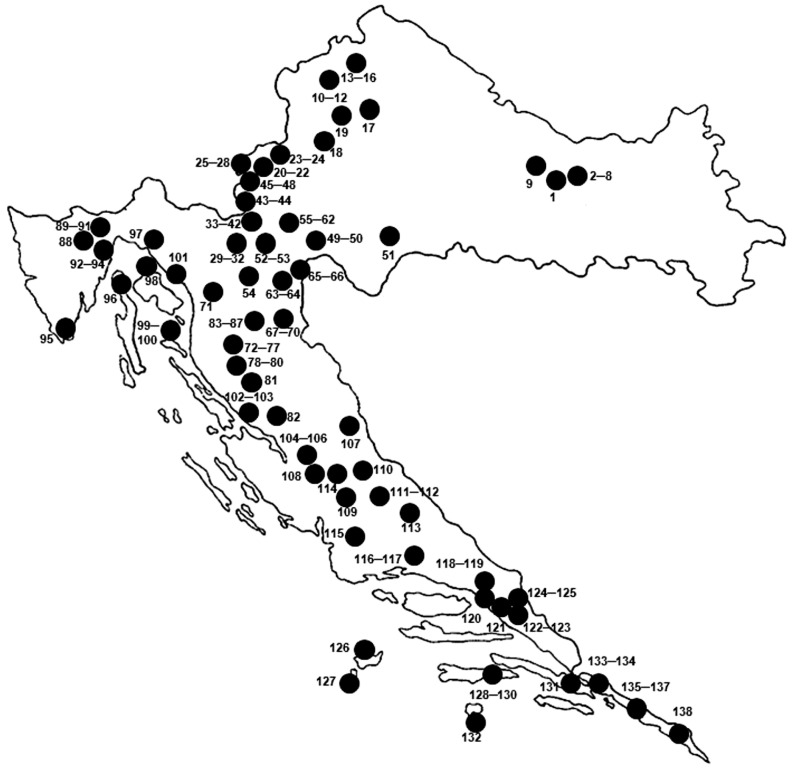 Figure 1
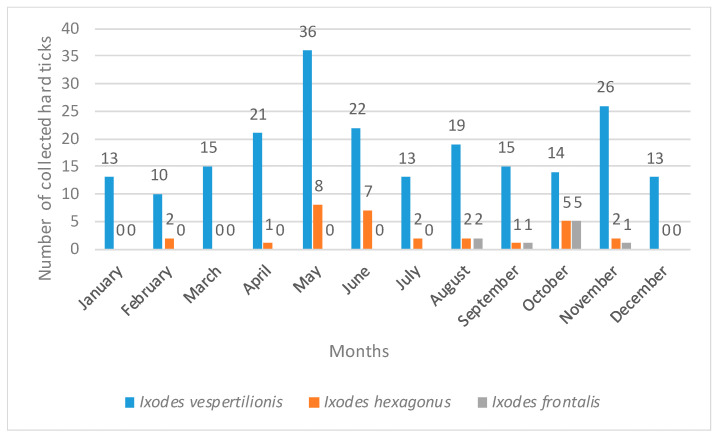 Figure 2
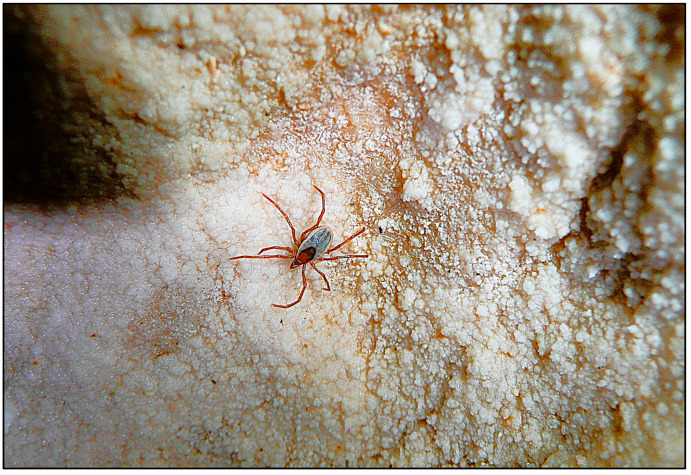 Figure 3
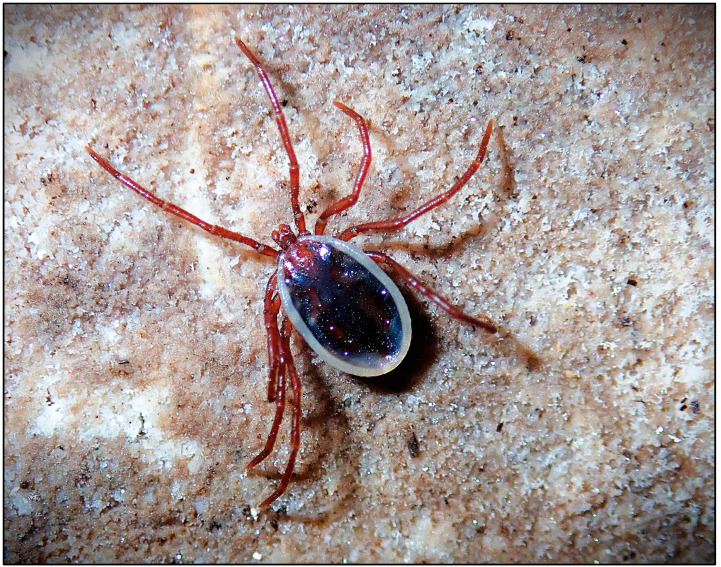 Figure 4
- —European Union—Next Generation EU
Peer Reviews
No public reviews on file for this paper yet. If you reviewed it on a platform where reviews are public (OpenReview, ICLR, NeurIPS, ICML), you can paste yours below so the community can read it here.
Videos
No videos yet. Explain this paper in a talk, walkthrough, or lecture? Add one.
Taxonomy
TopicsVector-borne infectious diseases · Parasites and Host Interactions · Parasitic Diseases Research and Treatment
1. Introduction
Hard ticks (Ixodidae) are obligatory hematophagous ectoparasites of many vertebrate species from the classes Mammalia, Aves, Reptilia and Amphibia [1], and can transmit various bacteria, viruses, parasitic protozoa and helminths to a wide range of domestic and wild animals from these classes, including humans [2,3,4]. Their blood-feeding habit and the exploitation of different hosts during the larval, nymphal, and adult stages increase the vector potential of ticks, making them the second most important vectors of disease agents in animals and humans after mosquitoes [5]. Due to their high vector capacity, hard ticks have been intensively studied worldwide in various natural ecosystems [6], as well as in numerous anthropogenic habitats such as urban green spaces and various agroecosystems [7,8,9,10]. Among the great diversity of existing biotopes, subterranean habitats (caves, semi-caves, and pits) are notable for their specific microclimate, lighting conditions, and the unique nature of their connections with other terrestrial ecosystems [11].
Although subterranean habitats in Central Europe host important vector groups of arthropods, such as hard ticks, taxonomically focused and geographically widespread studies in these habitats remain rare [12]. In Croatia, studies on the diversity of hard tick fauna and their vector potential in various natural ecosystems and anthropogenic habitats began in the first half of the last century and have continued to the present day. This is confirmed by recent findings of several species of the genus Ixodes newly recorded in the Croatian fauna [13,14]. In Croatia, hard ticks have mainly been collected using the flag-dragging method over vegetation in different ecosystems and manually from live or dead animals. However, data on the fauna of hard ticks from subterranean habitats remain very scarce. The first cavernicolous hard tick recorded in Croatia was Ixodes vespertilionis (reported as Eschatocephalus gracilipes), found in the cave Trojama u Srijanima in Dalmatia by Umberto Girometta, a gymnasium professor and speleologist from Split [15]. The university professor and entomologist August Langhoffer from Zagreb later confirmed Girometta’s finding and also reported the same taxon from a cave on the island of Vis (Špilja od Vore), from the Varaždin region (Repnjak), and from Medvednica Mt. (Žurenščak) [16]. The most important contribution to the knowledge of the tick fauna of the Dinarides was provided by material collected by the renowned Moravian biospeleologist Karel Absolon before the Second World War. This material was investigated by the German acarologist Carl Willmann, initially in short papers [17,18], and later in the monograph Die Acari der Höhlen der Balkanhalbinsel [19]. In this monograph, four taxa were reported for Croatia, partly determined by the German acarologist Paul Leopold Ernst Schulze: Ixodes vespertilionis from seven caves, Ixodes ricinus from one cave on Mljet Island, Ixodes hexagonus from Vrlovka Cave near Kamanje, and Hyalomma marginatum from one cave in Istria [19]. This contribution represents the most extensive dataset on hard tick fauna collected in subterranean habitats in Croatia since the Second World War. The aim of this study was to improve knowledge of the diversity of hard tick fauna in subterranean habitats in Croatia and, for the first time, to analyse the abundance, distribution, and seasonal dynamics of the recorded taxa.
2. Materials and Methods
2.1. Study Area
2.1.1. Croatian Dinaric Karst, Caves, and Cave Habitats
Croatia is a southern European country located in the Mediterranean, Pannonian, Dinaric, and Balkan regions, and is a member of the European Union. Karst covers approximately 26,000 km^2^ of southern Croatia, including the islands. The territory of Croatia includes four major macrotectonic units: the Adriatic, Dinaric, Supradinaric, and Pannonian [20]. The Dinarides occupy about 46% of Croatia’s territory and account for approximately 40% of the total surface area of the Dinarides (65,000 km^2^) [21].
More than 10,000 caves have been recorded in the Dinaric part of Croatia, and it is estimated that at least the same number remain undiscovered. In other, non-Dinaric regions of Croatia, only small areas of isolated karst or non-karstic caves occur. Thirty-one caves are protected under nature conservation legislation: 29 are classified as geomorphological monuments of nature and two as palaeontological sites [20]. More than 300 caves are protected as Natura 2000 sites, and many others are included within larger protected Natura 2000 areas. According to the Croatian National Habitat Classification, harmonised with the European Habitats Directive, the most important cave habitats where hard ticks may occur include karstic caves and pits, terrestrial karstic cave habitats, and caves inhabited by subtroglophilic vertebrates. The most important vertebrates in these cave habitats are bats (Chiroptera) and their associated parasitic and guanophilic organisms [20].
2.1.2. Cave Biodiversity
Biospeleological research in Croatia began in the first half of the 19th century, at the very inception of biospeleology, and has continued to the present day with an increasing number of scientists involved. Practically all taxonomic kingdoms can be found in cave habitats; however, photosynthetic flora occurs only in illuminated entrance zones, and, as in surface habitats, fauna predominates. The total number of cave taxa (stygobionts and troglobionts) recorded for Croatia and estimated up to 2002 is approximately 469 taxa [22]. In addition to cave-adapted taxa, numerous troglophilic and stygophilic taxa occur, including edaphic, guanophilic, and parasitic organisms, among which hard ticks (Ixodidae) are included.
2.2. Samplings and Identification
2.2.1. Fieldwork Methodology
All hard ticks were collected during systematic biospeleological research conducted in caves at 138 locations. The sampling was carried out or organised primarily by the second author, or the material was donated by colleagues (Appendix A, Figure 1).
The research included the identification of cave habitats, microclimatic measurements (air temperature, sediment temperature, and water temperature where present; relative air humidity; and CO_2_ content), assessment of cave biodiversity, and the collection of specimens from selected taxonomic groups or soil and water samples. Sampling for hard ticks was usually performed after visual observation, using tweezers to collect specimens from cave walls, stone crevices, or sinter formations. Typically, only the presence of bats or other mammals or vertebrates was noted, together with the number of individuals observed. It should be noted that in many cases no vertebrates were observed; therefore, the presence of ticks indicates the periodic presence of bats or other mammals, which was also inferred from observed excrements. In this way, in addition to bats, the presence of the European edible dormouse (Glis glis) and martens (Martes sp.) was most frequently documented. As part of the fieldwork methodology, many tick specimens were photographed in situ. All collected specimens were preserved in 8 mL plastic vials containing 70% ethanol. After collection, the vials were labelled with a hard paper label containing the minimum necessary handwritten information: cave name, basic location, date of sampling, and collector names. The material was then deposited in the Roman Ozimec Collection (ROC) for further processing.
2.2.2. Tick Identification
The identification of the collected hard ticks (sex and species) was performed using a Carl Zeiss Jena stereomicroscope (×40 magnification) according to available identification keys [23,24,25] and illustrated guides for tick identification [26,27]. For each record, the following data are provided: species name, locality, main locality (village, city, mountain, or protected area), name of municipality or city, or name of island, date of collection, name of collector, number and sex of specimens, and depository (Appendix B). The survey localities are marked with a running number referring to the map in Figure 1, and the UTM grid (10 × 10 km) is given in the third column of Appendix A, following the system used in the Catalogue of Cave Type Localities of Croatian Fauna [28]. Geographic coordinates are listed only for the first toponym (Appendix A), as exact coordinates for subterranean localities cannot be provided due to the protection of these speleological sites. This is in accordance with the instructions of the Ministry of Environmental Protection and Green Transition of the Republic of Croatia regarding the protection of such sites. All hard ticks from the tick collections (ROC) are deposited in the Natural Science Department of the Varaždin City Museum (GMV).
3. Results
A total of 274 specimens of hard ticks (Ixodidae) were collected from 138 subterranean habitats located in 13 regions of Croatia (Table A1 and Table A2; Appendix A and Appendix B). The collected ticks were classified into three genera and seven taxa (Table 1).
The most abundant genus was Ixodes Latreille, 1795, represented by five taxa, whereas the other two genera, Haemaphysalis Koch, 1844 and Hyalomma Koch, 1844, were each represented by a single taxon (Table 2). Ixodes vespertilionis Koch, 1844 was the most abundant species in the collected sample, followed by Ixodes hexagonus Leach, 1815, Ixodes frontalis (Panzer, 1798), Ixodes ricinus (Linnaeus, 1758), Ixodes sp., Haemaphysalis sp., and Hyalomma marginatum Koch, 1844 (Table 2). The majority of collected ticks (93.8%) were adults, whereas the nymphal stage accounted for 6.2% of specimens. Males represented 76.2% of the collected sample, females 17.5%, and nymphs 6.2% (Table 2). Nymphs were recorded only in the species I. vespertilionis. The largest number of hard ticks (52 specimens) was recorded in Pokuplje and Dalmatia. However, the highest number of taxa (five) was recorded in Dalmatia. Four taxa of hard ticks were observed in north-western Croatia (Croatian Zagorje and the Varaždin area), three in Slavonia, whereas two or one species were recorded in other regions (Table 2). Only I. vespertilionis was recorded in all 13 studied regions of Croatia. I. hexagonus was recorded in seven Croatian regions, followed by I. frontalis in three regions, while the remaining four taxa were recorded in only one region each (Table 2). Ixodes vespertilionis was recorded at 112 subterranean localities, appearing at 81.1% of the studied localities. It is followed by I. hexagonus at 21 localities (15.2%) and I. frontalis at seven localities (5.0%), whereas other hard tick taxa were recorded at a smaller number of localities (Appendix B). In Slavonia and Croatian Zagorje, I. vespertilionis was recorded at 33.3% of the studied localities, whereas in other regions it was present at 70% to 100% of the localities (Appendix B). The record of I. frontalis in subterranean localities in Slavonia, Istria, and Dalmatia represents a new record for the subterranean fauna of Croatia (Table 2; Appendix B). Only one species, I. vespertilionis, was recorded during all 12 months of the year (Figure 2).
I. hexagonus was recorded during nine months of the year, I. frontalis during four months, and the other taxa were collected over a shorter period of one or two months. The highest activity of I. vespertilionis was recorded in May and November, with 28.6% of specimens collected during these two months (Figure 2). However, the largest number of I. vespertilionis specimens was collected during the spring months (33.2%), while the smallest number was recorded in winter (16.6%). During the summer and autumn months, nearly equal numbers of I. vespertilionis specimens were collected (24.9% and 25.3%, respectively) (Figure 2). The highest activity of I. hexagonus was recorded in May and June, with considerably lower numbers in other months, except in October (Figure 2). I. hexagonus and I. frontalis, the second and third most abundant species, differed significantly in their seasonal patterns. The highest abundance of I. hexagonus was recorded in summer (36.7%), whereas the highest abundance of I. frontalis was recorded in autumn (77.8%) (Figure 2). Seasonality of the remaining four taxa was not analysed due to the significantly smaller number of collected specimens. Of the seven recorded tick taxa, I. hexagonus and I. vespertilionis were recorded in all three biogeographic regions of Croatia (Continental, Alpine, and Mediterranean). I. frontalis was recorded in two biogeographic regions (Continental and Mediterranean), whereas the remaining taxa were recorded in only one biogeographic region (Table 2).
4. Discussion
Comparison of the hard tick fauna recorded in this study with those reported from other European studies indicates that subterranean habitats in Croatia host a very similar tick fauna. Six species of hard ticks have been recorded in cave habitats in the Central German uplands and Luxembourg [12], of which two species, I. hexagonus and I. ricinus, were also recorded in this study. Furthermore, five species of hard ticks have been reported from cave habitats in Turkey [1], including I. vespertilionis, which was also recorded in this study. In Crimea and the Caucasus region of Russia, four species of hard ticks have been recorded from caves [11]; three of these (I. vespertilionis, I. hexagonus, and H. marginatum) were also found in this study. Three nidicolous species of hard ticks have been recorded in Central Europe, specifically associated with bats [29], of which only I. vespertilionis was recorded in the present study, as the other two species have not yet been documented in Croatia. Only I. vespertilionis (Figure 3 and Figure 4) was found in all studied regions of Croatia and was collected from cave walls and crevices by speleologists. Outside caves and cave-like shelters, I. vespertilionis occurs exclusively attached to its hosts [30]. In this study, no specimens were collected directly from bats, although numerous studies report this species on a wide variety of bat hosts at both immature and adult stages [31]. Studies conducted in Slovenia, Hungary, and Turkey indicate that I. vespertilionis is the most prevalent species in caves, occurring primarily on walls and in crevices [1,32,33]. In Slovenia, most I. vespertilionis were collected from January to April [32], which partially coincides with our data, as in Croatia the largest numbers of I. vespertilionis were collected in spring and autumn. Two peaks of abundance were observed: the first in May and the second in November (Figure 2). A similar seasonal pattern was reported in Hungary, with maximum abundance in spring [33]. During spring, pregnant female bats arrive at caves in groups of up to several hundred individuals, forming nursery colonies [30,34,35]. The first peak of I. vespertilionis abundance in May is consistent with this behavior, as the formation of nursery colonies provides an adaptive advantage for parasites to maximize feeding and reproductive success [35]. Female bats form small or large aggregations during the nursing period, making them particularly accessible to ticks [35]. Females remain in these caves until September to give birth and raise their young [30]. This pattern of host behavior likely explains the continued presence of substantial numbers of I. vespertilionis in caves throughout the summer. The second peak in November is probably related to bat colonies gathering in winter roosts, as hibernation typically occurs from late October to late March [34]. In Slavonia and Croatian Zagorje, I. vespertilionis was recorded at only 33.3% of studied localities, mainly during nursing and mating periods, whereas in other regions it was present at 70% to 100% of localities (Appendix B). Previous studies reported sporadic records of I. vespertilionis in Croatia from only a few localities: Trojama u Srijanima [15]; Špilja od Vore, Vis Island; Varaždin region (Repnjak); Medvednica Mt. (Žurenščak) [16]; Močiljska špilja (Dubrovnik); Petrićevi špilja, Čampari (Cres Island); Rabakova peć, Ročko polje (Roč); and Krbavsko polje [32,36]. The present study confirms these earlier findings in three cave habitats (Petrićevi špilja, Čampari, Cres Island; Rabakova peć, Ročko polje, Roč; Špilja [rudnik] od Vore, Vis Island). I. vespertilionis and I. hexagonus often occupy the same type of subterranean habitat, but they utilize different hosts [32]. In the present study, both species were collected together in only four of the 138 investigated subterranean localities (Appendix B). These localities were in north-western Croatia (Varaždin area: caves Zdenac pri Ciglaru, Klenovnik, Ravna Gora Mt.), Pokuplje (caves Pivnica jama, Sela Žakanjska, Hrenov Grič, Kamanje), and Kordun (cave Dragina peć na Dobri, Gabrk, Podumol) (Appendix B). In the western Palearctic, free-living stages of I. vespertilionis predominate in caves, with males recorded more frequently than females [37]. A similar pattern was observed in this study, where males represented 78.8% of specimens. This sex ratio may be explained by the fact that males do not feed and may live longer than females, which die after laying eggs [37]. The distribution of I. vespertilionis in the western Palearctic overlaps with the geographic ranges of five primary bat hosts: the greater mouse-eared bat (Myotis myotis), Maghrebian mouse-eared bat (M. punicus), Mediterranean horseshoe bat (Rhinolophus euryale), greater horseshoe bat (R. ferrumequinum), and lesser horseshoe bat (R. hipposideros) [37]. Four of these five species have been recorded in the Croatian fauna [38]. Although R. hipposideros, R. ferrumequinum, and M. myotis are considered the preferred hosts in Europe [37,39], this distribution explains why I. vespertilionis has been recorded in all studied regions. In Slavonia, hosts for I. vespertilionis are R. hipposideros and M. myotis, whereas in other studied areas R. ferrumequinum and M. myotis are the most likely hosts [38]. Of all hard ticks recorded in this study, only I. vespertilionis was recorded throughout the year. This pattern has also been observed in Slovenia and Hungary [32,33] and is likely a consequence of the stable microclimatic conditions in caves, which allow I. vespertilionis to remain active year-round [30].
I. hexagonus was the second most abundant species, representing 10.9% of ticks, and was recorded in seven of the 13 surveyed Croatian regions. This hard tick has previously been documented in subterranean habitats in Croatia, having been collected in the early 20th century from Vrlovka Cave, Kamanje in Pokuplje [19], a finding corroborated in the present study. I. hexagonus primarily inhabits lowlands but also occurs in mountainous regions up to 1000 m a.s.l. [40]. In these areas, it is ecologically restricted to caves [40], as confirmed by records from Papuk Mountain (953 m a.s.l.) in Slavonia, northwestern Croatia (Ivanščica 1059 m, Ravna Gora 686 m, Strahinjčica 846 m), and Velebit (1214–1757 m). In the study area, I. hexagonus was recorded in nine months, whereas I. vespertilionis was observed year-round. This reflects their endophilic lifestyles: one as a nest parasite associated with host burrows and dens, the other as a cave-dwelling species [34,41,42]. Subterranean habitats provide stable microclimatic conditions favoring free-living stages, independent of external weather [30,32,40]. Hedgehogs (Erinaceus roumanicus), a primary host of I. hexagonus, often hibernate in semi-caves or at cave entrances [40]. Other hosts from Mustelidae and Canidae families also frequent these habitats [40]. Occasionally, I. hexagonus has been recorded on bats such as M. myotis and R. ferrumequinum [37]. I. frontalis, the third most abundant species (3.3%), was recorded in cave habitats of Papuk (Slavonia), Učka (Istria), and Biokovo (Dalmatia), representing a new subterranean record for Croatia. In Dubrovnik, it was recorded on Bohemian waxwing (Bombycilla garrulus) and black redstart (Phoenicurus ochruros) [43]. I. frontalis is an ornithophilic tick, infesting various cavity- and open-nesting birds in all life stages [25,44]. Adult peak activity occurs from October to February [45], partially aligning with our observed October peak (Figure 2). Ixodes ricinus accounted for 2.6% of specimens. Although ungulates are primary hosts, it also parasitizes birds [46,47] and 18 bat species in Europe [37,48], mainly large-bodied, ground-hunting bats [37]. In this study, I. ricinus was recorded only in caves of northwestern Croatia (Varaždin, Croatian Zagorje: Ravna Gora, Strahinjčica), indicating that subterranean habitats are unsuitable for this exophilic species. The first Croatian subterranean record was from a cave on Mljet [19]. One adult H. marginatum was collected from Biokovo caves (Dalmatia), while its first subterranean record in Croatia was from Istria [19]. This species is widespread along the Adriatic coast from Pula to Dubrovnik [36,49]. Larvae and nymphs have been collected from hedgehogs [40], adults mainly from horses (Equus caballus), cows (Bos taurus), and sheep (Ovis aries) [36,49]. H. marginatum prefers high temperatures with low precipitation and humidity [50], whereas caves present opposite conditions, explaining its sporadic subterranean occurrence. Five ticks could not be identified to species. Three resemble Ixodes lividus Koch, 1844, an ornithophilic tick primarily associated with hole-nesting birds such as sand martins (Riparia riparia), and occasionally found in burrows [27,44]. While rarely recorded in caves, sporadic findings exist on bats in the UK, Germany, and the Netherlands [37]. DNA barcoding is required to confirm species identity. Similarly, the remaining two specimens resemble Haemaphysalis erinacei Pavesi, 1884, but species identification remains unconfirmed.
5. Conclusions
This study recorded seven hard tick (Ixodidae) taxa in subterranean habitats of 138 caves across 13 Croatian regions (Table 1, Figure 1). Four previously documented species were confirmed, while I. frontalis was recorded in subterranean habitats in Croatia for the first time. The genus Ixodes was the most abundant, represented by five taxa, whereas Haemaphysalis and Hyalomma were represented by a single taxon each. Two endophilic species, I. vespertilionis and I. hexagonus, dominated the sample, accounting for 91.9%, followed by the ornithophilic I. frontalis (3.3%). The remaining four taxa collectively accounted for 4.7%. Only I. vespertilionis was recorded throughout all 12 months; I. hexagonus appeared in nine months, I. frontalis in four months, and the other taxa over shorter periods. The presence of hard ticks in Dinaric subterranean habitats, reflecting their host specificity, can serve as indicators of vertebrate fauna in caves. The most abundant species, I. vespertilionis, indicates bat (Chiroptera) presence, particularly four primary hosts: greater mouse-eared bat (M. myotis) and three Rhinolophus species—the Mediterranean horseshoe bat (R. euryale), greater horseshoe bat (R. ferrumequinum), and lesser horseshoe bat (R. hipposideros). Linking individual bats or bat colonies to tick records in the same caves could inform integrated ecological analyses. Similarly, the second most abundant species, I. hexagonus, may indicate the presence of Mustelidae (e.g., martens, Martes spp.), Canidae, and occasionally bats such as M. myotis and R. ferrumequinum. Individual tick specimens collected from caves can also be tested for zoonotic pathogens, as they may serve as potential vectors between bats and non-bat hosts [51].
The reference list from the paper itself. Each links out to its DOI / PubMed record.
- 1Hekimoglu O. Elverici M. Yorulmaz T. A survey of hard ticks associated with cave dwelling mammals in Turkey Ticks Tick-Borne Dis.20221310200810.1016/j.ttbdis.2022.10200835932514 · doi ↗ · pubmed ↗
- 2Cull B. Pietzsch M.E. Hansford K.M. Gillingham E.L. Medlock J.M. Surveillance of British ticks: An overview of species records, host associations, and new records of Ixodes ricinus distribution Ticks Tick-Borne Dis.2018960561410.1016/j.ttbdis.2018.01.01129426591 · doi ↗ · pubmed ↗
- 3Defaye B. Moutailler S. Pasqualini V. Quilichini Y. A Systematic Review of the Distribution of Tick-Borne Pathogens in Wild Animals and their Ticks in the Mediterranean Rim between 2000 and 2021 Microorganisms 202210185810.3390/microorganisms 1009185836144460 PMC 9504443 · doi ↗ · pubmed ↗
- 4Kapo N. Zuber BogdanovićI. GagovićE. ŽekićM. VeinovićG. Sukara R. Mihaljica D. AdžićB. Kadriaj P. Cvetkovikj A. Ixodid ticks and zoonotic tick-borne pathogens of the Western Balkans Parasit. Vectors 20241722310.1186/s 13071-023-06116-138297327 PMC 10832161 · doi ↗ · pubmed ↗
- 5Dantas-Torres F. Chomel B.B. Otranto D. Ticks and tick-borne diseases: A One Health Perspective Trends Parsitol.20122843744610.1016/j.pt.2012.07.00322902521 · doi ↗ · pubmed ↗
- 6Ciebiera O. Grochowalska R. Łopińska A. Zdunjak P. Strzala T. Jerzak L. Ticks and spirochetes of the genus Borrelia in urban areas of Central-Western Poland Exp. Appl. Acarol.20249342143710.1007/s 10493-024-00932-538940943 PMC 11269503 · doi ↗ · pubmed ↗
- 7Hansford K.M. Wheeler B.W. Tschirren B. Medlock J.M. Questing Ixodes ricinus ticks and Borrelia spp. In urban green space across Europe: A review Zoon. Pub. Health 20226915316610.1111/zph.12913 PMC 948798735122422 · doi ↗ · pubmed ↗
- 8Hansford K.M. Gillingham E.L. Vaux A.G.C. Cull B. Mc Ginley L. Catton M. Wheeler B.W. Tschirren B. Medlock J.M. Impact of green space connectivity on urban tick presence density and Borrelia infected ticks in different habitats and seasons in three cities in Southern England Ticks Tick-Borne Dis.20231410210310.1016/j.ttbdis.2022.10210336525762 · doi ↗ · pubmed ↗