Body Composition’s Association with Resting Energy Expenditure Prediction in a Large Population Sample from Different Age Groups, Sex, and Physical Activity Levels
Lucas Bertoluci Zuquieri, Gabriel de Souza Zanini, Danilo Alexandre Massini, Eliane Aparecida de Castro, Wellington Segheto, Cassiano Merussi Neiva, Pedro José Benito, Dalton Müller Pessôa Filho

TL;DR
This study shows that fat-free mass strongly predicts resting energy expenditure in people of all ages and activity levels, while fat mass only shows a similar link in older adults.
Contribution
The study demonstrates the consistent relationship between fat-free mass and resting energy expenditure across diverse populations and highlights fat mass's limited role in older adults.
Findings
Fat-free mass strongly correlates with resting energy expenditure across all age groups and activity levels.
Fat mass shows a significant correlation with resting energy expenditure only in participants aged 60 and older.
FFM-based equations predict lower resting energy expenditure compared to weight- and height-based equations.
Abstract
Background: Resting energy expenditure (REE) represents 60–75% of total daily energy expenditure and is mainly determined by fat-free mass (FFM). Indeed, the predictive equations vary according to FFM techniques and population characteristics. Therefore, this study aimed to explore the influence of dual-energy X-ray absorptiometry (DXA)-derived FFM on REE prediction by different predictive equations in a large and diverse cohort. Methods: A total of 1987 active and sedentary participants of both sexes (43.8 ± 19.4 years) underwent body composition assessment by DXA. REE was predicted using the Harris–Benedict, Schofield, Mifflin–St Jeor (weight- and height-based), and Mifflin (FFM-based) equations. Statistical analyses included Kruskal–Wallis, Spearman correlations, and linear regression. Results: Men presented higher absolute FFM, whereas women exhibited higher relative fat mass (FM)…
Genes, proteins, chemicals, diseases, species, mutations and cell lines named across the full text — each resolved to its canonical identifier and authoritative record.
Click any figure to enlarge with its caption.
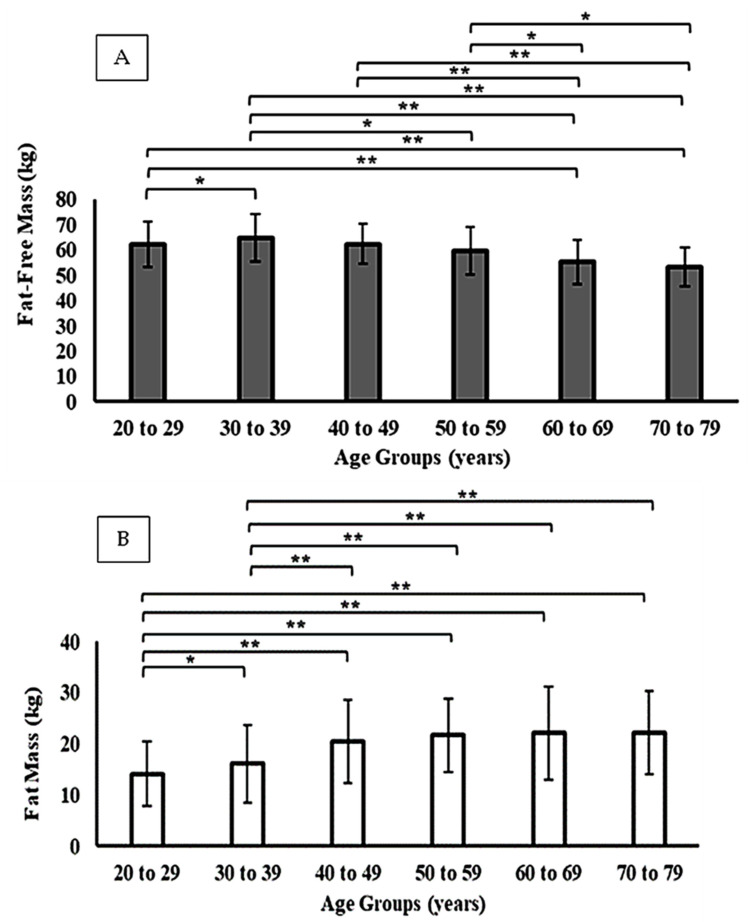 Figure 1
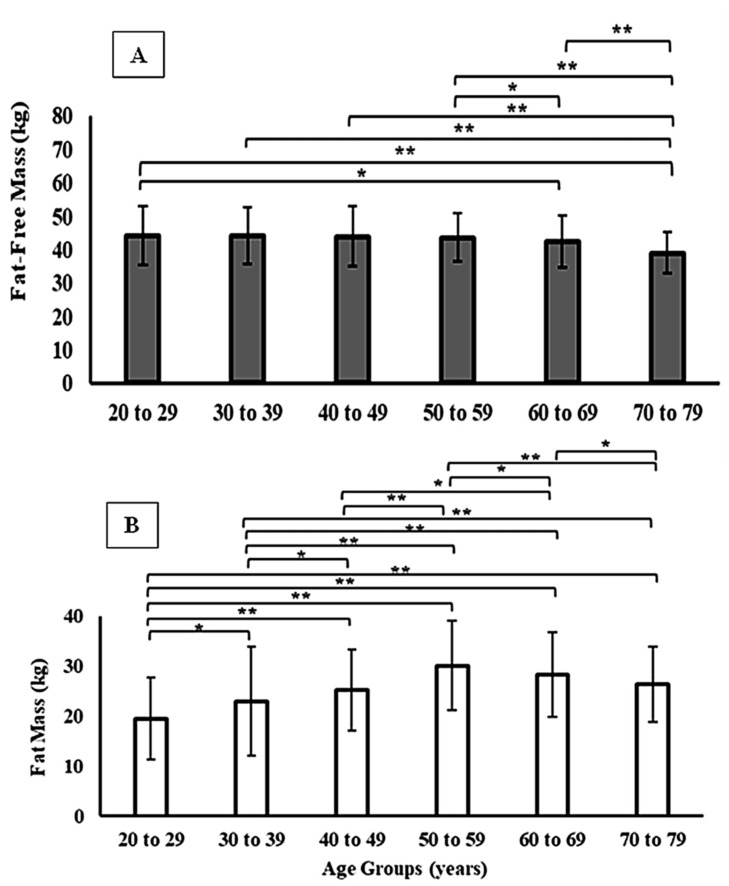 Figure 2
Peer Reviews
No public reviews on file for this paper yet. If you reviewed it on a platform where reviews are public (OpenReview, ICLR, NeurIPS, ICML), you can paste yours below so the community can read it here.
Videos
No videos yet. Explain this paper in a talk, walkthrough, or lecture? Add one.
Taxonomy
TopicsBody Composition Measurement Techniques · Nutrition and Health in Aging · Physical Activity and Health