Prognostic Impact of Early Metabolic Response on Interim 18F-FDG PET/CT in HR+/HER2− Metastatic Breast Cancer Treated with CDK4/6 Inhibitors
Vali Aliyev, Ali Kaan Güren, Murad Guliyev, Zeliha Birsin, Murat Günaltılı, Mehmet Cem Fidan, Emir Çerme, Hamza Abbasov, Selin Cebeci, Selver Işık, Murat Sarı, Onur Erdem Şahin, Muhammet Sait Sağer, Özkan Alan, Nebi Serkan Demirci

TL;DR
Early metabolic changes seen on PET scans can predict better outcomes for breast cancer patients on CDK4/6 inhibitors.
Contribution
This study shows that early metabolic response on PET/CT is a strong independent predictor of survival in HR+/HER2− metastatic breast cancer patients.
Findings
Patients with a ≥30% SUVmax reduction had significantly longer progression-free and overall survival.
Metabolic response remained independently associated with improved survival after adjusting for other factors.
Non-responders had more aggressive baseline features like higher rates of liver and brain metastasis.
Abstract
Background and objectives: Early biomarkers that can reliably predict treatment outcomes during CDK4/6 inhibitor therapy remain an unmet clinical need in patients with hormone receptor-positive/human epidermal growth factor receptor 2-negative (HR+/HER2−) metastatic breast cancer (MBC). Metabolic changes on ^18F-FDG PET/CT may precede radiologic response and provide insight into tumor biology and early treatment resistance. Methods: This two-center retrospective study included 203 patients with HR+/HER2− MBC who received first-line CDK4/6 inhibitors (ribociclib or palbociclib) plus endocrine therapy between 2018 and 2024. Baseline and interim ^18F-FDG PET/CT scans performed after 2–4 cycles were evaluated. Early metabolic response was defined as a ≥30% reduction in SUVmax on the most metabolically active lesion, consistent with PERCIST 1.0. Progression-free survival (PFS) and overall…
Genes, proteins, chemicals, diseases, species, mutations and cell lines named across the full text — each resolved to its canonical identifier and authoritative record.
Click any figure to enlarge with its caption.
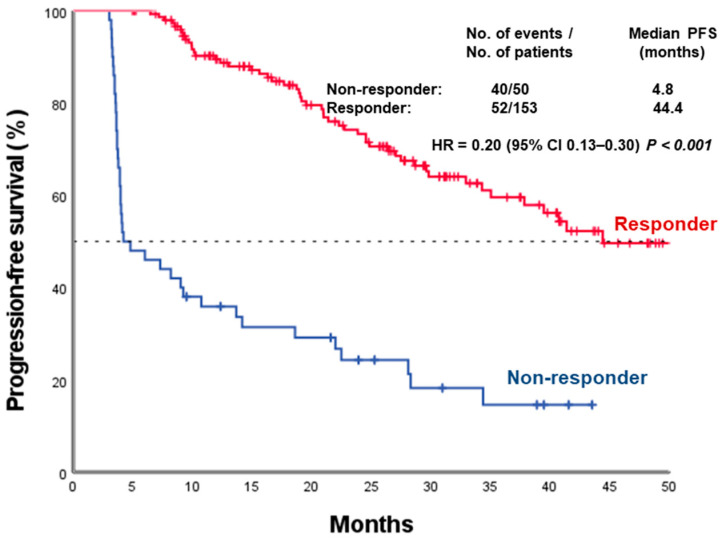 Figure 1
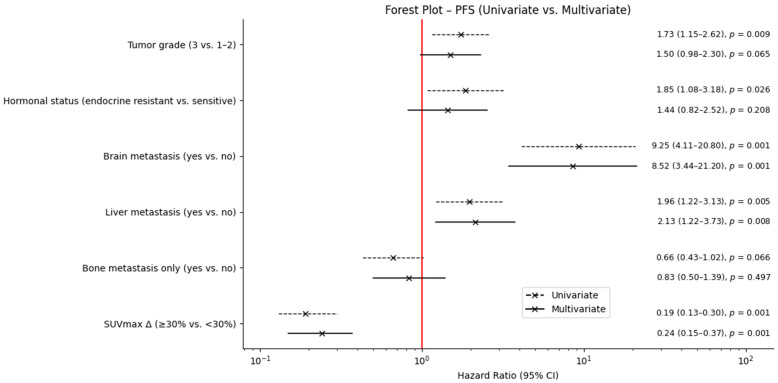 Figure 2
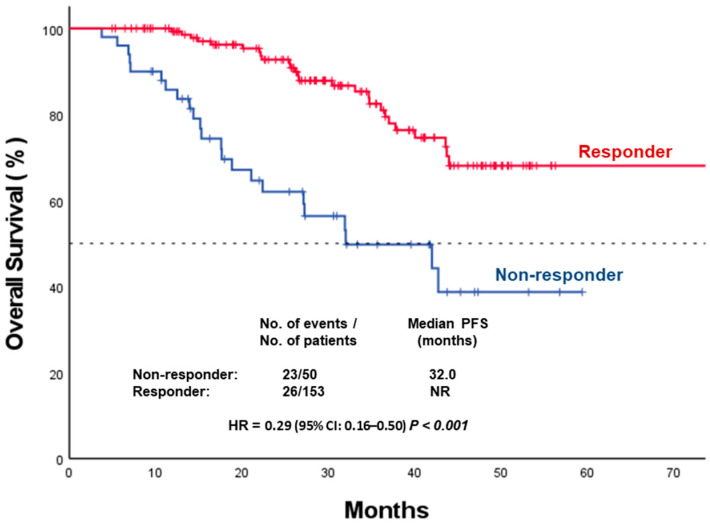 Figure 3
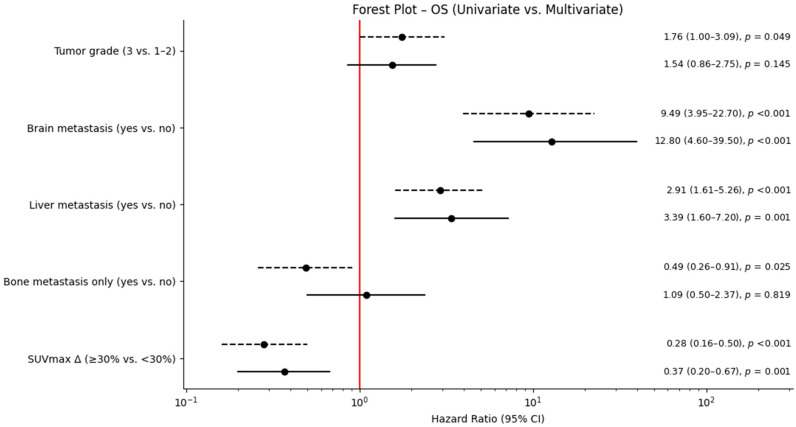 Figure 4
Peer Reviews
No public reviews on file for this paper yet. If you reviewed it on a platform where reviews are public (OpenReview, ICLR, NeurIPS, ICML), you can paste yours below so the community can read it here.
Videos
No videos yet. Explain this paper in a talk, walkthrough, or lecture? Add one.
Taxonomy
TopicsAdvanced Breast Cancer Therapies · HER2/EGFR in Cancer Research · Radiomics and Machine Learning in Medical Imaging