Optimizing Modified Activated Carbon Fiber for Organic Pollutant Removal from Reverse Osmosis Concentrate: Response Surface Modeling and Optimization
Xiaohan Wei, Aili Gao, Ruijia Ma, Yunchang Huang, Chenglin Liu, Jinlong Wang, Lihua Cheng, Xuejun Bi

TL;DR
This study explores using iron-modified activated carbon fiber to efficiently remove organic pollutants from reverse osmosis concentrate, optimizing conditions for maximum effectiveness.
Contribution
The novel contribution is the development and optimization of Fe-ACF for ROC treatment using response surface methodology and detailed adsorption mechanism analysis.
Findings
Fe-ACF adsorption is primarily governed by chemisorption and intraparticle diffusion.
The Langmuir–Freundlich model best fits the adsorption isotherm with a maximum capacity of 12.21 ± 0.80 mg/g.
Optimal adsorption occurs at pH 4.18, 34.63 °C, 547.91 rpm stirring, and 1.55 g/L adsorbent dosage.
Abstract
The adsorption of organics in ROC by Fe-ACF is mainly dominated by chemisorption. The Langmuir–Freundlich isotherm model provided the best fit to the experimental data. RSM analysis confirmed that pH is the dominant factor affecting Fe-ACF’s adsorption. The adsorption mechanism involves hydrogen bonding, π–π interactions, surface complexation, among others. Reverse osmosis concentrate (ROC) contains relatively high levels of refractory organic pollutants, posing significant challenges due to its difficult treatment and high environmental risks. Therefore, efficient and convenient removal strategies are essential. In this study, a self-developed iron-modified activated carbon fiber (Fe-ACF) was employed as an adsorbent to remove organic pollutants from ROC. Additionally, response surface methodology (RSM) was applied to model the adsorption process, identify and evaluate key…
Genes, proteins, chemicals, diseases, species, mutations and cell lines named across the full text — each resolved to its canonical identifier and authoritative record.
Click any figure to enlarge with its caption.
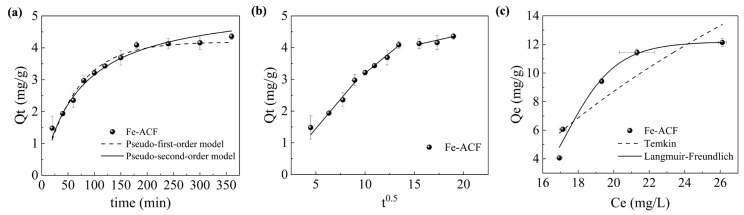 Figure 1
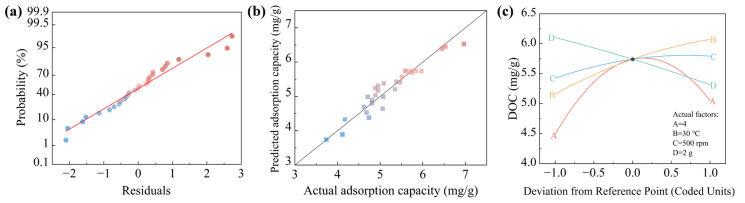 Figure 2
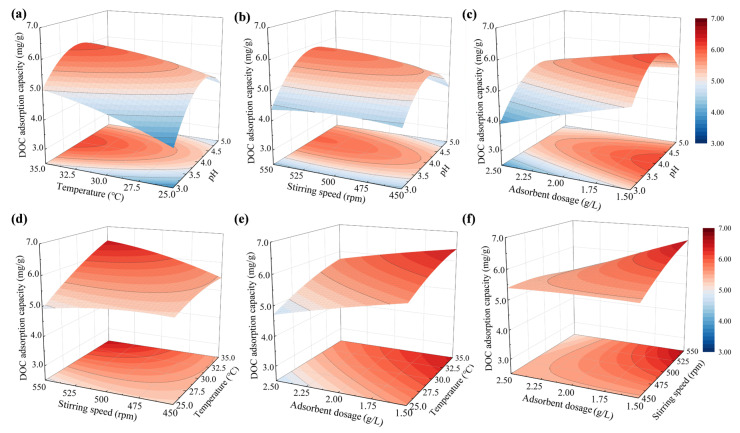 Figure 3
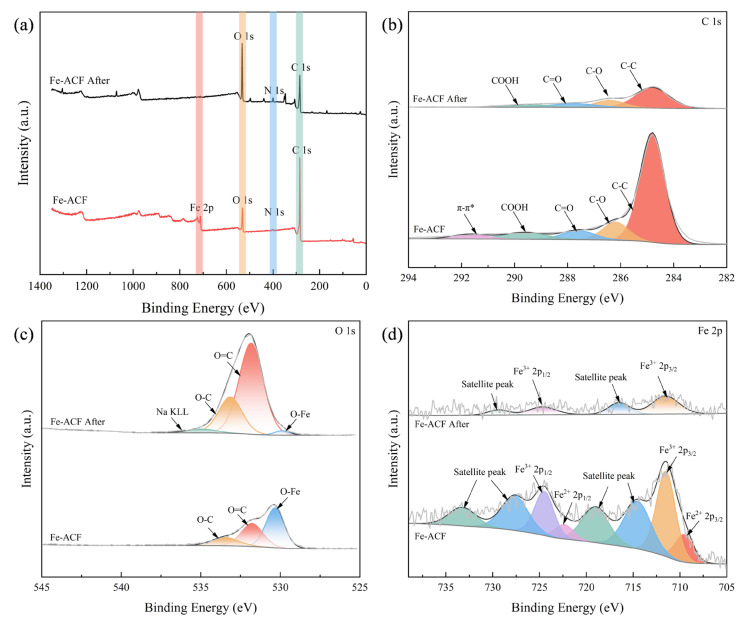 Figure 4
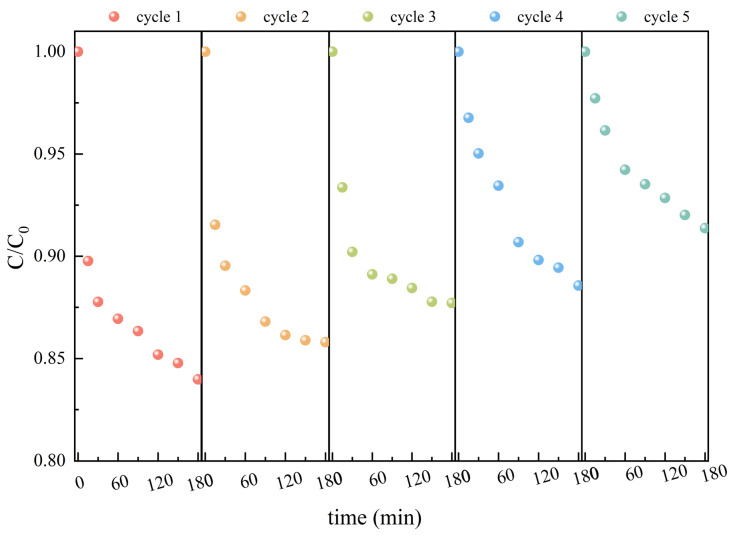 Figure 5
Peer Reviews
No public reviews on file for this paper yet. If you reviewed it on a platform where reviews are public (OpenReview, ICLR, NeurIPS, ICML), you can paste yours below so the community can read it here.
Videos
No videos yet. Explain this paper in a talk, walkthrough, or lecture? Add one.
Taxonomy
TopicsAdsorption and biosorption for pollutant removal · Membrane Separation Technologies · Advanced oxidation water treatment