The Relationship Between Pituitary Axis Hormones and All-Cause Mortality in Hospitalized Patients with Chronic Diseases: A Prospective Cohort Study
Esin Havare, Güneş Topçu, Pınar Yıldız, Emre Hoca, Hayriye Esra Ataoğlu

TL;DR
This study finds that pituitary hormone levels, especially LH and FT3, are linked to higher mortality in hospitalized patients with chronic diseases.
Contribution
The study identifies pituitary axis hormone levels as novel independent predictors of mortality in chronically ill hospitalized patients.
Findings
Lower free triiodothyronine (FT3) levels were independently associated with increased 6-month mortality.
Abnormal luteinizing hormone (LH) levels, outside adjusted reference ranges, predicted higher mortality risk.
Incorporating hormonal parameters improved mortality prediction models beyond traditional clinical markers.
Abstract
Background and Objectives: The pituitary gland plays a central role in endocrine regulation, and chronic illnesses may disrupt pituitary axis function, potentially influencing clinical outcomes. In this study, we aimed to thoroughly investigate the effects of the pituitary axis on all-cause mortality in patients with chronic diseases. Materials and Methods: This prospective observational cohort study included 526 patients with chronic diseases lasting longer than six months who were hospitalized in the Internal Medicine Department of a training and research hospital in Istanbul between 7 May and 30 November 2023. Hormonal parameters were measured within the first 72 h of admission. Demographic characteristics, comorbidities, laboratory findings, intensive care unit (ICU) transfer, and mortality outcomes were recorded. Multivariable binary logistic regression analysis was used to…
Genes, proteins, chemicals, diseases, species, mutations and cell lines named across the full text — each resolved to its canonical identifier and authoritative record.
Click any figure to enlarge with its caption.
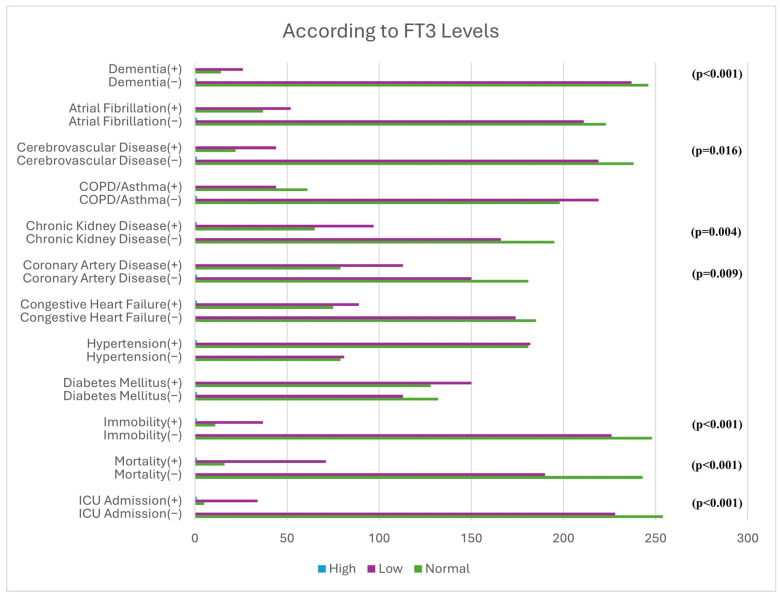 Figure 1
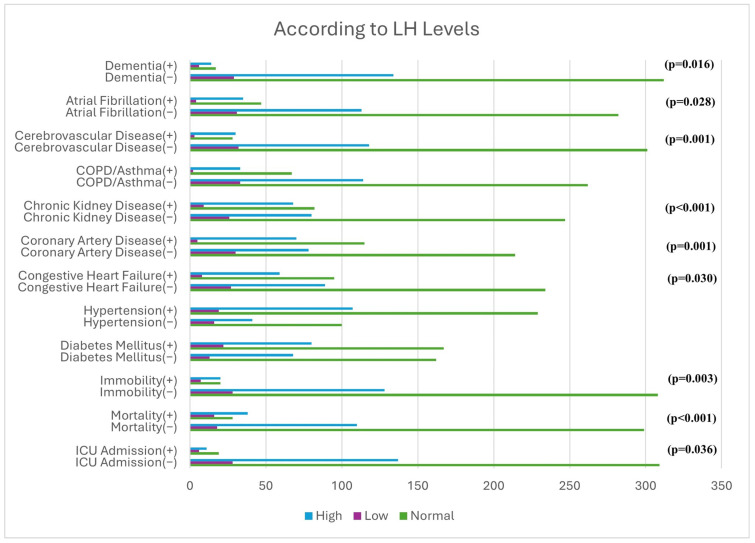 Figure 2
 Figure 3
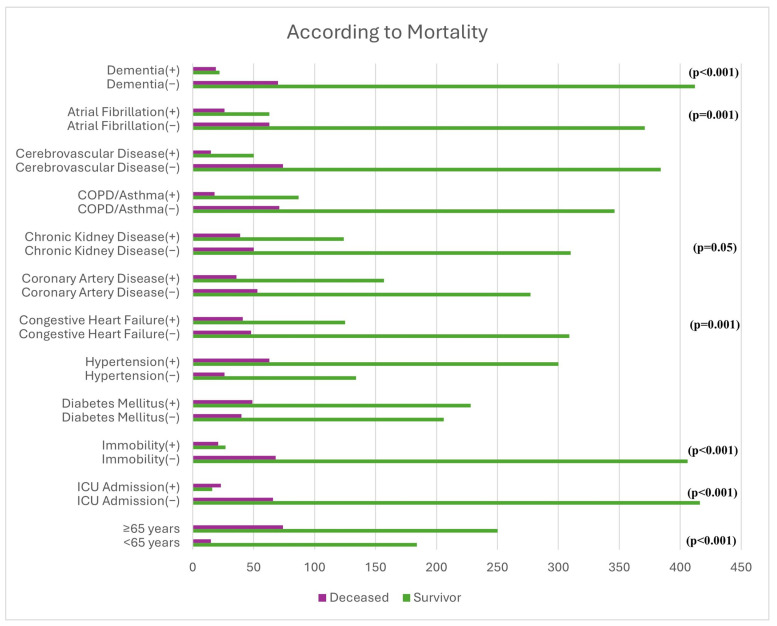 Figure 4
Peer Reviews
No public reviews on file for this paper yet. If you reviewed it on a platform where reviews are public (OpenReview, ICLR, NeurIPS, ICML), you can paste yours below so the community can read it here.
Videos
No videos yet. Explain this paper in a talk, walkthrough, or lecture? Add one.
Taxonomy
TopicsPituitary Gland Disorders and Treatments · Adrenal Hormones and Disorders · Growth Hormone and Insulin-like Growth Factors