SGLT2 Inhibitor Therapy and Long-Term Outcomes After Transcatheter Aortic Valve Implantation in Patients with Low Ejection Fraction
Berhan Keskin, Aykun Hakgor, Yerkenur Khidolda, Atakan Dursun, Aysel Akhundova, Umeyir Savur, Fatih Erkam Olgun, Ozlem Onder, Yasar Gokhan Gul, Beytullah Cakal, Bulent Demir, Haci Murat Gunes, Ibrahim Oguz Karaca, Ekrem Guler, Bilal Boztosun

TL;DR
SGLT2 inhibitors may improve survival and reduce hospitalizations in heart failure patients after a specific heart procedure.
Contribution
This study is the first to show long-term benefits of SGLT2 inhibitors after transcatheter aortic valve implantation in patients with low heart function.
Findings
SGLT2 inhibitor use was linked to a 32.8% composite outcome rate versus 50.8% in non-users.
SGLT2 inhibitors reduced acute kidney injury after the procedure and improved heart size at 6 months.
Long-term mortality was 32.8% in SGLT2 users versus 47.4% in non-users.
Abstract
Background and Objectives: Patients with impaired left ventricular ejection fraction (LVEF) undergoing transcatheter aortic valve implantation (TAVI) remain at high risk for adverse outcomes despite successful procedures. Sodium–glucose cotransporter-2 inhibitors (SGLT2i) improve outcomes in heart failure, but their long-term impact after TAVI is not well established. Materials and Methods: This single-center retrospective study included patients with LVEF < 50% who underwent transfemoral TAVI between January 2015 and September 2025. Patients were stratified according to SGLT2i use. The primary outcome was a composite of all-cause mortality and heart failure (HF) hospitalization requiring intravenous diuretics. Secondary outcomes included all-cause mortality, HF hospitalization, and changes in echocardiographic parameters at 6 months. Inverse probability of treatment weighting (IPTW)…
Genes, proteins, chemicals, diseases, species, mutations and cell lines named across the full text — each resolved to its canonical identifier and authoritative record.
Click any figure to enlarge with its caption.
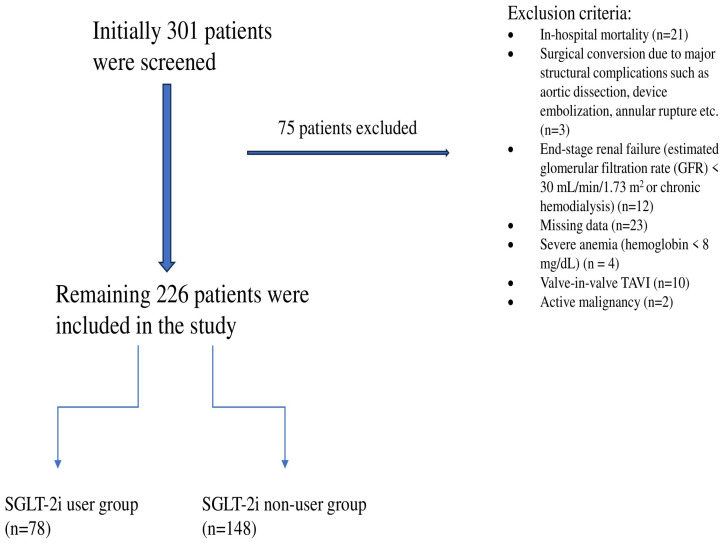 Figure 1
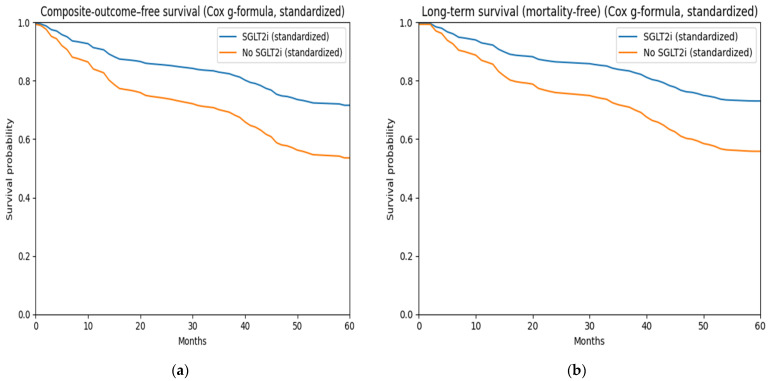 Figure 2
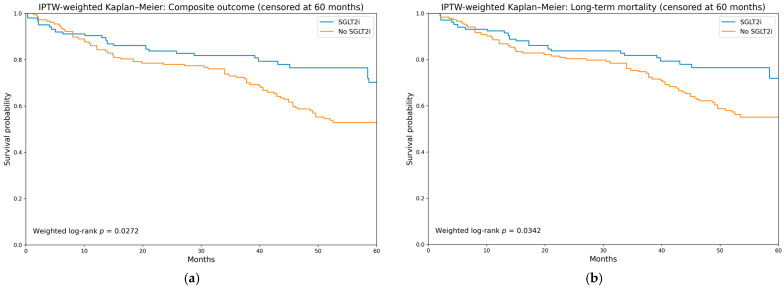 Figure 3
Peer Reviews
No public reviews on file for this paper yet. If you reviewed it on a platform where reviews are public (OpenReview, ICLR, NeurIPS, ICML), you can paste yours below so the community can read it here.
Videos
No videos yet. Explain this paper in a talk, walkthrough, or lecture? Add one.
Taxonomy
TopicsHyperglycemia and glycemic control in critically ill and hospitalized patients · Diabetes Treatment and Management · Cardiac Valve Diseases and Treatments