The First Principal Calculation of the Temperature-Dependent Crystalline Defect Evolution in UN
Yongheng Lu, Tingyu Sun, Zongshu Li, Yueqing Qian, Chen Chen, Lu Yu, Zheng Pan, Jing Wang, Kun Yang

TL;DR
This study uses first-principles calculations to explore how temperature affects defect formation in uranium nitride crystals, revealing that high temperatures promote spontaneous defect formation.
Contribution
The paper presents the first principal calculation of temperature-dependent crystalline defect evolution in UN.
Findings
Elevated temperatures significantly reduce defect formation energies in UN crystals.
Interstitial and divacancy defects show negative formation energies at 1780 K, suggesting spontaneous formation.
U interstitial defects cause a 5.1% lattice expansion at 0 K and significant lattice distortions.
Abstract
This study systematically investigates the influence of temperature on the defect formation mechanisms in uranium nitride (UN) crystals using first-principles calculations. The formation energies and lattice distortion characteristics of various defects at 0 K and 1780 K were calculated by constructing models of perfect crystals as well as vacancy, interstitial, antisite, and divacancy defects. The results demonstrate that elevated temperatures significantly reduce defect formation energies, with interstitial and divacancy defects exhibiting negative formation energies at 1780 K, indicating a tendency for spontaneous formation. The U interstitial defect induces the most pronounced lattice expansion of 5.1% at 0 K. Furthermore, interstitial defects cause the most significant lattice distortions, while Schottky defects exhibit the lowest formation energy. The current study provides…
Genes, proteins, chemicals, diseases, species, mutations and cell lines named across the full text — each resolved to its canonical identifier and authoritative record.
Click any figure to enlarge with its caption.
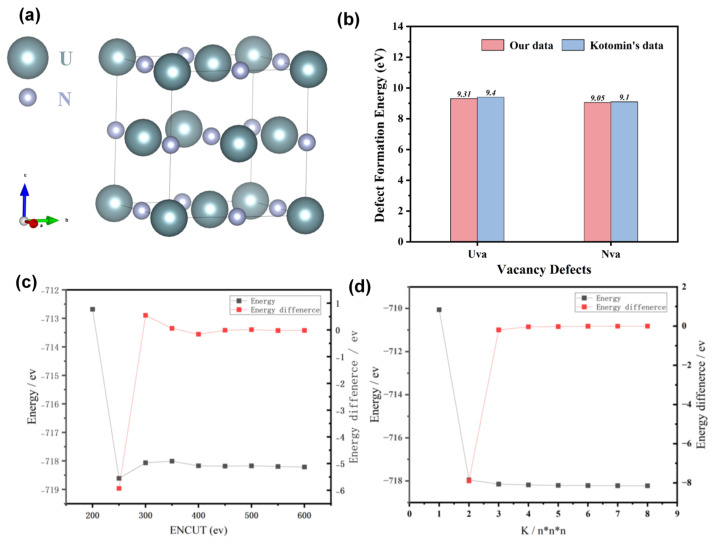 Figure 1
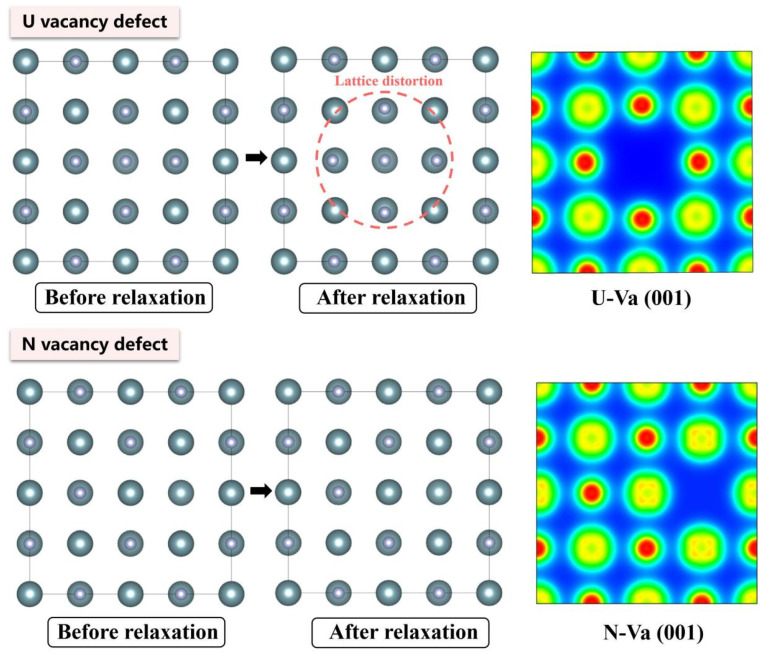 Figure 2
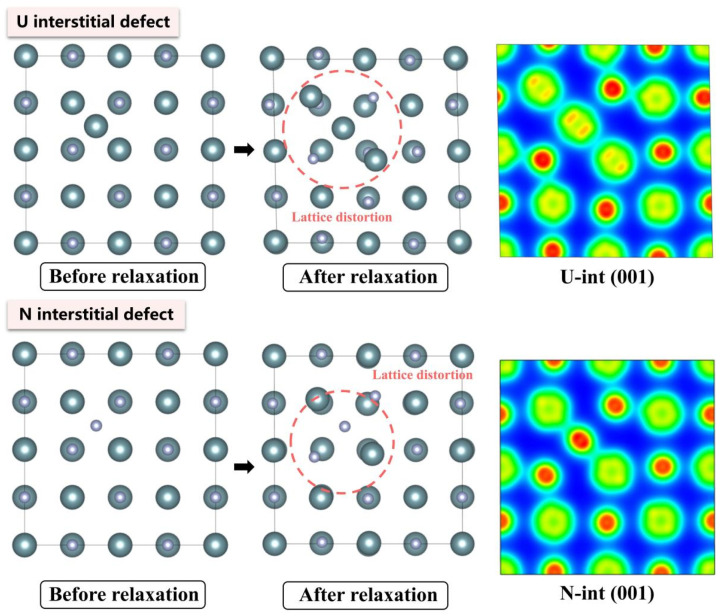 Figure 3
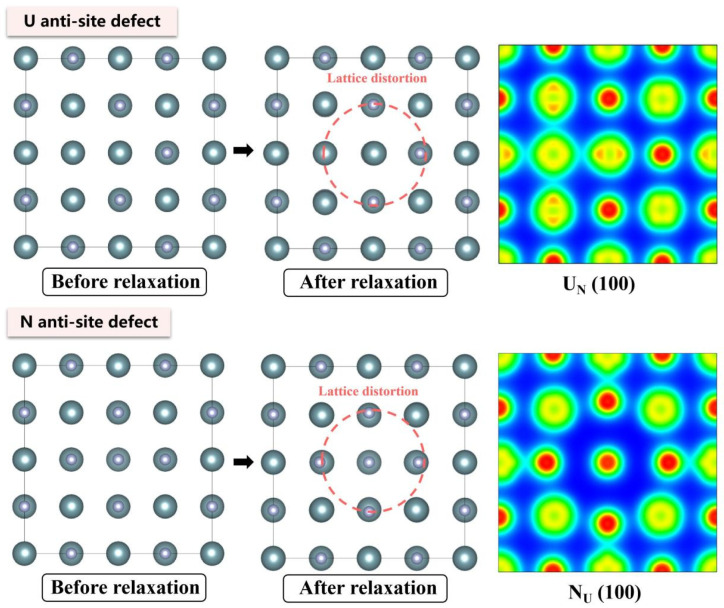 Figure 4
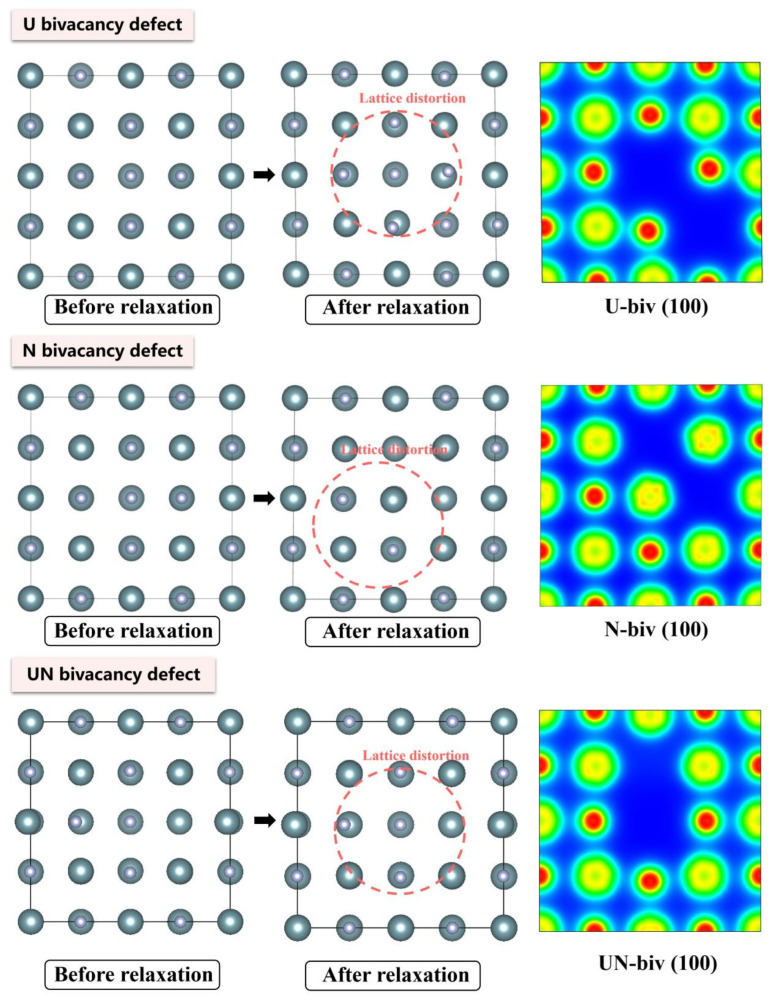 Figure 5
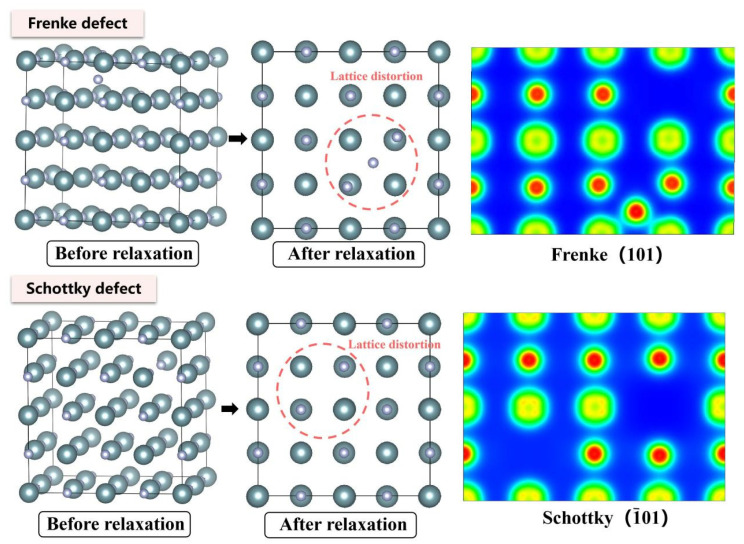 Figure 6
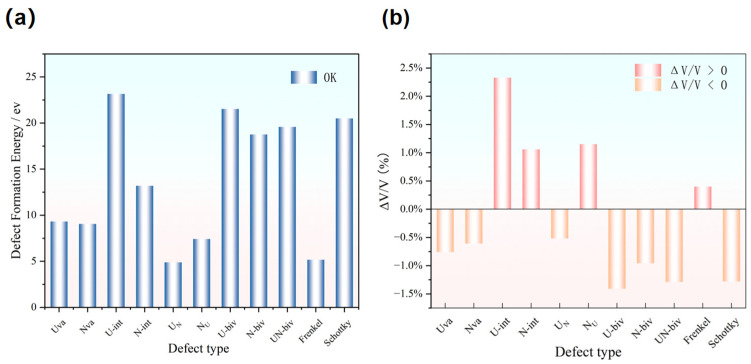 Figure 7
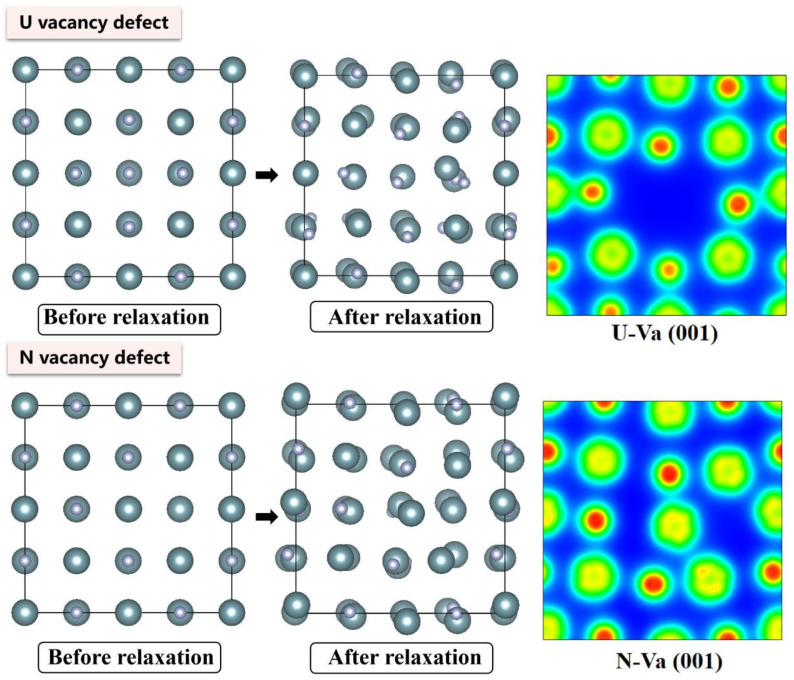 Figure 8
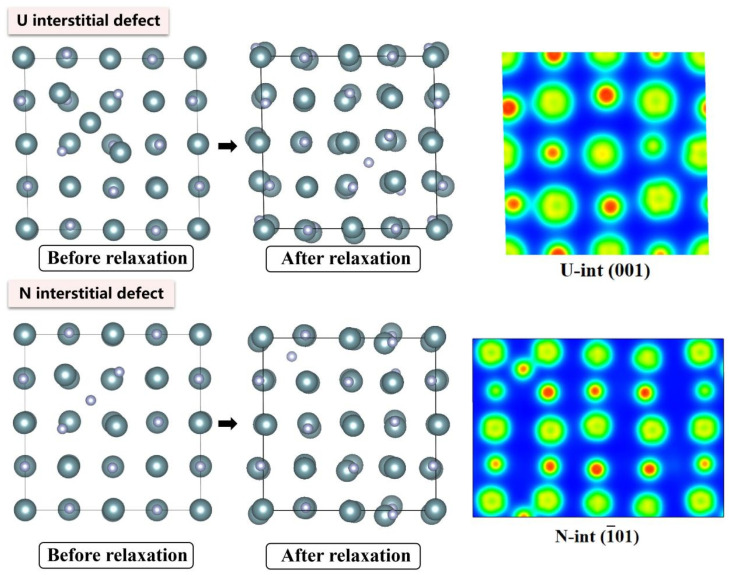 Figure 9
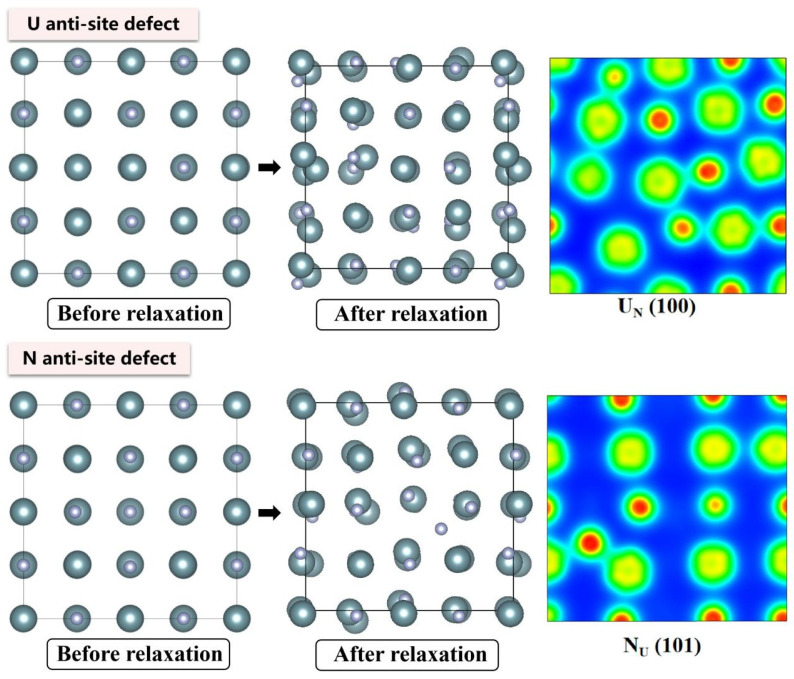 Figure 10
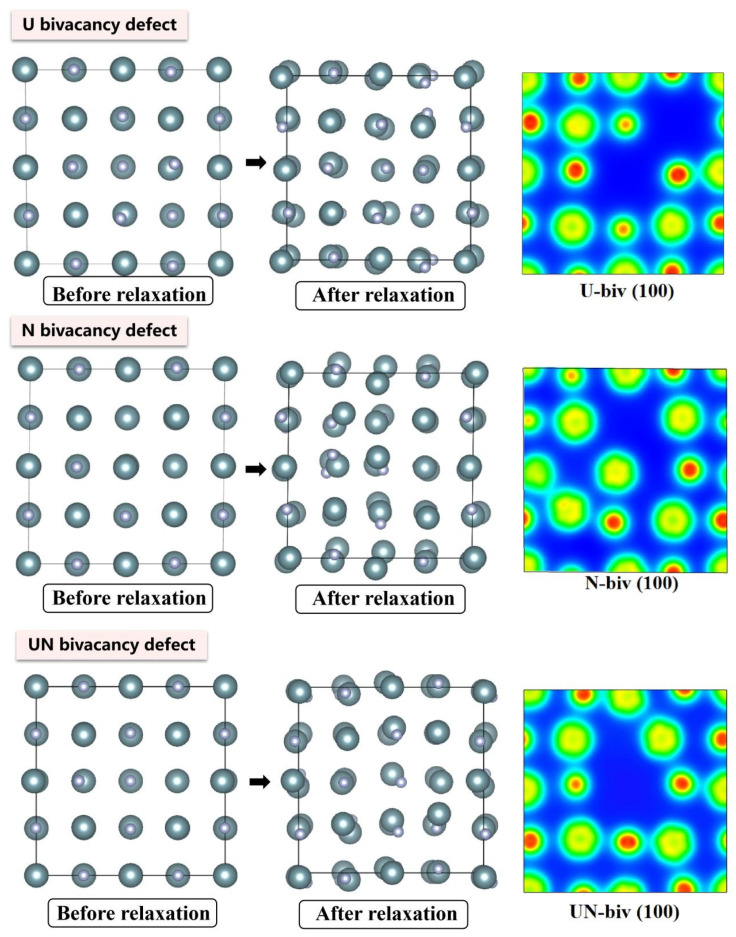 Figure 11
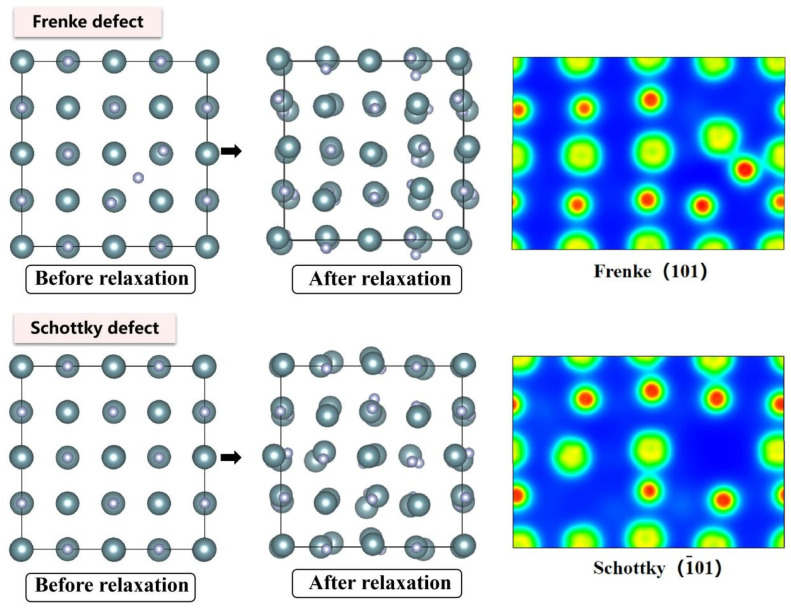 Figure 12
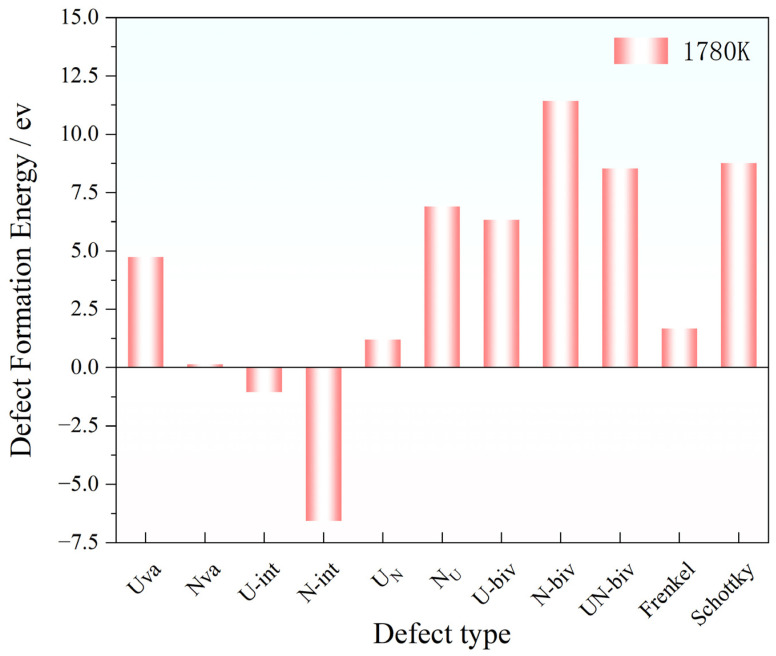 Figure 13
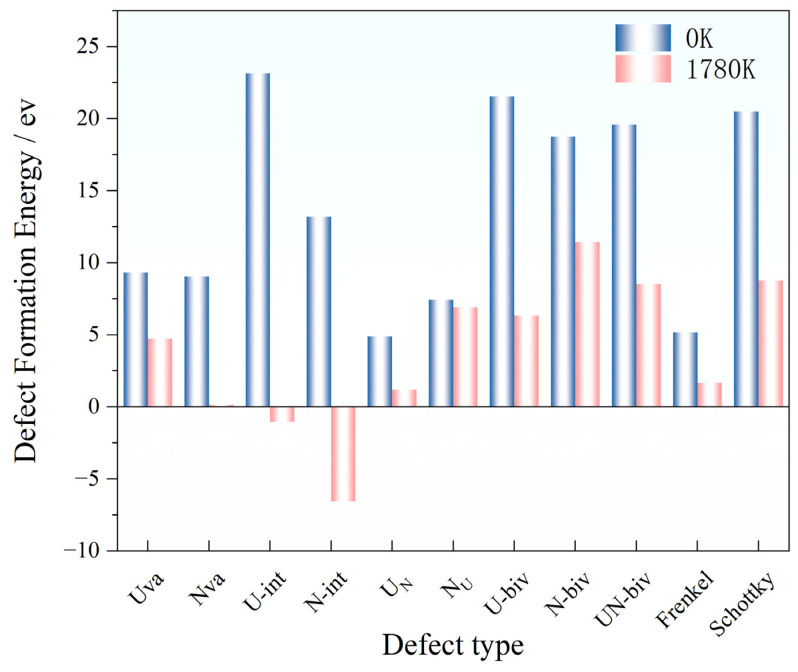 Figure 14
Peer Reviews
No public reviews on file for this paper yet. If you reviewed it on a platform where reviews are public (OpenReview, ICLR, NeurIPS, ICML), you can paste yours below so the community can read it here.
Videos
No videos yet. Explain this paper in a talk, walkthrough, or lecture? Add one.
Taxonomy
TopicsNuclear Materials and Properties · Radioactive element chemistry and processing · Nuclear reactor physics and engineering