Magnetic Nanostructures for the Removal of Emerging Organic and Inorganic Pollutants: An Overview of Applications in Contaminated Water
Raquel Murillo-Ortíz, María J. Martínez-Carreón, Rosario Herrera-Rivera, Deyani Nocedo-Mena, Eduardo G. Pérez-Tijerina

TL;DR
This paper reviews magnetic nanomaterials for water treatment, showing high efficiency in removing pollutants like dyes, pharmaceuticals, and heavy metals.
Contribution
The paper provides a comprehensive overview of synthesis methods and performance metrics for magnetic nanomaterials in water remediation.
Findings
Magnetic nanomaterials achieved up to 100% removal of organic contaminants like dyes and pharmaceuticals in lab conditions.
Adsorption capacities for heavy metals like Pb(II) reached 909.1 mg·g−1 with 90–99% efficiency.
Synthesis methods like coprecipitation and green methods were compared for their impact on particle size and magnetic properties.
Abstract
Magnetic nanomaterials (MNMs) have been adopted as effective platforms for water remediation owing to their excellent surface-area-to-volume ratios, tunable surface chemistry, and magnetic separability. This review highlights the recent progress made in the synthesis, properties, and environmental applications in the removal of organic and inorganic contaminants using magnetic nanoparticles (MNPs) and one-dimensional magnetic nanofibers. Demonstrated removal rates of organic contaminants such as dyes, pharmaceuticals, and pesticides are often up to 85–100% under laboratory conditions, with adsorption capacities of 580 mg·g−1 for melanoidin, 397.43 mg·g−1 for Congo Red, and 392.64 mg·g−1 for tetracycline. For heavy metals such as As(V), Cd(II), Cr(VI) and Pb(II), efficiencies are generally between 90–99% with maximum adsorption capacities of 909.1 mg·g−1 for Pb(II). In particular, the…
Genes, proteins, chemicals, diseases, species, mutations and cell lines named across the full text — each resolved to its canonical identifier and authoritative record.
Click any figure to enlarge with its caption.
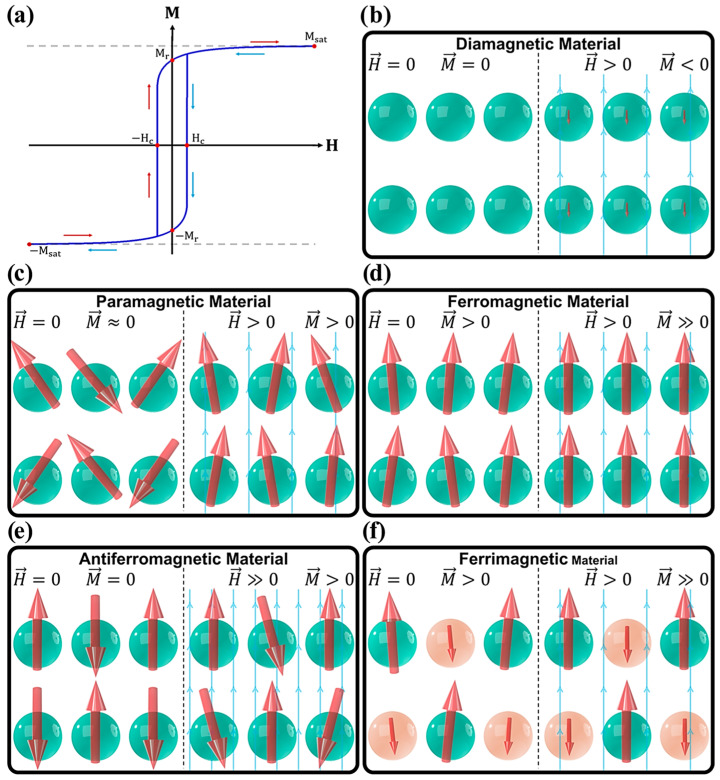 Figure 1
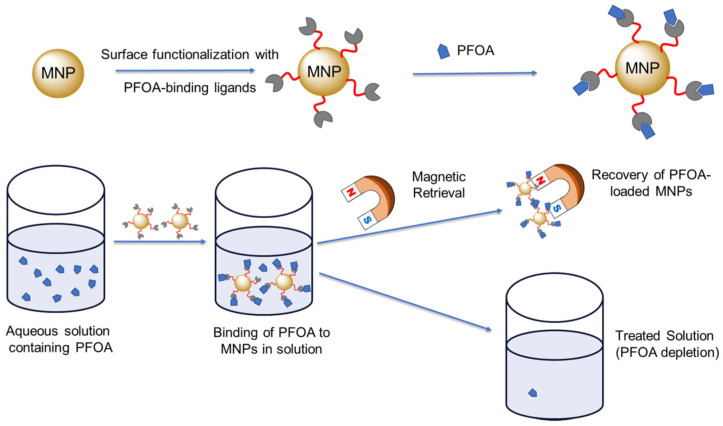 Figure 2
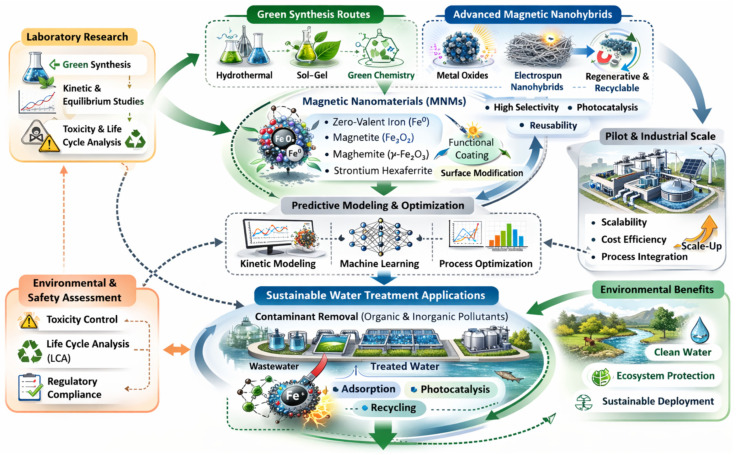 Figure 3
Peer Reviews
No public reviews on file for this paper yet. If you reviewed it on a platform where reviews are public (OpenReview, ICLR, NeurIPS, ICML), you can paste yours below so the community can read it here.
Videos
No videos yet. Explain this paper in a talk, walkthrough, or lecture? Add one.
Taxonomy
TopicsAdsorption and biosorption for pollutant removal · Environmental remediation with nanomaterials · Nanoparticles: synthesis and applications