ASME-Based Structural Assessment of Head–Shell Junctions in Pressurized Railway Tank Wagons
Costin Nicolae Ilincă, Rami Doukeh, Ibrahim Naim Ramadan, Adrian Neacsa, Alin Diniță, Eugen Victor Laudacescu, Marius Gabriel Petrescu, Bogdan Ilie, Andrei Cosmin Sîrbu

TL;DR
This paper assesses the structural integrity of pressurized railway tank wagon junctions using ASME standards and confirms their safety and reliability.
Contribution
A combined analytical and numerical approach is proposed to evaluate stress concentration effects in railway tank wagon junctions.
Findings
The maximum equivalent stress was 115 MPa (2D) and 117 MPa (3D), with less than 2% deviation.
The maximum combined primary membrane and bending stress (109.5 MPa) is well below the ASME allowable limit of 308 MPa.
The discontinuity influence zone extends approximately 120–150 mm from the junction.
Abstract
This study presents an ASME-based structural assessment of the head–shell junction in a 60 m3 pressurized railway tank wagon subjected to an internal pressure of 0.45 MPa, combining classical shell theory with finite element analysis (FEA) in accordance with ASME Section VIII Division 2 stress categorization and linearization procedures. An analytical model based on the moment theory of shells of revolution was developed to describe displacement and rotation compatibility at the ellipsoidal head–cylindrical shell junction, allowing for the determination of contour interaction loads governing membrane–bending coupling in the discontinuity region. The calculated contour loads (Q0 = 795 N/mm, M0 = 13,350 N·mm/mm) indicate localized membrane–bending interactions caused by geometric discontinuity. Finite element simulations using axisymmetric (2D) and full 3D models were evaluated through…
Click any figure to enlarge with its caption.
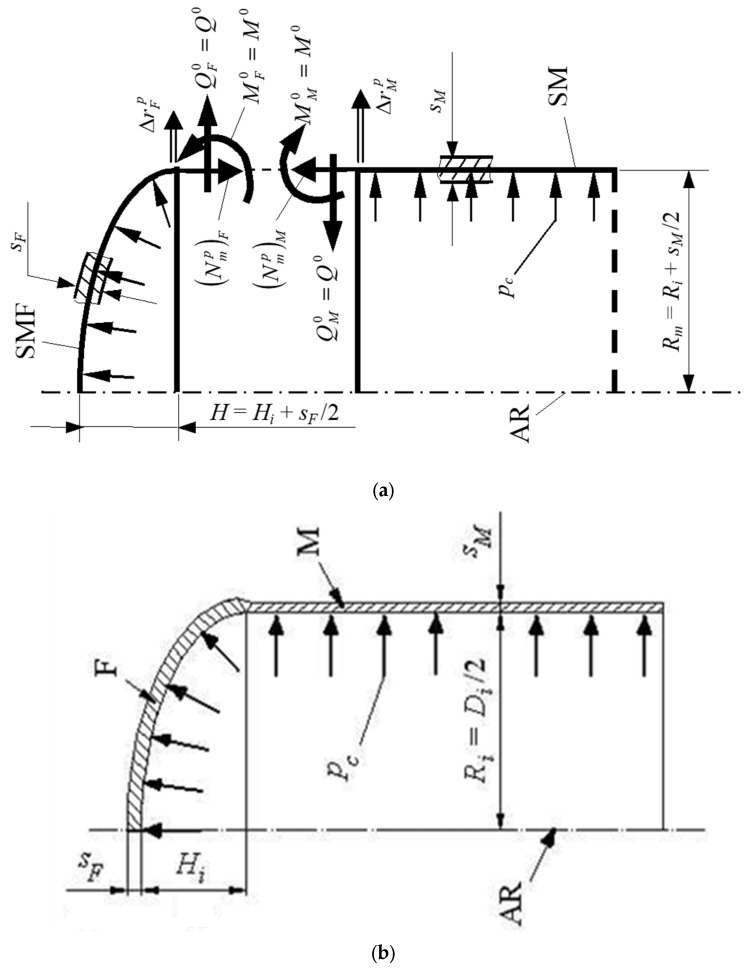 Figure 1
 Figure 2
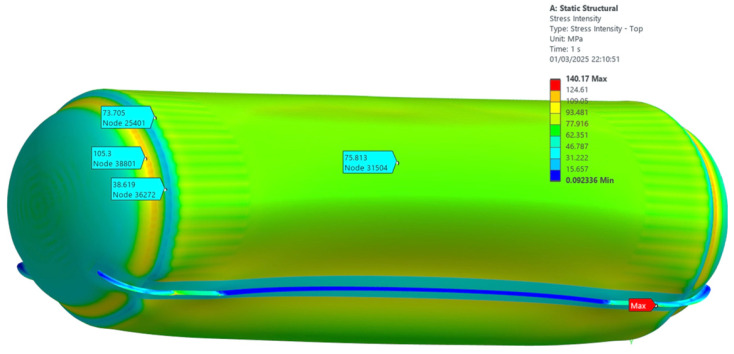 Figure 3
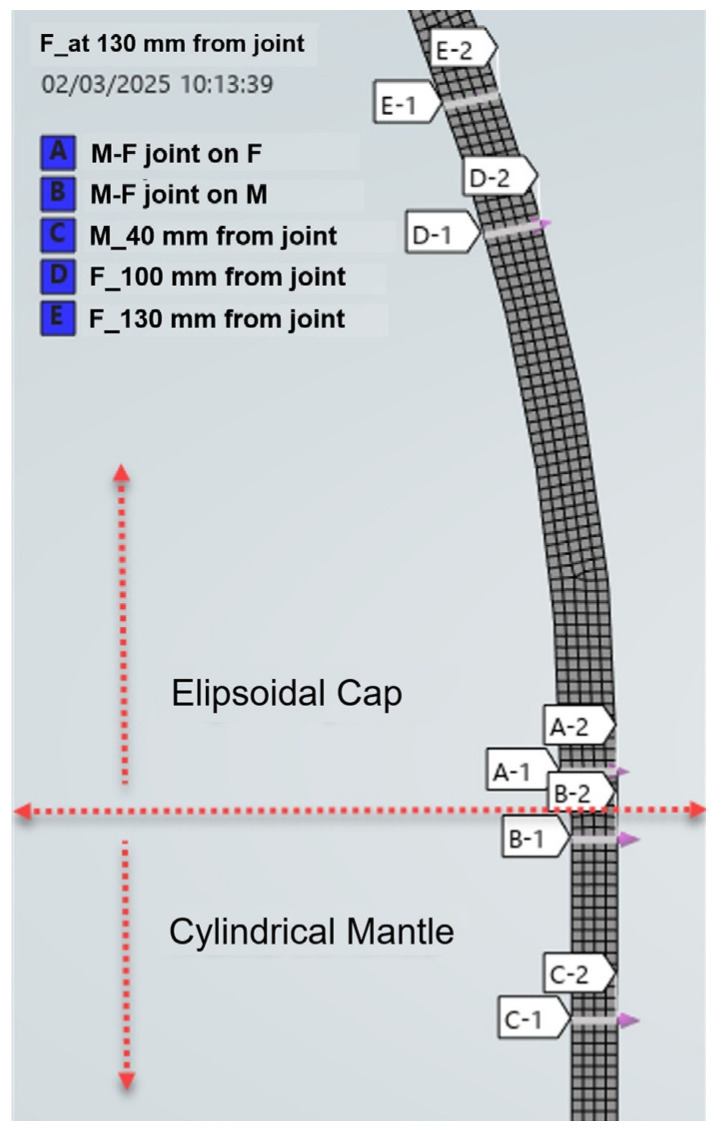 Figure 4
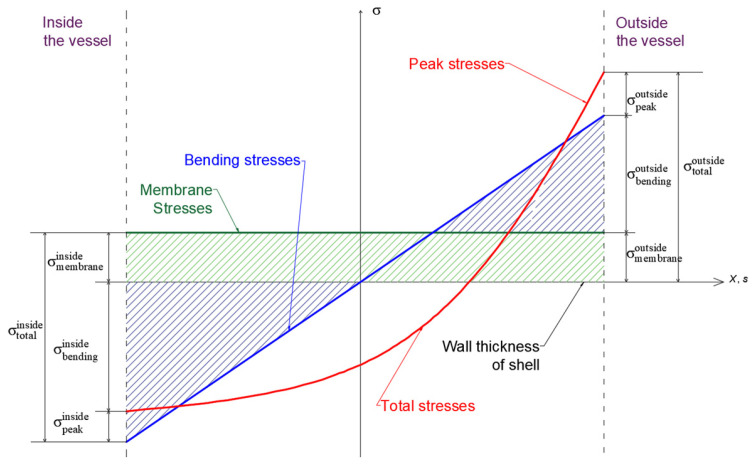 Figure 5
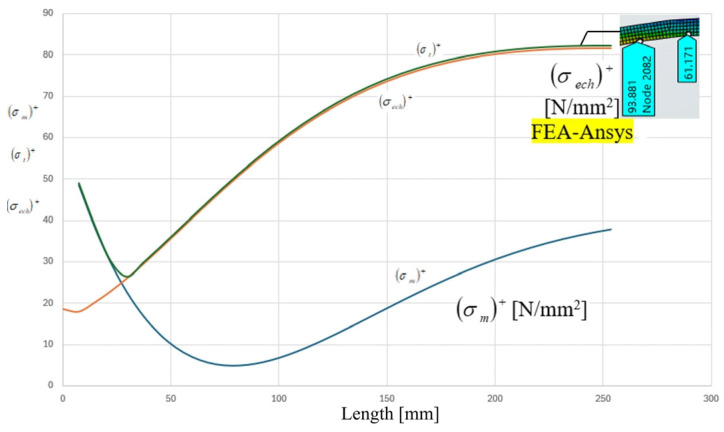 Figure 6
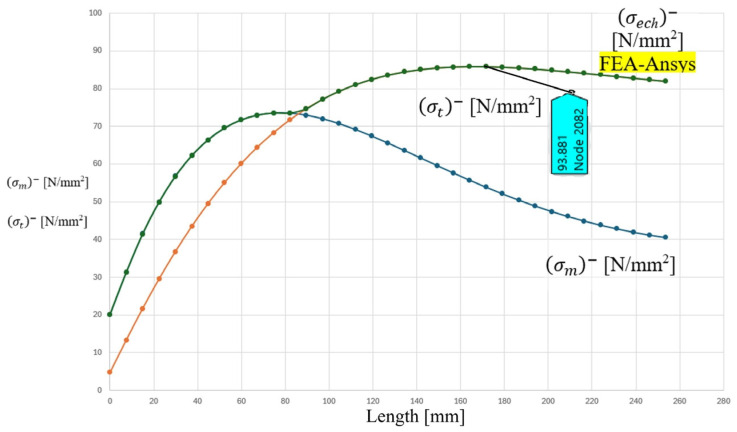 Figure 7
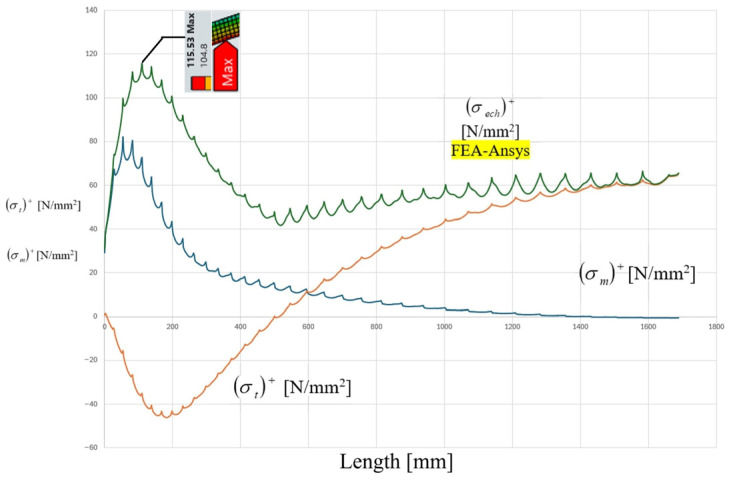 Figure 8
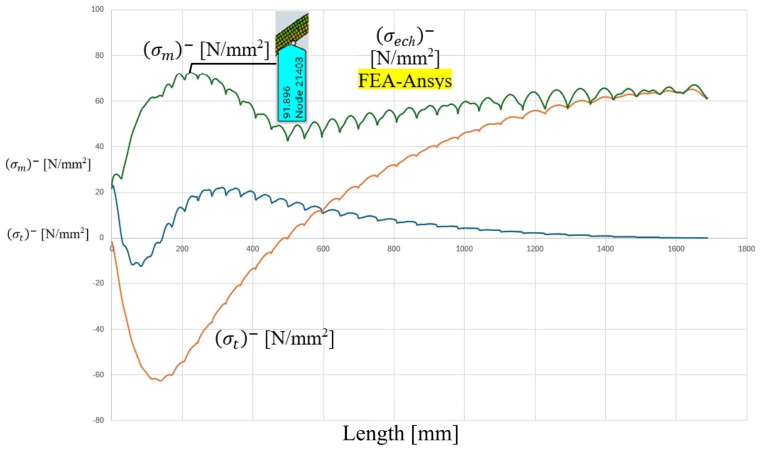 Figure 9
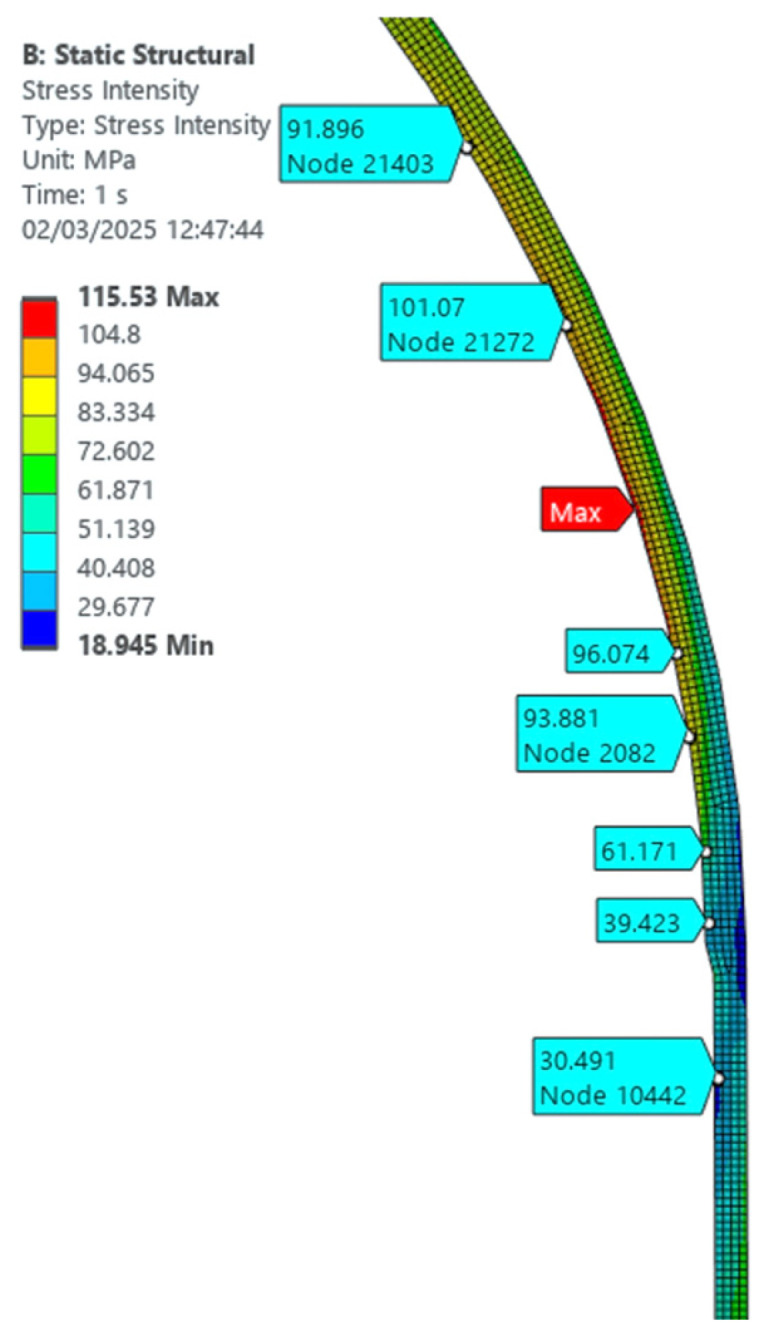 Figure 10
Peer Reviews
No public reviews on file for this paper yet. If you reviewed it on a platform where reviews are public (OpenReview, ICLR, NeurIPS, ICML), you can paste yours below so the community can read it here.
Videos
No videos yet. Explain this paper in a talk, walkthrough, or lecture? Add one.
Taxonomy
TopicsRailway Engineering and Dynamics · Fatigue and fracture mechanics · Fluid Dynamics Simulations and Interactions